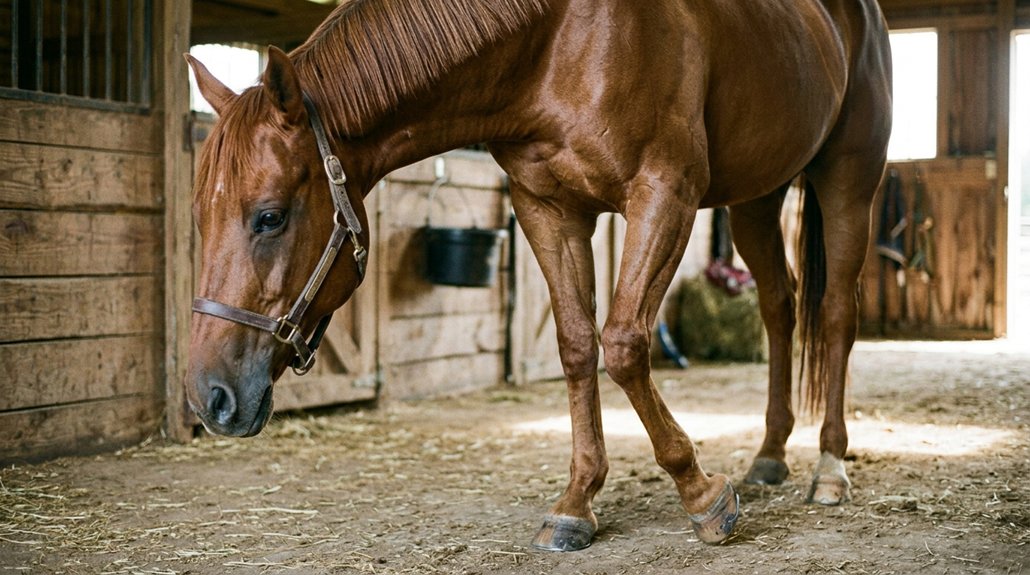
You’ll often find lameness in horses is due to musculoskeletal pain from conditions like hoof abscesses, subsolar bruising, navicular syndrome, and laminitis. Acute injuries or chronic issues such as osteoarthritis can also contribute. Diagnostic tools like radiography and ultrasound help identify underlying causes, while treatments focus on addressing root issues with techniques like corrective shoeing, anti-inflammatory medication, and strategic rehabilitation. Understanding these factors guarantees effective management, improving your horse’s mobility and comfort. Discover strategies to address these challenges effectively.
Key Takeaways
- Hoof abscesses, caused by bacterial infiltration, manifest with signs like hoof warmth and toe-touching lameness.
- Subsolar bruising leads to lameness and reluctance to walk on hard surfaces, noticeable on lighter soles.
- Navicular syndrome causes persistent lameness with symptoms like toe dragging and caudal heel pain.
- Laminitis involves coffin bone instability, resulting in weight-bearing pain and a rocked-back stance.
- Soft tissue injuries due to overexertion can cause acute lameness, swelling, and tenderness.
Understanding Lameness and Its Causes
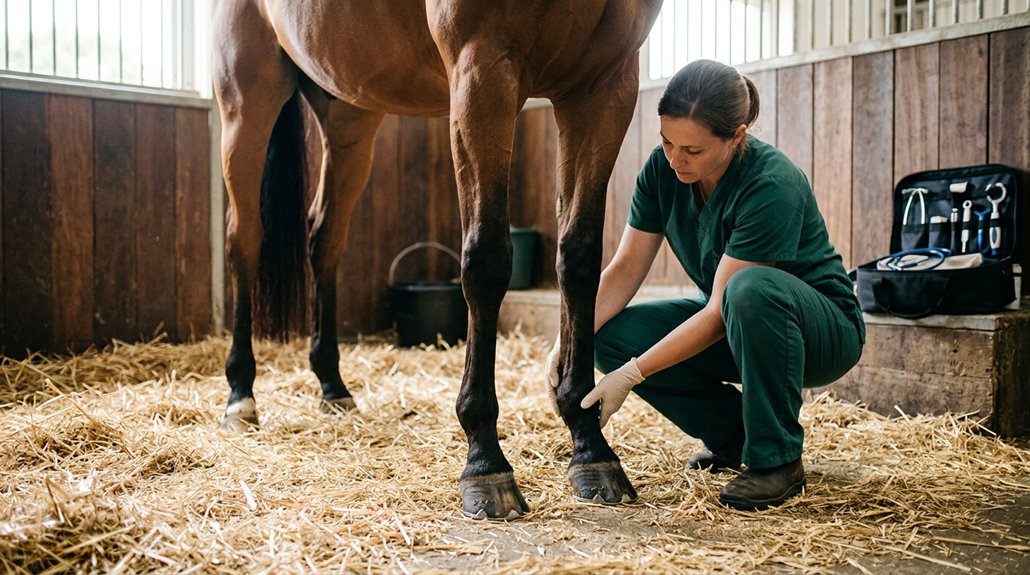
When delving into the intricacies of lameness in horses, it is vital to identify the underlying causes that lead to this condition. Pain in the musculoskeletal system, mechanical restrictions, or neurological issues disrupt equine biomechanics, leading to abnormal gait or stance. Diagnostic techniques such as radiography, ultrasound, and thermal imaging aid in pinpointing these causes. Common culprits include hoof abscesses, soft tissue injuries, fractures, laminitis, and osteoarthritis. Acute lameness, like a sudden hoof abscess, contrasts with the gradual onset of arthritis-related issues, both requiring nuanced diagnostic insight. Consider environmental factors—like hard surfaces—and improper conformation as critical contributors. Addressing the root cause not only alleviates pain but prevents secondary effects like compensatory lameness in other limbs.
Identifying Key Symptoms of Lameness
Although detecting lameness in horses can be challenging, being familiar with its key symptoms is indispensable for effective diagnosis and treatment. Assess gait changes like limping or “toe pointing,” which suggest muscle strain or joint stiffness. Observe for head bobbing during trotting, indicating weight shifts from an affected limb. Pain during movement often causes inflammation or swelling, further confirming stiffness or strain affecting the joint or muscle. An injured horse may stand awkwardly or shift weight away from the sore leg, revealing discomfort. Identifying these signs thoughtfully leads to accurate diagnosis and suitable rehabilitation strategies, ensuring best recovery.
| Symptom | Indicative of |
|---|---|
| Toe pointing | Muscle strain |
| Limping | Joint stiffness |
| Head bobbing | Weight shift due to lameness |
| Swelling | Inflammation |
| Awkward stance | Discomfort or distress |
How Hoof Abscesses Can Lead to Lameness
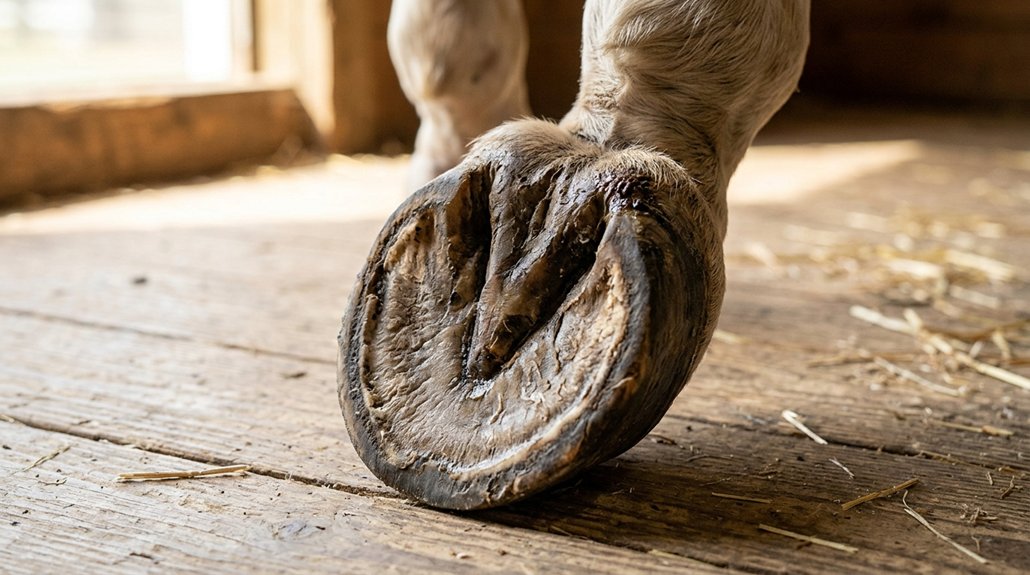
You must understand that hoof abscesses occur when bacteria infiltrate through cracks or wounds, leading to painful infections that result in lameness. Recognizing the early signs like warmth and an increased pulse in the hoof is essential, as it allows for prompt intervention. Effective management includes soaking the hoof, applying a poultice for drainage, and using anti-inflammatory medications to alleviate discomfort and prevent complications.
Entry Points for Bacteria
How do bacteria find their way into the horse’s hoof and cause debilitating lameness? Bacterial entry occurs through cracks, wounds, or weak spots that compromise hoof health. In wet or muddy environments, the hoof softens, creating ideal conditions for pathogens. Once inside, bacteria can cause infections known as hoof abscesses.
You might notice a “toe-touching lameness,” where your horse hesitates to bear weight, indicative of an abscess. Additionally, look for warmth and a prominent pulse above the hoof. If untreated, these abscesses result in severe pain and possibly chronic lameness.
While you won’t explore management strategies here, understanding the signs and conditions contributing to bacterial access is key to maintaining your horse’s hoof health and preventing lameness.
Management and Treatment Strategies
When addressing hoof abscesses, three fundamental management strategies can help alleviate lameness and support recovery. First, preventive hoofcare is essential. Confirm routine trimming to maintain healthy hoof balance and prevent entry points for bacteria. Secondly, infection control requires vigilant monitoring and quick response. Soak the hoof in antiseptic solutions and apply poultices to draw out infection while managing pain with anti-inflammatory medications. Finally, facilitate recovery by draining the abscess to relieve pressure and encourage healing. Without proper management, untreated hoof abscesses could escalate into chronic conditions like laminitis. Exercise caution by offering rest and a structured recovery plan, gradually reintroducing exercise under veterinary guidance. Through thorough care, the horse’s mobility and performance can be restored.
Addressing Subsolar Bruising in Your Horse
When dealing with subsolar bruising, you’ll notice symptoms like reluctance to walk on hard surfaces and fluctuating lameness intensity, with visible bruising especially on light-colored soles. Identifying these signs early is essential, as effective treatment strategies often involve pain management from your veterinarian and adjustments by your farrier to reduce pressure. Ensuring your horse’s proper rest and gradual return to work will also be key in achieving a full recovery.
Identifying Key Symptoms
Why might your horse be experiencing discomfort while walking on hard surfaces? Consider subsolar bruising, a condition stemming from repetitive trauma to the hoof sole. Lameness can manifest as reluctance to walk, particularly evident on unforgiving terrains. Key symptoms include fluctuating lameness severity and visible bruising, especially notable in light-colored hooves.
Consistent hoof care is essential, incorporating routine inspections and quick responses to any lameness to prevent worsening. Understanding these signs helps focus on prevention strategies, allowing for maintenance before an issue escalates. Below is a summary to aid in identifying symptoms:
| Symptom | Description |
|---|---|
| Lameness | Mild, persistent, varies in severity |
| Walking reluctance | Especially on hard surfaces |
| Visible bruising | More apparent on light-colored soles |
| Fluctuation | Lameness intensity may change |
Effective Treatment Strategies
While subsolar bruising can be a frustrating condition for horse owners, effective treatment strategies are vital for addressing it. Prioritize hoof health by combining veterinarian-recommended pain management with NSAIDs to alleviate discomfort. Collaborate with a skilled farrier to alter shoeing or trimming techniques, ensuring adequate hoof support and protection, which are essential in any equestrian care regime. Rest is paramount; restrict your horse’s time on hard surfaces. Opt for a soft, dry environment to promote healing. Monitoring is key—pay attention to improvements such as a gradual return to normal gait, indicating successful intervention. Address any hoof conformation issues to prevent future bruising. A strategic approach in managing subsolar bruising can notably enhance your horse’s recovery and comfort.
Spotting and Managing Navicular Syndrome
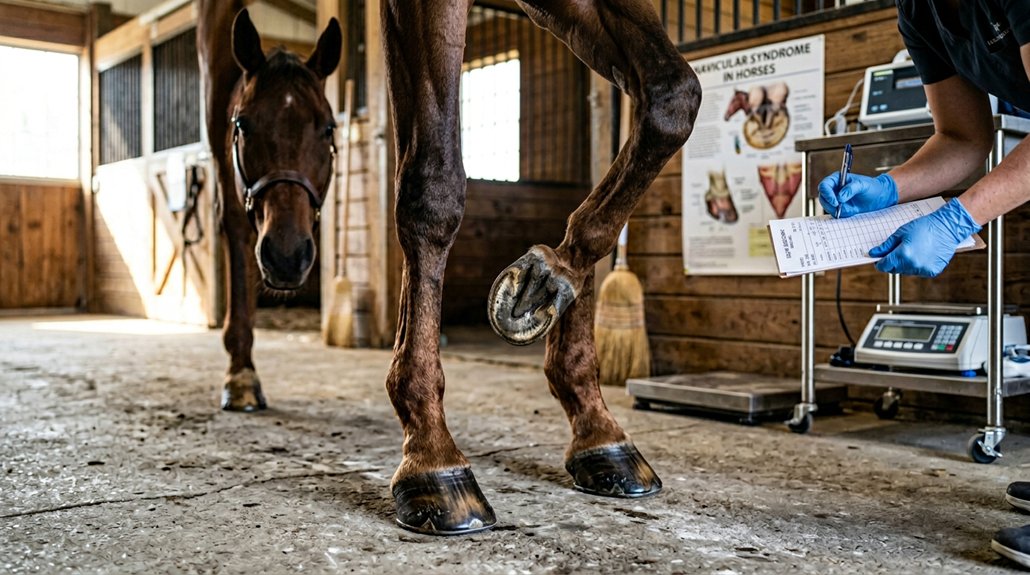
Though subtle at first, Navicular Syndrome manifests as a persistent lameness affecting the caudal heel area, often observable on firm surfaces and noticeable through altered gaits in horses. The initial navicular abnormalities may involve bilateral forelimb lameness, advancing to a progression marked by toe dragging and reduced motion range. Diagnostically, radiographs or MRI scans can reveal changes like bone spurs on the navicular bone.
Treatment encompasses:
| Treatment Strategy | Purpose | Outcome |
|---|---|---|
| Corrective Shoeing | Support and unload pressure | Improved gait alignment |
| Anti-inflammatory Meds | Pain reduction | Temporary lameness relief |
| Joint Injections | Pain and inflammation targeting | Enhanced mobility |
Prolonged management is essential for maintaining your horse’s performance and quality of life.
Understanding the Impact of Laminitis
Laminitis, a crucial and painful condition for horses, disrupts the attachment between the hoof wall and the coffin bone, leading to severe instability. Recognizing laminitis involves noting a horse’s rocked-back stance, weight-bearing pain, and an elevated digital pulse. Metabolic disorders like equine Cushing’s disease and insulin dysregulation or abrupt nutritional changes can trigger this ailment. For laminitis prevention, focus on nutritional adjustments and managing obesity. Prompt hoof care and pain management through NSAIDs are essential. Cold therapy reduces inflammation, while early intervention aids in mitigating damage. Weight control and tailored diet plans play significant roles in equine health. Through these measures, you’ll considerably reduce the risk of chronic laminitis and the threat of enduring lameness.
Managing Osteoarthritis in Equines
When tackling osteoarthritis in equines, an early diagnosis is essential, as it sets the stage for effective intervention and management. Recognize clinical indicators like gradual lameness onset, joint swelling, and limited motion. Implementing tailored exercise regimes is important to maintaining joint health and mobility. Controlled movements and physical therapy can mitigate progression and enhance function. Consider non-steroidal anti-inflammatory drugs (NSAIDs) to alleviate pain and joint injections to reduce inflammation. Incorporate dietary supplements as a nutritional strategy to support joint structure. Prompt intervention prevents further joint compromise and complications. Monitor activity levels and adjust rest periods accordingly, ensuring ideal recovery and comfort. Consistent veterinary assessments are key to adapting treatment plans for effective long-term management of equine osteoarthritis.
How Soft-Tissue Injuries Lead to Lameness
Soft-tissue injuries, prevalent in horses, profoundly impact their locomotion by causing pain and inflammation that disrupt normal gait. Muscles, tendons, and ligaments, when strained or sprained, often manifest with swelling and tenderness, indicating acute lameness. Soft tissue damage can result from inadequate warm-ups or excessive exertion. The severity and location of tears, such as those in the suspensory ligament or flexor tendons, determine how persistent lameness might become. Critical injuries lead to prolonged recovery, necessitating strategic rehabilitation. Employing controlled exercises, cold therapy, and anti-inflammatory treatments can effectively restore function. Prioritizing injury prevention through proper training routines helps reduce the risk of these conditions. Without timely intervention, untreated injuries may progress to chronic lameness and consequential musculoskeletal issues.
Recovery Strategies for Traumatic Injuries
Traumatic injuries in horses demand meticulous recovery strategies distinct from other types of lameness issues. Implementing stall rest guarantees affected tissues heal with minimal stress, a significant initial step. You’ll need to use NSAIDs to manage pain and inflammation, essential for your horse’s comfort at the start of rehabilitation exercises. These exercises, like hand walking and controlled low-impact activities, aid mobility restoration without worsening injuries.
Proper nutrition strategies are critical; a balanced diet complements tissue healing while ideal hoof care prevents complications during recovery. Regular veterinary follow-up is indispensable to evaluate healing progress and modify treatment plans.
- Stall rest aids in initial recovery.
- NSAIDs reduce inflammation and manage pain.
- Controlled exercises restore strength.
- Nutrition and hoof care support healing.
Frequently Asked Questions
What Are the Main Causes of Lameness in Horses?
You’re looking at hoof abnormalities, soft tissue injuries, joint inflammation, and tendon strain as the main culprits for lameness. Diagnosing requires imaging and clinical assessment. Consider hoof care, anti-inflammatories, or rest as part of the treatment strategy.
What Are the 3 F’s for Horses?
The “3 F’s” stand for Feed, Foot, and Fitness. Imagine a car’s engine fed premium fuel (feeding factors), with properly aligned wheels (footwear failures’ prevention), ensuring a smooth drive (fitness). Just like that, prioritize these aspects.
How Does a Horse Say “I Love You”?
A horse expresses “I love you” through equine affection and horse body language like gentle nuzzling, engaging the flehmen response, grooming actions, or relaxed eye contact. Diagnostic insight suggests these behaviors are key indicators of their bond and comfort.
What Are the First Signs of Cushing’s in Horses?
You’ll first notice Cushing’s symptoms like a long, curly coat and hormonal imbalances causing lethargy. Insulin resistance can lead to seasonal changes in energy levels. Early recognition is essential for effective treatment and managing potential complications.
Conclusion
Steering through the maze of equine lameness can feel like searching for a needle in a haystack, but understanding the root causes is half the battle. By closely monitoring symptoms and applying appropriate treatments—from managing hoof abscesses and subsolar bruising to addressing complex issues like navicular syndrome and laminitis—you’ll guarantee your horse’s well-being. Harnessing diagnostic insight and targeted recovery strategies transforms potential setbacks into manageable hurdles, ultimately optimizing your horse’s performance and quality of life.