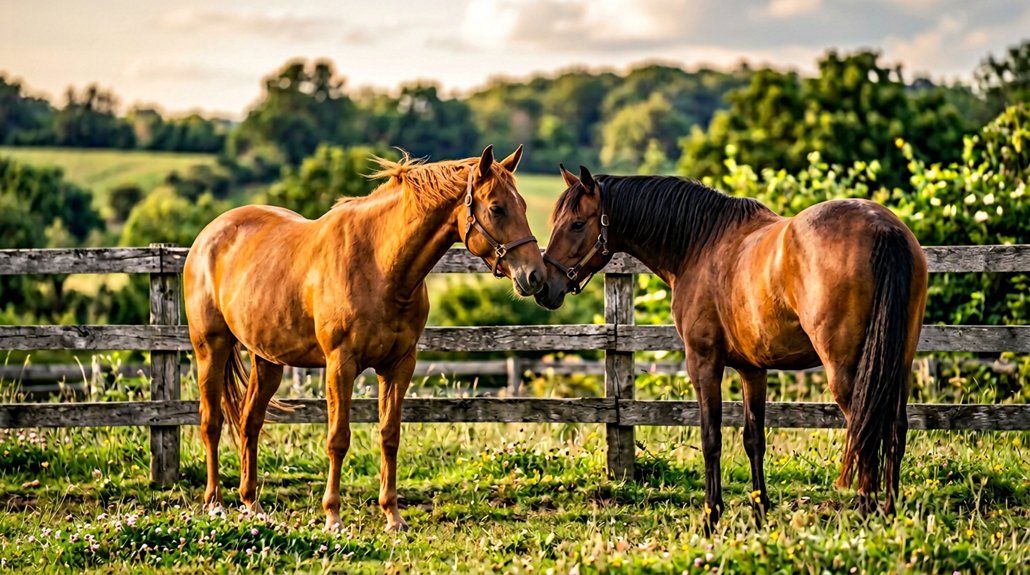
When selecting horse breeds with easy temperaments, consider the Morgan, American Quarter Horse, and Appaloosa. These breeds possess calm, patient demeanors essential for novice riders. American Paint Horses and Norwegian Fjord Horses are also great choices, known for their sociable nature and trainability. They form strong bonds and provide smooth riding experiences. Understanding these breeds enhances your decision, ensuring positive partnerships, safety, and adaptability for various riding styles. Discover more about these ideal beginner-friendly equine companions next.
Key Takeaways
- American Quarter Horses are calm, reliable, and versatile, making them suitable for beginners seeking safety and ease of handling.
- Morgans offer an eager-to-please nature and manageable size, fostering confidence and strong bonds with novice riders.
- Appaloosas have intelligent, patient dispositions, fostering trust and confidence in beginners through their calm and teachable nature.
- American Paint Horses possess a gentle disposition and sociable nature, forming deep bonds and adapting well to family environments.
- Clydesdales, despite their large build, are gentle giants, forgiving of mistakes and responsive to beginner training efforts.
Why Temperament Matters in Choosing Your First Horse
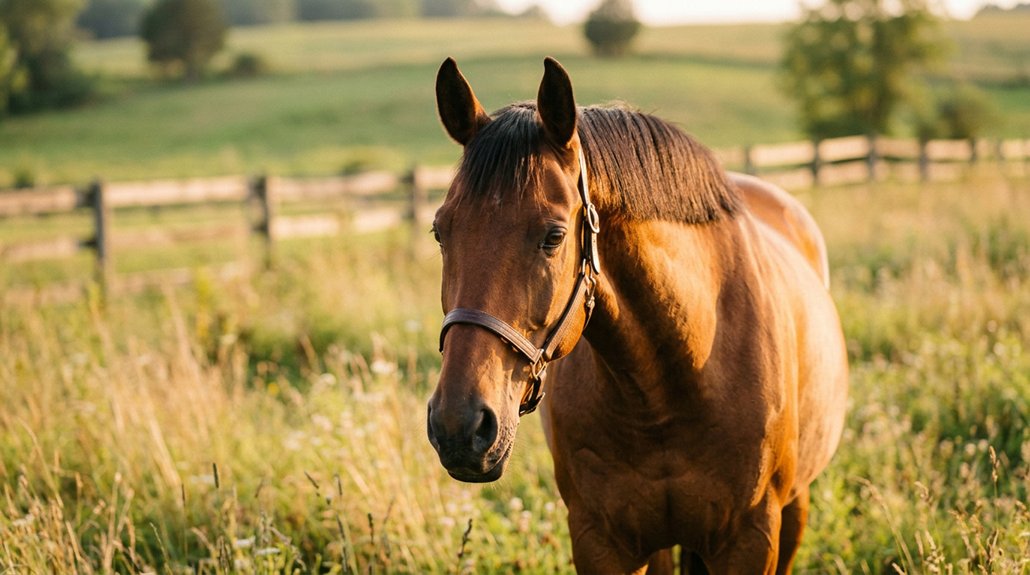
When selecting your first horse, understanding the significance of temperament can’t be understated. A horse’s temperament profoundly affects a novice rider’s experience, as a calm horse personality helps minimize rider anxiety. Horses known to be “bombproof” offer a forgiving nature, vital for building the confidence needed on your equestrian journey. These horses, with moderate energy levels, provide a stable environment that decreases the likelihood of accidents. Additionally, recognizing traits such as friendliness and willingness to please is essential. Engaging with a horse that exhibits these traits fosters a positive bond, important for an enriching training experience. A gentle and predictable temperament not only aligns with your goals but also guarantees a rewarding, long-term equestrian partnership.
Key Traits of Beginner-Friendly Horse Breeds
Selecting a horse breed that caters to beginners involves identifying several key traits essential for safety and enjoyment. Primarily, you’ll want breeds with calm, patient temperaments. These horse characteristics minimize spooking and create a stable learning environment fundamental for novice riders. Understanding training techniques is important, as breeds like the Morgan and Appaloosa are renowned for their intelligence and willingness to please, making training more effective. Additionally, forming strong bonds with horses such as Paint Horses fosters trust and enhances the training experience. Size matters too; breeds like the Cob or Connemara Pony offer a manageable stature for beginners. Finally, versatility in breeds like the Tennessee Walking Horse allows exploration of various riding styles, keeping the journey engaging and safe.
American Quarter Horses: A Trusted Beginner’s Choice
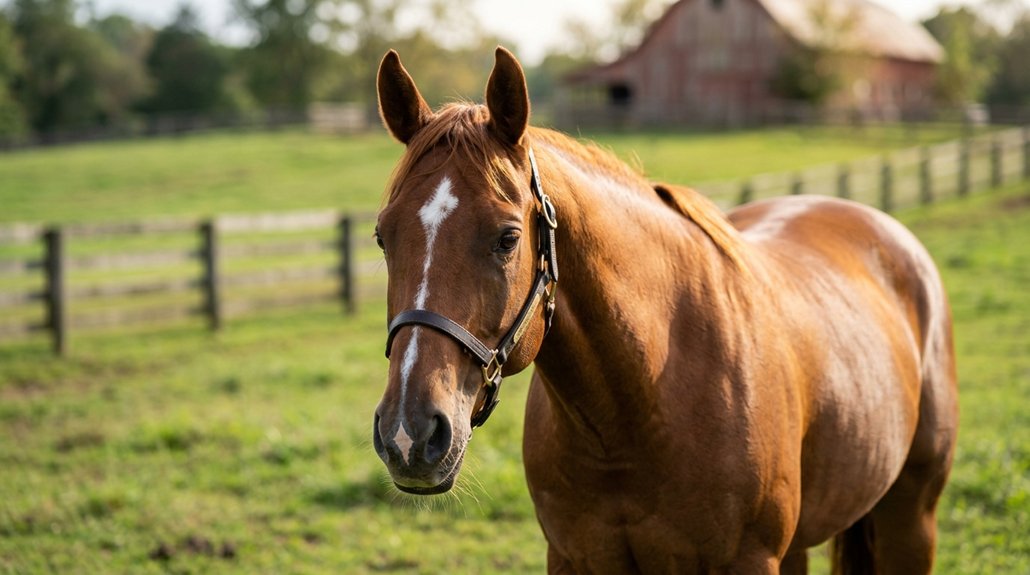
After exploring the fundamental traits essential for beginner-friendly horses, one breed stands out for novices: the American Quarter Horse. Known for its calm demeanor and reliable temperament, this versatile breed excels in diverse equestrian disciplines, from trail riding to Western events. With a manageable size of 14 to 16 hands, Quarter Horses are a perfect fit for beginners, facilitating safe and controlled learning experiences.
| Trait | Details |
|---|---|
| Size | 14 to 16 hands |
| Ideal Age for Beginners | 8 to 15 years |
| Versatility | Trail riding, ranch work |
Their willingness to please and strong bonds with owners enhance their trainability. Effective training methods guarantee beginner safety, allowing new riders to build confidence under the guidance of a seasoned companion.
Why Morgans Make Great First Horses
Choosing a Morgan as your first horse offers you an advantage due to their enthusiastic-to-please nature and intelligence, which supports a seamless learning experience. Their moderate size and forgiving demeanor make them suitable for riders of diverse ages and skill levels, including children and smaller adults. Additionally, Morgans excel across various equestrian disciplines, allowing you to explore interests from trail riding to dressage with a single, versatile companion.
Eager To Please Nature
When considering a first horse, it’s essential to find a breed with a willing-to-please nature, and Morgans are exemplary in this regard. Known for their keen-to-please nature, Morgans are highly responsive to rider commands, ideal for beginners looking to enhance their riding skills. Their forgiving temperament fosters a safe learning environment, allowing novices to focus on bonding experiences and building a strong owner-equine relationship. Morgans’ calm demeanor, paired with their intelligence, means they’re adaptable to various equestrian disciplines. This quality provides beginners with training tips throughout different riding styles. Whether you’re interested in English or Western disciplines, Morgans’ versatility makes them reliable partners, building trust and companionship that promote effective training and enjoyable riding experiences.
Suitable For All Riders
For riders of all experience levels, Morgans stand out as an ideal choice due to their calm and patient demeanor, particularly benefiting beginners seeking to build confidence. Their inherent morgan characteristics, such as a steady temperament and willingness to please, make them highly trainable. This supports beginner engagement by enabling new riders to acquire skills in an encouraging setting. Additionally, Morgans’ ability to develop strong bonds with handlers fosters trust and enhances communication, essential for novice riders. Typically aged 8-15 years, many Morgans bring the maturity and steadiness that are important when you’re just starting out. By having a Morgan as your first horse, you benefit from their experience and the confidence they inspire, facilitating a seamless introduction to riding.
Versatile Across Disciplines
While Morgans are widely appreciated for their friendly disposition, their versatility across equestrian disciplines truly sets them apart, particularly for those new to horse ownership. The Morgan characteristics of adaptability and intelligence make them exceptional for diverse equestrian pursuits. Whether you’re interested in dressage, jumping, trail riding, or Western events, a Morgan is likely to excel.
Key attributes include:
- Calm and gentle disposition: These traits foster strong rider bonds and enhance learning for beginners.
- Compact build: Averaging 14.1 to 15.2 hands, they’re manageable for riders of various ages and skill levels.
- Rapid learning ability: Their enthusiasm to please guarantees effective response to novice training commands.
These qualities collectively highlight why Morgans are ideal for families and first-time horse owners alike.
Appaloosas: Building Bonds and Training Ease
You’ll find that Appaloosas, with their distinctively spotted coats, excel in building strong rider relationships due to their intelligent and patient disposition. Their adaptive nature makes them particularly approachable for both novice and experienced equestrians, offering a training experience that’s remarkably efficient. This breed’s innate gentleness not only enhances your training techniques but also fosters confidence, especially for beginners and children.
Strong Rider Relationships
Due to their loyalty and affectionate nature, Appaloosas excel in forming strong relationships with their riders, a trait that can be attributed to their calm and patient disposition. These qualities enhance bonding experiences and improve communication between you and the horse. When engaging in riding activities, Appaloosas actively encourage a cooperative and trusting relationship. Their intelligence means they quickly grasp commands, making it easier for you to refine your communication techniques and strengthen your bond during training sessions.
- Affectionate loyalty: Facilitates deeper rider attachments.
- Calm temperament: Encourages consistent rider-horse communication.
- Trainable intelligence: Allows for quick learning and mutual understanding.
These traits highlight why Appaloosas are ideal companions for both novice and experienced riders. Their ability to forge lasting connections offers a rewarding equestrian experience.
Easy Training Techniques
An Appaloosa’s innate intelligence, combined with its enthusiasm to please, makes training sessions both efficient and enjoyable. Their cognitive abilities allow them to navigate training obstacles with ease, provided that you create a positive environment. This guarantees they remain engaged and enthusiastic to learn. In an Appaloosa’s case, dependably applying consistent and positive reinforcement techniques is essential; praise and rewards serve as significant motivators. These horses thrive on reassurance, solidifying their trust and deepening the bond with you during training. Thanks to this breed’s personable nature, training becomes a shared journey rather than a set of chores. Appaloosas’ versatility further adds to training ease, adapting smoothly to various disciplines, such as trail riding or jumping, guaranteeing diverse and stimulating sessions.
Calm and Adaptive Nature
Building on their ease of training, Appaloosas exhibit a calm and adaptive nature that enhances the connection between horse and rider. As gentle giants, their calm companions demeanor makes them perfect for beginners, providing a stable foundation for developing confidence. Their intelligence allows them to quickly grasp commands, helping beginners feel effective and connected. This breed’s forgiving attitude toward novice mistakes further encourages successful learning experiences.
Appaloosas’ adaptability is significant in various settings due to their versatile nature:
- Multidisciplinary Thriving: They excel in diverse riding disciplines, adapting smoothly to new environments.
- Strong Bonds: Forming profound emotional connections with owners boosts rider trust during training.
- Confidence Building: Their steady temperament helps riders advance more assuredly.
Indeed, Appaloosas’ innate traits make them ideal equine partners for any enthusiast.
Paint Horses: Ideal Family Companions
When selecting a horse breed that harmoniously fits into family life, the American Paint Horse stands out due to its calm and gentle disposition. One of the key Paint Horse advantages is their ability to form deep bonds with owners, enhancing family riding experiences. Known for their sociable nature, these horses exhibit a versatile blend of western, trail, and English riding skills. These abilities stem from their mixed heritage, adding to their reliability as companions for novice owners and families with young children. Paint Horses are also visually striking, thanks to their distinctive spotted coat patterns. This visual appeal combined with their easy temperament makes them ideal for enriching family environments, providing an interactive, friendly experience for all, while maintaining a dependable demeanor.
The Calm Court of Clydesdale Giants
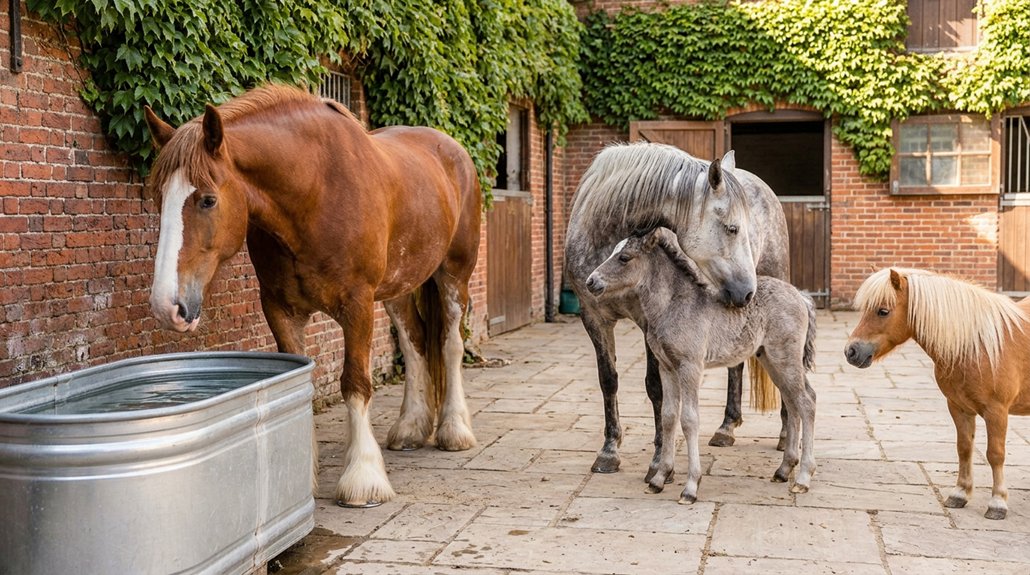
Moving from the vibrantly patterned Paint Horses to the majestic presence of Clydesdales, these “gentle giants” excel in providing a calm yet imposing equestrian experience. Although their large, muscular build—standing around 16 to 18 hands high—might intimidate, their affable disposition reassures. You’ll find Clydesdale characteristics include:
Clydesdales, the gentle giants, blend calming presence and towering strength, offering a uniquely reassuring equestrian experience.
- Intelligence: They’re responsive to training and keen to please, performing well in various disciplines.
- Forgiveness: Despite their size, they’re forgiving of a beginner’s mistakes, making them ideal for novice riders.
- Social Nature: These horses bond closely with handlers, thriving on companionship.
Their calm demeanor creates a safe environment, offering new riders a supportive experience. The blend of size and friendliness you’ll encounter with Clydesdales is truly unique.
Smooth Rides With Tennessee Walking Horses
Although renowned for their unique running walk gait, Tennessee Walking Horses offer far more than just a smooth ride. Their distinctive gaits guarantee comfortable rides, reducing strain over long distances. You’re likely to appreciate their calm temperament, making them ideal family companions. With a history rooted in plantation work, they’ve evolved into versatile equines, excelling in endurance and leisurely trail rides. Intelligent and keen to please, they bond exceptionally well during training sessions. Whether you’re a novice or an experienced rider, these horses provide a reassuring presence, minimizing stress. Explore their attributes below:
| Feature | Benefit |
|---|---|
| Unique Gaits | Smooth, low-impact rides |
| Calm Temperament | Ideal for families |
| Intelligence | Excels in training and bonding |
| Versatility | Suitable for various riding activities |
Embrace the pleasure of riding with Tennessee Walking Horses, where each stride is an experience to cherish.
Norwegian Fjords: Versatile and Steady Partners
As you appreciate the comfort offered by Tennessee Walking Horses, you might also find the Norwegian Fjord Horses to be exceptional partners, particularly in their versatility and steadiness across various equestrian activities. With their stocky build and calm temperament, Fjords are highly adaptable, serving novice and experienced riders alike. This versatility is demonstrated through:
- Trail Riding: Fjord adaptability guarantees a safe and enjoyable experience.
- Dressage: Excelling in discipline, they are increasingly popular in competitive settings.
- Light Draft Work: Their strength complements their steady nature in pulling tasks.
Their capacity to adjust pace builds confidence in beginners, while their friendly, loyal nature is family friendly, fostering interactions with children. Thanks to their hardiness and longevity, they remain active and healthy well into their late twenties.
Steps to Select the Right Horse for You
To guarantee you select the right horse, start by evaluating its temperament for signs of calmness, patience, and reliability, which are essential for a safe and comfortable experience. Align your riding goals by considering breeds like the American Quarter Horse, Morgan, or Appaloosa, noted for their friendly dispositions. Additionally, assess the compatibility between the horse’s behavior and your individual riding style by engaging with experienced owners or trainers who can provide valuable insights.
Evaluate Horse Temperament
Selecting the right horse hinges on evaluating its temperament, a critical aspect that determines compatibility and safety. Begin with behavior observation to gauge calmness and responsiveness. Examine how the horse interacts with people and other horses, and watch for positive response cues to commands.
- Breed Background: Consider breeds with friendly dispositions, like Appaloosas and American Paint Horses.
- Age and Training: Mature horses (8-15 years) offer increased dependability, particularly for novice riders.
- Direct Interaction: Conduct riding or leading tests to identify engagement levels, signaling temperament compatibility.
Engaging an experienced trainer or horse owner provides additional, invaluable insights into nuanced behavior patterns. Their expertise helps identify trainable, gentle horses that align with your comfort and safety needs, ensuring a trustworthy companion.
Match Riding Goals
Evaluating a horse’s temperament is just one facet of the selection process—aligning the horse with your riding goals is another essential step. Begin with a goal assessment to define your aspirations, whether it’s leisurely trail rides, competitive events, or family-oriented activities. Your riding objectives will guide you through breed selection. For instance, breeds like the American Quarter Horse and Morgan possess calm, forgiving natures, making them excellent for beginners. If you seek a manageable size, consider the Welsh Cob or Connemara Pony—ideal for novice riders. Engage experienced trainers or owners to gather insights that align horse characteristics with your goals. Additionally, guarantee the horse’s training level complements your experience; the highly trainable Tennessee Walking Horse offers a positive learning curve.
Assess Rider Compatibility
How do you determine the perfect horse match? Begin by evaluating your riding experience. It’s essential your horse’s temperament aligns with your comfort level. Choose breeds like the American Quarter Horse or Appaloosa, renowned for their calm and forgiving nature. Here’s what to reflect on:
- Horse Age: Mature horses (8-15 years) often offer reliability, especially beneficial for beginners.
- Horse Size: Assess the horse’s size in relation to your physical attributes; horses between 14-16 hands are typically easier to handle.
- Horse Sociability: Seek a friendly demeanor to foster a positive bond, enhancing your learning experience.
Engage with potential horses through riding trials or visits to observe behavior and personality, ensuring a suitable partnership for your goals.
Frequently Asked Questions
What Is the Calmest Temperament Horse?
You’ll find that the calmest temperament horses, often seen as gentle giants, are perfect for soothing rides. They’re usually mature, around 8-15 years old, displaying a bombproof nature, making them ideal companions in stressful environments.
What Is the Friendliest Breed of Horse?
You’re looking for a friendly horse breed? Consider Clydesdales, known as “gentle giants,” and Norwegian Fjords, resembling playful ponies. Both breeds exhibit sociable and affectionate traits, ensuring a rewarding human-animal partnership with calm and engaging interactions.
What Is the 20% Rule for Horses?
The 20% Rule, akin to trusting your dance partner’s instincts, guarantees horse behavior aligns with training techniques. By only controlling 20% of movements, you enhance trust, letting the horse thrive through natural responses and mutual communication.
What Is “I Love You” in Horse Language?
In equine communication, “I love you” is expressed through horse body language, like nuzzling, following you around, or softly nickering. These actions signify trust and emotional bonding, reinforcing affection and social connection in human-equine relationships.
Conclusion
Selecting a suitable steed starts with understanding temperaments, transforming you into a thoughtful equestrian. American Quarter Horses and Morgans manifest marvelous matches, while Appaloosas assist in advancing trust. Clydesdales create calm connections, and Tennessee Walking Horses provide peaceful, pleasurable rides. Norwegian Fjords, with their versatility, are valuable ventures for venturesome novices. Commencing equine exploration requires recognizing reliable traits and temperament, ensuring safe, satisfying satisfaction in your horsemanship journey. Choose with care, and the companionship will be rewarding.