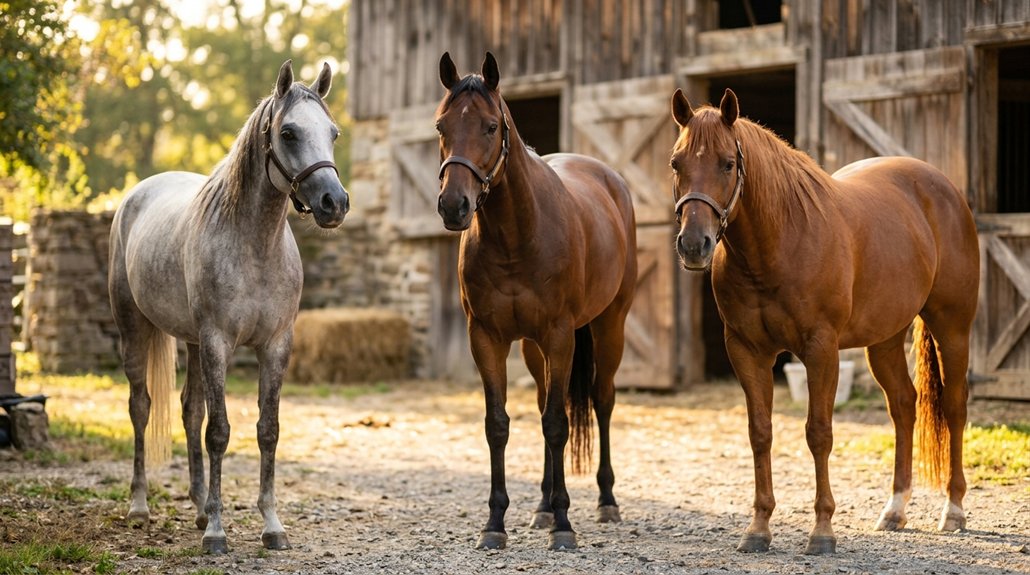
As a new horse owner, you’ll benefit from knowing popular breeds like the American Quarter Horse and Morgan, renowned for their calm and adaptable temperaments. Light horses such as the Thoroughbred offer agility, while Draft horses like Clydesdales are ideal for strength-related tasks. Gaited horses promise smooth rides, perfect for novice riders. Ponies, including Welsh and Shetland, combine strength and size for beginners. Discover how these breeds align with your equestrian goals and lifestyle for further insights.
Key Takeaways
- American Quarter Horses are versatile and calm, ideal for beginners seeking a forgiving riding experience across various equestrian activities.
- Tennessee Walking Horses offer comfort with smooth gaits, making them excellent for novice riders focused on long-distance or leisurely rides.
- Draft Horses exhibit gentle temperaments and impressive strength, suitable for both recreational riding and introductory heavy tasks.
- Paint Horses and Appaloosas provide intelligence and friendly natures, aiding new owners in training and establishing strong bonds.
- Welsh Ponies and Haflingers are perfect for children and smaller adults, offering manageable size and gentle demeanor for beginners.
Choosing the Right Horse Breed for Beginners
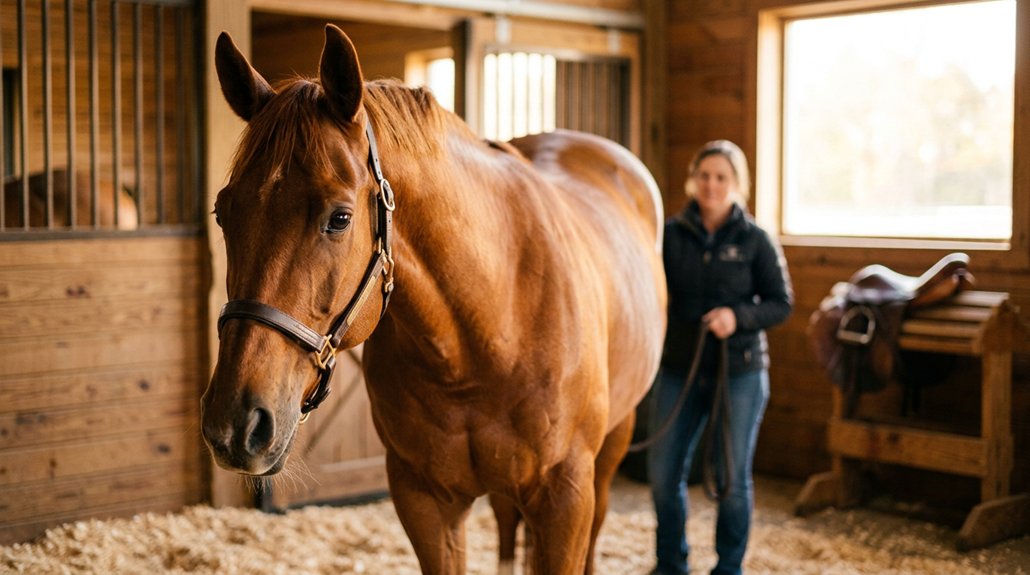
How do you guarantee you’re selecting the right horse breed as a beginner? Prioritize breeds with a calm and gentle demeanor, essential for mastering horse training fundamentals and beginner riding tips. Consider the American Quarter Horse or Morgan, both known for their forgiving nature and willingness to please novice riders. Versatile breeds like the Paint Horse and Appaloosa excel across various disciplines, aligning with diverse beginner interests. If size manageability is a concern, explore smaller breeds like the Welsh Pony or Haflinger, perfect for children or smaller adults. While Thoroughbreds can be suitable, they require more experience due to their high energy. Evaluate your lifestyle, as breeds like the Tennessee Walking Horse offer smooth gaits, enhancing comfort during extended rides.
Horse Breed Categories Explored
Selecting the right horse breed as a beginner can feel overwhelming, but understanding the main categories of horse breeds offers clarity. Light Horses, like Thoroughbreds or Quarter Horses, exhibit agility and speed, perfect for riding and racing due to their nimble reactions—this defines Light Horse Characteristics. Draft Horses stand as robust powerhouses, their large and muscular stature being quintessential for heavy labor, such as plowing and pulling. Recognizable breeds like Clydesdales and Belgians typify Draft Horse Uses, a demonstration of their workhorse nature. Gaited Horses bring comfort through their smooth gaits, ideal for relaxed, long rides, enhancing Gaited Horse Benefits. Ponies, smaller yet mighty, offer Pony Size Advantages with breeds like Welsh and Shetland, catering well to children and novices due to their strength and versatility.
Key Traits of Light Horse Breeds
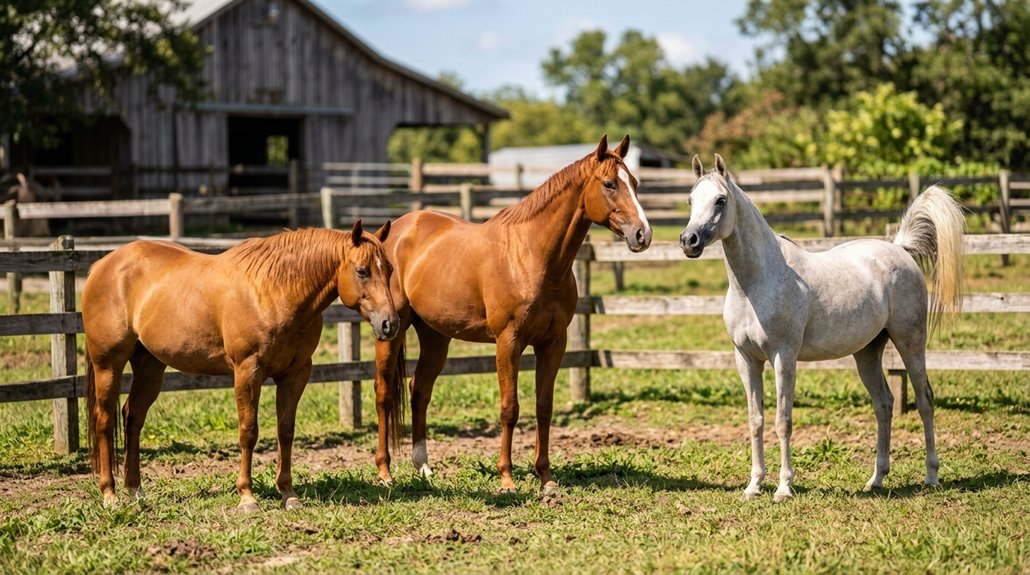
You’ll find light horse breeds such as the Quarter Horse, Thoroughbred, and Arabian are renowned for their versatile riding abilities, making them favorites in equestrian disciplines. Typically ranging from 14 to 17 hands in height, these breeds are well-suited for activities like jumping, dressage, and trail riding, offering both amateur and professional riders diverse experiences. Their athletic builds contribute to enduring performance, making them adaptable for various equestrian tasks, while their temperaments vary, impacting suitability for different rider expertise levels.
Versatile Riding Abilities
Light horse breeds, known for their versatile riding abilities, offer remarkable traits such as agility and speed that make them exceptionally suited for both English and Western riding disciplines. Their inherent agility allows them to adeptly adapt to specialized training techniques for each discipline. You’ll find that these breeds possess a calm demeanor, which is essential for novice riders mastering a range of riding disciplines. Moreover, these horses are built for endurance, meaning they excel in both trail riding and jumping, allowing you to pursue a broad spectrum of equestrian activities over extended periods. Their strong desire to please simplifies training, promotes a seamless learning process, and enhances the bond between horse and rider. Light horses easily accommodate varying skill levels and rider needs.
Popular Breeds Highlighted
When it comes to selecting a horse that fits your diverse riding needs, consider the American Quarter Horse and Thoroughbred, two light breeds famed for their agility and versatility across various equestrian disciplines. These breeds exemplify excellence in racing, jumping, and trail riding. In breeds comparison, the American Paint Horse‘s friendly temperament is well-suited for novice equestrians, adding to its appeal.
- Appaloosas: Known for their distinct spotted coats, these horses possess intelligence and a gentle demeanor, making training effective.
- Morgans: With a strong work ethic and willingness to please, they’re perfect for both beginners and seasoned riders.
- Icelandic Horses: Boasting five gaits, they offer a unique riding experience, excelling in temperament analysis with calm and approachable personalities.
Draft Horse Temperament and Strengths
When considering draft horses, you’ll appreciate their gentle nature and disposition, which makes them perfect companions for novice riders and families alike. These robust equines possess impressive power capabilities, adept at performing heavy tasks such as plowing, logging, and pulling substantial loads. Despite their size, their versatile work applications, including recreational riding and driving, highlight their adaptability beyond traditional labor roles.
Gentle Nature and Disposition
Draft horses, including breeds like Clydesdales and Belgians, exemplify a gentle nature that makes them reliable companions for inexperienced riders and families alike. These gentle giants create nurturing bonds with their handlers, ensuring a positive and reassuring riding environment. Despite their impressive size, their calm and patient demeanor makes them excellent for novice riders, allowing for mistakes without distress. Their temperament facilitates safety and ease for those new to horseback riding.
- Calm Disposition: Facilitates a relaxed experience for beginners.
- Forgiving Nature: Overlooks training errors, aiding learning.
- Strong Connections: Develop nurturing bonds that enhance interactions.
Draft horses’ attributes are ideally suited for building confidence in new riders, offering a balance of strength and gentleness that few breeds can match.
Impressive Power Capabilities
Few horse breeds possess the sheer power and formidable capabilities of draft horses, such as Clydesdales and Belgians. These remarkable animals are admired for their draft horse strength and impressive pulling capacity, often exceeding 8,000 pounds. Their muscular build and sturdy structure allow them to handle demanding tasks like plowing and logging with ease. Despite their immense size, they exhibit calm and gentle temperaments, making them an excellent choice for novice owners and family environments.
Draft horses are resilient workhorses, capable of performing efficiently even in less-than-ideal conditions. Their sociable nature and ability to form strong bonds with handlers enhance the training experience, leading to a positive working relationship. All these traits make draft horses reliable and effective partners in various heavy-duty activities.
Versatile Work Applications
Harnessing the impressive combination of strength and calm temperament, draft horses prove ideal for versatile work applications such as plowing and hauling. Breeds like Clydesdales and Belgians are quintessential examples, characterized by their impressive muscle mass and gentle dispositions. These traits make them perfect for heavy work versatility, handling everything from farm labor to recreational driving. With their steady nature, draft horse applications span various domains, efficiently leveraging power and durability for maximum effectiveness.
Consider their benefits:
- Farm Work: Their size and strength enable them to effortlessly manage tasks requiring endurance and force.
- Recreational Driving: Ideal for hobbyists, they’re trainable and responsive.
- Logging: Their formidable power maximizes productivity in timber hauling.
These attributes make them approachable even for novice handlers.
Gaited Horses: Smooth Rides for All Ages
While gaited horses are known for their unique ability to offer incredibly smooth riding experiences, they’re more than just gentle companions; they showcase sophisticated biomechanics that cater to riders of all ages and experience levels. Gaited horse benefits emphasize the smooth ride advantages, reducing rider strain considerably.
| Horse Breed | Unique Feature |
|---|---|
| Tennessee Walking Horse | Natural, smooth gaits |
| Missouri Fox Trotter | Endurance and comfort |
| Icelandic Horse | Five distinct gaits |
These breeds enable longer, more enjoyable rides, ideal for novice and experienced riders alike. The Icelandic Horse’s “tolt” offers unparalleled versatility, revolutionizing rider comfort. Furthermore, their forgiving nature boosts confidence, making gaited horses essential for both trail enthusiasts and those seeking a serene riding experience across varied terrains.
Why Ponies Are Perfect for Young Riders
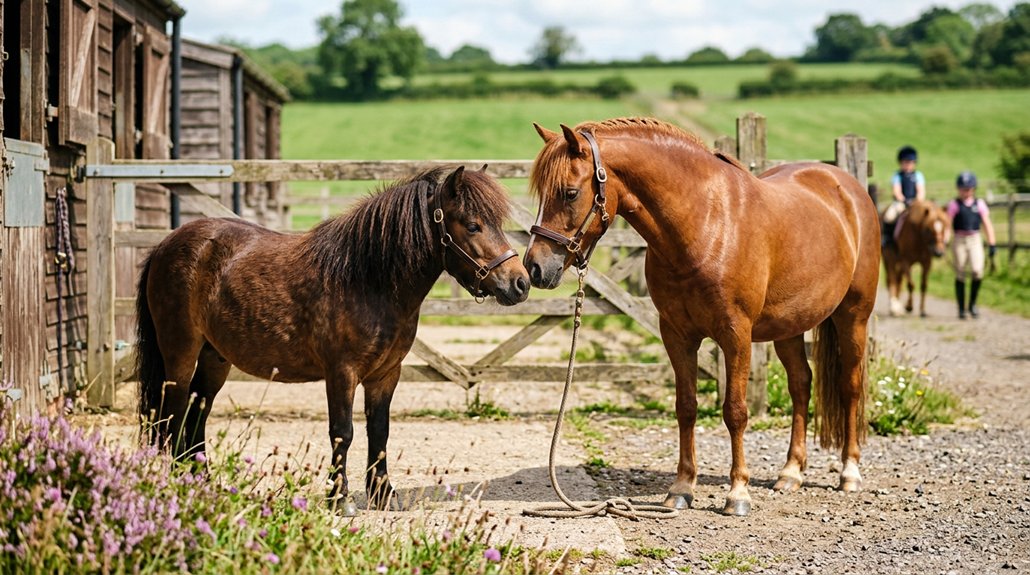
When selecting the right equine companion for young riders, ponies stand out due to their manageable size and approachable demeanor. Typically under 14 hands, breeds like the Welsh Pony and Haflinger are less intimidating and easier to handle. Their friendly and patient temperaments create a supportive learning environment, vital for building riding confidence. Utilizing effective pony training techniques guarantees these small equines excel in various disciplines, from English to Western styles.
Moreover, ponies boast a gentle nature, reducing the risk of accidents for novice riders. They’re also easier for children to care for, owing to their smaller size and lower feed needs, which simplifies pony care essentials.
Ponies’ gentle nature reduces accidents for novice riders and simplifies care due to their smaller size.
- Welsh Ponies: Excel in various disciplines.
- Haflingers: Known for their amiable behavior.
- American Paint Ponies: Gentle and forgiving.
Family-Friendly Horse Breeds: What to Expect
Ever wonder which horse breeds are best suited for family riding experiences? Consider family-friendly breeds like the American Paint Horse and Morgan, known for their calm and cooperative temperaments, ideal for children and novice riders. For safe family riding activities, the Tennessee Walking Horse and Welsh Pony offer gentle natures and friendly personalities, ensuring enjoyable experiences. An Appaloosa’s intelligence and gentle demeanor foster strong rider bonds, aiding in easy training and handling—key aspects in horse safety tips. Icelandic Horses, with their sure-footedness, make exceptional companions for family trail rides, accommodating various ages comfortably. Additionally, draft crossbreeds provide a blend of gentleness and manageable size, making them perfect for families seeking friendly, versatile horses for safe, pleasurable outings.
Easy Horse Maintenance Tips for Novice Owners
Maintaining some horse breeds is easier than others, making them ideal choices for novice owners. Choosing breeds with low-maintenance needs, like the Morgan or Icelandic Horse, can simplify care routines. Establish consistent grooming techniques to keep your horse’s coat healthy—this enhances appearance and prevents skin issues, while fostering a stronger bond. Regular veterinary care is essential; schedule check-ups and vaccinations to minimize emergency care, ultimately reducing costs.
- Grooming Techniques: Implement daily brushing to improve coat shine and skin health.
- Veterinary Care: Schedule bi-annual check-ups and follow vaccination schedules strictly.
- Equipment and Tack: Invest in well-fitting gear to prevent injuries and improve riding comfort.
Ensure access to clean water and balanced nutrition, vital for overall health and reducing long-term care expenses.
Assessing Horse Compatibility for Long-Term Loyalty
In evaluating horse compatibility for long-term loyalty, it’s essential to examine temperament traits such as calmness and a willingness to please, as these greatly influence rider-horse relationships. Conduct a thorough temperament assessment to understand horse behavior, guaranteeing a harmonious match. Breeds like the Morgan or American Paint Horse are renowned for their friendly and adaptable qualities.
Consider the horse’s size and strength relative to your experience; this promotes confidence, fostering control and reducing abandonment risk. Regular interaction with your family can enhance bond formation, making breeds like the sociable Appaloosa or Tennessee Walking Horse ideal. Prioritize breeds with patience and trainability, such as the Quarter Horse or Welsh Cob, which notably enhance compatibility and guarantee a lasting, fulfilling riding partnership.
Frequently Asked Questions
What Is the Best Horse Breed for a First Time Owner?
You’re choosing horse breeds for the first time, consider friendly horse breeds like the American Quarter Horse. Its calm demeanor and versatility make it an excellent pick. Alternatively, Morgan horses and Paint Horses also offer approachability and gentle nature.
What Is the 20% Rule for Horses?
“A horse is only as good as its feed.” The 20% rule in horse care guarantees balanced feeding practices. Limit grains to 20% of their diet, prioritizing forage to support health management, effective training techniques, and diverse riding styles.
What Is “I Love You” in Horse?
“I love you” in horse communication involves equine affection shown through gestures like nuzzling, resting their head on you, gentle nudges, or nickering. These behaviors indicate they trust you, appreciate your company, and feel safe around you.
What Fruit Should Horses Not Eat?
You shouldn’t feed horses harmful fruits like grapes, raisins, avocados, or cherries. These can cause serious health problems. Instead, opt for safe alternatives such as apples and carrots in moderation to guarantee your horse’s well-being.
Conclusion
Choosing the right horse breed as a new owner involves more than just preference; it’s about compatibility. Consider that nearly 80% of equine-related injuries occur with horses not suited to the rider’s skill level. Understanding each breed’s unique traits, from the gentle giants like draft horses to the smooth-gaited varieties, is essential. Make certain you opt for a breed that aligns with your lifestyle and experience. With informed choices, you’ll enjoy a rewarding and safe equestrian journey.