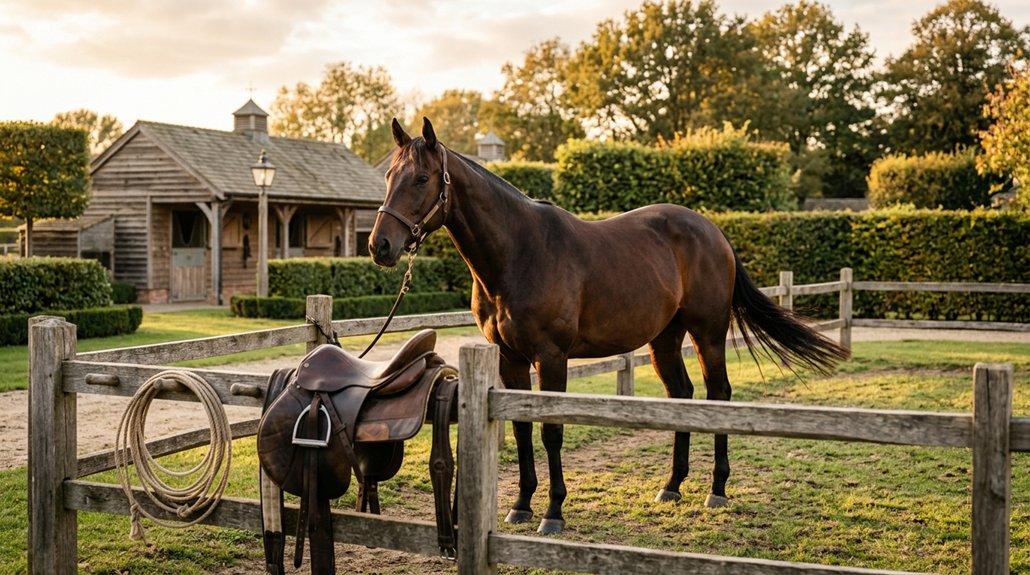
Owning a horse costs between $6,000 and $8,000 annually, covering essentials like feed, veterinary care, and boarding. Initial expenses range from $4,000 to $9,000, depending on equipment and horse type. Monthly feed costs $100–$400, while vet care averages $25–$60. Boarding can be $250 to $2,500 monthly, influenced by service level. Tack maintenance, veterinary exams, and insurance elevate expenses. Understanding these costs guarantees you’re prepared for the significant commitment and nuances of horse ownership. Dive deeper to explore cost-saving strategies.
Key Takeaways
- Annual horse maintenance costs range from $6,000 to $8,000, covering essentials like feed, veterinary care, and boarding.
- Initial costs for buying a horse and necessary equipment are typically between $4,000 and $9,000.
- Monthly boarding expenses vary from $250 to $2,500, depending on the service level provided.
- Feeding and supplements cost between $100 and $400 monthly, significantly impacting the annual care budget.
- Bundled insurance policies can reduce premium costs and offer comprehensive mortality and health coverage.
Understanding the Financial Landscape of Horse Ownership
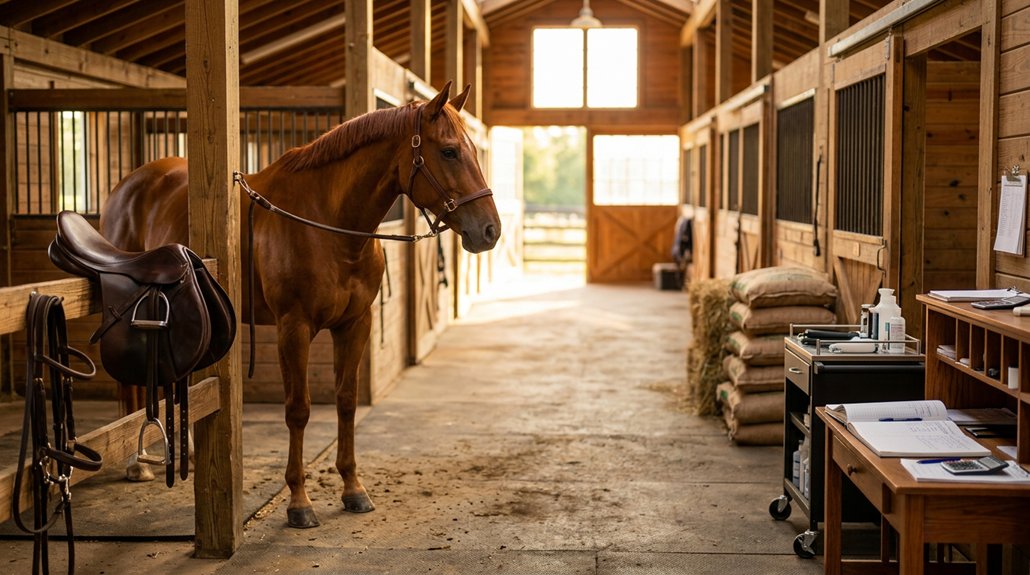
When considering the financial landscape of horse ownership, how prepared are you to manage the associated expenses? A fundamental part of financial planning involves understanding the ongoing costs that extend far beyond a horse’s initial value. Annually, owners can anticipate spending $6,000 to $8,000 just for maintenance—feeding, veterinary care, and boarding being primary components. Monthly boarding alone varies dramatically, anywhere from $250 for partial care to $2,500 for top-tier facilities, reflecting regional pricing disparities. Veterinary costs, essential for maintaining horse health, range from $200 to $700 annually. Be mindful that unplanned expenses can arise, unexpected medical issues needing immediate attention. Hence, sound financial planning is imperative to guarantee you’re adequately equipped to sustain this rewarding, yet costly, commitment.
Initial Costs: Buying a Horse
Before starting on horse ownership, it’s vital to thoroughly assess the initial financial commitments involved. The purchase price of a horse depends greatly on horse selection, ranging from $1,500 for leisure horses to over $100,000 for highly-trained or rare breeds. Price negotiation plays an important role, potentially lowering costs within your budget. It’s advisable to invest in a pre-purchase veterinary examination, as it guarantees soundness; costs vary with tests, travel fees, and radiographs. Additionally, preparing for horse ownership requires budgeting for initial equipment and supplies, from $1,500 to $2,000, for basic tack and barn setup. First-time owners should plan for overall initial expenses between $4,000 and $9,000, covering both purchase and necessary gear, facilitating a smooth shift into horse ownership.
Recurring Costs: Monthly and Annual Horse Care
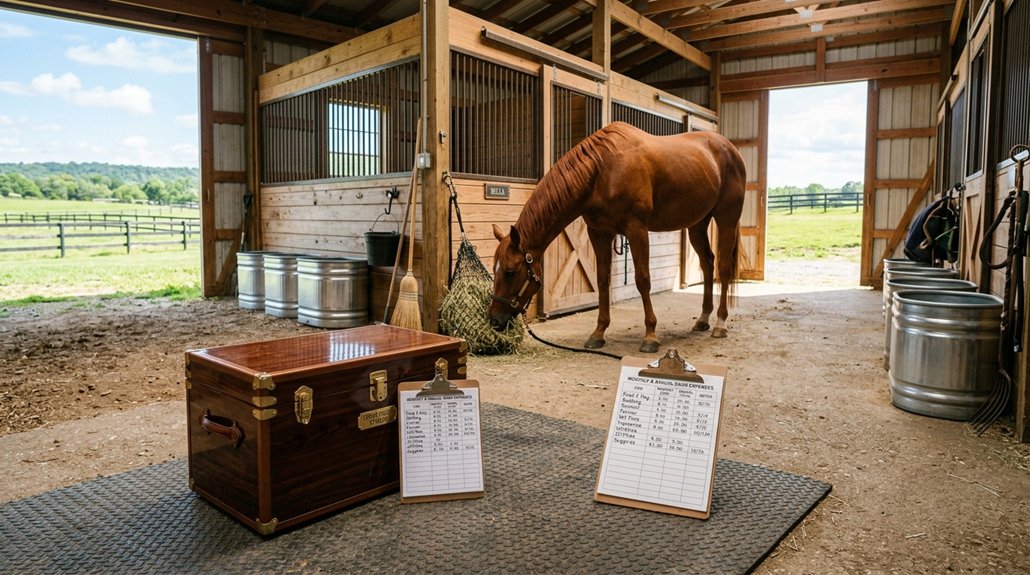
When budgeting for horse ownership, it’s vital to evaluate both monthly feeding expenses and the annual veterinary budget. Feeding costs can be influenced by various factors such as your horse’s size, activity level, and specific dietary needs, typically ranging from $100 to $400 per month. Meanwhile, annual veterinary care is an essential investment, encompassing routine check-ups and vaccinations, with monthly costs averaging between $25 and $60, which can help mitigate unforeseen emergency expenses.
Monthly Feeding Expenses
Understanding the monthly feeding expenses for your horse is essential for effective budgeting and care. Grain selection and hay quality greatly impact these costs, typically ranging from $100 to $400 monthly. Choosing high-quality grain and hay not only meets your horse’s dietary needs but also optimizes feeding strategies. On average, a 1,000-pound horse consumes about 0.5% of its body weight in grain and 1.5% in hay daily. Annually, this averages to roughly 84 bags of grain, priced around $40 per 50-pound bag, highlighting the importance of strategic feed choices. Consult an equine nutritionist to tailor dietary plans that support health and cost efficiency, ensuring your horse receives balanced nutrition at optimized costs tailored to its unique requirements.
Annual Veterinary Budget
An essential aspect of horse ownership is planning your annual veterinary budget, as this guarantees your horse’s health and safety are prioritized. Routine preventive care, including check-ups, vaccinations, and deworming, typically costs $300 to $700 annually for a healthy horse. Don’t overlook dental care, as budgeting $200 per visit is important for maintaining oral health and preventing complications. Emergency preparedness is essential; unexpected veterinary costs can arise from health problems or accidents, warranting a reserve fund. Consider farrier services too, typically ranging from $400 to $800 annually, factoring in hoof trims and shoeing. If you own a senior horse, anticipate greater expenses due to increased health care needs, with more frequent visits and specialized treatments enhancing your budgetary considerations.
Boarding vs. At-Home: Cost Insights
When considering horse boarding versus at-home care, your financial obligations will distinctly differ, requiring careful analysis. Monthly boarding expenses can range greatly based on services, starting at $300 and potentially exceeding $2,500, while at-home care demands a substantial upfront investment in infrastructure. Furthermore, keep in mind that regions will influence overall costs, so weigh these factors alongside your ability to dedicate 15-20 hours weekly for at-home management.
Monthly Boarding Expenses
Choosing between boarding your horse and maintaining it at home involves weighing several financial factors. Monthly boarding expenses can range markedly—starting at around $600 and climbing beyond $2,500, primarily influenced by the quality of boarding amenities and care types the facility offers. Partial or self-care boarding options, which place daily feeding and chores in your hands, lower costs to between $250 and $500 per month. Full-service commercial boarding guarantees extensive care, contributing to annual expenses that might span $12,000 to $24,000, heavily determined by the facility’s location and services. Regardless of choice, consider the average monthly feed and supplement costs, which vary from $100 to $400. This insight is vital when evaluating your overall horse ownership budget.
At-Home Care Costs
While opting for at-home care for your horse can save on boarding fees, it brings with it a distinct set of costs and responsibilities that you must consider carefully. You’ll need to account for land expenses, barn construction, and facility maintenance. Upfront investment is significant, adding beyond buying the horse itself. Your ongoing costs will include feed storage and turnout lot setups. Managing facility maintenance alongside the care of hay and bedding demands precision budgeting. Additionally, grooming expenses can vary widely based on your geographical location and horse’s specific needs. Be prepared to commit 15–20+ hours weekly to these tasks, as thorough care is essential. Here’s a detailed comparison:
| Expense Type | Boarding Facility | At-Home Care |
|---|---|---|
| Monthly Cost | $600 – $2,500+ | Variable |
| Time Commitment | 8–12 hours/week | 15–20+ hours/week |
| Initial Investment | Minimal | Significant |
Essential Horse Equipment and Supplies
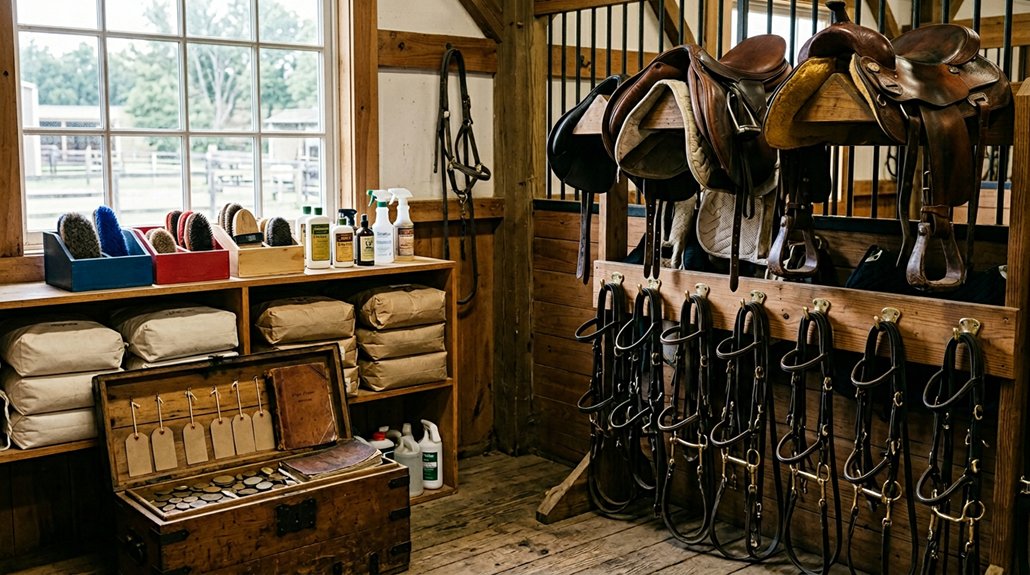
Although the initial investment in essential horse equipment and supplies can be substantial, understanding the breakdown of these costs enables you to budget effectively for your equine companion. Saddle options vary greatly, with prices reflecting factors such as quality and riding discipline—from $800 to over $7,000. Similarly, bridle types offer a range, with costs spanning from $100 to over $500. Incorporating grooming essentials like brushes, hoof picks, and shampoos typically requires an initial investment of $100 to $300. Tack maintenance is vital; quality saddles and bridles require ongoing care. In addition, specialized equipment may have fitting costs. Barn supplies, including mucking tools and feed buckets, add a foundational cost of $1,500 to $2,000, ensuring equipment longevity and efficient management of your horse’s needs.
How Insurance and Budgeting Can Save You Money
When managing the costs associated with horse ownership, a thoughtful approach to insurance and budgeting can save you money and provide peace of mind. Insurance benefits can be substantial; by investing in equine health and liability insurance, you mitigate substantial medical costs and protect against accidents. Consider these strategies:
- Policy Bundling: Bundle mortality and health coverage to reduce premium costs while enhancing protection.
- Budgeting: Set a detailed budget for $6,000-$8,000 annual expenses, covering feed, veterinary care, boarding, and equipment.
- Emergency Funds: Allocate funds specifically for emergencies, preparing you for unexpected veterinary expenses due to health issues or accidents.
Implementing these proactive measures will guarantee financial preparedness, safeguarding both your horse’s well-being and your financial stability.
Frequently Asked Questions
How Much Does It Realistically Cost to Own a Horse?
You’ll realistically spend between $6,000 and $8,000 annually. Feed expenses, consistent veterinary care, training costs, and selecting among boarding options drive up costs. Equipment purchases and insurance premiums also greatly impact your total horse ownership expenses.
What Is the 20% Rule With Horses?
When following the 20% rule, you’ve got to lay your cards on the table and budget 20% of your horse’s purchase price annually for horse care essentials, including feeding necessities and potential veterinary costs. It’s all about preparedness.
What Is “I Love You” in Horse Language?
“I love you” in horse language involves equine communication through nuzzling, gentle nudging, relaxed ears, and soft eyes. Recognizing these gestures demonstrates understanding of horse emotions, helping you strengthen the emotional bond with your equine partner.
Can You Ride a Horse With Epilepsy?
When it comes to riding a horse with epilepsy, tread carefully. Consult your vet for horse health advice. Epilepsy management is key; consider seizure severity, medication effects, and safe riding practices to guarantee a stable experience.
Conclusion
Owning a horse is like tending to a living, breathing investment. Just as an artist invests time and resources into a masterpiece, you’ll handle purchasing, boarding, feeding, and healthcare costs. Consider the story of a friend who saw their horse flourish with attentive care and budgeting, proving that every dollar you spend contributes to its well-being. By understanding these financial nuances, you’re not just owning a horse; you’re crafting an enduring bond grounded in commitment and responsibility.