Opting for low-shedding dog breeds like Poodles, Affenpinschers, and Miniature Schnauzers can minimize pet hair in your home and are great for allergy sufferers. These breeds often require regular grooming, but their hypoallergenic qualities and adaptability make them ideal for apartment living or smaller spaces. Use slicker brushes and hypoallergenic shampoos for easy maintenance. By choosing these breeds, you’re making home maintenance simpler and promoting a clean, healthy environment—and there’s more to discover.
Key Takeaways
- Poodles are hypoallergenic and friendly, making them easy to manage for allergy sufferers.
- Bichon Frises are trainable and family-friendly, requiring routine grooming for low-shedding.
- Miniature Schnauzers have minimal shedding and are energetic and sociable with regular maintenance.
- Portuguese Water Dogs are intelligent and playful, offering companionship with minimal mess.
- Use slicker brushes and mild shampoos to maintain low-shedding breeds’ coat health.
Why Choose Low-Shedding Breeds?
When considering a new pet, you might want to choose a low-shedding dog breed because it helps reduce the prevalence of pet hair in your home, making it a practical choice for allergy sufferers or anyone who values a cleaner living environment. Low-shedding breeds, like Poodles and Bichon Frises, are known for their hypoallergenic qualities, aiding in allergy management by minimizing allergic reactions. Additionally, these breeds often suit apartment living and smaller spaces well. Their lower energy needs and more predictable grooming patterns make them ideal for confined environments. Regular grooming prevents matting and skin issues, promoting overall health. By choosing a low-shedding breed, you’re aligning pet ownership with effective space considerations and manageable cleaning routines.
Find the Perfect Low-Shedding Breed for You
How do you choose the perfect low-shedding dog breed for your home? Start by considering breed compatibility. Poodles and Bichon Frises are ideal if you want less hair around and fewer allergy concerns. Evaluate your lifestyle with an activity assessment. If you desire an energetic family pet, Labradoodles or Goldendoodles, known for their friendly and intelligent nature, may suit you well.
Factor in grooming needs; both Miniature Schnauzers and Shih Tzus require regular grooming to prevent matting and maintain hygiene. Your living situation also impacts your choice, as larger breeds need more space, whereas smaller ones adapt easily to apartments. Regular maintenance, while reducing cleaning, emphasizes the commitment needed to keep these low-shedding breeds healthy and happy in your home.
10 Wonderful Low-Shedding Breeds to Consider
Looking for wonderful low-shedding dog breeds to bring into your home? Consider the Poodle with its hypoallergenic qualities and friendly nature, making it perfect for families with children. Known for its intelligence and distinctive Poodle characteristics, this breed is a smart and trainable choice. The Affenpinscher, recognized for its charming appearance and confident demeanor, is another excellent option. Affenpinscher traits include adaptability to various living environments and boundless enthusiasm during playtime. If you’re seeking intelligent and sociable companions, the Miniature Schnauzer and Portuguese Water Dog also deserve a look. With their energetic personalities and minimal shedding, they promise joy without the mess. Choose these breeds for a well-balanced blend of low maintenance and delightful companionship.
Grooming Your Low-Shedding Dog With Ease
To keep your low-shedding dog’s coat in top condition, you’ll need the right tools and a straightforward grooming routine. Equip yourself with essentials like slicker brushes and grooming gloves, and aim to brush at least weekly. Avoid common mistakes by maintaining a regular bathing schedule with mild shampoos and seeking professional grooming help every 4-8 weeks if necessary.
Essential Grooming Tools
While grooming low-shedding dog breeds might seem less demanding than others, having the right tools at your disposal is vital for maintaining their coats with ease. To manage grooming frequency effectively, especially during seasonal grooming changes, equip yourself with regular grooming tools like slicker brushes, combs, and grooming gloves to prevent matting. A quality deshedding tool is essential for removing loose hair from the undercoat without harming the top coat, promoting a healthy appearance.
Incorporate gentle, hypoallergenic shampoo during baths to control dander and refresh your dog’s coat. For breeds requiring routine hair trimming, invest in high-quality dog clippers to streamline the process. Finally, using a pet-specific vacuum or lint roller during grooming sessions helps minimize hair accumulation in your home.
Simplified Grooming Routine
Keeping a simplified grooming routine for your low-shedding dog can make a world of difference in maintaining their coat’s health and appearance. Brushing techniques are key, with a recommended grooming frequency of once or twice a week to prevent matting and maintain a healthy coat. Use slicker brushes or combs to efficiently remove loose hair without causing damage. It’s beneficial to integrate professional grooming every 4 to 6 weeks, especially for breeds like Poodles or Bichon Frises. This schedule helps keep their fur in prime condition. Also, incorporate grooming during playtime for a seamless experience. Don’t forget regular baths every 4 to 6 weeks to minimize dander and odors, promoting a healthier home environment for allergy sufferers.
Common Grooming Mistakes
Although many believe low-shedding dogs require minimal maintenance, ignoring their specific grooming needs can lead to complications. Regular grooming is essential, and neglecting grooming frequency can result in matting and poor coat health. Most low-shedding breeds need brushing at least once a week. Don’t underestimate this necessity, as even breeds like Poodles and Bichon Frises require consistent professional grooming to maintain a healthy coat.
Using incorrect grooming tools can cause skin irritation. Prioritize brush selection suitable for your dog’s specific coat type to avoid harm. Additionally, frequent bathing can strip essential oils, leading to dry skin. Aim for a bath every 4 to 6 weeks. Pay special attention to areas around the ears and eyes to prevent matting and maintain comfort.
Health Tips for Low-Shedding Dogs
When caring for low-shedding dogs, maintaining coat health is crucial to prevent matting and skin issues. Start with dietary considerations by selecting high-quality food catered to their specific needs, which supports a healthy coat and skin. Regular grooming through brushing and bathing is important to keep their coats free of tangles. Routine vet check-ups should include skin assessments to catch potential problems early. Don’t forget dental care; many low-shedding breeds are prone to dental issues, so brushing your dog’s teeth regularly and scheduling veterinary cleanings are essential practices. Finally, make sure your living space is clean to minimize allergens, using measures like vacuuming and air purifiers, creating a healthier environment for both you and your pet.
Tips for a Happy Low-Shedding Home
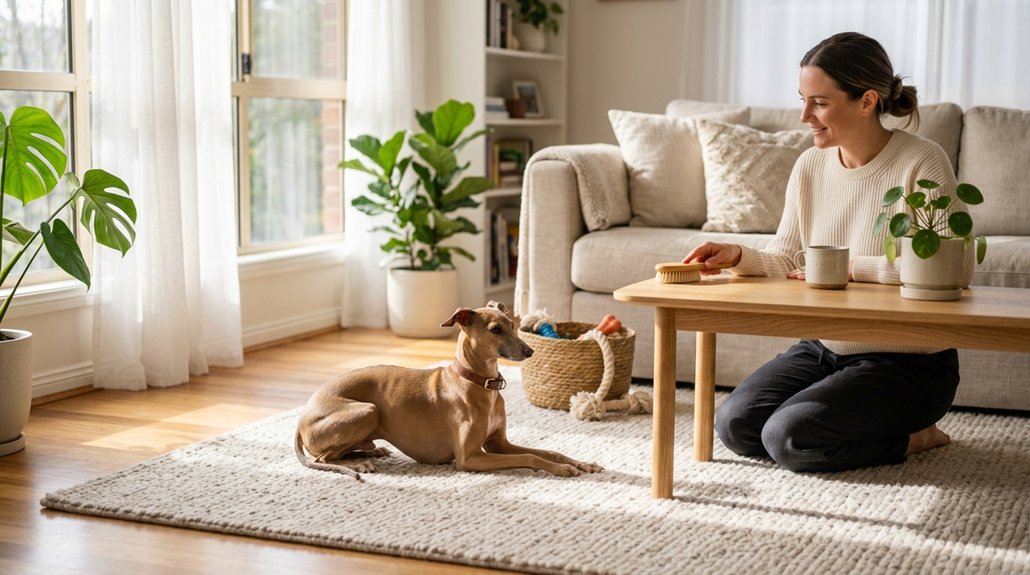
Ensuring a happy low-shedding home starts with a regular grooming schedule to keep your dog’s coat healthy and prevent matting and skin issues. Incorporate effective cleaning techniques like frequent vacuuming and dusting to tackle dander, which can still accumulate despite the low shedding. Designate pet areas and use washable bedding, combined with air purifiers, to minimize allergens and improve your home’s air quality.
Regular Grooming Schedule
Maintaining a regular grooming schedule is essential for keeping a low-shedding dog’s coat in ideal condition and guaranteeing a tidy home environment. It starts with a consistent grooming frequency; aim for once a week to manage coat maintenance effectively. Using the right tools guarantees your dog remains comfortable while eliminating loose hair. Here’s how you can maintain a happy, low-shedding home:
- Weekly Grooming: Helps maintain a healthy and mat-free coat.
- Proper Tools: Use a slicker brush and comb to remove dead hair.
- Scheduled Baths: Bathe every 4-6 weeks to reduce allergens and support coat health.
- Professional Help: For complex grooming needs, professional sessions can prevent skin problems.
A solid routine guarantees both your dog and home stay in top shape.
Effective Cleaning Techniques
Keeping a clean home with a low-shedding dog is not an impossible feat. Start by incorporating pet hair remedies like regular grooming to minimize loose fur and maintain your dog’s coat health. Invest in high-quality vacuum cleaners, specifically designed for pet hair, to reduce your cleaning time effectively. Lint rollers or sticky sheets are excellent cleaning solutions for swiftly removing stray hairs from clothes and furniture. Establishing a designated pet cleaning area, such as a mat or crate, can help contain any shedding, preventing fur from spreading throughout your space. Don’t forget to regularly clean pet bedding and toys, as well as frequently wash floors and upholstery, to guarantee a hair-free environment. With these techniques, you’ll maintain a tidy haven effortlessly.
Frequently Asked Questions
What Is the Best Low Maintenance Dog for Low Shedding?
You might find the American Hairless Terrier the best choice for low maintenance and low shedding. They’re hypoallergenic breeds, don’t have any grooming needs, and possess friendly, trainable personalities, making them ideal companions for allergy sufferers.
What Is the Calmest Dog That Doesn’t Shed?
You’ll find that the Bichon Frise stands out as one of the calmest hypoallergenic hounds. These quiet canines seamlessly adapt to different environments and are easy to live with, thanks to their gentle and lovable demeanor.
What Dogs Listen the Most?
You’ll find breeds like Border Collies, Labradors, and Poodles excel in listening most. With dog training techniques and superior canine communication skills, they’re enthusiastic learners, responsive to commands, embodying obedience and teamwork in their attentive nature.
What Is the Friendliest Non-Shedding Dog?
You’d find the Poodle to be the friendliest non-shedding dog. Among friendly non-shedding breeds and non-shedding companions, their high intelligence, adaptability, and affable nature make them perfect pets for diverse family settings.
Conclusion
Choosing a low-shedding dog is like selecting a gentle breeze over a gusty wind—peaceful, manageable, and still full of life. These breeds, with their symbolic soft coats, promise less upheaval yet offer boundless love. By ensuring their health and grooming needs are met, you’ll create a harmonious living space. Remember, your choice reflects a commitment to serenity in your home, painting a picture of a cozy, fur-free sanctuary where both you and your companion can thrive.