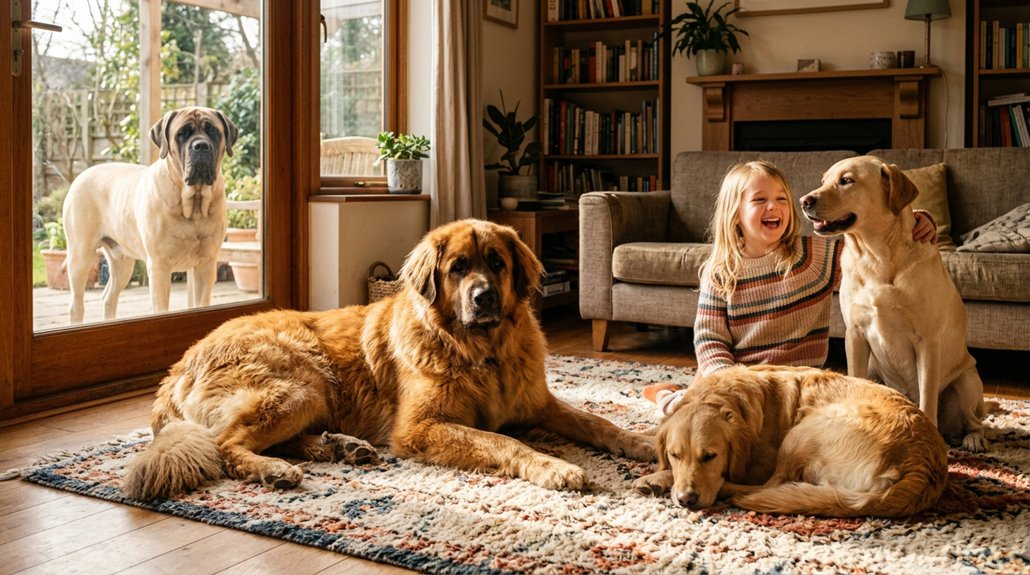
Large dog breeds like Golden Retrievers, Labrador Retrievers, and Bernese Mountain Dogs make excellent family pets due to their loyalty, patience, and protective instincts. These breeds provide security and comfort while fostering nurturing environments. Guarantee you have ample space both indoors and outdoors, and establish structured routines for exercise and engagement. Supervision with young children is essential for safe interactions. To explore the care requirements and benefits of each breed, further details await.
Key Takeaways
- Golden Retrievers are playful and easily trainable, making them ideal for families with children.
- Labrador Retrievers thrive in active households, requiring daily exercise and engagement.
- Bernese Mountain Dogs are gentle and protective, promoting calm interactions with kids.
- Great Danes offer a calm presence and are beneficial for young families seeking companionship.
- Newfoundlanders excel in water-based activities, perfect for families who enjoy aquatic environments.
Traits That Make Large Dogs Great Family Companions
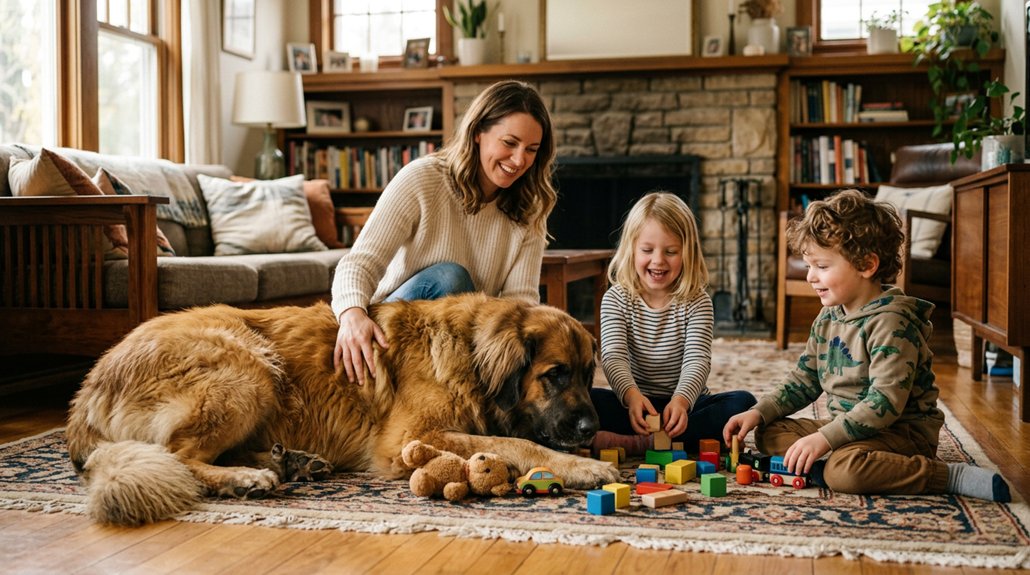
Large dog breeds offer a variety of traits that make them excellent family companions. Their stature, paired with traits like loyalty and patience, provides both security and comfort. Breeds such as Golden Retrievers and Labrador Retrievers exemplify friendly and patient dispositions, connecting seamlessly with children. Gentle giants like Bernese Mountain Dogs and Newfoundlanders further enhance a nurturing atmosphere through their calm interactions and strong bonds with kids. Rottweilers and Doberman Pinschers offer not only companionship but protective instincts that alert you to threats, ensuring safety. Meanwhile, Irish Wolfhounds and Great Danes bring a serene demeanor into your home. Through socialization and training, these large dogs evolve into loyal companions, enhancing familial bonds with both love and protection, essential for any household.
Meet the Giants: Top 10 Large Dog Breeds for Families
When choosing the perfect family companion, the top ten large dog breeds often stand out for their distinct balance of temperament, loyalty, and adaptability. Golden Retrievers, with their playful nature and high trainability, offer a friendly and patient presence ideal for households with children. Labrador Retrievers are energetic and devoted, requiring substantial daily exercise to maintain happiness, which aligns well with active family lifestyles. Bernese Mountain Dogs’ gentle and protective characteristics guarantee calm interactions with kids and pets alike. Similarly, Newfoundlanders thrive in water environments, perfect for families loving aquatic adventures. Great Danes provide majestic, yet calm and affectionate companionship, especially beneficial for families with young children. Each breed demands specific lifestyle considerations based on their unique dog breed characteristics.
Assessing Your Family’s Space and Routine for a Large Dog
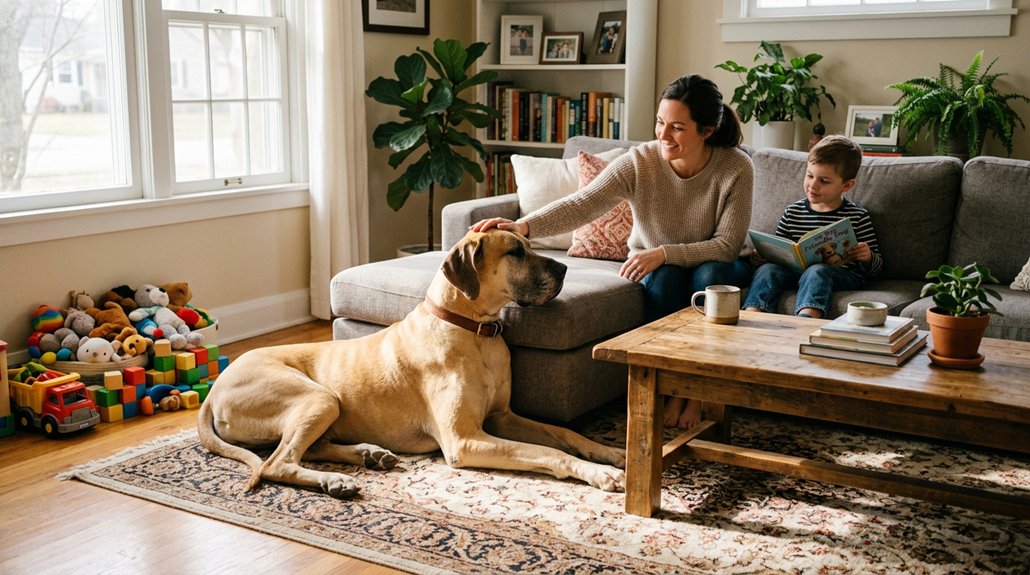
When considering a large dog as a family pet, assess your living space since these breeds need ample room indoors and out. Adjusting your routine to accommodate regular exercise and playtime is essential, especially for high-energy breeds like Labrador Retrievers. If urban living is part of your lifestyle, make certain nearby outdoor areas are accessible to meet your potential pet’s activity needs, while also accounting for their interactions with young children.
Space Needs for Larger Breeds
Evaluating your family’s capacity for a large dog begins with determining your home’s available space. Big dog breeds need ample living space to accommodate their size effectively. For instance, breeds like the Great Dane and Saint Bernard require both indoor areas and a yard to roam. Yard requirements are significant, especially for active breeds like the Bernese Mountain Dog and Newfoundland, who thrive on vigorous outdoor play.
Urban living might challenge housing large dogs. Access to parks or open areas is vital because dogs like the Irish Wolfhound or Rottweiler benefit from environments allowing them to stretch their legs. Even in confined spaces, daily outdoor exercise becomes mandatory. Commitment and consideration of living space are essential in deciding on a large dog breed for your family.
Routine Adjustments for Activity
After considering the spatial requirements of large dog breeds, focusing on routine adjustments becomes paramount. Large breeds like Golden Retrievers and Labrador Retrievers need structured routines that incorporate regular exercise and family involvement. Daily activities should include walks, training sessions, and socialization, adapting to varying schedules with exercise flexibility. If you’re living in an apartment, focus on breeds like Irish Wolfhounds that can manage smaller spaces but still need consistent outdoor exercise. Integrating their activity needs into family routines, like hikes or park visits, enhances bonding and health. Assess your home’s safety to prevent mishaps, particularly with young children, as larger breeds might accidentally knock them over. Tailoring your routine guarantees your dog’s well-being and fosters a harmonious household.
Compatibility With Urban Living
Determining a large breed’s compatibility with urban living demands careful assessment of both your family’s space and routine. Irish Wolfhounds, with adequate exercise, can thrive even in apartments. Access to urban dog parks is essential for larger breeds, providing room to roam and engage in activities critical to their health. Adhering to dog park etiquette guarantees a harmonious experience for both dogs and owners. Breeds like Doberman Pinschers and Rottweilers benefit from structured training for successful integration into smaller spaces. Consider your dog’s energy levels; a Great Pyrenees might struggle without frequent outdoor engagement. Familiarize yourself with local regulations on pet ownership, including breed restrictions, to make sure you’re complying while selecting a suitable companion for your urban environment.
Coping With Big Dogs and Little Kids
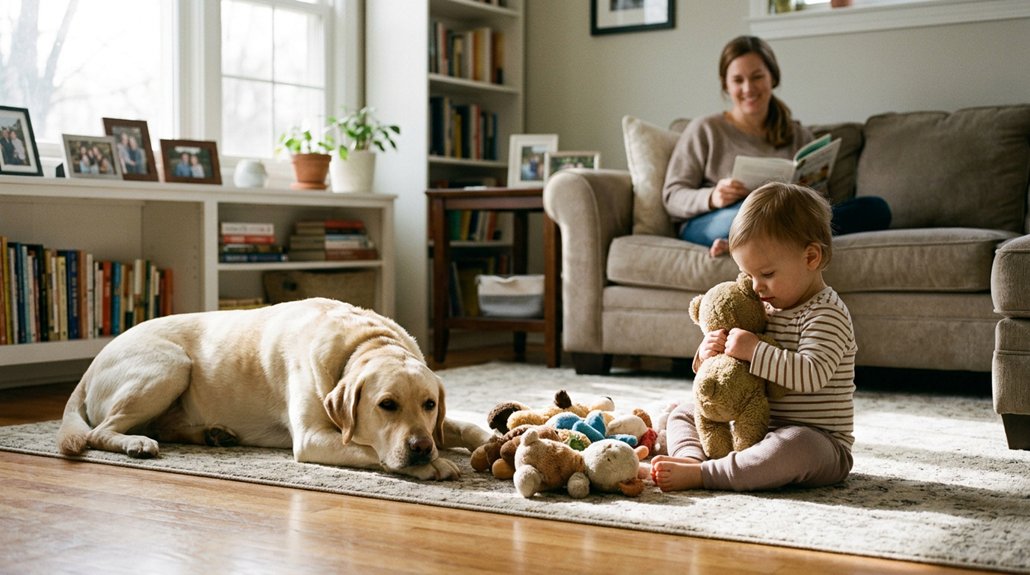
When it comes to managing playtime dynamics between large dogs and young children, supervision is key to ensuring a safe environment. It’s vital to establish safety protocols that encourage calm interactions, minimizing the risk of accidental injuries from the dog’s size and strength. By focusing on structured play and training, you can foster a harmonious relationship that benefits both the dog and the child.
Managing Playtime Dynamics
While large dog breeds often bring joy and companionship to family settings, it’s vital to manage playtime dynamics effectively, especially with little kids. Implementing proper playtime etiquette and supervision strategies prevents accidental knocks or rough play. Always supervise interactions between big dogs like Bernese Mountain Dogs and young children to guarantee safety. Introduce calm voices and gentle movements to children, teaching them respectful engagement. Regular exercise is essential for high-energy breeds, such as Great Danes, channeling their energy into structured play. Proper training from an early age for breeds like Rottweilers assures positive interactions. Use this playtime guide:
| Action | Recommendation |
|---|---|
| Supervision | Always watch play between large dogs and children. |
| Exercise | Implement regular, structured activity. |
| Respectful Play | Encourage calm voices and gentle movements. |
Ensuring Safety Protocols
Introducing a large dog breed to a family with young children demands meticulous attention to safety protocols to guarantee an accident-free environment. Consistently supervising children is an essential measure to prevent unintended incidents, as large dogs might accidentally knock them over or mistakenly exert too much strength. Implementing training techniques is crucial to nurture gentle demeanor in your pet, ensuring they remain calm around kids. This training mitigates any possible aggressive tendencies and includes teaching children proper interaction etiquette, like not bothering the dog during meals. Establish a designated safe zone for your dog, allowing it to retreat from overstimulation, reducing stress for everyone involved. Opting for known gentle breeds like Newfoundlanders or Golden Retrievers can further enhance harmonious coexistence.
Comparing Large Dog Breeds: Family Benefits and Care Needs
Exploring the family benefits and care needs of large dog breeds reveals both rewarding companionship and responsibility. Breeds like Golden Retrievers and Labradors are invaluable for their gentle, friendly nature. Bernese Mountain Dogs and Newfoundlands offer calmness and patience, ideal for nurturing a family setting. Rottweilers and Doberman Pinschers excel when socialization and training strategies are properly applied to manage protective instincts. Keep in mind, health considerations include regular vet visits and a balanced diet. Exercise needs, such as daily walks, foster healthy family habits.
| Breed | Family Benefit | Care Needs |
|---|---|---|
| Golden Retriever | Friendly | Regular exercise, balanced diet |
| Labrador | Gentle | Routine vet visits, proper training |
| Bernese Mountain Dog | Calm around children | Adequate socialization, patient handling |
Manage these health considerations diligently for a lifelong family pet companion.
Preparing Your Home for a Large Dog: Essential Tips for Safety
As you prepare your home for a large dog, consider both spatial needs and safety measures to guarantee a harmonious living environment. Home modifications are vital; make certain there is ample space for breeds like the Great Dane or Saint Bernard to move freely. Implement effective pet proofing strategies by removing fragile items and small objects that could be hazardous, particularly for energetic Rottweilers and Labradors. Reinforce your furniture, selecting sturdy options to withstand the weight of playful Mastiffs or Newfoundlands. Establish a secure, comfortable area complete with a bed and toys, aiming to reduce anxiety in your new pet. Finally, inspect your yard—making sure it’s securely fenced and free of gaps—to prevent escapes by instinct-driven Alaskan Malamutes or Doberman Pinschers.
Frequently Asked Questions
What Is the Largest Family Friendly Dog?
The Irish Wolfhound is the largest family-friendly dog, standing over 30 inches. They’re known as gentle giants, blending their impressive stature with a kind demeanor, becoming playful companions suited for homes with children. You’ll love them.
What Is the Best Large-Sized Family Dog?
The best large-sized family dog is typically a Labrador Retriever. Their friendly nature and sociable traits make them ideal companions. They’re intelligent, easily trainable, and exhibit the perfect balance of energy and calmness for family dynamics.
How Do Dogs Say “I Love You”?
Dogs say “I love you” through body language like leaning, tail wagging, and eye contact. Canine vocalizations such as joyful barks and playful growls also express affection. They might also bring gifts or engage in grooming behaviors.
What Is the Calmest Large Breed Dog?
You’re looking for a calm large breed with a gentle giant reputation. The Bernese Mountain Dog stands out for its calm demeanor. Irish Wolfhounds also shine in this regard, offering a serene and affectionate presence.
Conclusion
When considering a large dog for your family, remember the adage: “Bigger isn’t always better, but it can be just as loving.” These gentle giants offer unwavering loyalty and companionship, enhancing family life with their affectionate nature. Before bringing one home, assess your living space, routine, and readiness to accommodate their needs. By preparing thoughtfully, you’ll guarantee a harmonious environment where both your family and your large dog can thrive together, enjoying a joyful and fulfilling companionship.