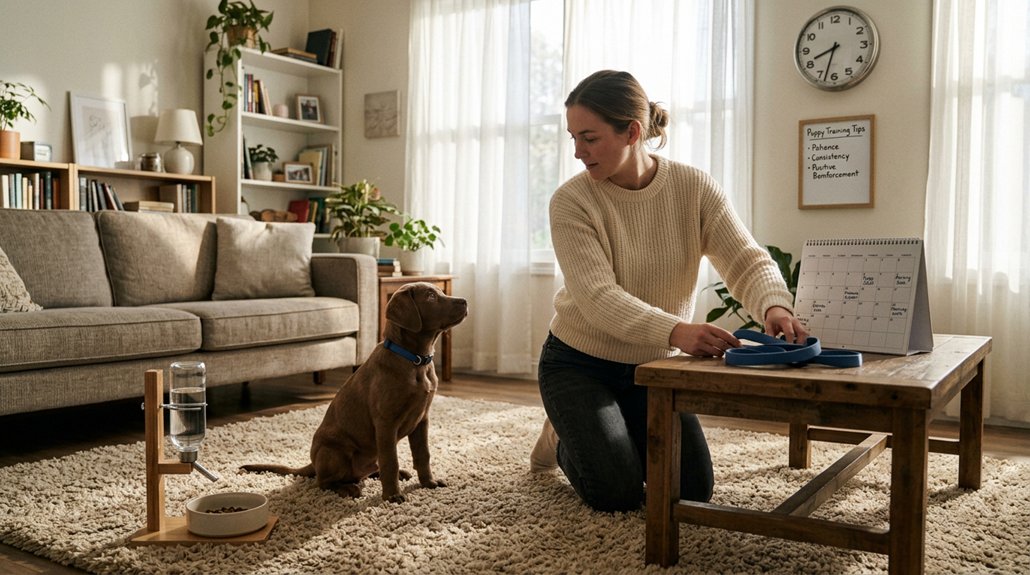
To build a routine with your first dog, start by understanding their basic needs, including balanced nutrition, regular feeding times, and ample exercise. Develop a consistent potty training regimen, using positive reinforcement. Tailor daily activities based on your dog’s breed to guarantee adequate exercise and mental stimulation. Establish a comfortable sleep space to promote rest. Begin socialization early, introducing various environments to build confidence. Stick to this plan, and you’ll discover even more beneficial strategies.
Key Takeaways
- Establish consistent feeding times and portion sizes to regulate your dog’s digestion and energy levels.
- Schedule daily exercise and structured activities, tailored to your dog’s breed and energy needs, for physical and mental health.
- Implement a regular potty training routine with immediate rewards to encourage successful behavior.
- Use gradual socialization with varied people and environments to build confidence and adaptability in your dog.
- Provide a comfortable sleep environment for optimal recovery and well-being.
Identifying Your Dog’s Basic Needs
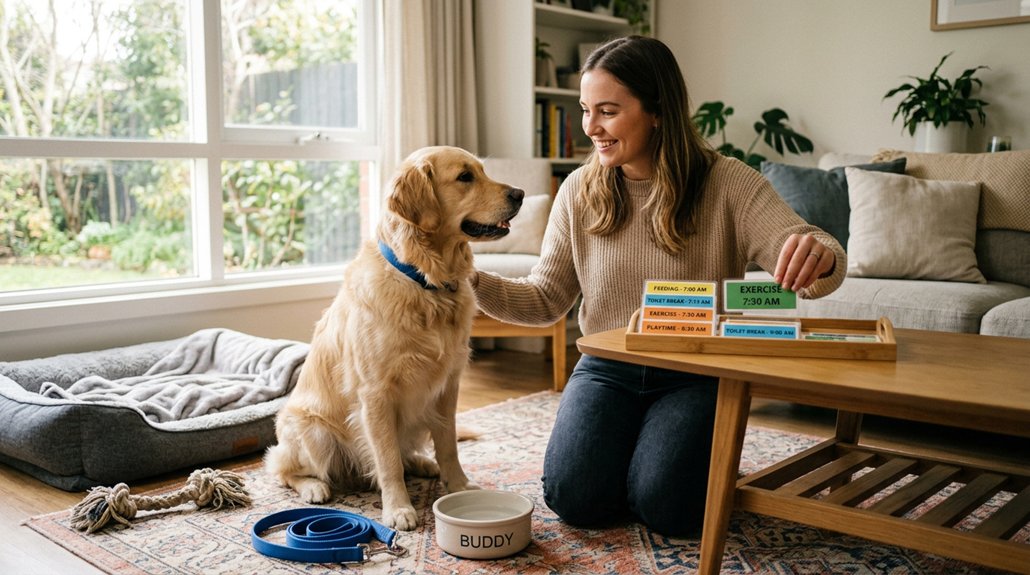
Understanding your dog’s basic needs is essential for building a harmonious and healthy routine. Focusing on dog nutrition guarantees your pup thrives. High-quality food supports their growth and energy. Watch for behavioral cues to assess if their diet suits them; changes in energy levels or coat condition might signal adjustments are needed.
Make certain to allocate time each day for exercise, tailored to your dog’s breed and energy levels, to keep them happy and healthy. Small breeds might need 30-60 minutes, while larger ones require more. Exercise not only helps with fitness but also improves mood and behavior. Don’t overlook rest—your dog needs a comfortable sleep environment for essential recovery. Address these needs thoughtfully for a well-adjusted, content dog.
Create a Feeding Schedule for Your Dog
With your dog’s basic needs in focus, let’s structure how and when they’re fed to promote their health and well-being. Establish consistent feeding times to regulate digestion. Adult dogs thrive on a twice-daily feeding schedule, with meals spaced 8-12 hours apart. Puppies under six months need three to four small meals each day. Serve a portion based on age, weight, and activity level to avoid overfeeding. Here’s a quick guide:
| Age Group | Feeding Frequency |
|---|---|
| Under 6 Months | 3-4 times daily |
| Over 18 Weeks | Shift to 2 meals daily |
| Adult Dogs | 2 times daily |
| Treats | ≤ 10% of daily intake |
| Water Access | Always available |
Ensure a comfortable feeding environment and keep fresh water handy between meals.
Establish a Potty Training Routine
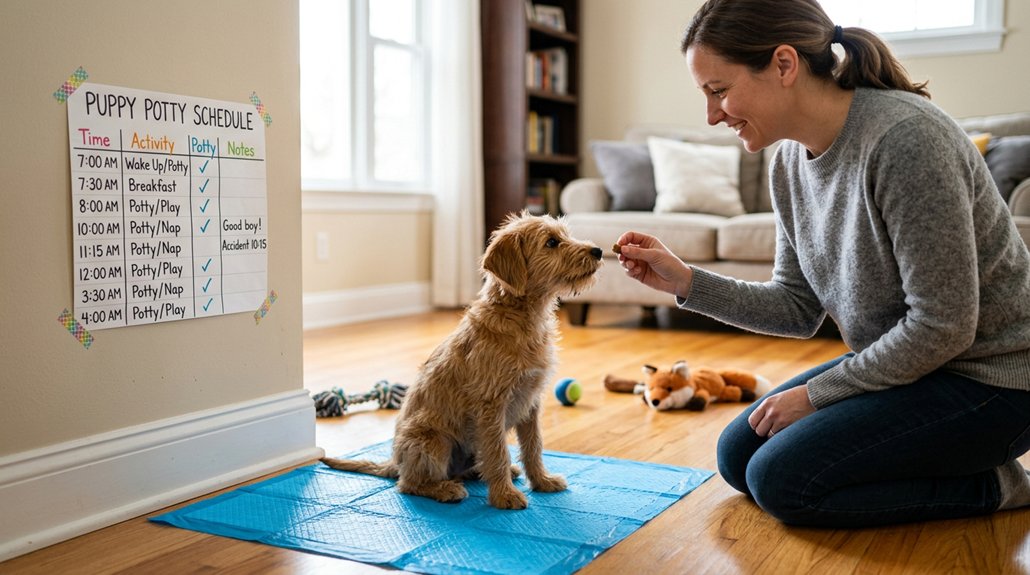
Establishing a potty training routine for your puppy starts with consistent potty breaks every 2-4 hours, particularly after meals, naps, and playtime. Use a specific phrase like “go potty” each time you’re outside with your puppy to associate the command with the action. Don’t forget to praise or reward them immediately afterward, reinforcing their success and helping them understand what’s expected.
Consistent Potty Breaks Schedule
A successful potty training routine for your first dog hinges on consistency and patience. To establish a reliable schedule, take your puppy outside every 2-4 hours. Puppies have limited bladder control, so frequent breaks are essential to prevent accidents. Pay close attention to puppy behavior, watching for potty cues like sniffing, circling, or whining. These signals indicate it’s time for a bathroom break. After your puppy eats, drinks, or wakes from a nap, head immediately to their designated potty area. Use a consistent phrase like “go potty” to reinforce the connection. Rewarding them with praise or treats immediately after they relieve themselves helps strengthen this association. As your puppy matures, gradually extend intervals between potty breaks to build their bladder capacity.
Positive Reinforcement Techniques
To successfully integrate positive reinforcement techniques into your puppy’s potty training routine, begin by establishing a consistent schedule for bathroom breaks. Take your puppy out every 2-4 hours, especially after meals and naps, to reinforce the desired behavior. Use a specific phrase like “go potty” as a positive cue to help them associate the command with the action.
Reward timing is essential; praise and reward your puppy immediately after they successfully potty outside. Use treats or verbal praise to encourage them to repeat the behavior. Keep the potty area designated and consistent, so your puppy knows where to go. Indoors, stay vigilant for signals that they need to relieve themselves. Quickly redirect them outside to minimize accidents and reinforce learning.
Daily Exercise and Playtime Ideas
Making sure your dog gets daily exercise is essential for their physical health and mental well-being. Active breeds thrive with at least one hour, while less active ones might need just 30 to 60 minutes. Engage them in interactive games like fetch or tug-of-war to stimulate their mind and body. Don’t forget to include short, enriching training sessions—5 to 10 minutes are perfect for reinforcing commands and promoting bonding. Puzzle toys and treat dispensers also keep them mentally engaged during quieter moments. Outdoor adventures are excellent for exploration and socialization; introduce your pup to new environments and other vaccinated dogs during walks or playdates. With patience and consistency, you’ll create a balanced routine that promotes your dog’s happiness.
How to Build a Sleep Routine
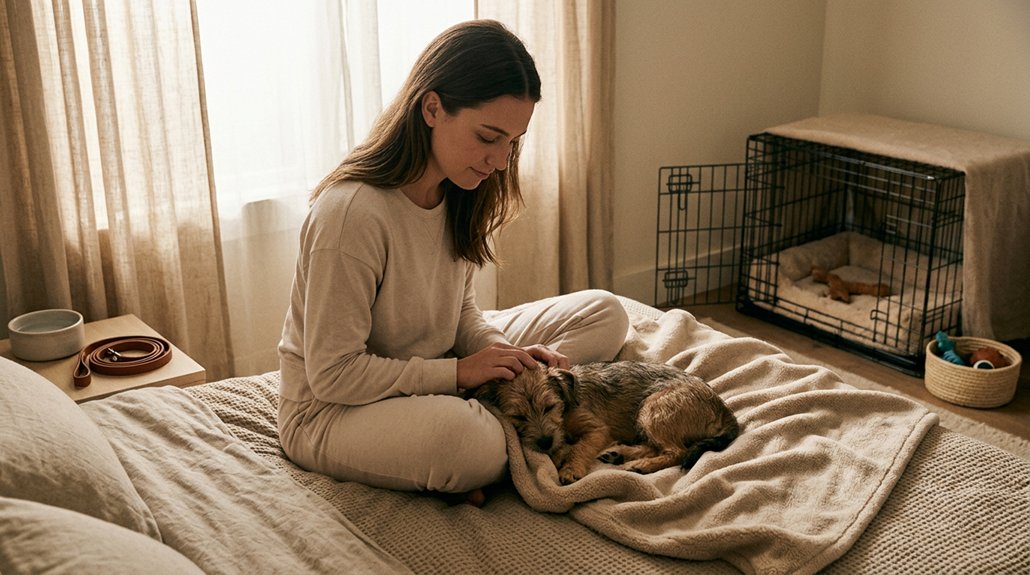
Establishing a successful sleep routine for your dog isn’t just about consistency—it’s about creating a comforting environment that encourages restful sleep. Start by setting up a dedicated sleep environment, such as a quiet, dark area for their bed or crate. This minimizes disturbances and enhances sleep quality. Use bedtime cues like a final potty break, light play, and gentle settling to signal that it’s time to wind down. Aim for a regular sleep schedule that aligns with your dog’s natural rhythms, which can help reduce anxiety and promote well-being. Remember, while adult dogs typically need 12-14 hours of sleep, puppies and older dogs might require up to 18-20 hours. Monitor and adapt their routine to guarantee they’re well-rested.
Training and Socializing Your Dog
After setting a solid sleep routine, it’s time to turn your attention to training and socializing your new canine companion. Start by teaching basic commands like “sit,” “stay,” and “come.” Use positive reinforcement—praise and treats will motivate them. Remember, short, frequent sessions work best.
Positive socialization is essential early on. From 3-16 weeks, expose them to various people, vaccinated dogs, and environments. Consistency matters—clear house rules help prevent confusion. Here’s a quick guide:
| Command | Reinforcement |
|---|---|
| Sit | Praise, Treats |
| Stay | Consistent Words |
| Come | Rewards, Affection |
| Socialization | Varied Environments |
Gradually increase the complexity of exposures as they grow more confident, ensuring they become well-adjusted and happy companions.
Adapting Your Dog’s Routine Over Time
As your puppy grows, you’ll need to adjust their routine to suit their evolving needs. This includes modifying their feeding schedule, enhancing their exercise regimen, and evolving their socialization practices. By observing your dog’s behavior and energy levels, you can make informed changes that promote their health and happiness.
Adjusting Feeding Schedule
Once you’ve settled on an initial feeding routine for your dog, it’s essential to adapt it as they grow and their needs change. Begin with consistent meal timing—puppies usually need three to four smaller meals daily, shifting to two meals a day as they mature. Monitor your dog’s weight and adjust portion control as needed. Keep in mind that their total daily caloric intake should match their age, size, and activity level. Limit treats to no more than 10% of their diet. Create a calm, distraction-free space for meals to help reduce anxiety and improve focus during eating. Regularly consult with your veterinarian for tailored dietary advice, ensuring that you’re meeting your dog’s specific nutritional needs.
Modifying Exercise Needs
When establishing an exercise routine for your dog, it’s essential to start with short, controlled sessions and gradually build up the duration and intensity. As your puppy grows, their exercise needs will change, requiring careful exercise adaptation to support their developing physical capabilities. Monitor their energy levels and adjust accordingly. Active breeds might need 1–2 hours daily, whereas smaller breeds may do well with 30–60 minutes. As your dog matures, shift from playful activities to more structured exercises like longer walks or jogging. Always consider your dog’s health and energy; older dogs might benefit from reduced duration or lower-impact activities. Tailoring your dog’s routine to weather conditions guarantees their comfort and safety, particularly during extreme temperatures.
Evolving Socialization Practices
Having established an effective exercise routine, it’s now time to focus on evolving socialization practices for your dog. Begin socializing your puppy between 3-16 weeks, marking vital socialization milestones.
| Age | Recommended Practice | Goal |
|---|---|---|
| 3-16 weeks | Meet gentle people and dogs | Comfort with varied contacts |
| After vaccinations | Organize playdates with vaccinated dogs | Enhance social skills |
| Ongoing | Introduce challenging environments gradually | Build confidence in new settings |
| All ages | Encourage varied age group interactions | Adaptability in diverse settings |
| Continuously | Assess and adjust to your dog’s comfort level | guarantee positive experiences |
Gradually expand exposures to new environments and stimuli. This prevents anxiety and promotes a well-rounded temperament. Assess your dog’s comfort, adapting their routine to guarantee they gain positive experiences and confidence along the way.
Frequently Asked Questions
What Is the 7 7 7 Rule for Dogs?
The 7 7 7 Rule for dogs emphasizes routine importance during the first seven days, seven weeks, and seven months in your home. Focus on bonding, socialization, and consistent dog training for a well-adjusted, confident canine companion.
What Is the 3-3-3 Rule With Dogs?
The 3-3-3 rule’s like an old map guiding a dog’s adjustment period. First three days: they adapt. Next three weeks: discover personality. Final three months: integrate fully. Watch canine behavior cues to support them wisely.
What Is the 10-10-10 Rule for Dogs?
The 10-10-10 rule for dogs involves spending ten minutes each day on training techniques, exercise, and mental stimulation. This approach enhances socialization tips, ensuring your dog remains well-adjusted, disciplined, and happy, fostering a strong owner-pet bond.
What Annoys Dogs the Most?
Loud noises, sudden movements, and long absences can greatly annoy your dog. Uncomfortable collars, intrusive strangers, and harsh training methods also cause distress. It’s essential to understand and minimize these irritants for your pup’s well-being.
Conclusion
Building a routine with your first dog isn’t just about organization; it’s about creating a nurturing environment. With patience and clarity, you’ll meet your furry friend’s needs for feeding, potty training, exercise, sleep, and socialization, ensuring a happy, healthy life. As your dog grows, stay adaptable and responsive to changes. After all, isn’t the joy of seeing your dog thrive worth the effort? Embrace this journey with your new companion, allowing you both to grow closer together.