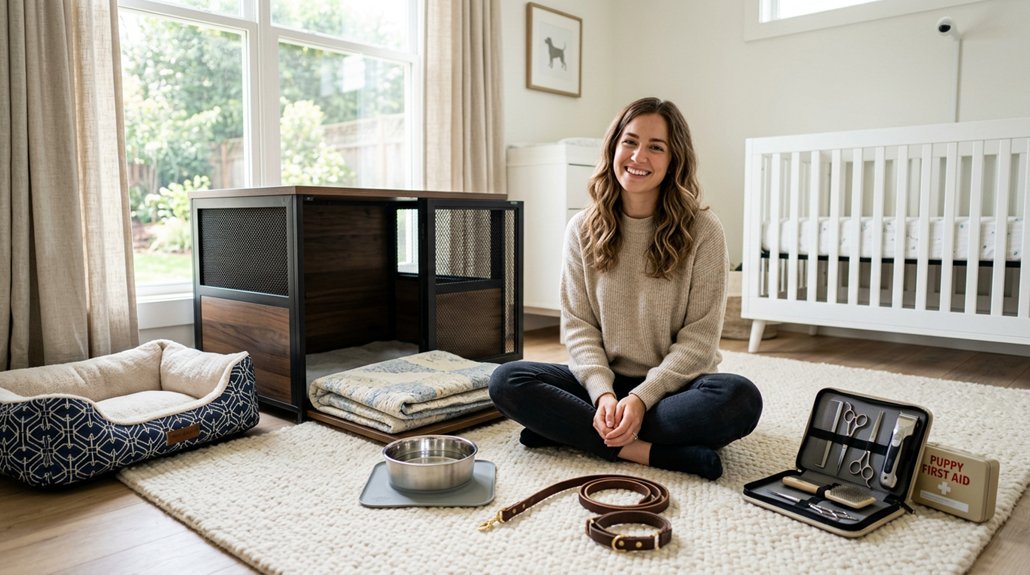
As a new dog owner, you’ll need essentials for your pet’s well-being. Start with high-quality, age-appropriate food and hydration tools. Invest in certified safety gear for travel and night walks. Create a secure environment by puppy-proofing your home and yard. A tailored grooming kit maintains coat health, and dental hygiene tools are crucial. Stainless steel feeding bowls are practical and easy to clean. Explore these basics further to guarantee a safe, healthy, and joyful life for your new companion.
Key Takeaways
- Purchase high-quality pet food suitable for your dog’s age and health needs as recommended by a veterinarian.
- Invest in certified pet carriers and travel harnesses for safe transportation.
- Use reflective leashes and gear for enhanced nighttime visibility and safety during walks.
- Acquire grooming tools, including hypoallergenic shampoos and specialized brushes, matching your dog’s coat type.
- Set up a puppy-proof home by removing hazards, securing windows, and fencing the yard for safe play.
Meeting Your Dog’s Basic Needs
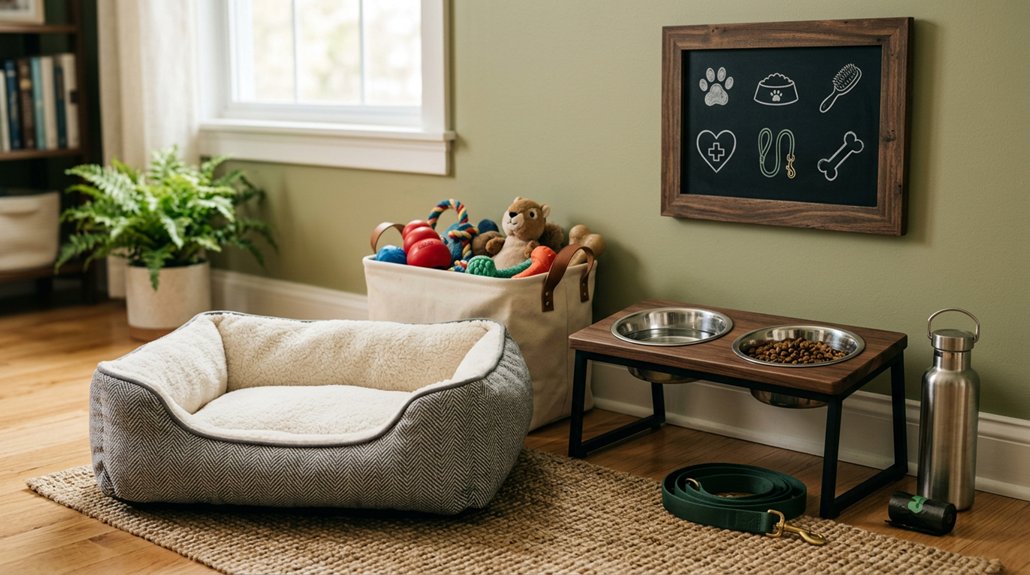
When meeting your dog’s basic needs, ensuring a balanced diet is crucial, as it directly impacts their health and well-being. Puppies require growth-formulated food, while adult dogs thrive on two meals daily, with high-quality proteins, fats, vitamins, and minerals. This dietary precision supports dog health and aids in disease prevention. Equally important is addressing their hydration needs. Your dog should always have access to fresh, clean water—the amount recommended is 20-40 mL per pound of body weight. By maintaining proper hydration, you help bolster their immune system and overall vigor. Remember, consistent routines in nutrition and hydration, along with regular veterinary care and vaccinations, form the foundation of a healthy life for your dog, ensuring they thrive by your side.
Essential Safety Gear for Dog Transportation and Night Walks
Ensuring your dog’s safety during transportation and night walks necessitates the use of appropriate gear designed to minimize risks. When focusing on travel safety, using a certified pet carrier or travel harness is paramount. The SturdiBag Pro 3.0 pet carrier provides excellent ventilation and fits comfortably under airplane seats, enhancing secure travel. For nighttime visibility, leverage reflective gear like the Orvis Personalized Reflective Collar to alert drivers. The Max and Neo Double Handle Heavy Duty Reflective Leash offers enhanced control and visibility in dim conditions. Consider the Ruffwear Front Range Harness for its robust design, ensuring your dog’s security through force distribution. Equip yourself with these essentials to fortify your dog’s safety:
Optimize your dog’s safety with travel gear like certified carriers and reflective collars for secure and visible walks.
- Certified pet carrier
- Travel harness
- Reflective leash
- Personalized reflective collar
- Visible harness
Puppy-Proofing to Create a Safe Home Environment
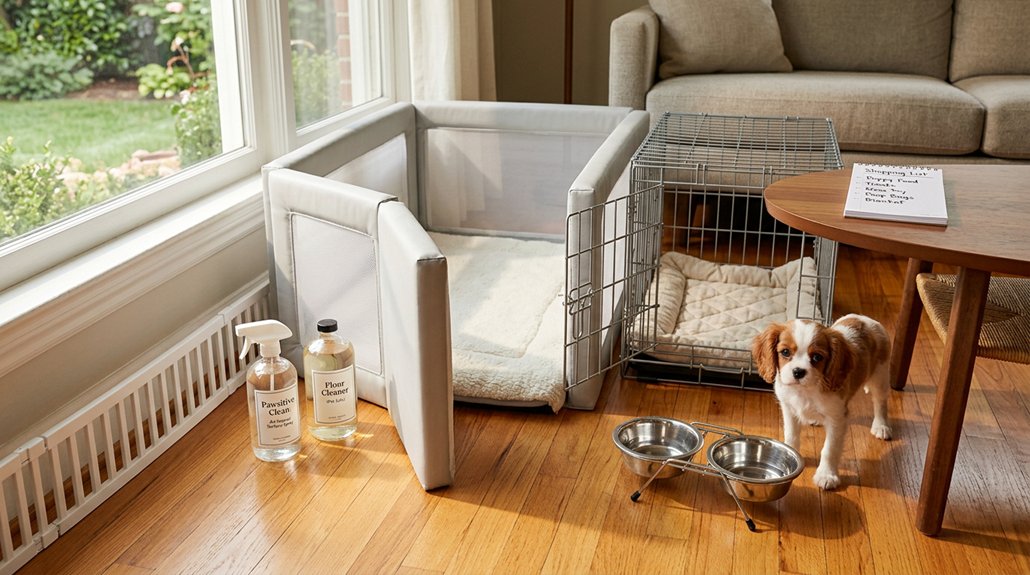
Once your dog’s safety on the road is covered, safeguard their at-home environment with thorough puppy-proofing. Begin by removing toxic plants and securing trash cans, as curious puppies explore with their mouths. Wrap and hide electrical cords to guarantee electrical safety and prevent dangerous chewing incidents. Use doggie gates to restrict access to areas containing small objects, cleaning supplies, and medications, all of which are choking and poisoning hazards. Keep windows and doors secure to prevent escapes and accidents.
| Hazard | Solution |
|---|---|
| Toxic Plants | Remove |
| Electrical Cords | Wrap and Hide |
| Small Objects | Restrict Area Access |
Guaranteeing a properly fenced yard will allow for a designated safe area for play and relaxation, minimizing health risks effectively.
Grooming Tools and Maintaining Hygiene
Incorporating essential grooming tools into your routine is crucial for maintaining your dog’s hygiene and overall health. Choose brushes specific to your dog’s coat type, regularly use nail clippers to manage overgrowth, and select hypoallergenic shampoos to prevent irritation. Consistent dental care, such as brushing and providing dental chews, will also support your dog’s oral health.
Essential Grooming Supplies
Although grooming your dog regularly is essential for maintaining both hygiene and health, the specific tools you choose can make a significant difference. Tailoring your grooming kit to your dog’s fur type and understanding the ideal grooming frequency are pivotal. Long-haired breeds often need detangling tools to manage their coats, whereas short-haired breeds may require only a basic brush. Equip yourself with these essentials:
- Hertzko Self Cleaning Slicker Brush: Ideal for long fur types to prevent matting.
- Nail Clippers: Regular use prevents painful splitting and snagging.
- Dog Toothbrush and Toothpaste: Maintains dental health, fighting plaque and tartar.
- High-Quality Dog Shampoo: Essential for an effective bathing routine.
- Dog Grooming Wipes: Perfect for quick cleans between baths.
Be prepared, and grooming will become a seamless part of dog care.
Regular Hygiene Practices
While gathering the right tools is an essential step in dog care, maintaining a regular hygiene routine guarantees your furry friend stays healthy and comfortable. Consistent grooming enhances not only your dog’s appearance but prevents health issues like matting and skin infections. Master correct brushing techniques, tailored to your dog’s coat, whether it’s short, long, or curly. Establish regular grooming schedules that include crucial components such as nail trimming, ear cleaning, and bathing, adjusted to your breed’s needs and activity level. Proper dental hygiene, involving specially designed toothbrushes and toothpaste for dogs, prevents disease and fosters good health. Consider professional grooming services for dogs needing specialized care, ensuring their coats remain both healthy and manageable. Invest wisely to sustain your dog’s well-being.
Nutrition Options and Feeding Essentials
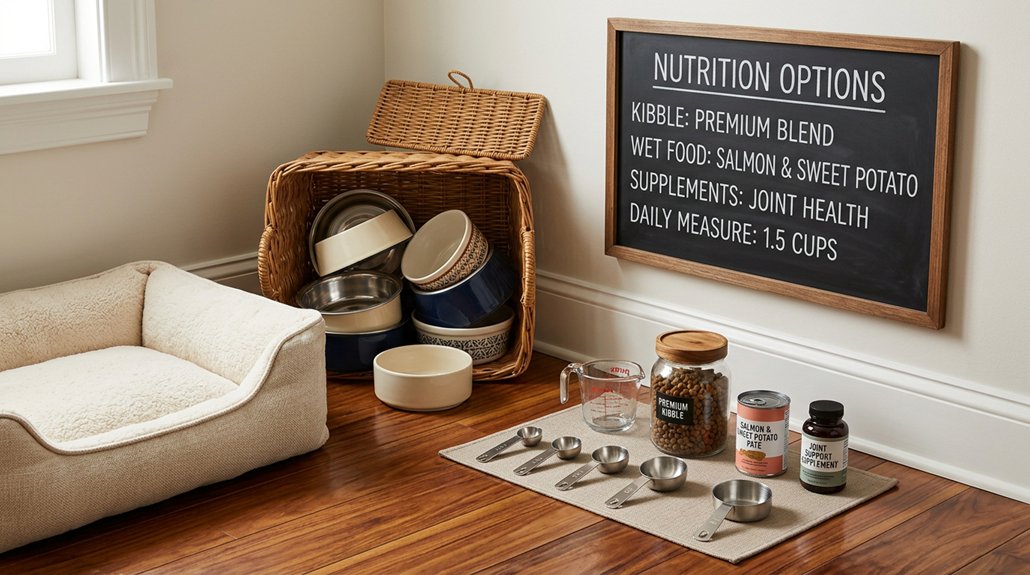
Ensuring that your dog receives a balanced diet requires an understanding of their unique nutritional needs, which vary based on factors like age, size, breed, and activity level. Puppies need growth-formulated dog food, given in three to four meals daily until six months. For adult dogs, a feeding schedule usually involves two meals a day, focusing on proteins, fats, vitamins, and minerals. Treats shouldn’t exceed 10% of daily calories. High-quality dog food brands like The Honest Kitchen are recommended for ideal health.
Understanding your dog’s nutritional needs ensures a balanced diet based on age, size, breed, and activity level.
Essentials include:
- Stainless steel bowls for ease of cleaning
- Ceramic water bowls proportional to the dog’s weight
- Consultations with a vet for tailored dietary advice
- Parasite prevention measures
- Reputable dog food brands known for whole ingredients
Tools for Engaging and Training Your Dog
Engaging and training your dog are essential components in fostering a well-mannered and mentally stimulated pet. To effectively train your dog, consider clicker training as a technique that uses a distinct sound to mark desired behaviors, facilitating positive reinforcement. Incorporate basic obedience training books to establish fundamental techniques. Utilize treats strategically to reward behavioral rewards, keeping in mind they should not exceed 10% of the daily caloric intake. Incorporate interactive games into your routine to provide mental stimulation and reduce destructive behaviors. Interactive toys are essential, as they channel your dog’s energy effectively. Finally, employ training pads to support potty training efforts. These tools are integral for developing a strong, healthy bond with your pet while reinforcing good behaviors.
Frequently Asked Questions
How Can I Introduce My New Dog to Other Pets at Home?
Begin with gradual introductions by allowing your pets to adjust to each other’s scents through scent swapping. Use separate areas initially and monitor interactions closely. Keep encounters brief and positive, reinforcing calm behavior with treats and praise.
What Is the Best Way to Build a Routine for My New Dog?
Forget rigorous training techniques for now; simply feed your dog precisely when they have an existential crisis about that kibble’s existentialism. In reality, blend feeding schedules with consistent playtimes to master your dog’s new routine effortlessly.
How Do I Handle Separation Anxiety in My New Dog?
To handle separation anxiety, use crating techniques to establish a safe space. Gradually increase alone time, rewarding calm behavior. Provide anxiety relief with toys or calming pheromones. Consistency and patience are essential for easing your dog’s distress during separation.
What Are Some Tips for Finding a Reliable Veterinarian?
Research veterinarians’ credentials thoroughly; it’s essential for your pet’s health. Verify their experience with emergency services and seek recommendations. You’ll want someone trustworthy, so never underestimate the peace of mind a qualified veterinarian provides.
How Can I Ensure My Dog Is Comfortable During Travel or Relocation?
Guarantee your dog’s comfort by packing travel essentials like a cozy blanket and familiar toys. Choose pet-friendly accommodations to reduce stress. Maintain routines, keep them hydrated, and provide breaks during the journey for ideal relaxation.
Conclusion
Starting on the journey of dog ownership is akin to tending a vibrant garden; every tool and precaution guarantees a flourishing bond. By meeting your dog’s fundamental needs, securing safe travel and outdoor adventures, crafting a puppy-proof sanctuary, and maintaining rigorous grooming, you’re nurturing a life of well-being. Consider nutrition as the soil of health, and training tools as seeds of understanding. With precision and care, you’ll cultivate a harmonious relationship with your new companion.