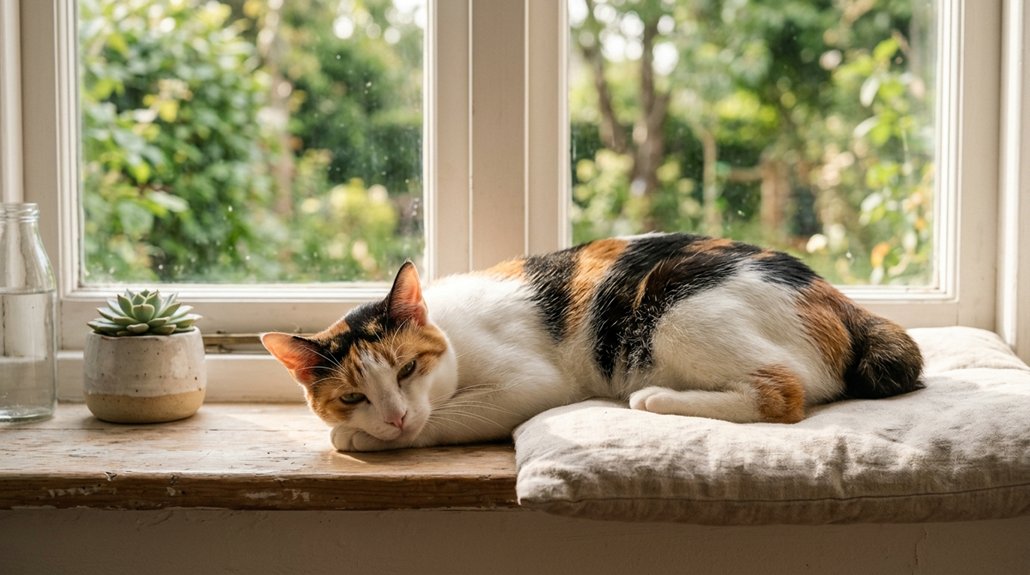
If you’re seeking low-grooming cat breeds for easy care, consider the British Shorthair, Sphynx, Cornish Rex, Devon Rex, and Russian Blue. These cats require minimal grooming, ideal for busy lifestyles. Proper care includes nail trimming, dental hygiene, a balanced diet, and regular vet visits. Despite their low shedding, they’re not hypoallergenic and need consistent grooming to maintain skin health. Explore these breeds further to see how they align with your routine and preferences.
Key Takeaways
- British Shorthairs require minimal brushing, making them ideal for owners seeking easy grooming routines.
- Sphynx cats demand regular skin care but have no hair to groom, simplifying maintenance tasks.
- Cornish Rex cats trap loose hair, which significantly reduces shedding and grooming needs.
- Devon Rex cats have low grooming requirements, similar to Cornish Rex, due to their unique fur texture.
- Russian Blue cats have short hair that requires occasional brushing, fitting effortlessly into a busy lifestyle.
Low-Grooming Cats: What Do Owners Need to Know?
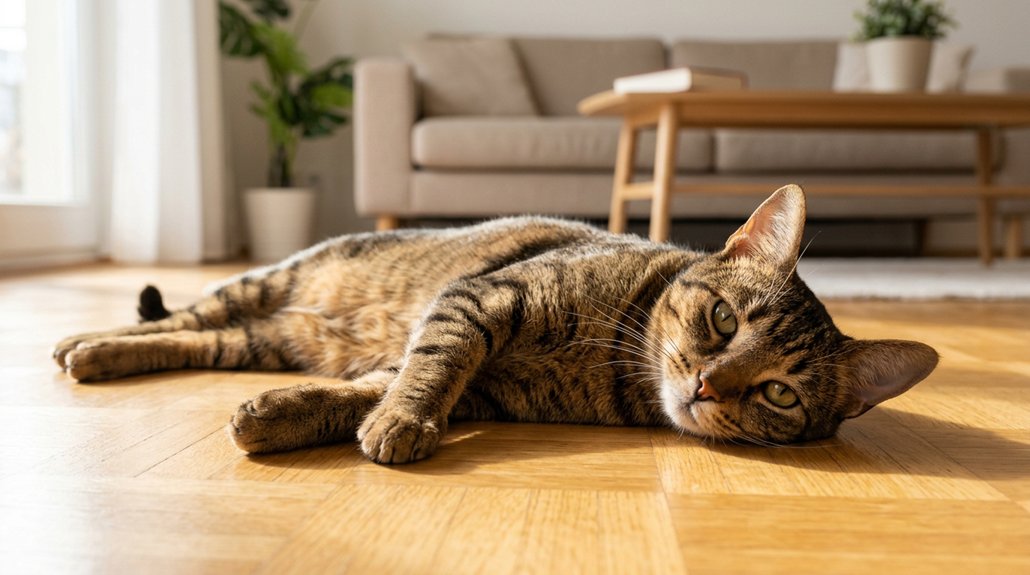
When considering low-grooming cat breeds, what essential details should potential owners keep in mind? It’s important to emphasize that breeds with strong self-grooming habits, such as the British Shorthair, require minimal intervention from you. Their short coats necessitate only occasional brushing, focusing more on coat care than intensive grooming routines. Despite having hair, these cats maintain cleanliness effectively, reducing upkeep.
For breeds like the Sphynx, which lack fur, regular skin care is paramount due to the absence of self-grooming habits related to hair maintenance. Additionally, breeds with fine or curly coats, such as the Cornish Rex, trap loose hair efficiently, minimizing visible shedding. Incorporate routine care practices like nail trimming to support their well-being holistically.
Meet the Top Low-Grooming Breeds
Understanding the demands of low-grooming cat breeds simplifies the decision for potential cat owners. Several breeds stand out for their minimal grooming needs, making life easier for busy individuals:
- Sphynx: This hairless breed offers Sphynx advantages by eliminating shedding, requiring only regular skin care rather than extensive fur grooming.
- Rex Breeds: Both the Cornish Rex and Devon Rex present Rex uniqueness with their distinct coat structures, resulting in reduced grooming requirements while offering vibrant companionship and unique personalities.
- Russian Blue and British Shorthair: These short-haired breeds need minimal brushing due to their sleek coats, reducing shed and maintenance efforts.
Despite their low grooming needs, maintaining essentials like litter box hygiene and routine veterinary care guarantees these cats remain healthy.
Why Choose a Low-Maintenance Cat?
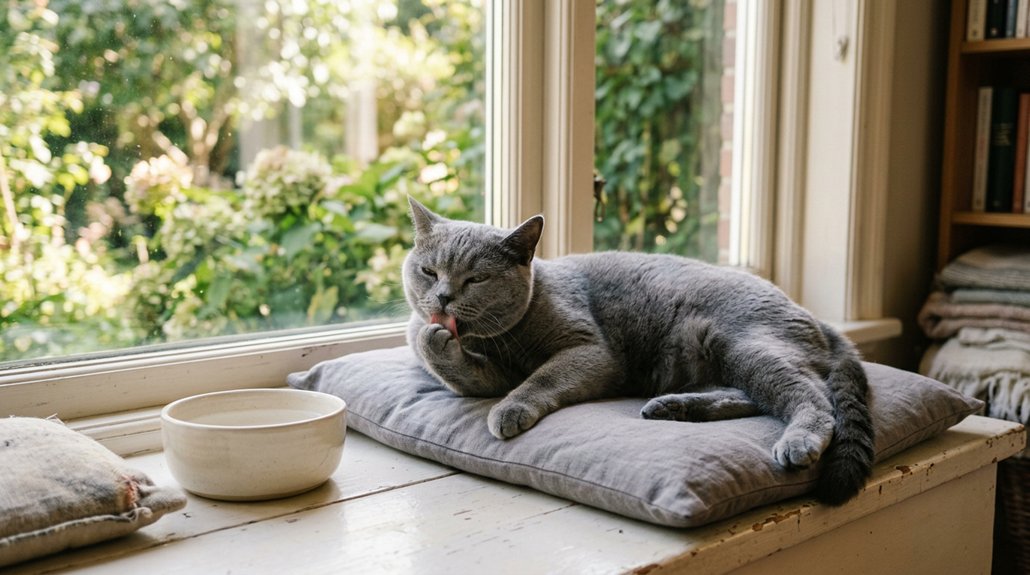
Selecting a low-maintenance cat breed can be an advantageous choice for busy individuals or first-time cat owners, primarily due to their minimal grooming requirements. Breeds like the Sphynx or British Shorthair feature cat characteristics that result in less shedding, thereby supporting a cleaner living environment. Their low grooming needs align well with diverse owner lifestyles, accommodating those with hectic schedules or minimal pet-care experience. Furthermore, their adaptable personalities provide companionship without demanding extensive maintenance. These cats typically require reduced grooming supplies, leading to potential cost savings. While all cats need some grooming, these breeds demand less frequent attention, offering the ideal balance of care and convenience for owners seeking enjoyment without added responsibilities that more high-maintenance cats might require.
Caring for Your Easy-Groom Cat
- Nail trimming: Regular trimming is essential to prevent overgrowth and potential injury.
- Dental hygiene: Incorporate routine teeth cleaning to mitigate dental issues.
- Veterinary visits and nutrition: Maintain a balanced diet and schedule consistent vet check-ups for overall well-being.
Addressing these elements will keep your low-maintenance cat thriving.
Avoiding Common Pitfalls for New Cat Owners
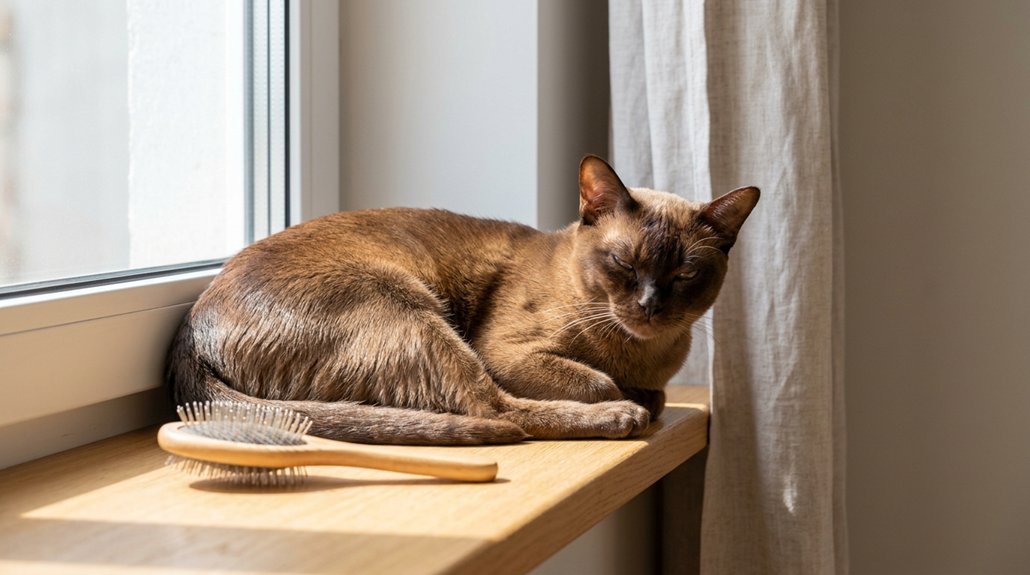
Why do new cat owners often stumble into common pitfalls with low-grooming breeds? Misconceptions about grooming and cat allergies are frequent culprits. Many believe that low-shedding breeds are hypoallergenic, but all cats produce the allergenic Fel d 1 protein. Establishing a regular grooming regimen is vital, even for breeds with minimal grooming needs, to guarantee skin health and reduce allergens.
Here’s a quick reference table:
| Pitfall | Solution |
|---|---|
| Misunderstanding hypoallergenic breeds | Recognize all cats produce allergens |
| Skipping grooming due to low maintenance | Implement regular grooming routines |
| Choosing the wrong breed for lifestyle | Research breed-specific needs and behaviors |
Consider adopting from shelters where mixed breeds may offer easier maintenance and fewer hereditary health issues, while still being a delightful companion.
Frequently Asked Questions
What Is the Easiest Low Maintenance Cat to Have?
The Sphynx is the easiest indoor cat if you’re prioritizing low maintenance. With no fur, their grooming is limited to skin cleaning. They’re affectionate, social, and enjoy human interaction, enhancing their favorable personality traits for companionship.
What Is the 3-3-3 Rule With Cats?
Research shows 17% of cats fully acclimate in three months. The 3-3-3 rule refers to this adjustment period, enhancing your understanding of feline behavior through three phases: hiding, comfort, then socializing. Provide patience and consistency.
What Cats Require the Least Grooming?
Cats with minimal grooming needs include the Sphynx, Devon Rex, and Abyssinian. These low care felines are known for requiring less coat upkeep due to hairless or short, fine, and sleek coats, reducing maintenance intervals effectively.
What Breed of Cat Sheds the Least Hair?
You’re looking for a low shed frequency? Cornish Rex, Devon Rex, and Sphynx cats are your best bet. They minimize allergens due to their unique coats or lack thereof, offering ease for those sensitive to cat hair.
Conclusion
Choosing a low-grooming cat breed offers convenience without sacrificing companionship quality. Remember, “a stitch in time saves nine,” so regular, simple care guarantees your cat’s health and happiness. Prioritize routine veterinary checks, balanced diets, and interactive play to optimize well-being. Keep an eye out for subtle behavioral changes, as these can signal health issues. By following expert advice, you’ll provide a joyous life for your cat and enjoy a more stress-free pet ownership experience.