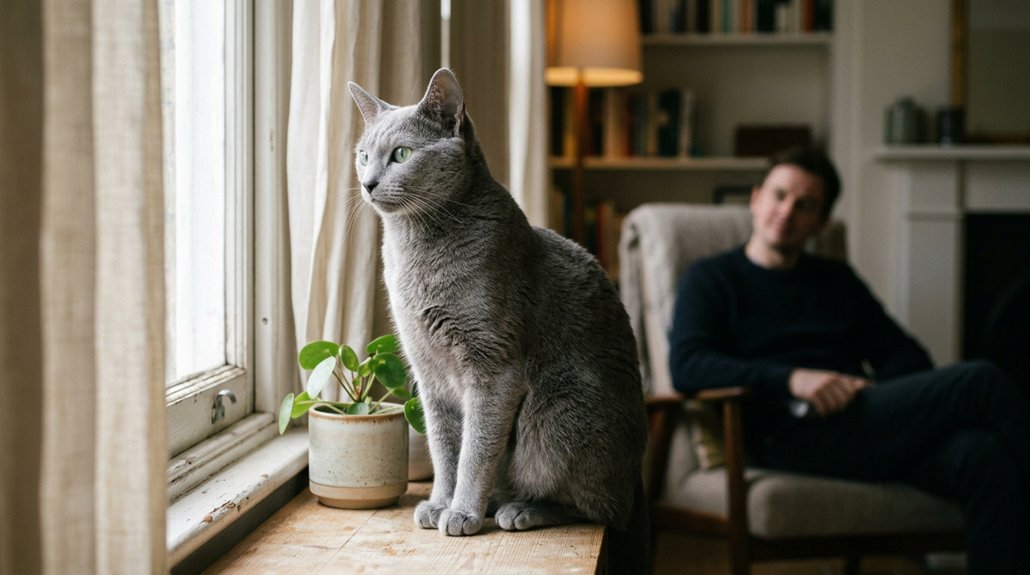
Your cat’s breed greatly influences its behavior due to genetic factors. Ragdolls show affection but can be shy with strangers, while Bengals are lively and need mental stimulation. Abyssinians’ playfulness and energy contrast with the gentle nature of Maine Coons. Selective breeding has shaped these traits, with genetics accounting for nearly half of behavioral differences. Understanding these hereditary influences helps you meet your cat’s needs and reveals more about what makes your feline unique.
Key Takeaways
- Genetic factors account for nearly 50% of behavioral differences among cat breeds.
- Selective breeding influences specific breed traits, shaping personality and behavioral outcomes.
- Breeds like Abyssinians and Bengals are energetic due to selective genetic traits.
- Ragdolls, known for their affectionate nature, may exhibit shyness around strangers.
- Socialization and exposure are crucial for managing breed-specific behavioral tendencies.
Cat Behavior by Breed: An Overview
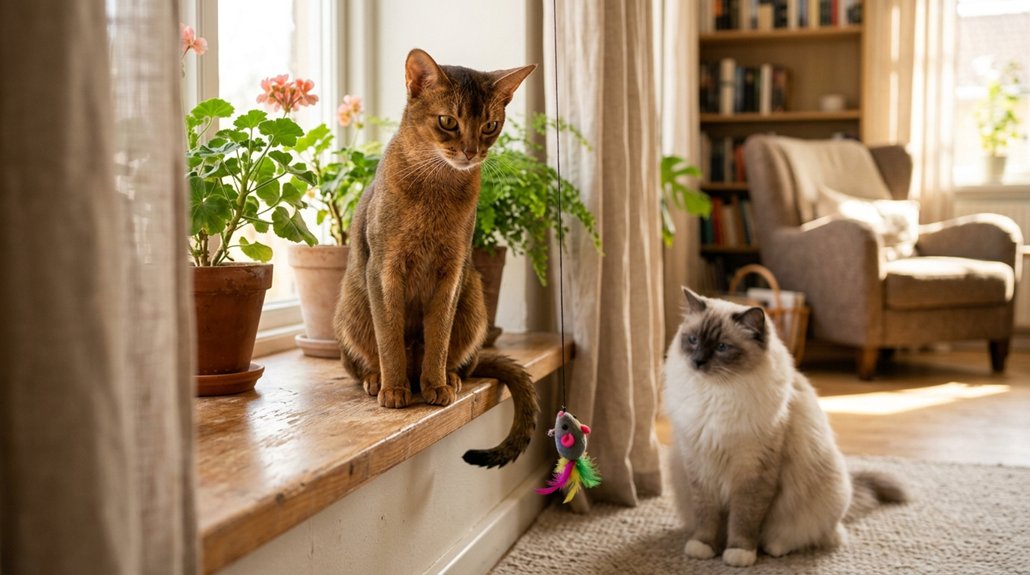
When exploring cat behavior by breed, it’s essential to understand how hereditary factors contribute greatly to their distinct personalities. These differences aren’t just biological; they’re woven into the cultural influences and historical significance of each breed. For instance, the affectionate Ragdoll has evolved alongside human companions, often reflecting a less aggressive demeanor. In contrast, the lively and water-loving Bengal showcases traits that nod to its wild ancestry, needing space to exercise its high energy. Similarly, Abyssinians bring historical vibrancy with their intensely playful nature but may be slightly more aggressive due to genetic determinants. Maine Coons are known for their gentleness, often attributed to centuries of sociable behavior. Therefore, when you’re considering a breed, think of these intertwining narratives shaping their behavior deeply.
How Genetics Shape Your Cat’s Personality
When you watch your Ragdoll’s shyness or your Abyssinian’s playful antics, you’re witnessing how genetics shape your cat’s unique personality. Nearly half of the behavioral differences in cat breeds are linked to hereditary factors, with selective breeding amplifying these traits to create breed-specific characteristics. By understanding these genetic influences, you can appreciate your cat’s nature while also supporting breeding programs aimed at fostering desirable behaviors and minimizing challenges.
Hereditary Behavioral Traits
Genetic factors play an essential role in shaping your cat’s personality and behavioral tendencies. Understanding hereditary traits through behavioral genetics provides insights into why certain breeds display specific behaviors. Research on 5,726 cats across 40 breeds shows nearly half of the behavioral differences are hereditary. For example, Ragdolls may be shy around strangers, while Bengals might show aggression. Additionally, activity levels are genetically influenced, with Abyssinians and Bengals being more energetic than Persians. Recognizing these predispositions helps in addressing your pet’s unique needs empathetically.
| Breed | Behavior Trait | Genetic Predisposition |
|---|---|---|
| Ragdoll | Shyness | Higher |
| Bengal | Aggression | Greater |
| Abyssinian | Sociability | Higher |
Knowing these tendencies can guide you in nurturing and managing your cat’s behavior.
Influence of Selective Breeding
While it might seem that your cat’s personality is a delightful mystery, selective breeding has played a significant role in shaping the behavioral traits of various breeds. Nearly half of these breed-specific traits you observe are thanks to a genetic legacy spanning many generations. This genetic influence drives the behavioral evolution of domestic cats, molding characteristics like activity levels and sociability. For instance, the docile Ragdoll has a predisposition for shyness and reduced aggression due to its selective breeding history. Conversely, Bengals display high activity and potential aggression, reflecting their genetic design. These meticulously crafted genetic connections also link appearance, like coat type, to inherent behaviors. Understanding these facets helps predict the personality traits you’ll encounter with specific breeds.
Breed-Specific Characteristics
As you become acquainted with your cat’s quirks and personality traits, you’ll find that genetics play a fundamental role in these breed-specific characteristics. Studies suggest nearly half of behavioral differences across breeds are hereditary. This means your cat’s communication style and demeanor might reinforce familiar breed stereotypes. Consider the following:
- Sociability: Abyssinians and Bengals are particularly sociable and energetic, while Ragdolls exude shyness and gentleness.
- Activity Levels: Bengals often display more aggression and activity, contrasting with the laid-back nature of Persians.
- Hunting Instincts: Domestic shorthairs retain strong hunting instincts from their farming ancestors.
Understanding these genetic influences allows you to empathize with your cat’s behavior and nurture a more harmonious relationship, respecting its unique nature.
Domestic Shorthairs: The Adaptable Choice
You’ll find Domestic Shorthairs intriguing with their diverse color patterns, ranging from black to tabby, enhancing their widespread appeal. Their energetic and playful nature, often exhibited through nocturnal activities, is complemented by a strong hunting instinct that proves useful in controlling pests. Adaptability is their hallmark, allowing them to thrive in varied environments while forming strong bonds with their human companions.
Varied Color Patterns
Domestic Shorthairs, with their varied color patterns, offer a delightful visual diversity that captivates many cat enthusiasts. This color diversity is more than just aesthetically pleasing; it reflects the breed’s genetic adaptability and survival traits. The pattern significance in these cats can speak volumes about their background and evolution, inviting a deeper appreciation for their visual appeal and genetic lineage.
You might wonder what specifically accounts for this diversity. Consider:
- Genetic Complexity: A wide genetic pool allows for unique coat colors and patterns, adapting to different environments.
- Historical Significance: Their diverse patterns also indicate a rich ancestry of blending and adaptation.
- Aesthetic Appeal: Each color pattern, from tabby to tortoiseshell, adds to their charm, inviting both love and adoption.
Energetic and Playful Nature
While their stunning color patterns captivate the eye, Domestic Shorthairs also enchant with their spirited and playful demeanor. You’ll quickly notice their energetic playfulness as they scamper through your home, engaging in playful antics that bring life to any room. Their propensity for “zoomies,” particularly when the moon’s up, reflects their boundless energy—a trait rooted in their history as farm cats. These lively companions adapt seamlessly to varied environments, making them a model choice for diverse households. They thrive on interaction, ensuring they’re never short on mischief or curiosity. Their ability to adjust stems from their diverse lineage, enhancing their appeal. Observing a Domestic Shorthair’s playful bursts creates a bond that’s both dynamic and gratifying, affirming their role as adaptable pets.
Strong Hunting Instincts
Rooted in their history as natural pest controllers, Domestic Shorthairs exhibit a strong hunting instinct that remains evident in their modern domestic environments. You’ll notice their hunting behavior through playful interactions involving stalking and pouncing, often seen with toys. Their playfulness traits manifest as energetic “zoomies” around your home, particularly when night falls.
To keep their instincts sharp and guarantee mental and physical stimulation, consider these strategies:
- Interactive Play Sessions: Use toys that mimic prey to engage their hunting skills.
- Create a Stimulating Environment: Provide climbing structures or puzzle feeders.
- Consistent Routine: Establish regular playtimes to satisfy their energy needs.
Understanding these behaviors enriches the human-feline bond, enhancing their adaptability and contentment in your home.
Abyssinians: Playful and Curious Cats
How much do you know about the energetic charm of Abyssinians? Analyzing their behavior reveals a delightful blend of Abyssinian playfulness and Abyssinian communication. They’re highly intelligent, capable of engaging in interactive games, such as fetch, showcasing not just play but problem-solving abilities. Their inquisitive nature means they often follow you around, making them fantastic companions curious about your activities.
Communication is key for these talkative cats. With gentle trilling sounds, they keep you informed about their needs and affection. It’s important to understand that they form strong bonds with their humans and may get distressed if left alone for long periods. To nurture their energetic personality, offer them a stimulating environment that encourages exploration and continuous engagement.
Why Bengals Are Adventurous and Active
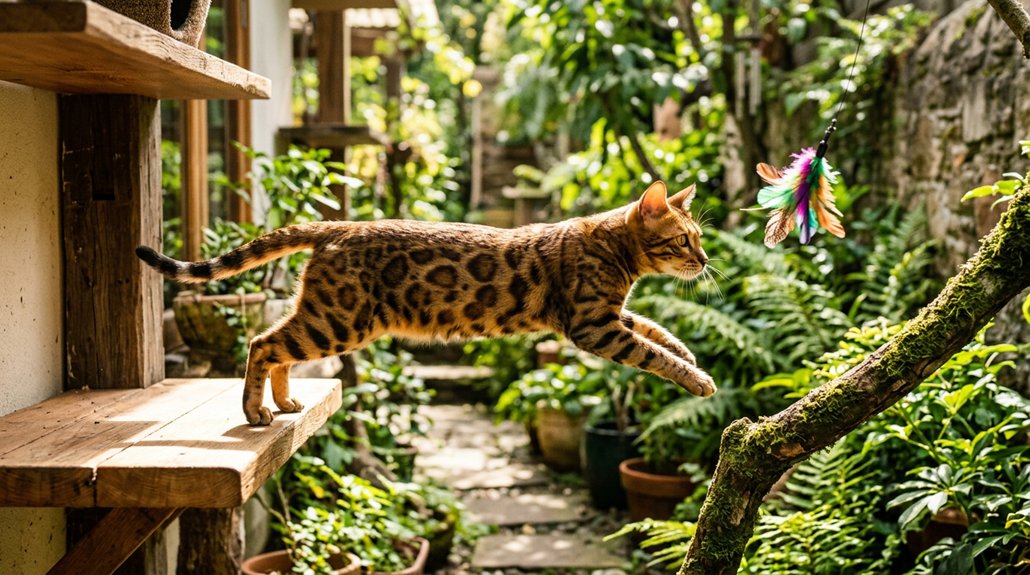
Bengal cats captivate with their adventurous and active nature, requiring plenty of exercise and engagement to maintain their well-being. Their Bengal agility shines as they deftly maneuver through spaces, making them excellent companions for outdoor adventures. These cats exhibit an interplay of intelligence and curiosity, often wanting to be involved in every activity. Here’s why they’re so dynamic:
- Intelligence and Learning: Bengals are highly intelligent, often mastering new games and tricks like fetch, reflecting their desire for interaction.
- Inquisitive Nature: They’re known to follow owners, exploring new surroundings with keen interest and strong hunting instincts.
- Water Play: Unlike many cats, Bengals enjoy water, often engaging in water play, which highlights their unique adventurous spirit compared to typical feline behaviors.
Maine Coons: Gentle Giants of the Cat World
Maine Coons, often described as the “gentle giants” of the feline world, capture attention with their impressive size and amiable personalities. Weighing up to 25 pounds, these cats are one of the largest domestic breeds. Their Maine Coon personalities are marked by a gentle, friendly nature, making them affectionate companions who thrive in social environments. As skilled hunters, their playful antics keep you entertained, reminiscent of their historical role in rodent control. Maine Coons enjoy snuggling and actively seek attention, forging strong bonds with their human families. Remarkably, they exhibit lower levels of aggression and separation anxiety compared to other breeds, enhancing their appeal as ideal companions for individuals and families. Embrace the joy of having these gentle giants in your life.
Addressing Shyness and Aggression in Ragdolls and Turkish Vans
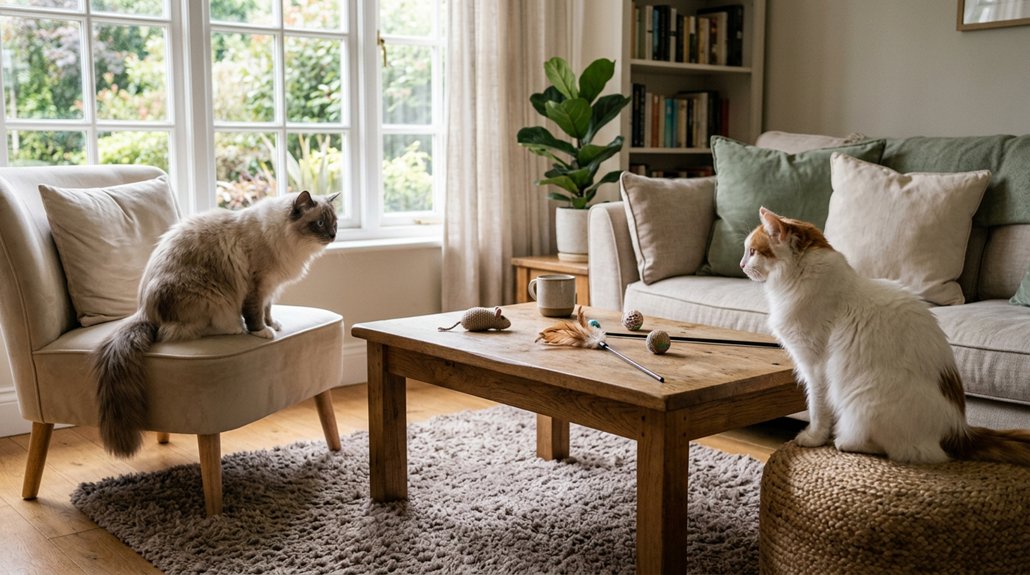
While Maine Coons captivate with their amiable charm, Ragdolls and Turkish Vans present more complex behavioral dynamics, requiring a nuanced understanding of their tendencies toward shyness and aggression. You’ll find Ragdolls often shy around strangers, showing Ragdoll aggression as a fear response. However, they’re gentle with familiar faces, highlighting their variable assertiveness in different environments. Turkish Vans, in contrast, exhibit Turkish Van shyness coupled with notable aggression, especially during unstructured social interactions. To address these behaviors effectively:
- Understanding: Recognize that shyness and aggression often stem from unfamiliarity.
- Socialization: Gradually expose Ragdolls and Turkish Vans to new people and experiences.
- Environment: Provide a secure, relaxed space that fosters positive social behaviors in these breeds.
Empathetic interactions can transform shyness into trust.
Impact of Selective Breeding on Cat Personalities
Although selective breeding has undeniably shaped the personalities of various cat breeds, it’s important to understand how deeply genetic factors influence these behaviors. Researchers at the University of Helsinki found that about half of the behavioral differences among breeds stem from genetics. For instance, Abyssinians and Bengals are known for their sociability and energy due to their genetic variations. Their high playfulness and low fear with familiar people contrast with other breeds’ traits.
You may notice Ragdolls’ inherent gentleness, as they’ve been bred for low aggression towards humans. In contrast, breeds like Bengals show more aggressive tendencies. Understanding these differences helps in behavior training, allowing you to tailor your approach based on your cat’s unique genetic disposition, ultimately supporting their well-being and your relationship.
Which Cat Breed Matches Your Lifestyle?
Wondering how to find a cat that complements your lifestyle? Consider breeds that match your activity level and need for feline companionship. If you’re active and love the outdoors, the Bengal breed fits well, offering plenty of cat exercises with their hiking enthusiasm. For families seeking a snuggly companion, the Maine Coon is affectionate and gentle.
When choosing a feline friend, evaluate based on:
- Activity Level: Bengals thrive with active partners, while British Shorthairs suit a laid-back environment.
- Companionship Needs: Abyssinians are inquisitive and enjoy human interaction, making them great for constant companionship.
- Unique Traits: Lykois love mental challenges and show surprisingly affectionate behavior despite a visually independent exterior.
Think about your lifestyle to guarantee a harmonious match.
Frequently Asked Questions
What Is the 3-3-3 Rule of Cats?
The 3-3-3 rule guides the adoption process, detailing how a cat’s adjustment period unfolds. Expect initial anxiety from fear factors, gradual exploration, and settling in. Offer socialization tips to ease the adjustment and build trust.
Do Cat Breeds Affect Personality?
You’ll find cat personalities won’t just purr along the same path without some influence from specific breed traits. Behavioral tendencies vary amongst breeds, meaning your fluffy companion might inherit quirks depending on their lineage. Breed definitely matters.
How Do Cats Say Goodbye?
When saying goodbye, cats use communication and feline emotions like slow blinking and tail raising. You’ll notice increased purring or vocalizations. Some might seek solitude, showing their emotional complexity and sensitivity to changes in their environment.
What Color Cat Is Least Desired?
You’re likely aware that black cats are often least desired due to breed stereotypes and misconceptions. Despite their beauty, their coat patterns and color face bias, impacting adoption preferences and leading them to linger longer in shelters.
Conclusion
Choosing a cat breed isn’t just about aesthetics; it’s about finding a soul mate. Domestic Shorthairs are adaptable, matching your rhythm, while Abyssinians infuse life with curiosity. Bengals release your adventurous side, and Maine Coons comfort with gentle grace. Ragdolls and Turkish Vans teach patience as you nurture trust. Genetics and selective breeding shape these behaviors, creating varied personalities. Select wisely and you’ll not just bring home a pet—you’ll welcome a true companion into your life.