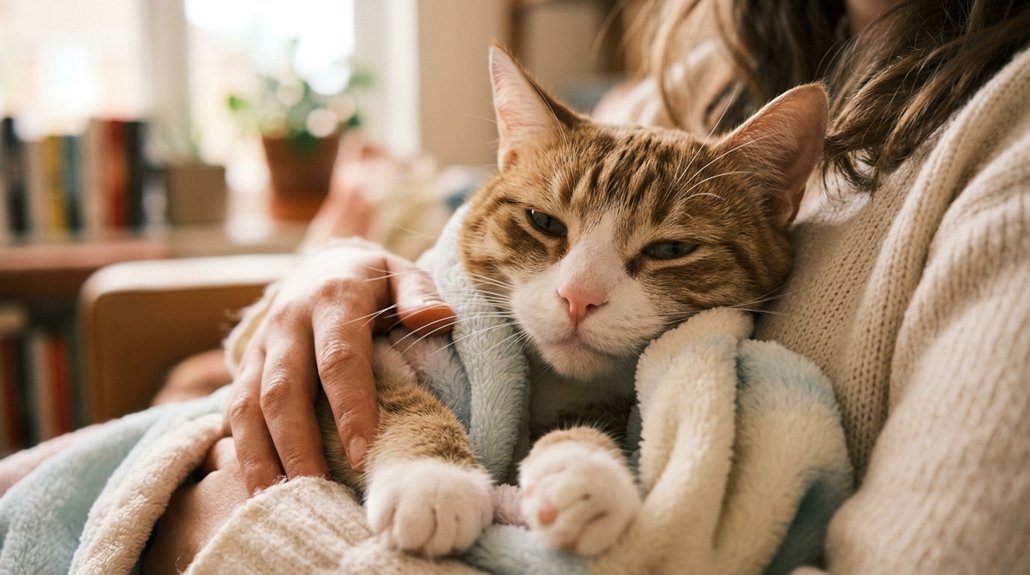
You’ll find that Ragdolls, Burmese, and Siamese cats exhibit genetic predispositions for close human bonds, enjoying being held due to their affectionate and sociable natures. Sphynx cats’ need for warmth promotes snug interactions, while Scottish Folds thrive on proximity with their distinctive charm. Birmans and Maine Coons also stand out with their gentle dispositions, seamlessly integrating into family dynamics. To enhance your understanding of these engaging feline companions, further exploration will reveal their unique traits.
Key Takeaways
- Ragdolls are known for their tranquil temperament and love being held, especially by families with children.
- Burmese cats crave human companionship, often curling up on laps and seeking affection.
- Siamese cats bond through vocal interactions and enjoy cuddling with their owners.
- Sphynx cats, known for their hairlessness, enjoy warmth and human closeness, often snuggling under covers.
- Scottish Folds have affectionate dispositions, making them ideal lap companions who dislike being alone.
Why Some Cats Love Being Held
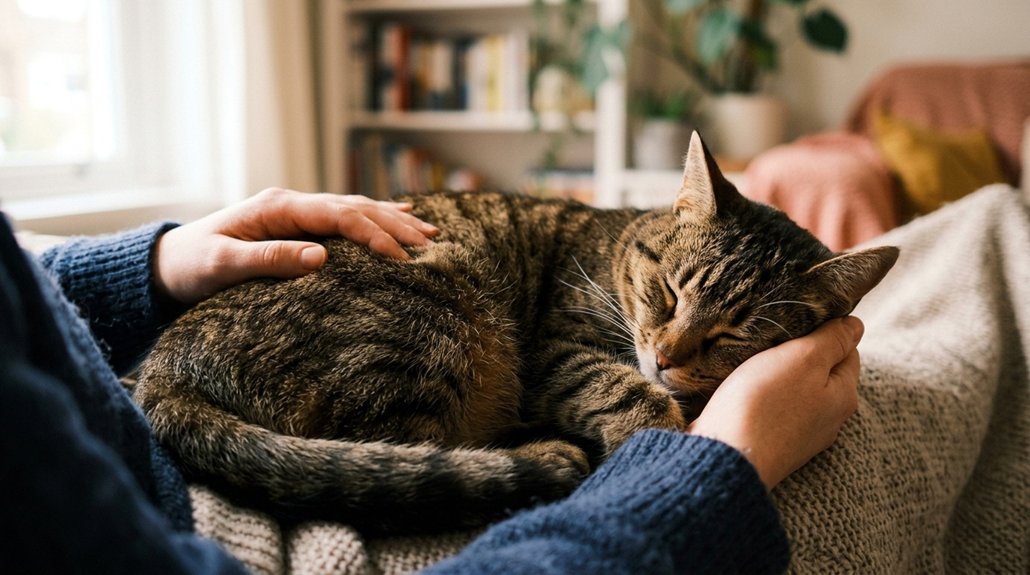
While not all cats appreciate being held, several breeds demonstrate a marked preference for it due to their affectionate predispositions and instinctual behaviors. Cats seeking cat comfort often derive emotional security from the warmth and close contact reminiscent of maternal bonding. Affectionate breeds like the Burmese and Siamese exhibit these behaviors as they possess a genetic inclination toward human companionship. Their clinginess isn’t merely attachment; it’s indicative of a profound trust and a need for an emotional refuge. Holding such cats fosters a symbiotic relationship where shared warmth and gentle hold convey safety and affection. This bond enhances welfare through psychological and physiological equilibrium, emphasizing the importance of respectful and nurturing human-cat interactions. Understanding this dynamic is vital for responsible pet ownership.
Ragdoll: The Ultimate Cuddle Buddy
You’re likely to find Ragdolls irresistibly devoted with their affectionate and loyal disposition, especially suited to environments with children or multiple pets, bolstering family dynamics. Scientifically observed for their tranquil temperament, Ragdolls often prefer an indoor-only lifestyle that promotes ideal well-being and safety, aligning with animal welfare standards. These cats’ propensity for extended human interaction satisfies their innate social instincts, establishing them as quintessential companions for anyone seeking a reliable cuddle partner.
Affectionate and Loyal Nature
Renowned for their unique ability to relax completely in your arms, Ragdolls exhibit a physiological response to being held that sets them apart from other cat breeds. This cessation of muscular tension, known as “flopping,” is a direct indicator of their affectionate expressions and robust loyalty bonds with humans. The breed’s innate desire for companionship drives them to form lasting attachments, often following you from room to room in a display of social behavior akin to pack animals. Their affinity for human contact requires environments rich in warmth and care, essential for their well-being and longevity. For 13 to 15 years, their docile demeanor not only makes them tranquil companions but also elevates their status as ideal pets for those valuing both closeness and long-term devotion.
Perfect for Families
Ragdolls are exemplary feline companions for families, combining a uniquely docile temperament with a strong proclivity for human interaction. These cats demonstrate a remarkable capacity for affectionate bonding, often seeking to enhance family dynamics by engaging in consistent companionship. Their tendency to go limp when held is rooted in a genetically ingrained response, underscoring their comfort with tactile engagement.
Ideal for families with young children, Ragdolls exhibit patience and tolerance, essential traits for maintaining a harmonious household. They have a life expectancy of 13 to 15 years, offering long-term relational stability and loyalty. Additionally, their calm demeanor adapts seamlessly to various home environments, making Ragdolls an ideal choice for promoting tranquility and psychological well-being within familial structures.
Indoor-Only Lifestyle
For families who have discovered the unique benefits of having a Ragdoll, maintaining a tranquil environment aligns perfectly with their indoor-only lifestyle. Ragdolls boast an affectionate, docile nature, ideal for an indoor setting where mental stimulation and comfort are prioritized. Indoor enrichment is essential, ensuring these felines engage in activities that promote cognitive and physical well-being. You can achieve this by providing interactive toys, cat trees, and spaces where your Ragdoll can retreat for solitude and safety. Their tendency to go limp when picked up signifies trust and a strong social bond, enhancing interactive experiences. Cozy environments complement their gentle demeanor, offering them the perfect backdrop for daily cuddle sessions, essential for their psychological health and companionship needs.
Burmese: Your Velcro Cat Companion
Burmese cats, often termed “velcro cats,” exhibit an exceptional affinity for human companionship, craving physical proximity and interaction with their humans. Their Burmese behavior is marked by significant affection display, as they relish curling up on laps and trailing after their guardians throughout the home. This breed’s playful and outgoing nature thrives on consistent interaction, providing an excellent companion for anyone seeking an active and loving pet. Adaptable and sociable, Burmese cats cultivate profound bonds with their owners, making them a superb choice for families and individuals desiring an engaged feline presence. Possessing a life expectancy of 10 to 17 years, they’re long-lasting companions that necessitate love and attention to sustain their positive temperament and enhance their welfare.
Siamese: Talkative and Tender
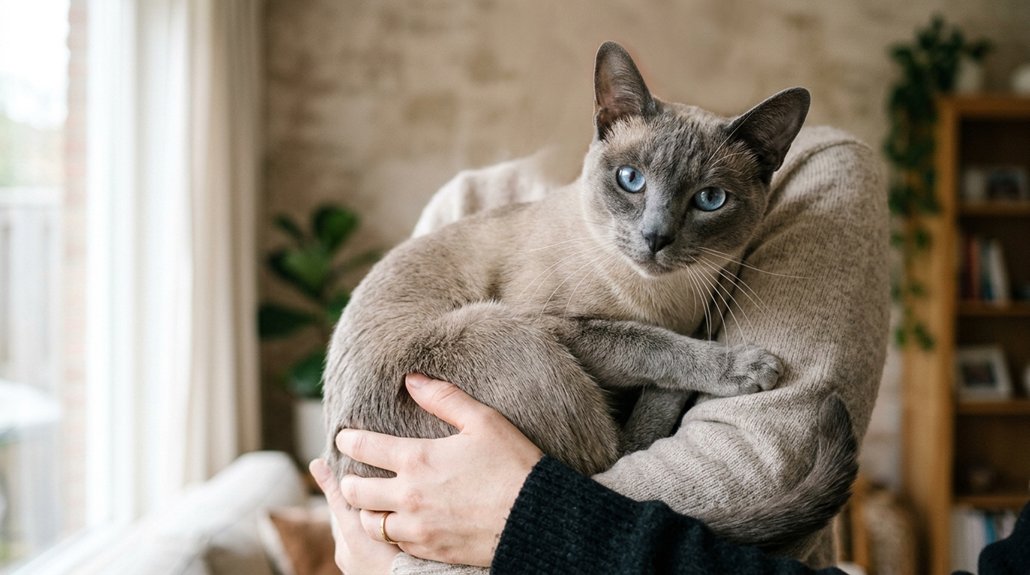
As a potential owner of a Siamese cat, you’ll find their vocal bonding to be a unique aspect of their interaction, often engaging you with their characteristic vocalizations that indicate a strong social aptitude. This breed’s inclination for human connection positions them as a species highly adapted to reciprocal relationships, requiring consistent companionship and affectionate interaction for ideal welfare. In addition, their playful nature and energy levels make them an engaging participant in interactive activities, contributing to their overall well-being and behavioral satisfaction.
Vocal Bonding With Owners
While many feline breeds are known for their independence, the Siamese cat distinguishes itself through its inherent sociability and distinctive vocalization. Engaging in vocal communication is a hallmark of this breed, using meows, trills, and chirps to articulate its desires to its owner. This active vocalization fosters a deep emotional connection, strengthening the relational bond between you and your Siamese.
Consider these facets of Siamese vocal bonding:
- Expressive Needs: Siamese cats clearly state when they want to be held or receive attention.
- Emotional Sensitivity: Their expressive voices convey affection, forming a unique communicative bond.
- Dynamic Interaction: Persistent following and vocal cues are indicative of their desire for interaction.
Thrives on Human Connection
Given their innate vocal tendencies, Siamese cats exemplify a breed that thrives on human connection, leveraging their ability to “converse” with owners for emotional fulfillment. This breed’s sociability is a product of genetic predispositions favoring social behaviors and bonding activities. Siamese cats exhibit strong attachment behaviors by frequently curling up in your lap or beside you, seeking tactile contact as a form of social bonding. Scientifically, these behaviors enhance oxytocin levels in both the cat and owner, reinforcing mutual ties.
Their affectionate and tender nature makes them ideal for families, including children. The breed’s propensity to follow you around signifies a robust loyalty, indicative of their intrinsic need for companionship. Such traits mark them as quintessential examples of domestic felines suited for engaging human interactions.
Engages in Playful Interactions
Although Siamese cats are renowned for their vocal and social prowess, their playful interactions further solidify their status as ideal companions. Engaging in interactive games facilitates a robust playful bonding between you and your Siamese. These felines exhibit an intense desire for companionship, employing their distinctive vocalizations to initiate various play activities. Scientifically, such interactions are paramount for cognitive stimulation and emotional well-being. Here’s how you can foster these playful interactions:
- Interactive Toys: Use toys that stimulate their hunting instincts, ensuring both mental and physical engagement.
- Routine Play Sessions: Designate consistent times for play, enhancing your bond and meeting their vigorous social needs.
- Positive Reinforcement: Reward behaviors that exhibit desirable play, strengthening their affectionate tendencies.
Each interaction strengthens the affectionate Siamese-human bond.
Sphynx: Warmth-Loving Hug Seeker
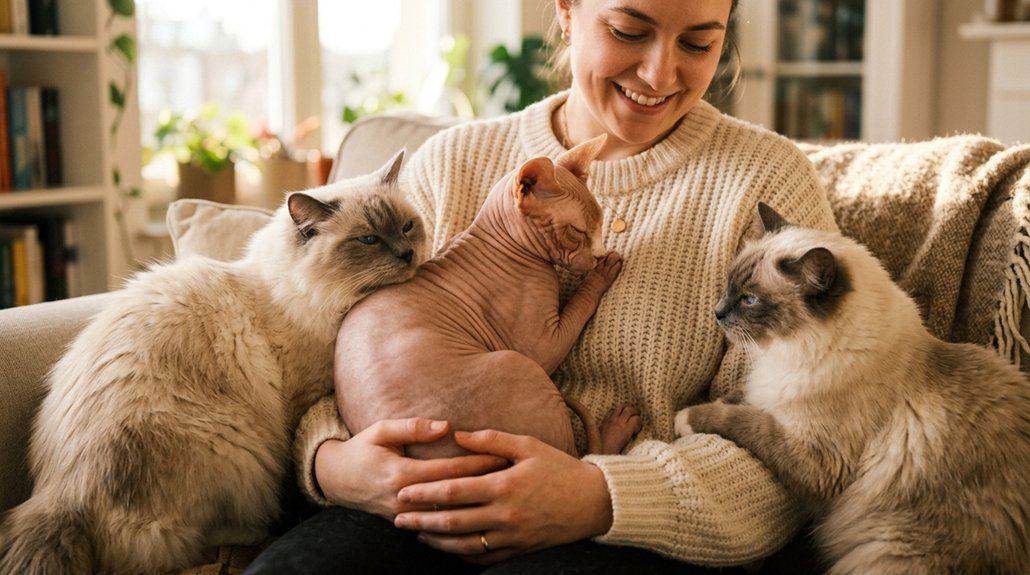
With their unique hairless characteristic, Sphynx cats exhibit a remarkable affinity for human warmth, making them natural warmth-seeking companions. Sphynx behavior is particularly extroverted, and these felines thrive on human interaction, demonstrating strong bonding tendencies through their affectionate nature. They love snuggling under covers or curling up on laps, acting as living hot water bottles for those who cherish direct pet contact. Despite their lack of fur, these cats demand thorough grooming needs. Their skin requires regular bathing to remove excess oils and maintain dermal health, compensating for absent fur’s protective barrier. A lifespan of 9 to 15 years guarantees sufficient time for forming enduring connections, fostering a rewarding bond that transcends any grooming obligations.
Scottish Fold: Unique Ears, Lovable Nature
One of the most defining characteristics of the Scottish Fold is its distinctive folded ears, the result of a natural genetic mutation that lends these felines their endearing appearance. This breed thrives in environments where it can engage socially, given its affectionate nature. You can expect them to be highly interactive, often seeking proximity by following you around.
Their temperament and desire for contact make them exceptional options for family settings. Consider the following attributes:
- Affectionate Disposition: Scottish Folds revel in physical contact, making them ideal lap companions.
- Social Aptitude: They dislike solitude, preferring the company of their human counterparts.
- Gentle Demeanor: Their calmness suits households with children and other animals.
If you’re looking for a warm, fuzzy friend, the Scottish Fold is a prime candidate.
Birman: Sophisticated Lap Lovers
Scottish Folds charm with their folded ears and affectionate nature, yet if you’re seeking a truly sophisticated lap cat, the Birman offers an exceptional choice. Their long, silky coats require regular grooming, ensuring peak skin health and maintaining the breed’s striking visual appeal. Birmans are renowned for their gentle disposition and social nature, seamlessly integrating into family settings and seeking warmth from human companionship. Weighing between 10 to 12 pounds, they display an elegant build, enhancing their lap-loving characteristics. Their serene temperament makes them both playful and calm—traits that promote their suitability as perfect lap companions. With a life expectancy of 13 to 15 years, Birmans offer prolonged affectionate companionship, demanding attention to their grooming and health to extend their quality of life.
Maine Coon: Loyal Gentle Giants
Maine Coons, often dubbed “gentle giants,” exhibit an impressive size, especially with males reaching between 13 to 18 pounds. Despite their large stature, their gentle nature makes them exemplary companions. These felines boast a friendly and sociable demeanor, ensuring they’re great for families. Maine Coons stand out due to:
- Affectionate Loyalty: Their tendency to follow owners, displaying deep loyalty and companionship.
- Playful Temperament: They maintain a playful yet calm demeanor, adapting to various environments and showing patience with children and other pets.
- Social Engagement: Maine Coons thrive on involvement in family activities, bolstering their bond with human companions.
Their affectionate, easygoing personality not only makes them enjoyable pets but also supports their well-being in a family setting.
Caring for Cuddly Cats
When caring for cuddly cats, ensuring their emotional and physical well-being requires a multifaceted approach. Playtime benefits are essential; interactive toys stimulate cognitive processes, providing psychological enrichment vital for Ragdolls, Maine Coons, Persians, and Birmans. Additionally, grooming tips emphasize regular combing to prevent matting, especially in breeds like Persians and Maine Coons. Stress reduction occurs when grooming sessions are paired with gentle tactile interactions, promoting adrenal relaxation.
| Cat Breed | Playtime Benefits | Grooming Tips |
|---|---|---|
| Ragdoll | Enhances bond | Prevent coat matting |
| Maine Coon | Boosts mood stability | Regular combing recommended |
| Persian | Reduces anxiety | Frequent hair maintenance |
Understanding each breed’s unique behavioral traits enhances the owner-pet connection, resulting in an optimized care regimen for these affectionate felines.
Frequently Asked Questions
What Cat Breed Likes to Be Held the Most?
You’ll find Ragdoll affection unparalleled; they truly enjoy being held and go limp in your arms, maximizing comfort. Persian cuddles also rank high, as they appreciate gentle handling, enhancing their calm demeanor. Prioritize animal welfare when handling.
What Is the 3-3-3 Rule With Cats?
The 3-3-3 rule describes feline adaptation phases: three days of acclimation-related stress, three weeks of cautious exploration, and three months achieving stability. Understanding cat behavior here guarantees ideal animal welfare during your cat’s adjustment period.
What Annoys a Cat the Most?
Isn’t it ironically delightful how cats get annoyed by unpredictability? Understanding feline preferences, you’d see they thrive on routine. Cat behavior reveals overstimulation, territorial disputes, or loud noises can greatly perturb these creatures, impacting their overall welfare.
What Is “I Love You” in Cat Language?
“I love you” in cat language involves feline communication through slow blinking, head nuzzling, purring, and kneading. Each of these behaviors signals affection and trust, revealing emotional bonding within the complex cat body language.
Conclusion
In your pursuit of a feline friend that relishes being held, remember: the right breed can make all the difference. Isn’t it fascinating how each breed, from the affectionate Ragdoll to the gentle Maine Coon, has unique qualities that cater to your cuddling desires? Prioritize their well-being by understanding their physical and emotional needs, ensuring they thrive in your care. When you meet these needs, you’ll nurture a loving bond that delights both human and cat.