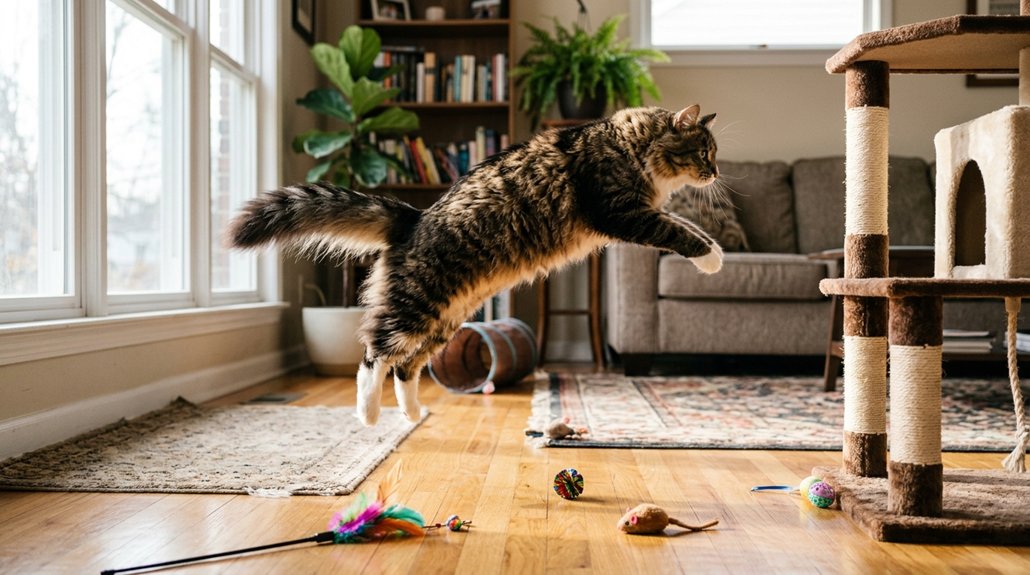
To manage high-energy behavior in cats, recognize their crepuscular nature and engage them during peak activity times with brief play sessions. Use rotating and interactive toys to sustain interest and guarantee a mix of physical and mental stimuli, like puzzle feeders. Monitor overstimulation signs and redirect with safe play toys. Create calming environments for rest and always consult a veterinarian for underlying health issues. Further insight awaits with more guidance on these strategies.
Key Takeaways
- Schedule brief, engaging play sessions during dawn and dusk to match their natural energy peaks and prevent boredom.
- Use a variety of interactive toys, rotating them frequently to maintain interest and provide mental stimulation.
- Redirect overstimulated cats from hands to suitable toys to prevent aggressive behavior during playtime.
- Implement calming strategies with designated quiet zones and diverse resting spots to ensure a restful environment.
- Regularly monitor health through veterinary checkups to identify any underlying conditions affecting energy levels.
Understanding Why Cats Have High-Energy Levels
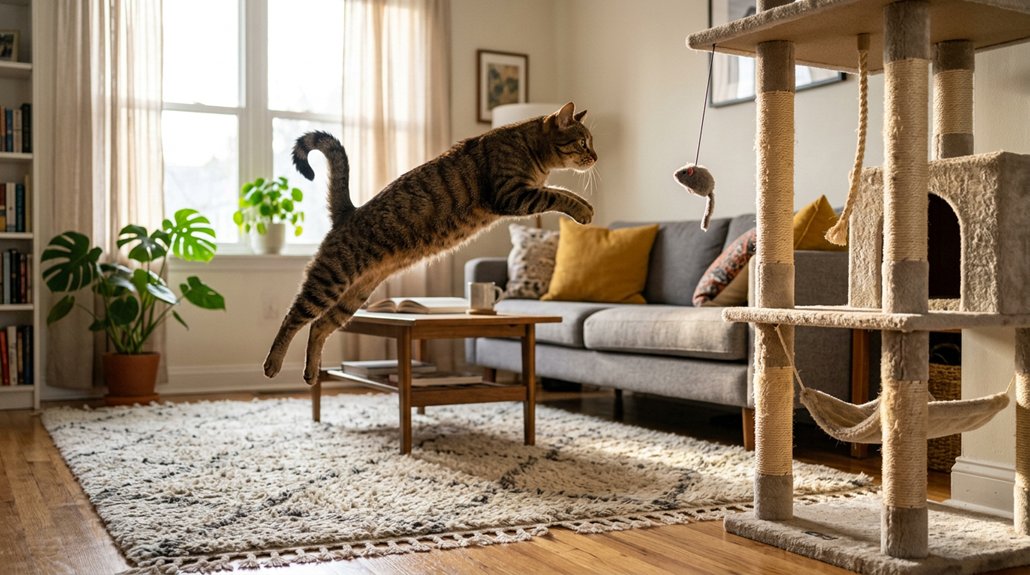
Why do cats exhibit such high-energy levels? Understanding cat behavior and energy patterns is fundamental. Cats are naturally crepuscular, meaning they’re most active at dawn and dusk. This aligns with their instinctual hunting behavior, causing bursts of high-energy activity. Despite spending 60% of their day sleeping, these energy patterns reflect their survival instincts—hunt, explore, and play.
Kittens and young cats, particularly, are significantly energetic due to developmental needs. Certain breeds like Abyssinians and Siamese are inherently energetic, necessitating ample stimuli. Without adequate mental and physical stimulation, cats may develop pent-up energy, increasing the risk of behavioral issues. Therefore, recognizing these natural tendencies is vital for effective energy management, ensuring your cat is both content and well-behaved.
How to Recognize and Manage Overstimulation in Cats
Recognizing and managing overstimulation in cats is vital to maintaining their behavioral health and well-being. Overstimulation signs include dilated pupils, excessive purring, and an agitated body posture, often witnessed amidst playful behaviors. It’s important to prevent these from escalating into aggressive actions like biting or scratching. Environmental factors and aggressive play can trigger overstimulation, making close observation during playtime essential. When you notice such signs, calmly end the play session and redirect your cat’s focus toward suitable toys rather than hands or fingers. Provide mental enrichment through interactive toys and solo activities, addressing your cat’s instinctual needs. Monitor body language closely and adjust the intensity and duration of play sessions to guarantee balanced, enjoyable interaction for your feline companion.
Effective Playtime Strategies for High-Energy Cats
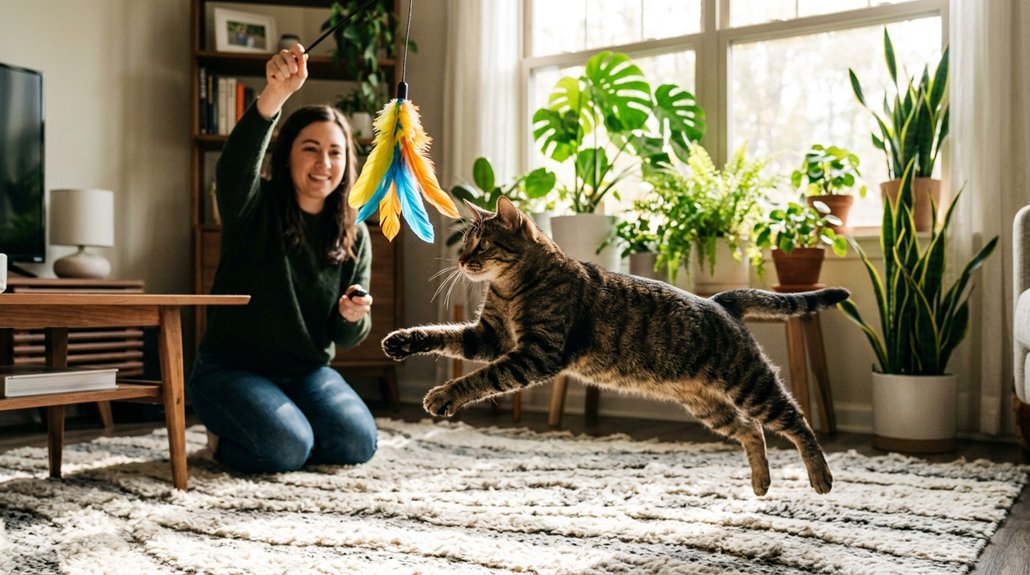
In managing your cat’s high-energy behavior, schedule brief play sessions during their most lively times, generally around dawn and dusk. Opt for a range of interactive toys and activities, ensuring to rotate toys frequently to sustain engagement and minimize boredom. It’s essential to employ safe tools like laser pointers, while always concluding with a tangible toy to provide a sense of accomplishment.
Tailor Playtimes to Peaks
Understanding the ideal timing for play sessions can greatly improve the effectiveness of managing high-energy behavior in cats. By establishing structured playtime routines, you can tap into your cat’s natural activity mapping which aligns with their crepuscular instincts. Schedule these sessions during peak activity periods, usually at dawn and dusk. Implement short play sessions, about 10-15 minutes each. Kittens benefit from more frequent engagement, up to 10 times daily, while older cats might need only 2-3 sessions.
Enhance interaction by engaging your cat just before mealtime, leveraging their interest in food and readiness for play. Be observant of body language to recognize agitation or fatigue, ensuring each session is productive. Integrate diverse stimulating toys to mirror natural hunting behavior.
Rotate Toys Regularly
Building on the concept of tailoring playtimes to your cat’s natural activity peaks, maintaining your cat’s interest requires rotating toys regularly. Implementing a toy rotation strategy every few days guarantees that playtime remains fresh and engaging. By introducing a variety of toys, such as catnip toys, balls, and interactive puzzles, you cater to your cat’s different preferences and promote sustained play engagement. This not only stimulates their hunting instincts but also provides essential mental enrichment. Regularly changing toys can prevent undesirable behaviors that arise from frustration or excess energy due to boredom. Furthermore, engaging your cat with different toys daily enhances the bond between you and your feline companion, assuring they receive the necessary physical and mental stimulation.
Engage With Safe Tools
Engaging with safe tools is essential when managing the playtime of high-energy cats. Interactive toys, like puzzle feeders and treat-dispensing devices, provide mental stimulation, keeping your cat engaged in playtime activities. Utilize wand toys and teaser toys for hands-free interactions that allow natural hunting behaviors, reducing risk of injury. Short, frequent play sessions (10–15 minutes) for older cats and up to 10 daily for kittens are ideal for managing energy levels.
| Interactive Toys | Engaging Activities |
|---|---|
| Puzzle Feeders | Natural hunting |
| Treat-Dispensers | Stalking and pouncing |
| Wand and Teaser Toys | Chasing and capturing |
Regularly rotate toys to prevent boredom and maintain your cat’s interest. A laser pointer can boost physical activity, but remember to finish with a tangible toy.
Offer Mental Enrichment and Stimulate Curiosity
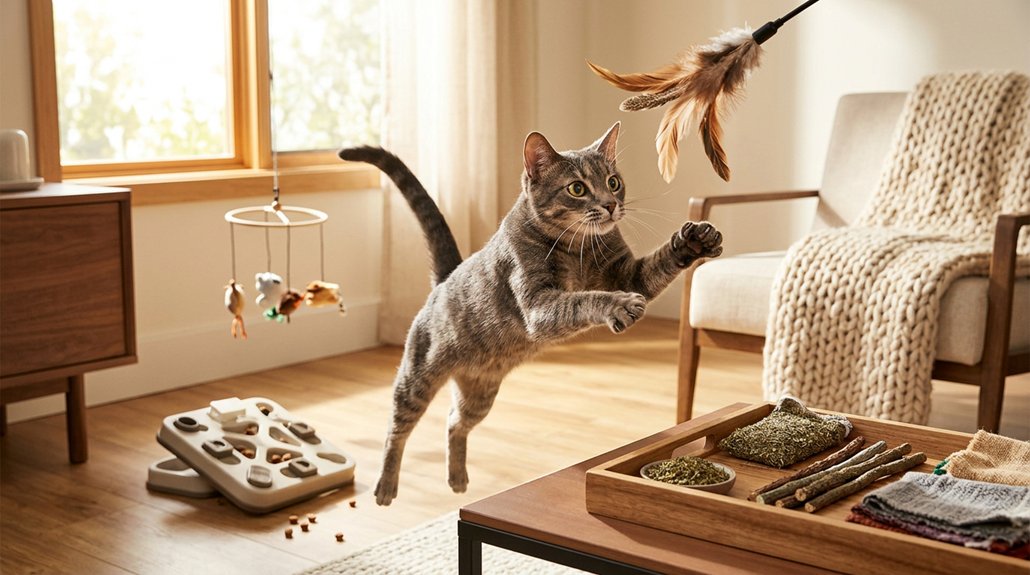
To effectively manage a high-energy cat, consider incorporating mental enrichment strategies that engage their instincts and curiosity. Providing puzzle feeders challenges their problem-solving skills, while strategically hiding treats encourages exploratory behavior. Regularly rotating a variety of toys guarantees sustained interest, preventing boredom and curbing hyperactivity through fresh stimuli.
Provide Puzzle Feeders
Utilizing a variety of puzzle feeders is an effective strategy to manage high-energy behavior in cats, as it directly engages their natural hunting instincts. Interactive feeding through these devices provides cognitive challenges, encouraging your cat to solve problems to access their meals. This not only stimulates their mind, reducing boredom but also slows down eating, which aids digestion and can help prevent obesity. Offering different difficulty levels of puzzle feeders maintains your cat’s interest, continually provoking their curiosity and enhancing problem-solving skills. Distributing these feeders across multiple rooms not only physically engages your pet by encouraging exploration but also integrates foraging instincts into their daily routine, promoting overall mental enrichment and reducing unwanted high-energy behaviors in your feline companion.
Hide Treats Strategically
A practical approach to managing high-energy behavior in cats is strategically hiding treats, which effectively satisfies their instinctual hunting and foraging behaviors. By creating opportunities for scent exploration, you simulate a hunt, which keeps your cat mentally engaged. Use trick training to introduce your cat to small puzzle feeders or treat-dispensing toys that challenge their ability to retrieve treats. This method not only promotes exploratory behavior but also encourages them to expend energy while searching. Vary the hiding spots and treat types to prevent boredom, ensuring they’re continuously stimulated and interested. Prioritize small, high-value treats to maintain motivation and make the search rewarding. This technique effectively redirects excess energy, provides mental enrichment, and sustains high levels of curiosity.
Rotate Toys Regularly
After employing the strategic placement of treats to engage your cat’s hunting instincts, another effective method for managing high-energy behavior is to regularly rotate their toys. Toy rotation prevents boredom and stimulates curiosity, keeping your cat engaged during playtime. Introducing interactive puzzle feeders and wand toys enhances mental enrichment and caters to various play styles. Hide older toys and reintroduce them after some time to create novelty and rekindle interest. Cats thrive on playtime variety; mixing textures, shapes, and functionalities mimics natural hunting instincts, enhancing play experiences. Rotate toys every few weeks to maintain a fresh and stimulating environment, vital for mental wellness.
| Toy Type | Benefit |
|---|---|
| Puzzle Feeders | Mental enrichment |
| Wand Toys | Physical activity |
| Plush Toys | Comfort |
| Jingle Balls | Auditory engagement |
| Rubber Toys | Chewable texture |
How to Calm Your Cat at Night
One effective method to calm your cat at night involves strategically scheduling play sessions during their peak activity hours, dawn and dusk. Playtime during these periods taps into their natural nighttime habits, engaging them physically to promote feline relaxation. Employ interactive toys and puzzles to mentally stimulate your cat, ensuring a more settled demeanor as bedtime approaches. Additionally, secure household items like trash cans or lamps to minimize potential disruptions and mischief during the night. Providing a dedicated sleeping area equipped with essentials—litter box, food, and cozy resting spots—helps establish a routine that encourages settling down. For a potential long-term solution, consider introducing another cat as a play companion. This can mitigate excessive nighttime activity by offering social engagement and alternate stimulation methods.
Creating a Restful Environment
Ever wondered how to create a space that fosters relaxation for your high-energy cat? Start by offering diverse resting spots throughout your home, giving your feline a selection tailored to their preferences. Experiment with varying heights in resting areas as some cats enjoy elevated views while others prefer secluded corners. It’s essential to mitigate environmental factors like loud noises which may impede relaxation. Designate and encourage retreat spaces in bustling homes to allow cats security and decompression. Consistently rewarding your cat for using these spots reinforces a sense of calmness.
Here’s a structured approach:
| Aspect | Recommendation |
|---|---|
| Resting Spots Choices | Provide various heights and locations |
| Environmental Factors | Minimize noise and activity |
| Retreat Spaces | Create quiet, secure zones |
| Encouragement | Reward use of designated spots |
| Monitoring | Observe stressors and adjust |
Identifying Health Concerns That Require Veterinary Care
When managing high-energy behavior in cats, it is crucial to identify any underlying health issues that might require veterinary care. Begin with a thorough symptoms checklist to discern potential health concerns. Hyperthyroidism, for example, is characterized by excessive activity, weight loss, and increased appetite. Chronic pain, such as from arthritis, can also cause hyperactivity as your cat attempts to alleviate discomfort. Conduct a behavioral assessment to detect changes that might signal anxiety or stress disorders. These conditions often necessitate veterinary evaluation. Infections and metabolic disorders, like diabetes, can lead to unusual energy levels, warranting prompt consultation with a veterinarian. Remember, hyperactivity might be a medication side effect, highlighting the importance of regular veterinary check-ups to adjust treatment plans effectively.
Frequently Asked Questions
How to Deal With a High Energy Cat?
Utilize targeted playtime strategies by scheduling multiple short sessions at dawn and dusk. Engage your cat with interactive toys and puzzle games to effectively channel excess energy, simulate hunting instincts, and provide essential mental stimulation.
What Is the 3-3-3 Rule for Cats?
Imagine your cat as a new moonshiner, adjusting through three phases: initial day jitterbugs, three-week adaptation dances, and a three-month personality reveal. This 3-3-3 rule guides their adoption adjustment, observing behavioral signs carefully.
What Is “I Love You” in Cat Language?
In cat language, “I love you” is communicated through feline gestures like slow blinking, gentle kneading, and purring. These forms of cat communication reflect contentment and trust, signifying their strong affection and bonding with you.
How Do You Calm Down a Hyperactive Cat?
Schedule playtime strategically using interactive toys as calming techniques. Keep sessions short to maintain attention. A structured playtime strategy, alongside puzzle feeders, offers mental stimulation and helps channel your cat’s energy constructively, promoting tranquility.
Conclusion
Managing a high-energy cat requires patience and understanding, much like “a stitch in time saves nine.” By recognizing overstimulation and offering effective playtimes, you’re promoting a balanced life. Mental enrichment can satisfy curiosity and help you calm your cat at night. Creating a tranquil environment is essential, but never ignore health concerns that might need veterinary care. By taking proactive steps, you guarantee your feline friend remains happy, engaged, and healthy.