
You can observe if your cats are bonding by noting behaviors such as curling up together, mutual grooming, or playful interactions like gentle chasing. These actions indicate trust, affection, and comfort. Watch for signs of relaxed body language and harmonized sleeping patterns. Conversely, aggression, hissing, and avoidance suggest tension. Understanding these behaviors will provide insight into your cats’ relationship dynamics, helping you foster harmonious connections. Stay informed to deepen your understanding of their interactions.
Key Takeaways
- Cats sleeping or curling up together shows comfort and security, indicating a strong bond.
- Mutual grooming and body contact during sleep exhibit trust and affection between cats.
- Gentle play behaviors like chasing and wrestling suggest a friendly and trusting relationship.
- Absence of conflict during mealtime signals a harmonious relationship between bonded cats.
- Signs of aggression such as hissing and swatting indicate potential conflict and lack of bonding.
Observable Signs of Bonded Cats
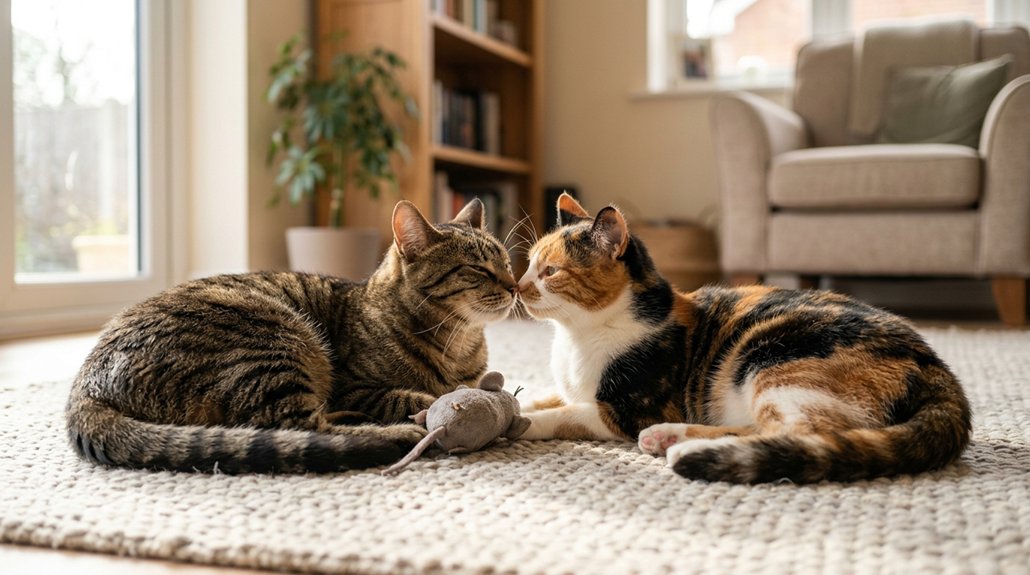
When observing cats, there are several key behaviors that indicate bonding. Common activities such as sleeping or curling up together show comfort and security, reflecting their emotional connection. Feline communication is vibrant when cats rub their bodies or faces against each other, which is an exchange of scents signifying familiarity and a sense of belonging. Playful behaviors like chasing or wrestling are indicative of trust and a relaxed relationship, demonstrating that the cats feel safe and secure with one another. Additionally, the absence of conflict during mealtime, where cats share food or eat close to each other, signals a harmonious relationship. These activities and communications are effective indicators of the bond strength between feline companions, highlighting trust and mutual understanding.
How Mutual Grooming Reveals Connection
You’re likely to notice mutual grooming among cats, scientifically known as allogrooming, which signals both trust and affection. When one cat licks another’s face and ears, they’re exchanging scents and fostering a stronger social bond. This act not only strengthens their relationship but also indicates a deeper connection through relaxed behaviors like slow blinking and purring.
Trust and Affection Indication
Mutual grooming in cats, often observed in social groups, serves as a crucial indicator of trust and affection. When one cat licks or nibbles another’s fur, it’s a clear affection display that signifies a strong bond. You can consider this behavior a form of trust building, as it demonstrates comfort and relaxation in their interactions. Cats engage in mutual grooming in safe environments, showing they feel secure around each other. Additionally, grooming acts as a calming mechanism, potentially reducing stress levels and enhancing their sense of companionship. So, if you notice your cats grooming each other, it’s more than hygiene maintenance; it reveals a deep connection and a desire for closeness, strengthening their relationship over time.
Strengthening Social Bonds
Even though cats are often perceived as independent creatures, mutual grooming plays a pivotal role in strengthening social bonds. When your cats engage in mutual grooming, you’re witnessing a clear expression of affection and trust. This behavior helps reinforce their bond and promotes social cohesion by reducing stress levels and fostering comfort. The act of one cat licking another signals familiarity and acceptance, indicating they’re open to sharing territory and resources harmoniously. It suggests they’re caring for each other and feel secure in their environment. Conversely, if your cats avoid grooming each other, it might reveal tension or incompatibility, hinting at issues in their social bond. Regular observation of grooming interactions can offer insight into the health of their relationship.
Understanding Play: Recognizing Aggressive vs. Friendly Behavior
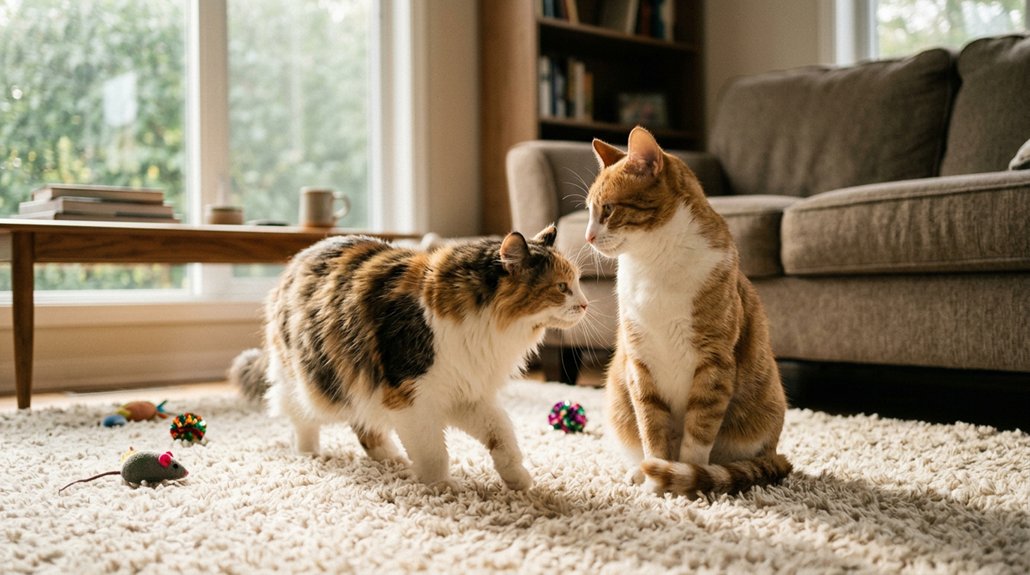
Understanding the nuances in your cats’ behavior is crucial for distinguishing between bonding play and potential aggression. You’ll notice that playful signals often include gentle chasing and pouncing with relaxed postures, while aggression is marked by hostile patterns such as hissing and swatting. By interpreting social dynamics, such as mutual grooming and playful vocalizations, you can accurately assess whether your cats are building a bond or experiencing territorial disputes.
Identifying Playful Signals
When observing your cats engaging in play, it’s important to discern between friendly interactions and aggressive behavior. Healthy play includes playful pouncing and a relaxed body, indicating comfort and bonding. A cat’s tail should be loose, not tense. During these sessions, mutual enjoyment is exhibited through equal chasing and wrestling without signs of distress. Vocal cues play a significant role; soft meows and purring suggest satisfaction, while growling can signal conflict. Identifying relaxed body language, such as a calm posture with no arched backs, helps assess their interaction’s positive nature. Frequent initiations of play between cats hint at a strong bond, reflecting their desire for mutual engagement. Regular mutual grooming during or after play reinforces trust and affection, signifying a bonded relationship.
Distinguishing Aggression Patterns
To effectively distinguish between aggression and friendly behavior in cats, it’s essential to closely observe their body language and interactions. Aggressive postures include flattened ears and arched backs, indicating potential hostility. In contrast, relaxed postures, such as a play bow, signal playful interactions. Observe whether their interactions involve gentle swatting or chasing, typical of friendly play, or if there is hissing, growling, or persistent swats coupled with a tense body, signifying aggression. Mutual grooming and evenly paced play highlight a bond, whereas swatting and biting may suggest discomfort or territorial disputes. It’s also important to differentiate “play fighting” from true aggression; the former lacks the intensity and fear of real conflicts, showing turns and pauses rather than a one-sided attack.
Interpreting Social Dynamics
Although it may initially seem challenging, deciphering the social dynamics between cats involves a keen understanding of their play behavior to discern between aggressive and friendly actions. Observing cat interactions like chasing or wrestling usually points to friendly dynamics, indicating a strong bond. In contrast, actions such as hissing or swatting suggest boundary-enforcing behavior. Watch for mutual grooming, an important aspect that fosters trust and affection. Simultaneous activities, like feeding or napping, reinforce positive social dynamics. It’s important to be mindful of body language; relaxed postures and slow blinking indicate comfort and trust, while aggression, marked by flattened ears or arched backs, suggests tension. Recognizing these nuances guarantees a harmonious environment for your cats by addressing their interaction needs accordingly.
Sleeping Habits: Indicators of Cat Bonding
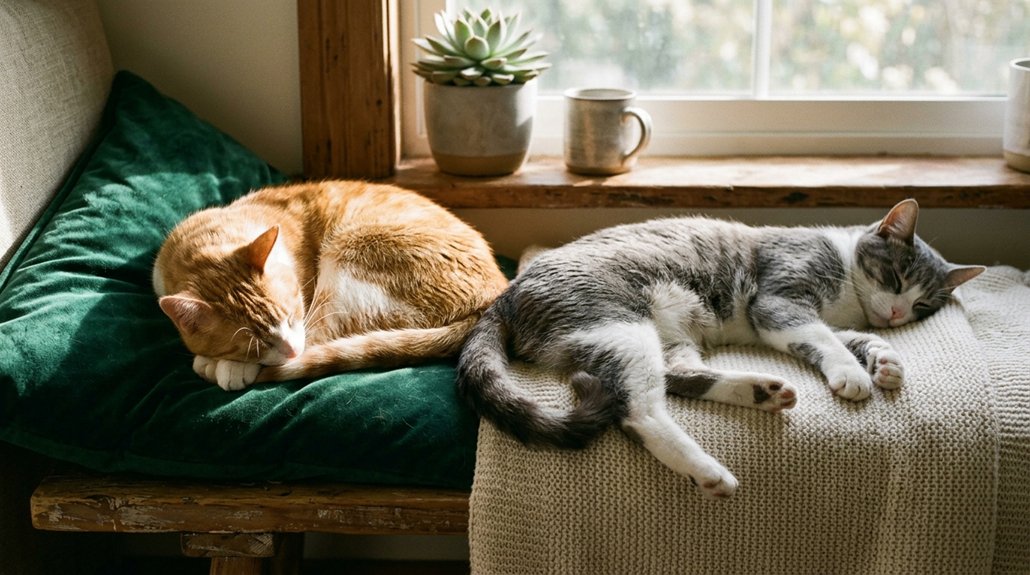
Observing the sleeping habits of your feline companions can offer valuable insight into their social dynamics and level of bonding. When cats are bonding, specific sleep positions and napping behaviors can be key indicators of their relationship. Note the following:
- Body Contact: Cats that sleep with touching bodies exhibit deep trust and familiarity.
- Proximity Preferences: Choosing close sleeping arrangements or sharing a bed signals comfort levels and security.
- Synchronized Sleep Frequency: If both cats nap simultaneously in similar spots, it reflects cooperative behavior and strong bonding.
- Separate Sleeping: Conversely, if your cats consistently rest apart or avoid each other, it may suggest a lack of bonding and mutual comfort.
These factors help assess your cats’ connection and shared comfort levels.
Body Language: Comfort and Tension Signals
Understanding feline body language offers essential insights into their emotional states and relational dynamics. Observing comfort indicators like relaxed postures, where cats lie flat or curl up together, suggests a bonding relationship. Mutual grooming, with one cat licking the other, demonstrates trust and affection, critical for a harmonious bond. Slow blinking and gentle nuzzling further reinforce security and attachment. Conversely, tension signals such as flattened ears, arched backs, and tail flicking point to aggression or stress, indicating possible discord. Cats avoiding each other’s grooming or sleeping apart hint at discomfort or weak connections. By interpreting these signs, you can assess if your cats are comfortably bonded or if there’s underlying tension, helping you manage their interactions effectively.
Timeline for Cats to Bond
When it comes to the timeline for cats to bond, patience is key. The bonding duration varies widely among cats, with some forming connections quickly, and others taking weeks or months. Kittens often exhibit greater adaptability when establishing bonds due to their social nature and absence of past feline interactions. Adult cats, affected by previous experiences, may require more time and gradual introductions to minimize stress and prevent aggression. Keep in mind each cat’s bonding process is unique.
Here are four points to reflect on:
- Kitten adaptability: Younger cats tend to bond faster.
- Previous relationships: Adult cats may need more time.
- Gradual introductions: Essential for fostering healthy bonds.
- Uniqueness: Past bonding patterns don’t guarantee future outcomes.
Strategies to Enhance Cat Bonding
Cats, with their individual personalities and past experiences, require tailored approaches to forge bonds effectively. Gradual introductions in a safe space are vital, as they minimize stress and territorial aggression. Encourage bonding by incorporating shared toys, fostering positive associations during play. Separate yet balanced safe spaces—each with food, litter, and a comfortable resting spot—are fundamental in preventing competition, supporting peaceful coexistence. Incorporating structured routines, such as consistent schedules for feeding and play, aids in building security and strengthening connections. Observing and applying positive reinforcement to behaviors like mutual grooming or relaxed body language nurtures trust and further interaction. Each strategy contributes to a cohesive environment where cats can gradually and confidently establish enduring relationships.
Spotting Conflict or Stress in Cats
Curiously, how can you tell when cats are under stress or experiencing conflict? Observing stress indicators and behavioral cues can provide insight. Here’s what to watch for:
Observing stress indicators and behavioral cues helps identify when cats experience stress or conflict.
- Aggressive Behaviors: Look for hissing, swatting, or growling. These actions indicate significant conflict and a lack of bonding.
- Avoidance Signs: If one cat consistently hides or keeps its distance from the other, it reflects discomfort and potential stress in their relationship.
- Physical Signals: Flattened ears, arched backs, and puffed-up tails signify heightened tension during interactions.
- Resource Guarding: Preventing access to food, toys, or spots can show conflict and underlying issues within their bond.
Excessive vocalization paired with aggression may also signify dissatisfaction, indicating potential problems in their relationship.
Why Bonded Cats Need Each Other
Understanding stress indicators in cats leads to a deeper appreciation of why bonded cats need each other. These feline pairings provide essential emotional support, markedly reducing stress and anxiety. The companionship benefits extend to enhancing their overall happiness and promoting healthier, longer lives. Research indicates that cats in bonded pairs show fewer anxiety-related behaviors and enjoy a more enriched environment filled with shared play and exploration. This unique connection fosters social adjustment, as shelters often advise against separating bonded pairs due to the potential for depression and behavioral changes. When kept together, bonded cats thrive, relying on each other for comfort and support, illustrating the deep emotional ties crucial for their well-being and continued contentment.
Frequently Asked Questions
How to Tell if Cats Are Truly Bonded?
You’ll observe bonding signs like mutual grooming, co-sleeping, and synchronized playful interactions. These behaviors in cat behavior suggest trust and comfort. Shared resource use, like eating together without conflict, also indicates they’re genuinely bonded.
What Is the 3-3-3 Rule for Cats?
The 3-3-3 rule outlines a feline behavior acclimation process: first three days are stressful, three weeks for exploration and curiosity, and three months until settled. Use socialization tips like patience and positive reinforcement for smoother adjustment.
What Is “I Love You” in Cat Language?
Think of “I love you” in cat language as a gentle symphony of feline communication. When a cat slow blinks, purrs, or headbutts you, these cat behaviors whisper affection, demonstrating their trust and fondness scientifically and precisely.
What Breed of Cat Is the Most Clingy?
The Ragdoll breed is often considered the most clingy due to their deep attachment and affection, frequently showcasing signs of attachment by following you around, seeking constant closeness, and wanting to partake in everyday activities with you.
Conclusion
Understanding the nuances of your cats’ interactions is vital for fostering a harmonious relationship. If your cats are like two peas in a pod, you’re seeing signs of mutual grooming, playful yet gentle behavior, and relaxed sleeping patterns. By interpreting their body language and recognizing stress, you can guide them toward bonding. It takes time and patience, but with the right approach, you’re laying the groundwork for a lifelong feline friendship. Their bond isn’t just comforting; it’s fundamental for their well-being.