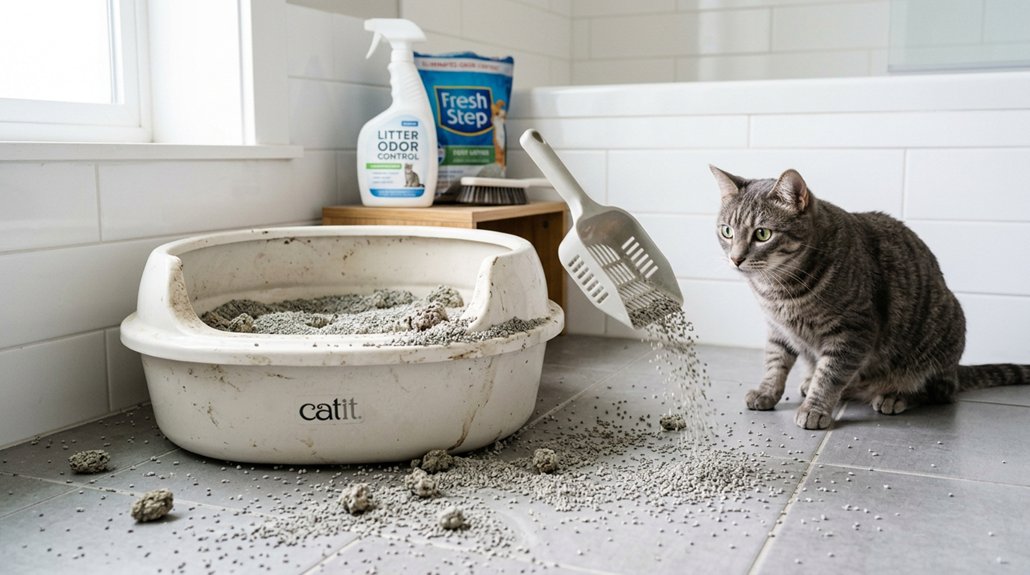
You may encounter several litter box problems, like improper hygiene or environmental stressors, which upset your cat. For medical avoidance, conditions like UTIs, arthritis, or bladder stones necessitate a vet visit. Behavioral issues can be managed by reducing stress, using pheromone diffusers, and providing multiple boxes. Make certain the box is clean and use unscented, clumping litter. Monitoring these aspects can improve your cat’s litter box usage and overall wellness; solutions are available just ahead.
Key Takeaways
- Regular scooping and weekly litter replacement are essential for maintaining a clean, welcoming litter box.
- Medical conditions like UTIs and arthritis often cause litter box avoidance and require a vet’s attention.
- Offer one litter box per cat plus an extra to reduce territorial stress in multi-cat homes.
- Stress-related avoidance can be managed with pheromone diffusers and ensuring litter boxes are in quiet, accessible locations.
- Unscented, clumping litter in a spacious box usually improves cat preference and comfort.
Common Litter Box Problems
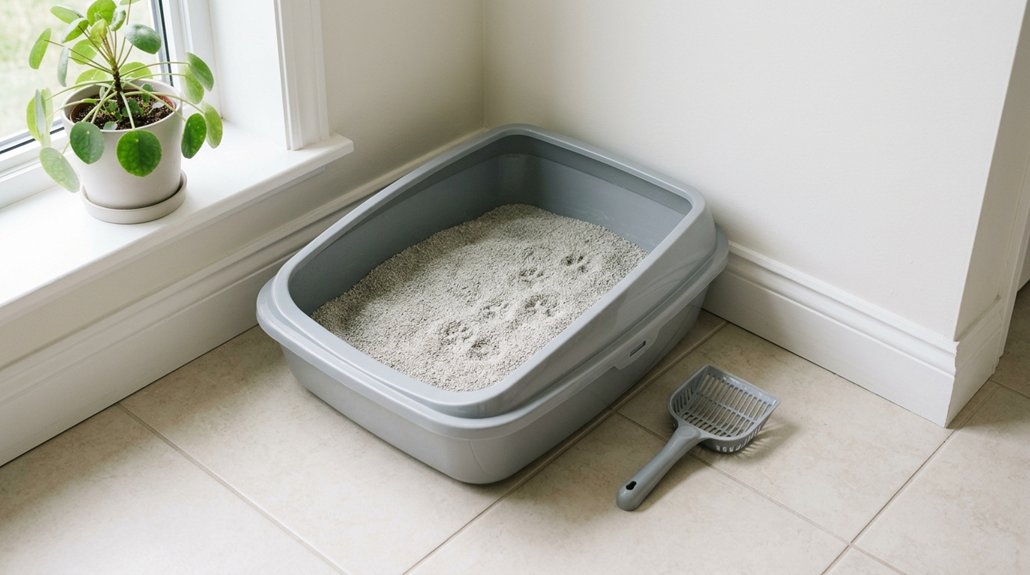
Even though litter box issues are a frequent concern among cat owners, understanding their causes can greatly enhance your ability to manage them effectively. A key aspect is diligent litter box maintenance. Scoop solid waste daily and replace the litter completely each week to guarantee an inviting environment for your cat. Moreover, in multi-cat households, providing one litter box per cat, plus an extra, reduces territorial behavior, minimizing stress and competition. Cats can be picky about litter types; experiments with various unscented, clumping litters might be necessary to find the one your cat prefers. Additionally, watch for changes in household dynamics or new pets, as these environmental stressors can trigger litter box avoidance, emphasizing the need for a secure, stable space.
Medical Causes of Litter Box Avoidance
When your cat starts avoiding the litter box, it could be a sign of underlying medical conditions such as urinary tract issues, which can make urination frequent and painful. Problems like bladder stones or crystals may block urine flow and lead to discomfort, prompting your cat to steer clear of the box altogether. These situations require prompt veterinary attention, as ignoring them could result in chronic health problems for your feline friend.
Urinary Tract Issues
Although often overlooked, medical issues such as urinary tract infections (UTIs) can be a primary cause of litter box avoidance in cats, leading to a frustrating challenge for pet owners. Recognizing UTI symptoms, like straining and blood in the urine, is vital. Effective management requires acknowledging these signs promptly. Feline cystitis, another condition affecting urinary behavior, leads to bladder inflammation and discomfort, causing cats to associate litter boxes with pain. Frequent but unproductive visits can be a key indicator. Kidney stones and blockages need urgent care, as they can escalate to severe health threats. For older cats, arthritis may complicate entry into high-sided litter boxes. Understanding these aspects guarantees your cat receives timely veterinary care, enhancing its comfort and health.
Painful Elimination Triggers
While you’re taking steps to guarantee your cat’s litter box habits remain consistent, it’s important to understand how painful elimination can trigger avoidance behaviors. Medical conditions like UTIs, interstitial cystitis, and bladder stones can cause intense pain, leading your cat to associate the litter box with discomfort. Recognizing pain symptoms, such as altered urination habits or reluctance to use the box, is essential for effective pain relief options. Obstructions require immediate vet attention. Additionally, kidney disease can cause frequent and urgent elimination, whereas arthritis might hinder box accessibility. Be proactive in pain recognition by monitoring these changes and consulting your vet for tailored solutions.
| Condition | Symptoms | Action Needed |
|---|---|---|
| UTIs | Frequent but unsuccessful urination | Consult vet |
| Feline Interstitial Cystitis | Pain, inflammation | Pain relief options |
| Arthritis | Difficulty accessing litter box | Modify litter box |
Behavioral Causes and Stress Management
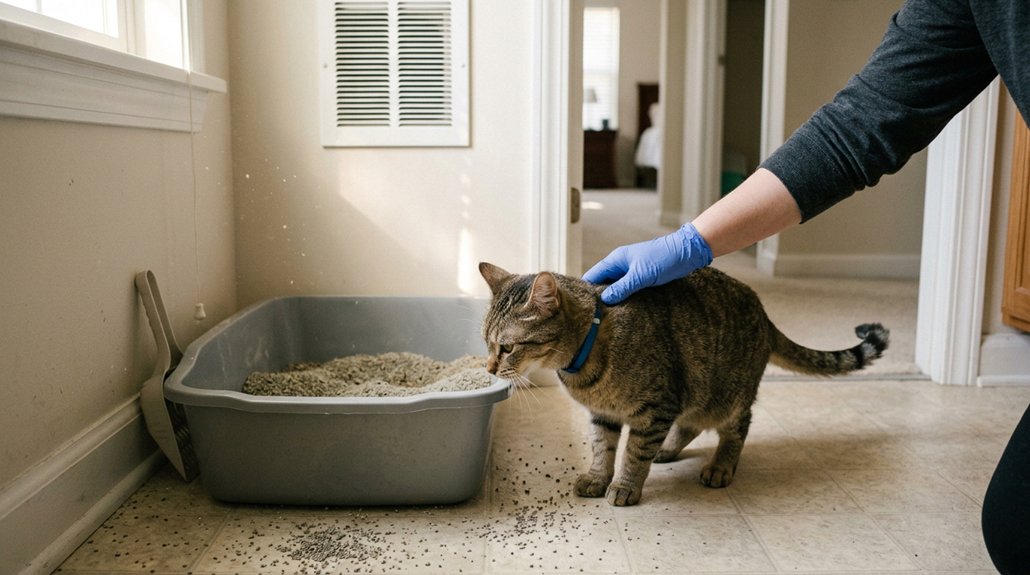
Because changes in a cat’s environment can lead to stress-related behavioral issues, understanding the root causes of litter box problems is vital for effective management and resolution. Stress triggers like environmental changes or household dynamics can cause a cat to avoid its litter box. For effective behavioral management, consider providing multiple litter boxes—one per cat plus an extra to reduce territorial stress. Incorporating calming products like pheromone diffusers can create a more serene and secure environment. Regular playtime and enrichment are essential, as they help lower stress levels, encouraging proper litter box use. Additionally, identifying household stressors, such as loud noises or high-traffic areas, and making necessary modifications can greatly improve your cat’s litter box behavior.
Where Should You Put the Litter Box?
Why is the location of your cat’s litter box so important? It greatly influences your cat’s comfort and willingness to use it. Proper litter box placement can reduce stress and prevent behavioral issues. Avoid high-traffic zones to provide a peaceful, semi-private area. Make sure the box is visible but not in confined spaces to prevent feelings of entrapment. Here are vital considerations:
- Separate from food and water: Cats naturally avoid eliminating near their eating spots.
- Quiet locations are best: Keep away from noisy areas like laundry rooms or near appliances.
- Accommodate mobility: For multi-cat homes, place litter boxes on different floors.
Taking these steps will enhance litter box visibility and access, encouraging your cat’s consistent use.
Choosing Cat-Friendly Litter and Box Types
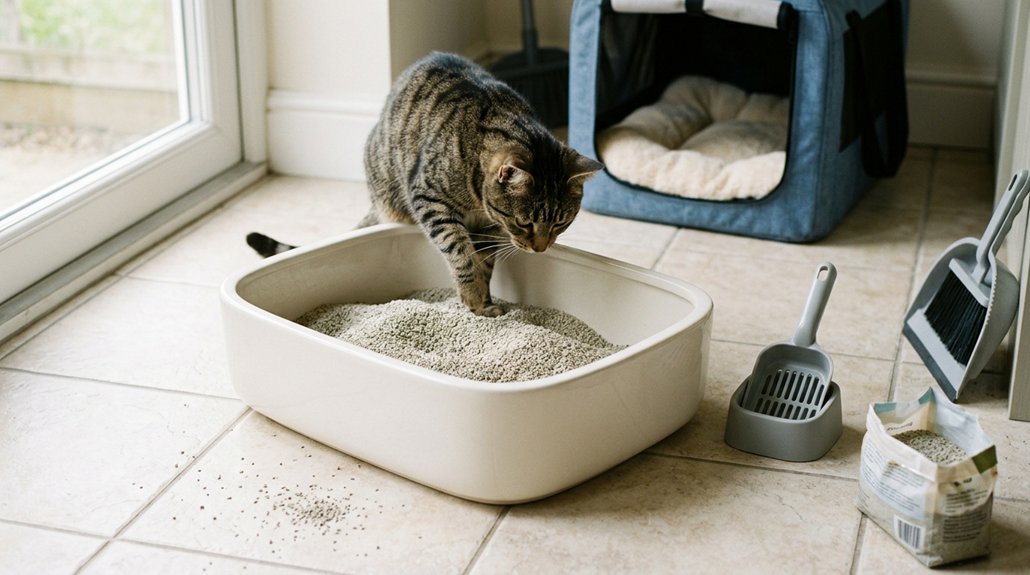
When selecting litter and boxes, prioritize your cat’s comfort by choosing unscented clumping litter, as they often prefer the texture and lack of strong fragrances. You’ll want to take into account the size of the box too, guaranteeing it’s spacious enough to accommodate cats of all sizes, especially if they have mobility challenges. Additionally, tailor your choices by observing your cat’s behavior with different litter types and box styles to make sure they feel secure and content.
Litter Texture Preferences
Understanding your cat’s litter texture preferences is essential for maintaining their comfort and encouraging proper elimination habits. Cats often exhibit strong preferences for certain textures, like clumping, unscented litter with a medium to fine texture. By conducting litter experiments, you can identify the best option for your feline friend, ensuring consistency once their preference is clear. Observing how your cat interacts with different texture variations will provide insight into their comfort levels.
To effectively determine your cat’s texture preferences, consider the following:
- Provide multiple litter boxes with different types of litter side by side.
- Maintain a consistent litter depth of around two inches to facilitate digging.
- Avoid sudden changes in litter type or texture to prevent aversion.
Box Size Considerations
Selecting the right litter box size is a vital aspect of creating an environment where your cat feels comfortable. Consider box dimensions that are at least one and a half times your cat’s length—from nose to tail tip—to allow ample space for movement and digging. Larger boxes better contain waste and suit cats with larger elimination behaviors or preferences for standing while eliminating. For kittens or elderly cats, choose shallow boxes to accommodate mobility needs. Maintaining ideal litter depth is essential—around two inches is ideal—as too much or too little litter can deter usage. Open boxes can minimize stress, providing your cat with the freedom to observe its surroundings, ensuring it feels secure while meeting its litter box needs.
Avoid Strong Fragrances
Many cats are sensitive to strong fragrances found in certain litter products, which can discourage them from using the box. Your feline friend’s scent preferences often align with plain, unscented clumping litter, fostering an environment of comfort and litter box cleanliness. It’s essential to recognize that scented options can overwhelm their delicate senses, leading to avoidance or even elimination issues.
Consider the following tips to maintain a cat-friendly litter box:
- Select Unscented Litter: Cats prefer options free from overpowering smells.
- Monitor Reaction: Observe individual preferences over time; assess which materials encourage proper use.
- Consistency is Key: Stick with familiar products to guarantee they align with your cat’s scent preferences.
Keeping the Litter Box Clean and Appealing
Maintaining a litter box that’s consistently clean and appealing is essential for your cat’s health and happiness. Proper litter box maintenance involves scooping at least once daily, preferably twice, to guarantee cleanliness and effective odor control. A clean box encourages usage and reduces the risk of health issues. Enhance satisfaction by replacing all litter weekly, providing a fresh environment. Deep clean with warm water and an enzymatic cleaner monthly to diminish stubborn odors and bacteria. Keep around two inches of litter depth to cater to your cat’s digging needs while reducing mess. Consider specialized litter formulas for odor control, further improving the box’s appeal. Your attentive care creates a welcoming space that’s integral to your cat’s well-being.
Balancing Multi-Cat Household Litter Box Needs
Managing a litter box in a single-cat household is straightforward compared to balancing the needs of a multi-cat home. When dealing with multi-cat dynamics, consider both territorial instincts and individual preferences. It’s advisable to have one litter box per cat plus an extra to minimize conflicts. Proper litter box placement is essential. Position them in various locations to cater to different preferences and reduce competition.
- Use larger, uncovered boxes to accommodate multiple cats and avoid space issues.
- Regularly clean these boxes to prevent deterring your cats and guarantee proper usage.
- Watch the cats’ interactions for signs of stress or aggression, which might signal the need for relocating or changing litter box styles.
How to Solve Litter Box Aversion
When addressing litter box aversion in cats, it’s important to contemplate both environmental and behavioral factors. Begin by ensuring there’s one litter box per cat plus an extra—competition can stress cats. Experiment with litter by providing various types of unscented, clumping litter side-by-side to enhance cat comfort. Maintain hygiene by scooping daily and washing the litter box monthly with warm water and an enzyme-based cleaner. Strategic litter box locations are vital; place boxes in quiet, accessible spots that minimize stress, avoiding loud or high-traffic areas. Always separate litter boxes from food and water zones. Evaluate litter box aversion thoroughly by addressing these elements to foster a comfortable environment for your cat.
Should You Contact a Vet or Behaviorist?
Is it time to consult a vet or behaviorist for your cat’s litter box issues? If your feline friend suddenly changes their litter habits, don’t delay a vet consultation. Medical problems like urinary tract infections require immediate attention. Here’s when you should seek professional help for your cat’s litter box behavior:
- Vet consultation is critical if there’s frequent straining or blood in urine, to rule out serious ailments.
- Behaviorist guidance becomes essential if litter box avoidance persists after other interventions, pointing to stress or environmental factors.
- Vet visit must precede behaviorist input, ensuring that no medical issue underlies behavioral signs.
Starting with a veterinarian will help identify potential treatments, while a behaviorist can address environmental or emotional causes.
Frequently Asked Questions
What Is the Best Litter for Diabetic Cats?
Choosing the best diabetic litter involves focusing on absorbent materials like clumping, unscented options made from corn or wheat. These help control odors naturally, supporting your cat’s comfort. Avoid scented versions; they may upset your cat’s sensitive nose.
Can Cat Litter Cause Sinus Infections?
“An ounce of prevention is worth a pound of cure.” Yes, cat litter’s composition, particularly dusty or scented varieties, can trigger allergy symptoms, leading to possible sinus infections. Opt for low-dust, unscented options to safeguard your sinus health.
How to Fix Litter Box Issues?
To fix litter box issues, guarantee proper litter box maintenance by scooping daily and washing regularly. Pay attention to your cat’s behavior for stress signals; switch litter types or box styles to suit their preferences and reduce anxiety.
How Often Should a Cat Pee in 24 Hours?
Your cat should urinate 2 to 4 times daily. Watch for clear to light yellow urine color, as this indicates proper hydration. Too frequent or rare urination might signal issues, so consult a vet for reassurance.
Conclusion
In all your efforts to address litter box issues, remember: understanding is key, patience is crucial, and persistence is essential. Recognize the medical signs; reduce the stressors; optimize the placement; select the right litter; maintain cleanliness consistently; balance multi-cat needs effectively; and address aversion respectfully. If challenges persist, consulting a vet or behaviorist can provide tailored solutions. By prioritizing your cat’s comfort, you create a harmonious environment, promoting both feline happiness and household peace.