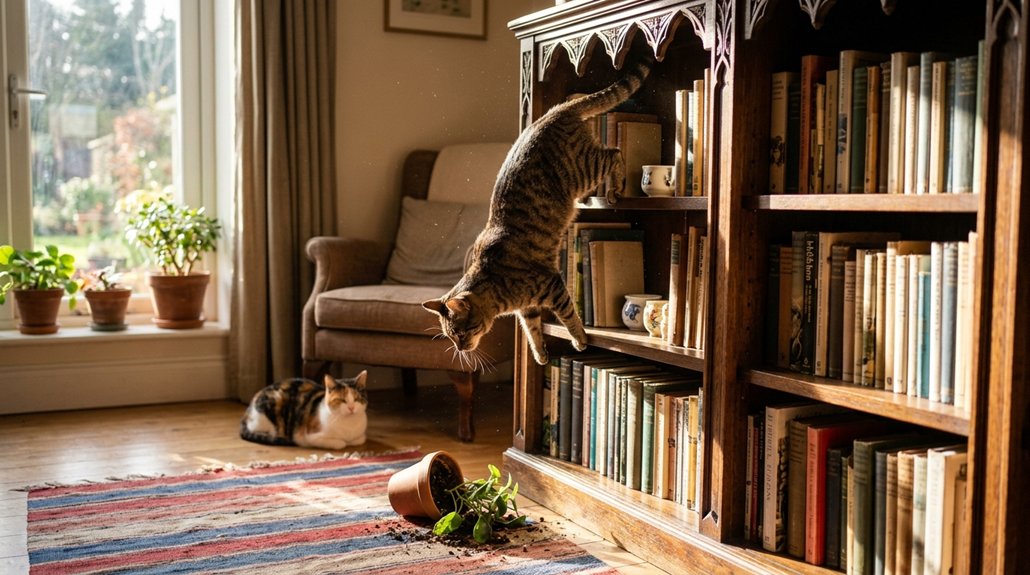
Cats climb everything due to their natural instincts for vantage points, security, and exploration. Indoors, they might climb more if there’s a lack of enrichment or vertical spaces, leading to stress-related behaviors. To manage it, offer designated climbing areas with cat trees, shelves, and cozy spots. Positive reinforcement encourages appropriate climbing while reducing unwanted actions. By providing mental stimulation and observing stress signals, you’ll better address their needs and discover additional effective strategies.
Key Takeaways
- Cats climb to express hierarchies; higher perches often signify dominance and enhance their mental stimulation.
- Lack of vertical options indoors can drive cats to climb furniture for strategic vantage points and security.
- Providing cat trees and shelves offers safe, designated climbing areas to prevent unwanted climbing behavior.
- Positive reinforcement and clicker training effectively encourage appropriate climbing behavior without using negative feedback.
- Seek professional help if compulsive climbing persists or signs of stress-related behavior are observed.
How to Manage Unwanted Cat Climbing Instincts
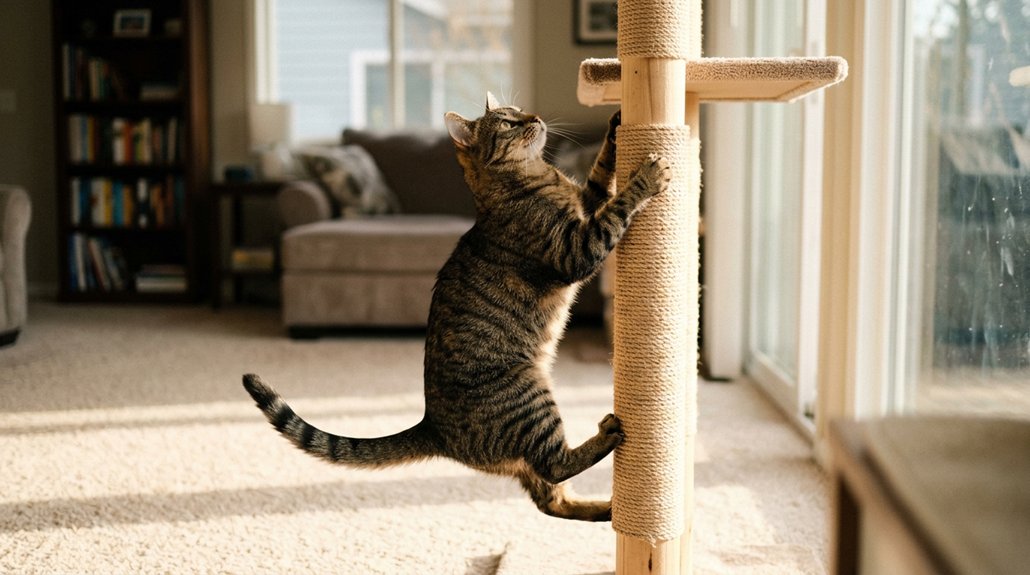
When living with cats, managing their instinctual urge to climb can be a challenge, but with the right strategies, it’s possible to redirect these behaviors effectively. Begin by focusing on climbing safety; provide designated climbing structures like cat trees or shelves to satisfy these urges. These not only offer vertical enrichment but reduce unwanted furniture and counter climbing. Use environmental deterrents such as sticky tape or plastic carpet runners on surfaces that should remain cat-free. Incorporate positive reinforcement training by rewarding your cat with treats when they use appropriate spaces. Regular interactive playtime of about 30 minutes can channel energy into acceptable activities. A calm environment rich in vertical spaces and puzzle toys keeps indoor cats mentally stimulated, helping mitigate inappropriate climbing endeavors.
Understanding Your Cat’s Natural Climbing Behavior
Having set up strategies to manage unwanted climbing, it’s just as important to understand why your feline friend loves to scale their surroundings. Cats have inherent climbing instincts rooted in their wild behavior mimicry—ascension provides them a vantage point to spy on prey and monitor for threats. For indoor cats, scaling furniture mirrors their wild counterparts, fulfilling their natural insatiable curiosity. Climbing also bestows warmth and comfort, making elevated areas ideal for quiet, secluded rest. Moreover, the act enables expression of social hierarchies; the highest perch can signify dominance within their group. Beyond these instincts, climbing offers crucial mental stimulation and physical exercise, essential to your cat’s well-being.
| Purpose of Climbing | Explanation | Benefit |
|---|---|---|
| Vantage Point | Spot prey | Observational power |
| Warmth & Comfort | Seclusion | Resting place |
| Hierarchical Display | Status signifier | Social dynamics |
| Stimulation | Mental | Overall well-being |
| Exercise | Physical | Health maintenance |
Identifying Indoor Triggers for Cat Climbing
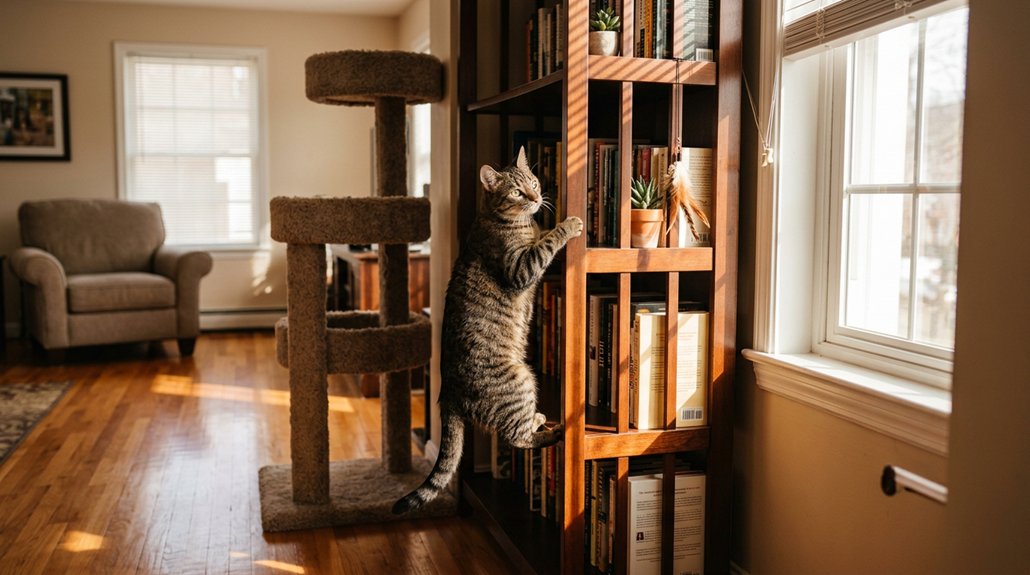
Why do cats seem to climb everything within sight in an indoor environment? Often, indoor spaces don’t offer sufficient vertical options, motivating your feline friend to scale furniture or countertops. This behavior isn’t just about scratching surfaces—cats have an instinctual drive to seek out cozy, elevated spots for comfort and security. If you’ve got children or other pets, your cat may climb to escape stressors, preferring the safety of a high perch. Additionally, without adequate environmental enrichment, your kitty might explore out of sheer boredom, leading to climbing across non-designated areas. Thoughtful furniture selection, like cat trees or shelves, can address these needs by offering safe and satisfying spaces, minimizing the impulse to climb where they shouldn’t.
Creating a Cat-Friendly Home
Understanding your cat’s innate behaviors is essential to creating a cat-friendly home that not only addresses their needs but also harmonizes with your living space. To promote climbing safety, incorporating vertical spaces like cat trees and shelves in your home designates areas where cats can safely explore. These structures provide necessary outlets for their instincts and reduce the risk of mischief. Placing perches near windows satisfies their natural curiosity, offering a front-row seat to the outside world. By including interactive elements such as puzzle toys and feeders, you enhance mental stimulation, mitigating undesired climbing behavior. Additionally, comfy resting spots like kitty condos or blankets in elevated areas give your cats the security and comfort they crave, ensuring a harmonious environment.
Providing Engaging Climbing Alternatives
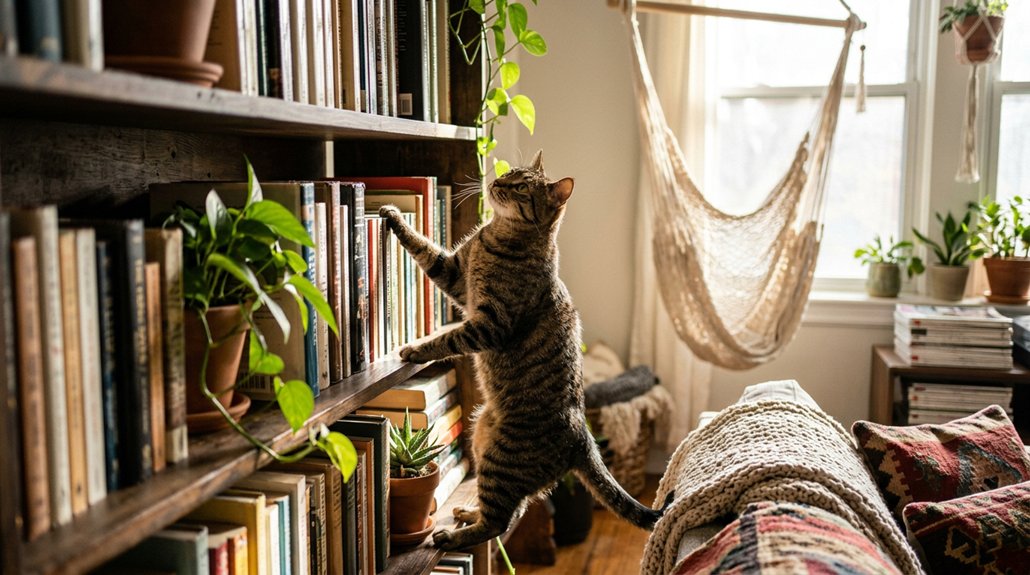
To effectively manage your cat’s natural climbing instincts, offering engaging climbing alternatives like dedicated cat trees or shelves is essential. These structures provide vertical space where your cat can satisfy its need for exploration and exercise. A well-designed cat tree, with various heights and perches, lets your cat mimic wild behaviors and find cozy spots to relax. This not only curbs unwanted climbing on furniture and countertops but also creates a secure retreat away from household commotion.
Incorporating climbing toys and interactive wall shelves into your home encourages physical activity, promoting mental and physical health. By providing stimulating environments that cater to their natural instincts, you’ll help minimize destructive behaviors and foster a well-balanced feline companion.
Techniques for Discouraging Inappropriate Climbing
When cats’ climbing behavior becomes a challenge, it’s essential to use positive reinforcement techniques that reward them for choosing appropriate spots. Equip your environment with stimulating alternatives like cat trees, which cater to their natural instincts without causing frustration. Remember, using these strategies not only redirects your feline friend’s energy but also strengthens your bond through shared understanding and trust.
Use Positive Reinforcement
One effective technique for discouraging inappropriate climbing in cats is positive reinforcement, which focuses on encouraging desired behaviors rather than punishing negative ones. By understanding your cat’s climbing instincts, you can guide them to preferred structures like cat trees. Proper reward timing is key; praise or offer a treat when your cat chooses an appropriate surface to climb. This helps them associate good behaviors with positive outcomes and reinforces their learning. Consistent training and gentle redirection can help if they attempt to climb prohibited areas. Establishing routines that foster a positive environment can decrease unwanted climbing incidents.
- Reward desired climbing immediately.
- Avoid negative feedback; cats are sensitive to criticism.
- Praise when using designated climbing structures.
- Redirect from forbidden areas.
- Engage with interactive play to tire them out.
Offer Stimulating Alternatives
While it might seem that your cat climbs as a mere act of rebellion, it’s actually an expression of their innate curiosity and need for vertical exploration. Providing stimulating environments, such as cat trees and climbing furniture near windows, satisfies these instincts and redirects their focus from countertops. By offering interactive play through toys and enrichment activities, you can engage their mind and body, diminishing boredom-driven climbing. Besides, environmental deterrents like sticky tape on surfaces act as a harmless barrier, discouraging climbing behaviors effectively.
Here’s a breakdown of solutions:
| Solution Type | Benefit | Usage Tips |
|---|---|---|
| Cat Trees | Meet climbing instincts | Place near windows for view exploration |
| Interactive Toys | Engage mind & body | Include in daily routines |
| Environmental Deterrents | Create barriers | Use sticky tape or aluminum foil |
Through these techniques, you foster a stimulating environment for your curious feline.
Benefits of Positive Reinforcement for Climbing
You can effectively guide your cat to appropriate climbing spots by using positive reinforcement techniques. Rewarding your cat with treats and praise when they choose their cat tree over the kitchen countertop not only promotes positive climbing behavior but strengthens your relationship. By focusing on reward-based training, you create a supportive environment that encourages your cat to explore designated areas with confidence and joy.
Encourage Appropriate Climbing Spots
When you use positive reinforcement like treats or praise, you encourage your cat to choose designated climbing spots such as cat trees over household furniture. Training them with climbing incentives fosters healthy habits, enhancing their well-being. By rewarding appropriate climbing behavior, you can:
- Create a stimulating environment with designated perches that fulfill their natural instincts.
- Strengthen the bond between you and your cat, making interactions more rewarding.
- Reduce territory conflicts by providing enough designated climbing areas for multiple cats.
- Improve mental health through consistent rewards that make climbing structures appealing.
- Offer physical benefits as climbing promotes exercise, helping maintain a healthy weight.
Integrating these strategies guarantees your cat enjoys climbing safely, minimizing unwanted behaviors inside your home.
Reinforce Positive Climbing Behavior
Ensuring your cat’s climbing experiences are positive doesn’t just promote the use of designated climbing areas but also fortifies the connection you share with your feline companion. By utilizing positive reinforcement, like treats and praise, you create a positive environment that encourages cats to favor cat trees over your furniture or counters. This approach not only establishes good habits but also enhances trust building between you and your cat. When your cat consistently experiences these positive interactions, it becomes a cooperative partner in the training process, greatly reducing stress. Feline behaviorists advocate for this method, highlighting its effectiveness in establishing a harmonious home. Through positive reinforcement, you cultivate an environment where your cat feels secure exploring its climbing instincts, leading to happier, stress-free experiences.
Reward-Based Training Techniques
Although cats are naturally inclined to climb, directing this instinct through reward-based training techniques can greatly benefit both the cat and its owner. Clicker training, coupled with a carefully structured reward hierarchy, transforms training into an insightful and rewarding journey for your feline friend. Positive reinforcement effectively encourages cats to choose designated climbing structures over furniture.
Here’s how you can implement this method:
- Use clicker training to mark desired climbing behaviors.
- Establish a reward hierarchy, beginning with your cat’s favorite treats.
- Reward your cat consistently for choosing appropriate surfaces.
- Keep training sessions brief and enjoyable.
- Seamlessly integrate rewards into your daily routine for natural learning.
Avoid criticism, as it’s counterproductive and promotes anxiety. This approach fosters trust and strengthens your bond with your cat.
Recognizing and Reducing Stress in Cats
Recognizing and reducing stress in cats is important for their overall well-being, as stress can manifest through behaviors such as increased climbing. Identifying stress signals, like sudden climbing spurts or feline anxiety, is a critical first step. Your cat might climb more when feeling anxious or threatened, using height as a retreat. Ensuring regular exercise and mental stimulation helps alleviate anxiety, preventing maladaptive behaviors. Incorporate routines that provide consistency and calm, essential for minimizing stress. Creating safe spaces like high perches allows your cat to seek solace when overwhelmed. Keep an eye on behavioral changes, as this helps in pinpointing stressors. Addressing these promptly is necessary for effective management, ensuring your cat remains comfortable and secure in their environment.
When to Seek Professional Help for Climbing Issues
- Climbing leads to injuries or damage at home.
- There are signs of compulsive climbing linked to disorders or stress.
- Behavior persists despite changes in the environment.
- Stress-induced climbing begins unexpectedly.
- You seek to develop effective behavior modification strategies.
A feline behaviorist or veterinarian can assess these behaviors and recommend treatments ensuring your cat’s instincts are respected. Effective management is possible with professional guidance, addressing both your cat’s well-being and your peace of mind.
Frequently Asked Questions
How Do I Get My Cat to Stop Climbing on Everything?
To address your cat’s behavior, offer climbing solutions like cat trees and shelves. Engage in daily playtime, use positive reinforcement, and provide environmental deterrents on undesired areas. Maintain a calm atmosphere to minimize stress-induced climbing.
What Is the 3-3-3 Rule for Cats?
The 3-3-3 rule is about a cat’s adjustment period: three days to explore, three weeks to adjust, and three months to feel settled. Understanding this helps manage feline behavior like cat climbing due to stress or curiosity.
What Is “I Love You” in Cat Language?
A symphony of soft purrs, gentle blinks, and delightful head butts: that’s how your feline whispers “I love you”. Deciphering cat communication and understanding feline behavior shows your bond’s deep connection based on trust and affection.
What Is a Cat’s Worst Enemy?
A cat’s worst enemy is often its own feline instincts, primarily the fear of larger predators. Your cat’s behaviors are driven by these instincts, prompting them to seek safety and control through climbing and observing from heights.
Conclusion
In understanding why your cat climbs, you’re not only addressing a behavior but nurturing a bond. Like a puzzle patiently solved, creating a cat-friendly home and redirecting their energy speaks volumes in love and care. By recognizing triggers, providing alternatives, and using positive reinforcement, you’re crafting a harmonious environment. Remember, patience is your ally. If climbing remains a challenge despite your efforts, seeking professional guidance guarantees peace of mind for both you and your feline companion.