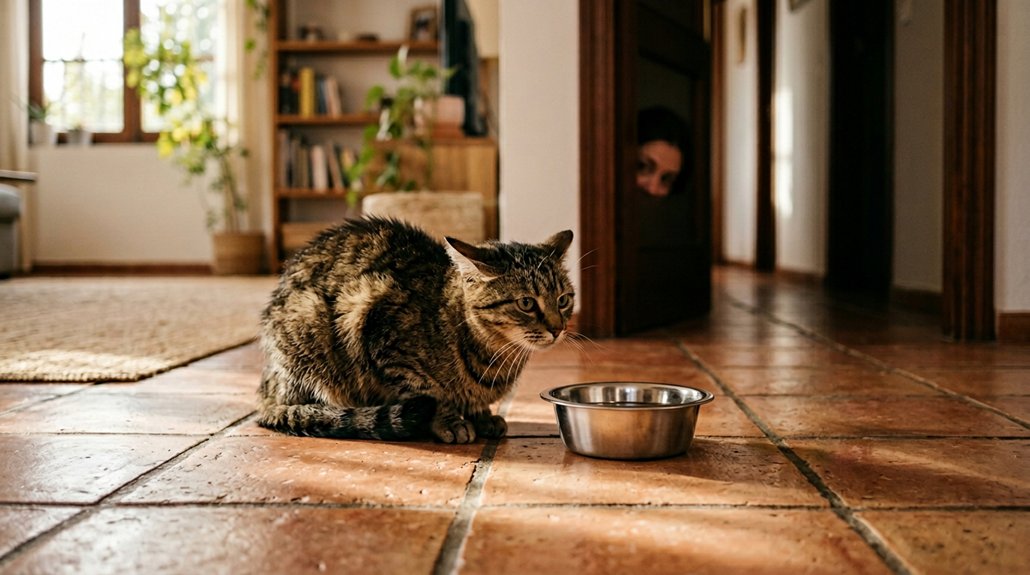
If your cat seems afraid of everything, create a designated safe space with essentials like food, water, cozy bedding, and a litter box in a quiet area. Identify stress triggers by observing behavior and limit exposure, using calming aids like pheromone diffusers. Gradually introduce new experiences at your cat’s pace and reward positive interactions. Consult a veterinarian if anxiety persists, as medical issues might be involved. There’s more to discover about calming feline fears effectively.
Key Takeaways
- Designate a quiet space with essentials where your cat can retreat from stressors.
- Monitor to identify fear triggers and limit exposure to these stressors.
- Utilize pheromone diffusers like Feliway to create a calming environment.
- Gradually desensitize your cat to anxiety-inducing stimuli using positive reinforcement.
- Consult a veterinarian for potential medical issues and tailored behavior modification plans.
Design an Emotional Safe Space for Your Cat
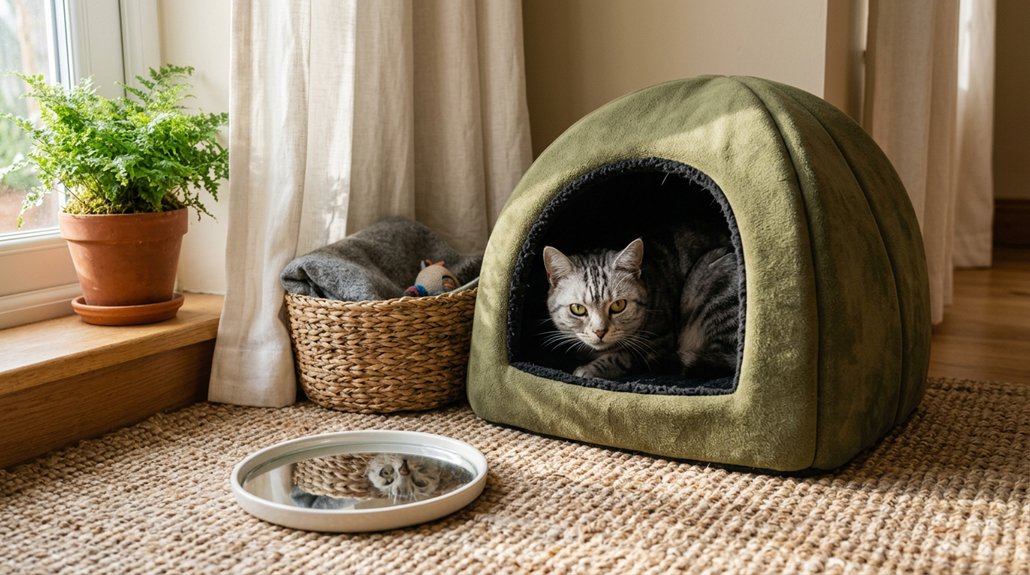
When helping your cat feel safe, consider creating a designated emotional safe space within your home. Start by selecting a quiet area that’s away from high-traffic zones and loud noises. This safe environment should include essential items like a litter box, food and water bowls, and cozy bedding. These elements guarantee comfort and security, helping your cat recognize this place as a sanctuary.
Enhance the space with vertical climbing surfaces, such as cat trees or shelves, allowing your cat to observe their surroundings from a protected height. Use calming pheromones like Feliway® to foster a soothing atmosphere. Incorporating familiar toys and cozy hiding spots encourages exploration and instills a sense of ownership, gradually building your cat’s confidence in their environment.
Identify, Minimize, and Manage Stress Triggers
Creating a sanctuary for your cat is an important step in providing comfort, but identifying and managing stress triggers is equally essential in fostering a peaceful environment. Begin by closely monitoring your cat’s behavior to pinpoint specific fear triggers such as loud noises, unfamiliar faces, or sudden movements. Look for signs like hissing, hiding, or agitated tail movements. Limit their exposure to these stressors by creating a controlled environment where known triggers are minimized. Establish a designated safe space equipped with essentials like food and a litter box for your cat to retreat and calm down. Gradually desensitize them to anxiety-inducing stimuli by introducing them slowly with positive reinforcement. Regular vet check-ups can help identify any underlying health issues contributing to their fear.
Ease Your Cat’s Anxiety With Relaxation Aids
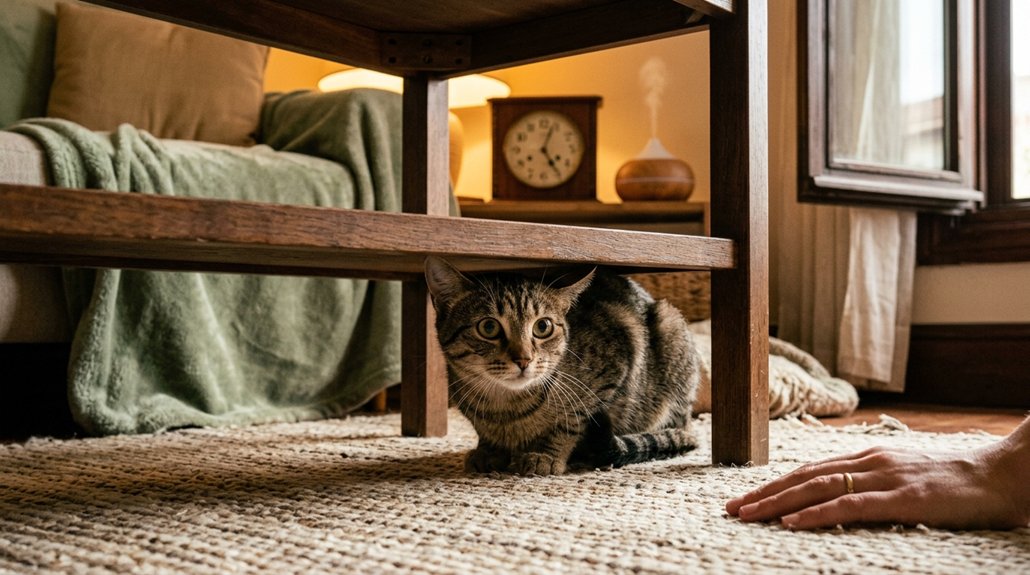
If your cat seems consistently anxious despite your best efforts to mitigate stress triggers, integrating relaxation aids into their environment can be a surefire way to enhance their comfort. Consider employing these strategies:
- Pheromone Diffusers: Use products like Feliway to mimic natural feline pheromones. These diffusers can reduce anxiety and stress, creating a serene atmosphere.
- Calming Probiotics: Administer calming probiotics such as Purina Pro Plan Calming Care consistently. These can help decrease stress hormone levels, promoting overall relaxation.
- Inviting Safe Spaces: Provide soft and familiar bedding, along with accessible hiding spots filled with cozy blankets. This encourages your cat to retreat and decompress in a secure environment, easing their anxiety effectively.
Implementing these aids can markedly improve your cat’s emotional well-being.
Guide Your Cat to New Experiences Gradually
Although adjusting to new experiences can be intimidating for a cat, guiding them gradually through this process can greatly bolster their confidence. Begin with exploration techniques in a controlled, low-pressure environment. Allow your cat to explore at their own pace, providing them with a safe space for retreat if overwhelmed. Gradual exposure to new stimuli is essential—start with quieter sounds, slowly increasing volume as they adjust, rewarding any positive behavior with treats. Supervise your cat’s exploration of new areas or home changes to guarantee they acclimate securely. When introducing new people or pets, let your cat initiate interaction to retain control. Consistency in routine and exposure helps in structuring these new challenges, framing them with positivity and reassurance.
Seek Professional Guidance for Persistent Fear
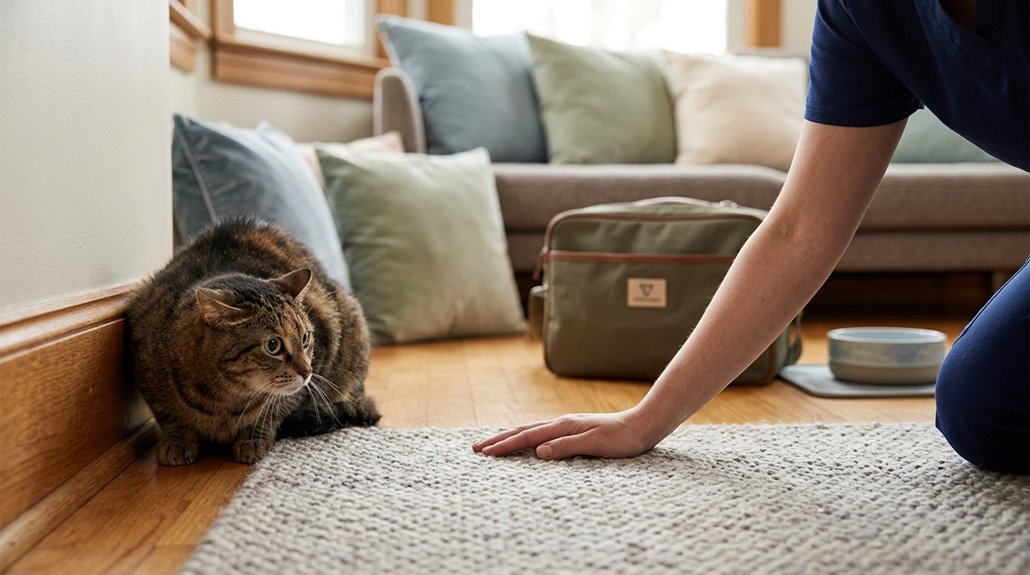
Despite the best efforts to gently introduce your cat to new experiences, some cats may still struggle with persistent fear that disrupts their daily lives. It’s essential to seek a veterinary consultation to rule out medical issues that might contribute to this anxiety. A veterinary behaviorist can provide a behavior modification plan tailored to your cat’s needs, incorporating strategies like desensitization and counterconditioning.
Consider these steps:
- Veterinary Consultation: Identify any underlying health problems impacting behavior.
- Behavior Modification Plan: Employ techniques to address specific fears and create a calming routine.
- Pheromone Diffusers: Use products like Feliway to establish a peaceful atmosphere.
Regularly monitor your cat’s progress, and remember that severe anxiety might require prescribed medication from a veterinarian.
Frequently Asked Questions
How Do I Get My Cat to Stop Being Scared of Everything?
Start with creating safe spaces where your cat feels secure. Gradually introduce desensitization techniques to fear-inducing stimuli, rewarding positive reactions with treats. Monitor stressors and seek professional advice if necessary for persistent fear issues.
What Is the 3-3-3 Rule for Cats?
“Rome wasn’t built in a day.” The 3-3-3 Rule helps cats adjust in stages: three days for fear triggers, three weeks exploring safety zones, and three months for full acclimation. Patience supports your cat’s successful adaptation.
What Is “I Love You” in Cat Language?
In cat language, “I love you” translates through body language such as slow blinking, gentle nuzzles, purring, and following you. Understanding feline communication involves observing these affectionate behaviors, which indicate trust and deep emotional connection toward you.
What Are the Signs That a Cat Is About to Pass Away?
You’ll notice signs of distress and end behavior, like significant weight loss, withdrawal, reduced grooming, altered sleep patterns, changes in appetite, or unusual vocalizations. Always consult a vet if your cat shows these concerning signs.
Conclusion
In addressing your cat’s monumental fears, you create not just a sanctuary but a feline paradise of tranquility. By meticulously identifying and obliterating stressors, integrating calming elixirs, and orchestrating a symphony of gradual exposure to new wonders, you’re fundamentally transforming into a cat whisperer. Should these Herculean efforts falter, reaching out to a seasoned behavior expert guarantees you’re equipped with a master plan. Embrace this epic quest, and watch as your eternally grateful cat thrives elegantly!