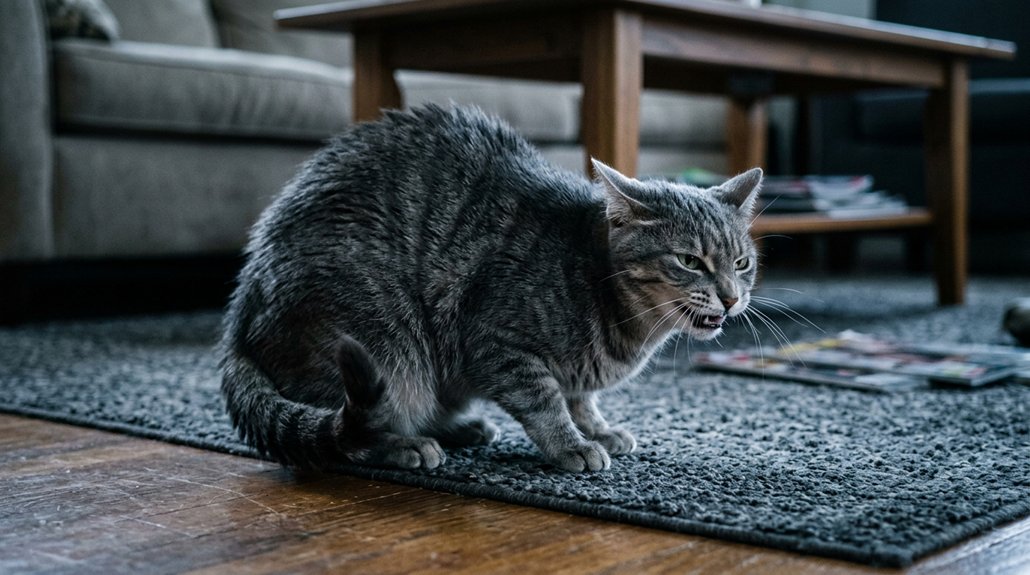
To identify when your cat might bite or attack, observe its body language closely. Dilated pupils, pinned-back ears, and a twitching tail indicate agitation. Increased vocalization, like growling or hissing, signals discomfort or threat. A stiff body posture or restlessness can also foreshadow aggression. Understanding these signs can help prevent incidents. If you recognize these behaviors, there are additional steps and strategies to enhance your cat’s comfort and reduce aggression over time.
Key Takeaways
- Dilated pupils can signal stress, arousal, or impending aggression.
- Twitching or thrashing tail indicates the cat feels threatened or agitated.
- Flattened ears reflect irritation or discomfort, suggesting potential for biting.
- Increased vocalization, such as growling or hissing, warns of looming aggression.
- Restlessness, like pacing or abrupt movements, signals an approaching attack.
How to Read Your Cat’s Signals?
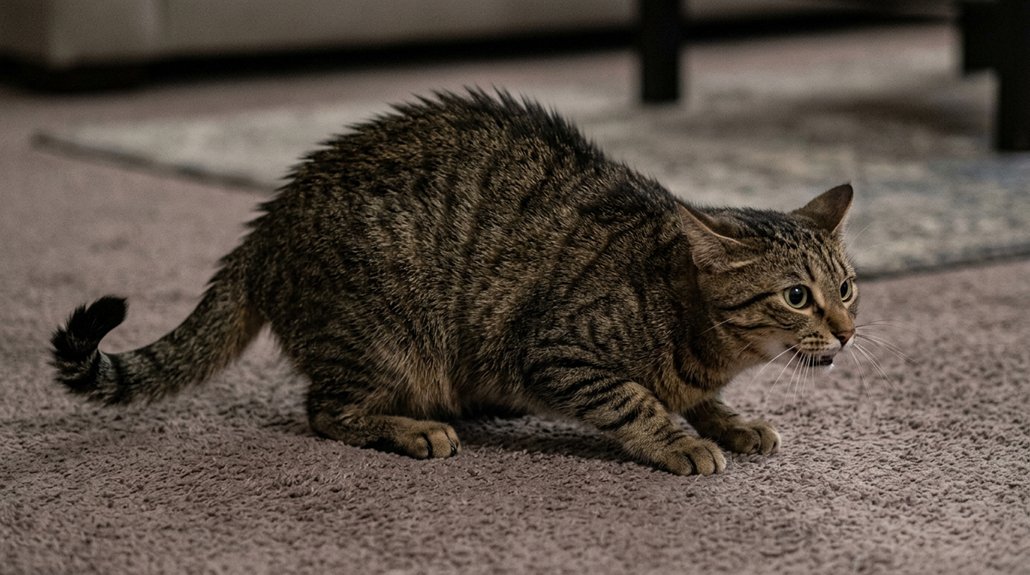
When understanding your cat’s signals, it’s crucial to recognize the subtle indicators that precede biting or attacking. Observing your cat’s body language can help identify signs of aggressive behaviors. A stiff body posture often signals fear or aggression, while pinned-back ears are another clear indicator. Pay attention to tail movements; a twitching or thrashing tail signifies agitation. An erect tail with raised hairs indicates heightened alertness or hostility. Dilated pupils shouldn’t be overlooked, as they signal excitement, fear, or aggression. Restlessness or sudden head movements towards hands or objects might foreshadow an impending bite. If your cat vocalizes through growling or hissing, it likely feels threatened or uncomfortable. It’s advisable to give the cat space and avoid escalation.
Common Triggers of Cat Aggression
Although cats are often perceived as independent and enigmatic creatures, their aggressive behaviors can typically be traced back to specific triggers. Environmental changes, such as introducing a new cat, can provoke territorial aggression. This arises when a cat perceives a threat to its territory, resulting in aggressive behavior towards intruders. Overstimulation from prolonged petting can also lead to sudden bites or scratches. Fear responses are another trigger; loud noises or unfamiliar stimuli often lead to defensive aggression. Your cat may hiss or bite out of fear when startled. Additionally, pain-induced aggression can occur if your cat has underlying medical issues like dental disease or arthritis, leading to aggression when touched in sensitive areas. Play aggression is common when hands are mistaken for prey.
Warning Signs: Is Your Cat About to Bite?
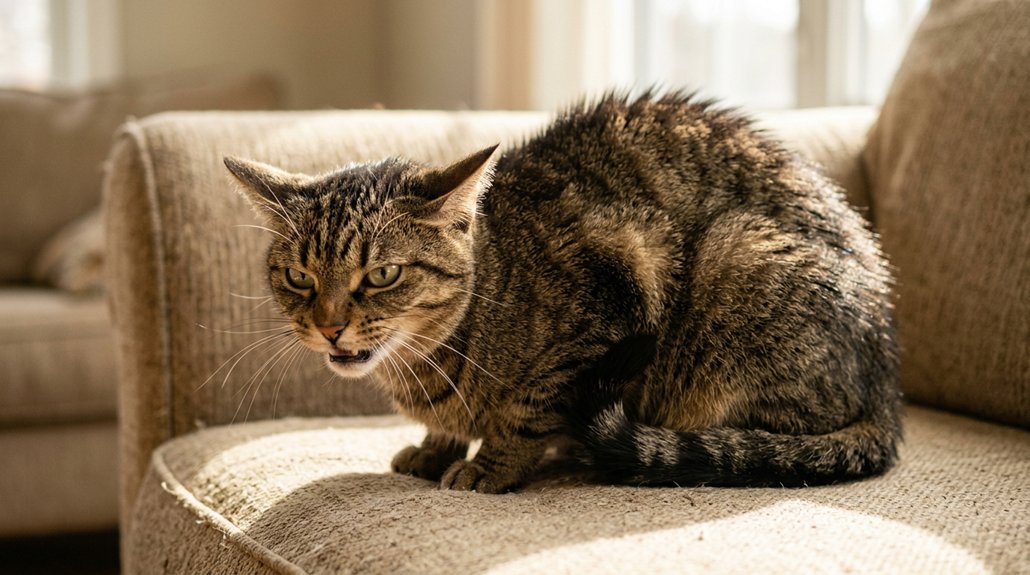
To effectively manage aggressive behaviors in cats, identifying the warning signs of a potential bite is essential. Recognizing key indicators such as dilated pupils and flattened ears can aid in bite prediction. These signs reflect heightened arousal, irritation, or fear. Observe your cat’s behavior for tail twitching or a bristled coat, suggesting a defensive stance. Restlessness manifests as pacing or abrupt movements, further alerting you to a possible aggressive episode. Vocal cues like growling or hissing are explicit warnings of discomfort. Pay attention to your cat’s body posture, particularly crouching or turning the head away with flickering ears.
| Behavior | Indication |
|---|---|
| Dilated pupils | Arousal, stress |
| Flattened ears | Irritation, fear |
| Twitching tail | Feeling threatened |
| Increased vocalization | Discomfort, agitation |
| Restlessness | Approaching biting threshold |
Preventive Steps for Immediate Tension De-escalation
Ever noticed your cat showing signs of stress like dilated pupils or pinned-back ears? These can be precursors to aggression. To avert escalation, employ playtime distractions. Introduce interactive toys that capture your cat’s focus, diverting energy away from potential hostility. Creating safe zones in your home is vital. Provide vertical spaces and hiding spots, offering your cat a sanctuary when feeling overwhelmed. This guarantees they have a retreat to diffuse stress independently. Additionally, during interaction, keep petting sessions short and confined to preferred areas like the head or chin to prevent overstimulation. Avoid loud noises and sudden movements if aggression surfaces. Instead, calmly step back to allow your cat the necessary space and time to settle.
Long-term Strategies for Reducing Cat Aggression
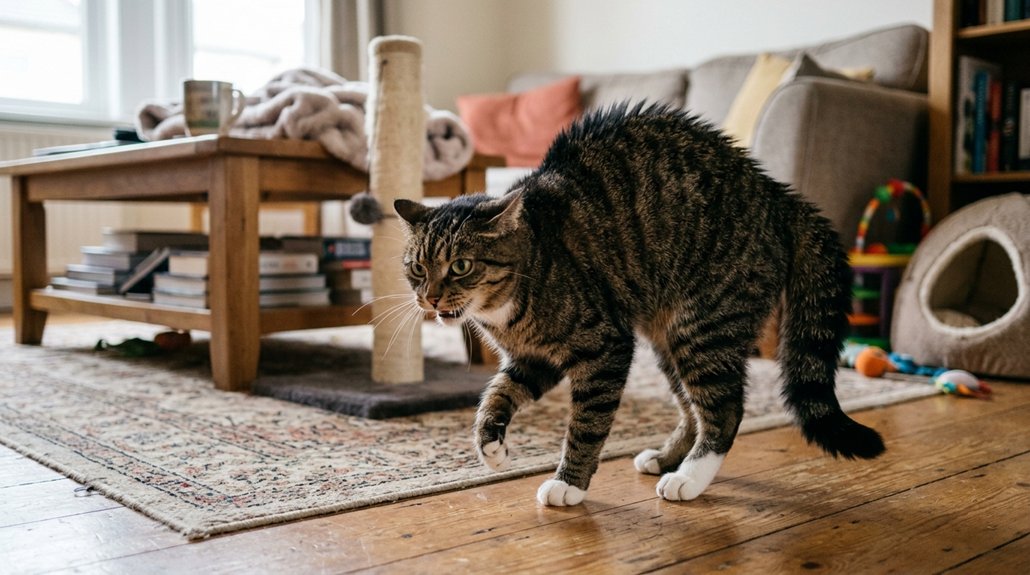
Establishing consistent routines and providing environmental enrichment are essential in reducing long-term aggression in cats. Regularly incorporate interactive toys into play sessions to engage your cat’s instinctual hunting behavior without encouraging biting. Here’s a structured approach:
- Environmental Enrichment: Offer vertical spaces and hiding spots to minimize stress, providing cats with safe areas to decompress.
- Interactive Toys: Use toys, not hands, during play to redirect playful aggression effectively.
- Observe & Intervene: Watch for signs like tail twitching or flattened ears. Address them early to prevent escalation.
- Training & Reinforcement: Use positive reinforcement to reward calm behavior, strengthening the owner-pet bond.
Gradually introducing desensitization techniques for fear-induced aggression makes cats feel secure, reducing aggression triggers considerably.
Frequently Asked Questions
How to Tell if a Cat Is Trying to Attack You?
You’re evaluating feline body language for potential aggression. Look for flattened ears, arched back, or twitching tail. Sudden movements and intense staring indicate readiness to strike. These signals suggest the cat’s preparing to attack or defend itself.
What Is the 3-3-3 Rule of Cats?
The 3-3-3 rule highlights cat behavior in new environments: 60% hide initially, adjusting stress-related behaviors. Within weeks, observe feline body language; anxiety eases. After months, they’re relaxed, comfortable, and their social interactions become more consistent.
What Is “I Love You” in Cat Language?
In feline communication, “I love you” is expressed through body language like slow blinking, purring, bunting, and kneading. These behaviors demonstrate trust and affection, indicating your cat’s comfort and attachment towards you.
What Color Cat Is Least Desired?
Black cats often face lower adoption rates due to prevalent feline color myths linking them to bad luck. Understanding cat color preferences highlights the impact of cultural bias on their desirability, despite their potential as wonderful companions.
Conclusion
In the dance of daily interactions, understanding your cat’s signals is key to avoiding unintended aggression. Recognizing common triggers and warning signs gives you a heads up when your feline friend is ready to strike. By implementing preventive measures and long-term strategies, you can help your cat feel more at ease, like calming a brewing storm. With patience and attentiveness, you’ll transform your home into a more harmonious space for both you and your cat.