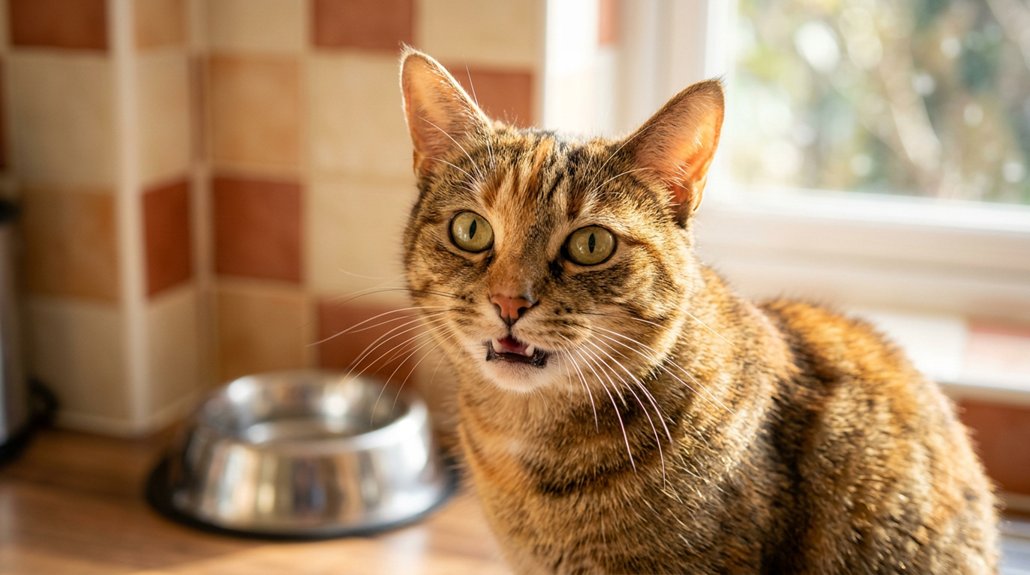
Cats meow to communicate their needs and emotions to you, acting as a bridge between feline and human worlds. Different meows convey varied messages; brief, high-pitched meows greet you warmly, while prolonged or deeper sounds indicate urgency or dissatisfaction. Rapid meowing may signal distress or health issues. Understanding these vocalizations is essential for effectively attending to your cat’s needs. With a keen ear and observation, you’ll uncover more about this fascinating feline language.
Key Takeaways
- Cats primarily meow to communicate with humans, not other cats.
- Brief, high-pitched meows often signal greetings or requests for attention.
- Prolonged or deep meows can indicate urgency or dissatisfaction with unmet needs.
- Rapid, repetitive meows may suggest discomfort or the need for medical attention.
- Understanding meowing patterns helps identify needs and strengthens the human-cat bond.
Why Do Cats Meow? Understanding the Basics
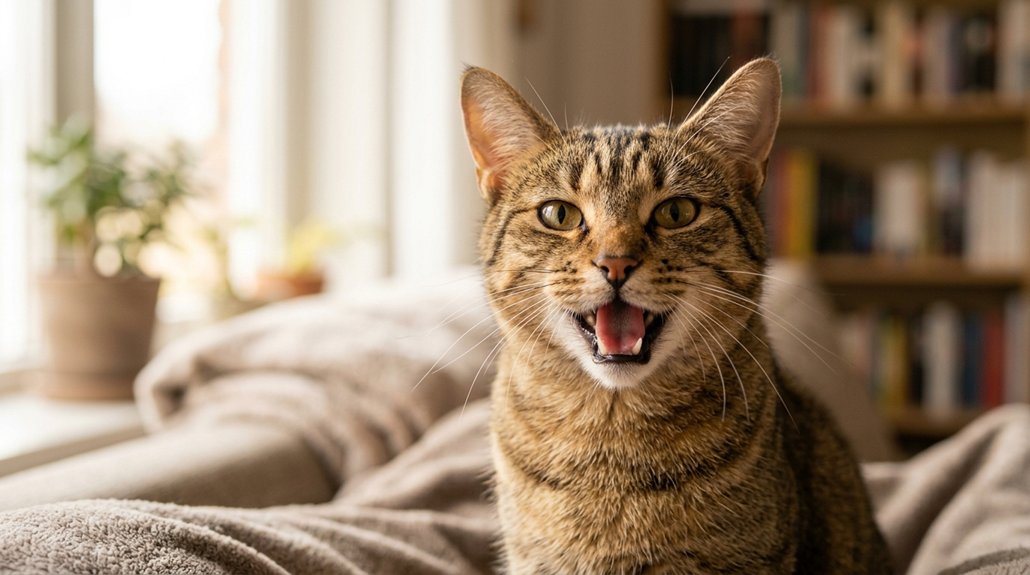
Although cats are known for their enigmatic behaviors, their meows serve as a direct communication link between them and humans. You’ve probably noticed that cats rarely meow at each other, reserving this vocalization mostly for you. This specific aspect of cat communication is intriguing since meow frequency often varies depending on their needs. A single, brief meow might simply greet you, while a series of protracted meows might demand immediate attention, signaling urgency or distress. Paying close attention to the context and patterns of these meows can help you accurately address what your feline companion wants. Excessive meowing might indicate hunger or discomfort, or even point to underlying health issues. Therefore, understanding your cat’s meowing habits becomes essential for effective interaction.
Decoding Cat Vocalizations: What Each Sound Means
When trying to interpret your cat’s vocalizations, it’s essential to take into account how different sounds communicate unique messages about their needs or emotions. A brief, friendly meow often signals a greeting or seeks attention, whereas deeper, more resonant calls suggest dissatisfaction, such as when food is scarce. In addition, recognizing the nuance in their vocal distress signals, like yowling, can help you identify whether your cat is experiencing discomfort or expressing a need for immediate attention.
Greeting and Attention Signals
Cats have developed a sophisticated range of vocalizations to communicate effectively with their human companions, each meow carrying a distinct message. Greeting behavior is one of the most common meow variations you’ll encounter. When you return home, the brief, high-pitched meow is a universal welcome, inviting interaction and acknowledging your presence. Mid-pitched meows often signal a tender request; perhaps your cat’s after a treat, having cleverly learned to use vocalization to solicit food. Cats also deploy meows to capture your attention for companionship or play, reinforcing your bond through direct communication. Just note that when the meow extends into a prolonged “mrrroooow,” your feline might need access, though we’ll explore that need more deeply in subsequent discussions.
Urgent Requests and Demands
Meows can serve several urgent purposes, each conveying a specific demand or request. When a cat emits a deep, resonant “mrrrooooowww,” it’s typically indicating dissatisfaction, such as hunger or frustration with a closed door. This sound falls within a cat’s broader communication patterns and vocal range used to guarantee their needs are met. Cats quickly learn that certain vocalizations prompt human responses, effectively turning meows into a tool for immediate attention. Conversely, brief, high-pitched meows function as an excited greeting, signaling a desire for acknowledgement. Rapid, repetitive meows may hint at discomfort or require medical attention, urging owners to take quick action. Understanding these vocal cues and their nuances improves your bond with your feline companion.
Discomfort or Distress Indicators
Understanding a cat’s vocalizations offers valuable insights into its emotional and physical state. Cats primarily meow to communicate with you, and certain vocalizations serve as discomfort indicators or distress signals. A prolonged meow or deep “mrrrooooowww” suggests dissatisfaction, often linked to unmet needs like hunger or another discomfort. Rapid sequences of meows often signal urgency, potentially indicating pain or severe distress; observing the context in which this occurs is vital. Yowling is another distress signal, frequently related to discomfort or mating behaviors in females, warranting a vet check if persistent. Differentiating specific meows, such as a high-pitched “mew” for attention or a deep “growl” denoting aggression, is essential for effectively addressing your cat’s needs.
Ever Wondered Why Your Cat’s Meowing?
Have you ever stopped to think why your cat’s meowing at you? Understanding these vocal cues requires attention to the context and possible triggers, like hunger or environmental changes, that influence their behavior. By interpreting these emotional signals accurately, you can address your cat’s needs more effectively and foster a stronger bond.
Understanding Cat Vocal Cues
Cats possess a fascinating ability to use vocalizations specifically tailored to communicate with their human companions. Understanding cat behavior can be quite revealing, especially when considering their vocal range. Cats primarily meow to express needs or emotions, whether it’s a demand for attention, a greeting, or a request for food. To enhance your connection with your cat, pay attention to:
- Various meows signify different demands or emotions, like a high-pitched meow for a friendly greeting or a prolonged mrrroooow for urgency.
- The vocal range can vary widely across breeds; Siamese cats, for instance, are particularly more vocal than their quieter Persian counterparts.
- Excessive meowing may indicate loneliness or health issues, warranting a closer look or a veterinary visit.
Deciphering Meowing Triggers
When you hear your cat meowing, it often reflects an intent to communicate specific needs or emotions, making it essential to discern what each vocalization means. Meowing triggers in cats can range from simple greetings to complex requests for food or attention; high-pitched meows often serve as welcoming communication cues, whereas prolonged mrrroooows indicate urgency. An uptick in vocalization could suggest underlying issues such as loneliness or anxiety, warranting close observation for changes in frequency or intensity. Additionally, shifts in routine or household changes are environmental factors that may increase meowing as your cat responds to stress or disorientation. By understanding these vocalizations’ context, you can greatly enhance your bond and offer better support to your cat’s emotional well-being.
Interpreting Emotional Signals
Ever wondered just why your cat insists on meowing at all hours? It’s often because they’re trying to communicate specifically with you through distinct vocal patterns. By examining these patterns, you can decode their emotional cues. A high-pitched meow can signal your cat’s excitement to see you, while a drawn-out meow might indicate they urgently need something. If they’re yowling, they could be in distress, facing either a territorial issue or an emotional one like anxiety or loneliness. Excessive meowing often hints at deeper issues that shouldn’t be ignored.
- High-Pitched Meow: Signals a warm greeting or excitement.
- Prolonged Meow: Often a distress call or urgent request.
- Excess Meowing: May indicate anxiety, loneliness, or health concerns.
Interpreting these signals fosters a stronger human-cat bond, enhancing mutual understanding.
Breed-Specific Vocalization Tendencies and What They Mean for You
Although vocalization in cats can vary widely, understanding breed-specific tendencies provides valuable insight into their behavior and communication methods. Siamese characteristics include being famously talkative, a vocal breed tendency that’s integral to their feline communication. They’re known for engaging in ongoing “conversations” with their owners, fostering a more interactive relationship. If you have a Siamese, expect frequent meows that express desires or seek attention. Oriental breeds, like the Oriental Shorthair, exhibit similar vocal behaviors.
Conversely, breeds such as the Norwegian Forest Cat and Maine Coon prefer more subtle cues through body language. Recognizing these tendencies can enhance owner interactions, allowing you to cater to your cat’s unique needs and personality traits while strengthening your bond through effective communication.
Cat Vocalization: Should Health Concerns Worry You?

Curious why your cat’s meowing has increased lately? It’s important to know that excessive vocalization can signal underlying health issues requiring prompt health evaluations. Conditions like hyperthyroidism or kidney disease are common culprits. Especially with elderly cats, cognitive decline or sensory deficits may be to blame, necessitating regular health monitoring.
Consider these key considerations:
- Increased meowing may be linked to anxiety triggers. It’s vital to identify and alleviate these to help reduce vocal stress.
- Changing meowing patterns warrant a vet check-up. Ruling out medical conditions is fundamental for your cat’s well-being.
- Frequent meowing can indicate fear or discomfort. Addressing health concerns might also alleviate emotional responses.
Monitoring vocalization context guarantees thorough care for your feline friend.
Effective Behavioral Strategies for Reducing Meowing
When managing a cat’s excessive meowing, employing effective behavioral strategies is essential for fostering a more tranquil living environment. First, observe the meowing patterns to discern the triggers—be it hunger, loneliness, or the desire to explore outdoors. Implement behavioral reinforcement by rewarding periods of silence instead of responding to the noise. Reinforcing quiet behavior conditions your cat to seek attention calmly. Consistent feeding schedules or using automatic feeders can mitigate hunger-driven meowing, promoting routine and predictability. Additionally, ensuring regular interaction or companionship addresses loneliness and reduces vocal demands. Finally, installing a cat door might satisfy their urge for adventure without constant vocal cues. By maintaining consistency in reactions, you’ll establish clear behavioral expectations, reducing overall meowing efficiently.
Strengthening Your Bond: Understanding Cat Communication
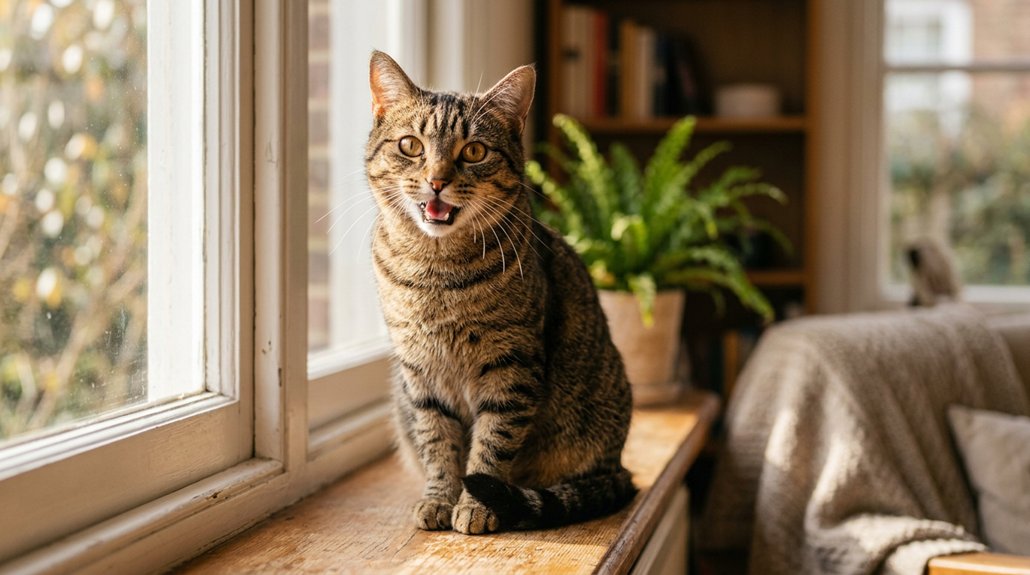
Delving into cat communication offers valuable insights into strengthening the bond between you and your feline friend. By understanding meowing variations and body language signals, you can decode your cat’s emotional nuances and enhance your interaction patterns. Meows aren’t just sounds; they’re tailored messages shaped by your responses. For instance, brief, high-pitched meows often serve as greetings, while prolonged ones indicate urgency. Additionally, learning communication through observing feline bodylanguage, such as a cat’s leaning in or head weight, reveals contentment or needs.
Understanding cat communication enhances bonds by decoding meows and body language, revealing your feline friend’s emotions and needs.
- Adapt vocal behavior by responding to each unique meow appropriately.
- Recognize and interpret subtle body language signals to meet your cat’s emotional needs.
- Foster a deeper bond by adjusting your human response to promote mutual understanding and responsive interaction.
Frequently Asked Questions
What Is My Cat Trying to Tell Me When It Meows?
Your cat’s meowing is a form of communication. Different tones and durations convey specific meanings, from greetings to urgent needs. Analyzing meowing patterns helps understand what they’re expressing, ensuring timely responses to their needs or discomforts.
What Is the 3-3-3 Rule for Cats?
The 3-3-3 rule guides cat acclimation: three days for stress and hiding, three weeks for exploration, three months for trust. It can influence cat communication and reduce meowing frequency through a structured adjustment period.
What Is a Cat’s Worst Enemy?
A cat’s worst enemy is often stress. Environmental changes, predator threats, and feline foes can elevate anxiety levels, causing health and behavioral issues. Being aware of these factors helps protect your feline from potential harm and distress.
What Is “I Love You” in Cat Language?
“I love you” in cat language involves feline communication through cat vocalizations like purring, soft meows, and trills. Couple this with slow blinks and physical touch. They’re indicators of your cat expressing affection and trust towards you.
Conclusion
Understanding your cat’s meows is like deciphering a secret code that strengthens your bond. Just as a symphony uses variations to convey emotion, your cat’s vocalizations reveal needs, moods, and even potential health issues. From breed-specific tendencies to behavioral strategies, analyzing these sounds offers insights into their world. So, don’t dismiss your feline friend’s chatter. Instead, lean in and listen—your cat’s trying to tell you something, and the answer might just surprise you.