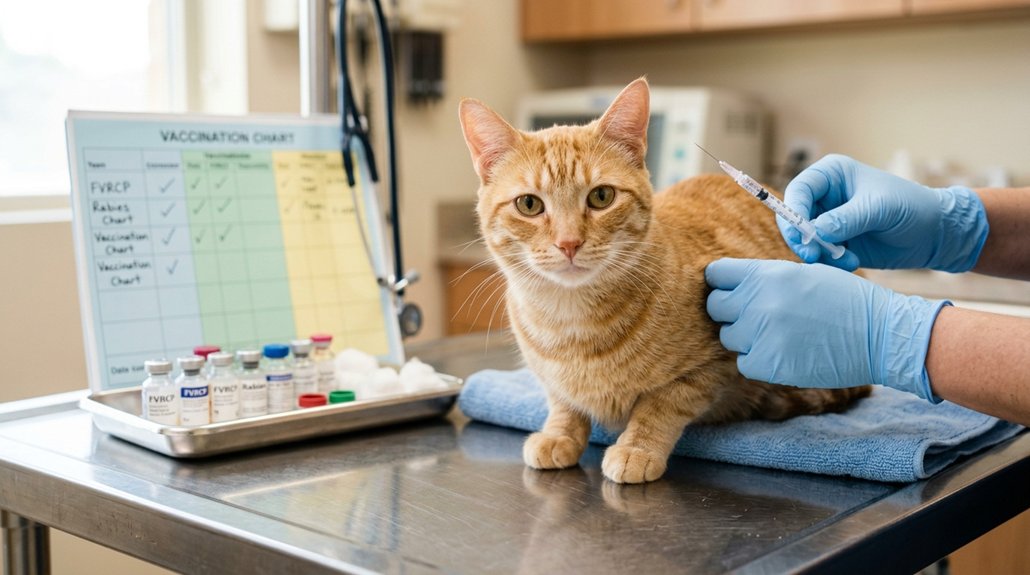
Your cat’s vaccination schedule starts when they’re a kitten, between 6 to 8 weeks. Begin with the FVRCP vaccine, followed by additional doses every 3-4 weeks, and conclude with FVRCP and rabies shots by 16 weeks. Booster shots are vital, typically needed every 1-3 years. Core vaccines like FVRCP and rabies are important, with non-core vaccines depending on lifestyle. Understanding this schedule guarantees lifelong health, and there’s much more to learn about tailored vaccination plans.
Key Takeaways
- Initial kitten vaccinations start between 6 to 8 weeks for protective immunity development.
- Core vaccines, including FVRCP and rabies, are essential for all cats regardless of lifestyle.
- Booster shots are required every 1 to 3 years to maintain immunity.
- Vaccination schedules may be personalized based on the cat’s age, health, and lifestyle.
- Regular veterinary consultations help adjust vaccination plans for optimal cat health.
Why Vaccinate Your Cat: Health Benefits
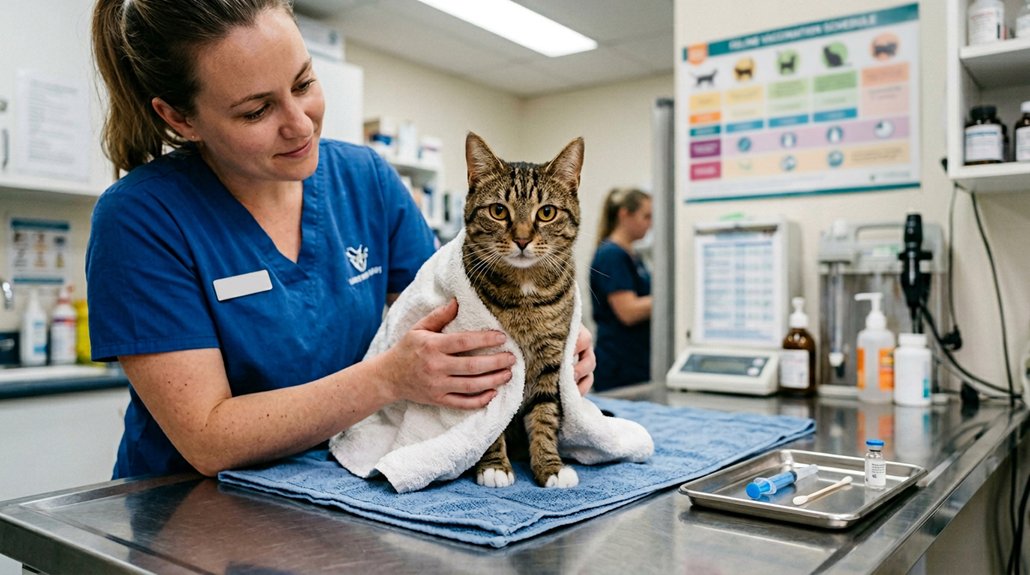
Vaccinating your cat offers numerous health benefits, shielding them from potentially devastating diseases like feline leukemia, rabies, and panleukopenia. These diseases aren’t only contagious but can be life-threatening if left unchecked. With the prevalence of vaccine misinformation and health misconceptions, it’s essential to rely on factual evidence: vaccines are a vital preventive measure that promotes your pet’s well-being. Following a vaccination schedule starting at 6 to 8 weeks guarantees your cat develops lasting immunity through doses every 3 to 4 weeks until they reach 12 to 16 weeks. This process not only protects your cat but contributes to herd immunity, reducing the risk of outbreak within the feline community and preventing disease transmission to other pets and humans.
Core vs. Non-Core Vaccines: What’s Essential?
While considering your cat’s health needs, it is important to differentiate between core and non-core vaccines. Core vaccines, such as Rabies and FVRCP, are essential for every cat, regardless of lifestyle. The Rabies vaccine is not only a legal requirement in many areas but a key measure against zoonotic diseases. FVRCP protects against severe illnesses like Feline Rhinotracheitis Virus, Feline Calicivirus, and Feline Panleukopenia, ensuring overall well-being.
Non-core vaccines, however, depend on specific factors such as your cat’s environment and potential exposure risks. For example, the Bordetella vaccine may be recommended for cats in multi-cat households. Regular assessment and updates of your cat’s vaccination schedule are critical, as lifestyle shifts can alter the necessity of non-core vaccines.
When Should You Start Kitten Vaccinations?
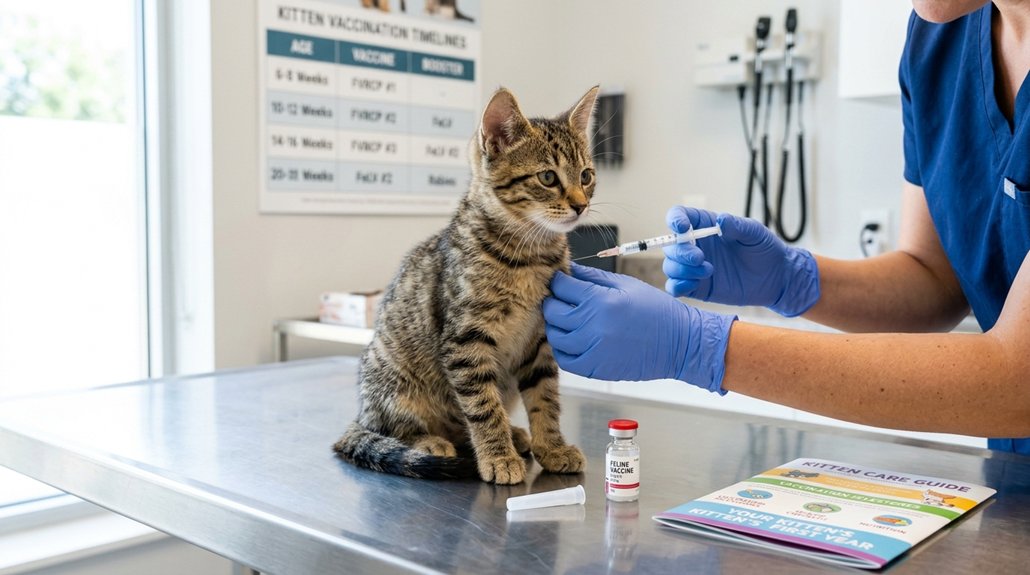
Deciding when to begin your kitten’s vaccination journey is an integral part of safeguarding their health. At the kitten age of 6 to 8 weeks, you should initiate their vaccinations. This critical step helps establish early immunity against serious diseases. The primary vaccine type administered during this time is the FVRCP combination vaccine, which guards against feline viral rhinotracheitis, calicivirus, and panleukopenia. To guarantee thorough protection, kittens will require additional vaccine doses every 3 to 4 weeks, continuing until they reach 12 to 16 weeks old. During this period, the final round of vaccinations, including possibly a rabies vaccine, should be completed. It’s essential to adhere to this schedule, ensuring your kitten develops strong and lasting immunity.
Kittens’ Vaccination Timeline: Key Milestones
You’ll want to begin your kitten’s vaccinations between 6 to 8 weeks of age to lay the foundation for a robust immune system. The FVRCP series, starting as early as 6 weeks and repeated every 3-4 weeks, and the rabies vaccine by 12 to 16 weeks, are key milestones in their early health regime. Remember, these initial vaccinations should be followed by a one-year booster to guarantee continued protection against serious diseases.
Initial Vaccination Timing
Starting your kitten’s vaccination schedule at the right time is imperative to safeguard their health against serious diseases. You should begin when your kitten is between 6 to 8 weeks of age. Sticking to the timeline is essential, as vaccination gaps can leave your kitten vulnerable. Here’s a timeline to help guide you:
- FVRCP Vaccine: Administer the first dose between 6 to 8 weeks, followed by doses every 3-4 weeks.
- Second FVRCP Dose: At kitten age 9 to 11 weeks, ensuring continued protection.
- Final FVRCP & Rabies Shots: Given between 12 to 16 weeks.
- FeLV Vaccine: Consider based on your kitten’s risk of exposure to outdoor cats.
Completing all initial vaccinations by 16 weeks is crucial for ideal immunity.
Booster Shots Schedule
Once your kitten’s initial vaccination series is complete by around 16 weeks, the focus shifts to guaranteeing long-term protection through booster shots. Boosters are crucial for maintaining immunity against core diseases like FVRCP and rabies. The first-year booster is administered 12 months after your kitten’s last dose during the initial series. This 1-year booster is essential in solidifying your cat’s defenses as it matures into adulthood. Additionally, boosters benefit your cat by adapting to changes in immunity needs, influenced by health factors and new environments.
It’s important to adhere to the recommended booster schedule, usually every one to three years for adult cats. This guarantees that their immune system stays robust, reducing the risk of contracting preventable illnesses. Regularly scheduled boosters can markedly enhance your cat’s overall health.
Adult Cats and Vaccination Schedules
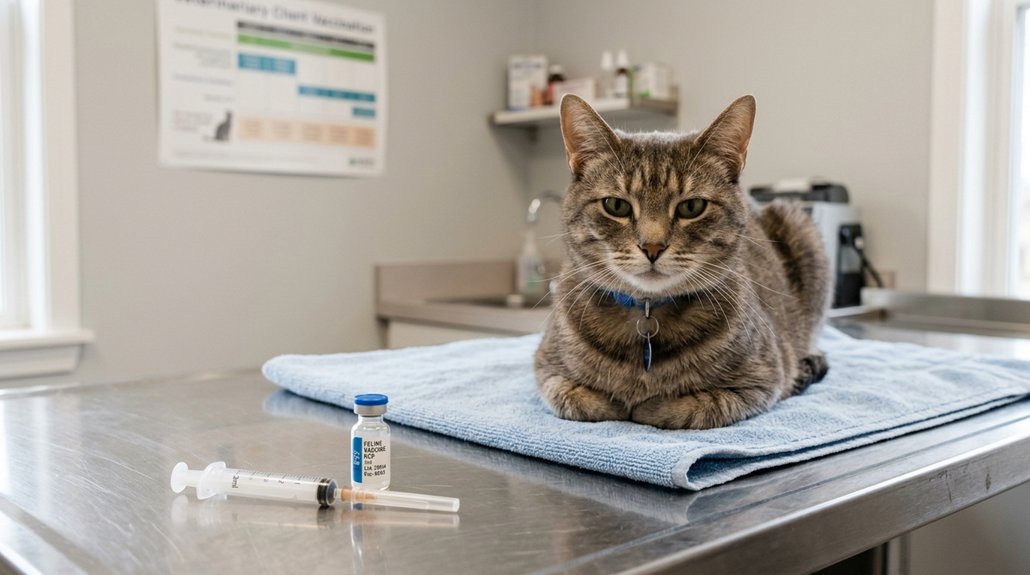
As a cat owner, you’ll need to guarantee your adult cat receives vaccination boosters, typically every one to three years, to maintain immunity against diseases like rabies and the FVRCP combination. Tailoring your cat’s vaccination plan involves evaluating their lifestyle and environmental exposure risks to decide on necessary non-core vaccines. Regular veterinary consultations will guarantee your cat’s vaccine schedule is adjusted appropriately, considering their health status and potential reactions.
Booster Shot Frequency
Understanding the booster shot frequency for adult cats is a significant aspect of responsible pet ownership. Recognizing the booster shot importance guarantees your feline friend stays healthy while adhering to the vaccination timeline adjustments advised by your veterinarian. Here’s what you need to know:
- Core Vaccinations: FVRCP and rabies boosters are usually due every one to three years. Your vet’s guidance is imperative, as these timelines may vary.
- One-Year Booster: After your cat’s initial kitten series, a one-year booster is fundamental to maintain immunity.
- Local Regulations: Rabies vaccine renewal might be required annually or triennially, depending on local laws.
- Non-Core Vaccines: The need and frequency for these are based on your cat’s exposure risk and lifestyle.
Regular vet consultations help tailor the best schedule.
Tailored Vaccination Plans
While crafting a tailored vaccination plan for your adult cat, it is vital to take into account various individualized factors that safeguard their health and well-being. Personalized vaccination schedules hinge on understanding your cat’s unique needs, blending age, health status, previous vaccination history, and lifestyle considerations. Core vaccines such as rabies and FVRCP remain important, with boosters required every one to three years. However, non-core vaccines should be assessed based on specific exposure risks. A shift in your cat’s lifestyle, such as moving to a multi-cat household or roaming outdoors, requires re-evaluating their vaccination plan. Regular veterinary consultations guarantee your cat’s plan stays current, providing updates tailored to their evolving circumstances and promising sustained protection against potential pathogens.
Risk Assessment Factors
Thorough risk assessments are essential for establishing effective vaccination schedules for adult cats. By evaluating your cat’s exposure history and lifestyle impact, you and your veterinarian can tailor a vaccination plan specifically for them. Consider these key factors:
- Exposure History: Understand previous contact with pathogens to determine non-core vaccines’ necessity.
- Lifestyle Impact: Assess how your cat’s daily environment and interactions influence their health risks.
- Health Status: Regular health checks guarantee vaccines align with your cat’s current well-being.
- Location: Local disease prevalence impacts the vaccine types and booster frequency needed.
Consult your vet regularly to adapt the schedule as your cat’s circumstances change. Maintain accurate vaccination records for travel or boarding purposes, safeguarding your feline friend’s health and safety.
The Importance of Vaccine Boosters
When it comes to maintaining your cat’s health, vaccine boosters play a vital role in ensuring their long-term well-being. Booster importance lies in their ability to maintain immunity by enhancing your cat’s protective response against diseases. Vaccination compliance is essential, as core vaccines like FVRCP and rabies typically require boosters every one to three years. This schedule can vary based on specific vaccines and your cat’s lifestyle. After completing the initial vaccination series by 16 weeks, kittens need a 1-year booster to solidify immunity. For adult cats with uncertain history, starting anew with primary vaccines plus boosters is important for adequate disease protection. Regular veterinary consultations help tailor booster timing, considering your cat’s health, lifestyle, and potential pathogen exposure.
Vaccine Side Effects: What to Watch For
After your cat’s vaccination, it’s important to watch for common mild reactions such as soreness at the injection site, decreased appetite, sleepiness, and a mild fever, which typically resolve within 24 to 72 hours. However, be attentive to any signs of more severe reactions like facial swelling, difficulty breathing, vomiting, diarrhea, or collapse, as these rare but serious symptoms require immediate veterinary attention. If mild symptoms worsen or persist beyond 24 hours, contacting your veterinarian is advisable to guarantee your cat receives appropriate care.
Common Mild Reactions
- Observe: Keep a close eye on your cat for any changes.
- Comfort: Provide a calm resting area to help them relax.
- Hydrate: Encourage fluid intake if appetite decreases.
- Consult: Contact your vet if mild symptoms worsen or persist beyond a few days.
Severe Reaction Indicators
Severe reactions to vaccines in cats, although rare, demand immediate attention due to their potential life-threatening nature. You need to be vigilant for symptoms such as facial swelling, difficulty breathing, or sudden collapse. These symptoms might indicate a severe allergic reaction, requiring swift reaction management. If you observe severe vomiting, diarrhea, or refusal to eat and drink for more than 24 hours, it calls for an emergency response by contacting your veterinarian promptly.
Symptoms can appear within hours, so closely monitoring your cat’s behavior after vaccination is essential. Injection site reactions like swelling or warmth should also be observed, as persistent changes might signal a problem. Your cat’s unusual lethargy or disorientation post-vaccination is another red flag necessitating urgent care.
When to Contact Vet
Regular monitoring post-vaccination is paramount in ensuring your cat’s safety and well-being. Recognizing potential cat vaccination concerns early allows for prompt intervention. Watch for common mild side effects such as soreness, sleepiness, decreased appetite, and mild fever, which usually resolve within 24 to 72 hours. However, immediate veterinary consultation is essential if you observe:
- Severe symptoms: facial swelling, difficulty breathing, collapse, persistent vomiting, or diarrhea.
- Prolonged anorexia: refusing food and water for over 24 hours.
- Worsening mild symptoms: increased swelling, heat at injection site, unusual lethargy, or disorientation.
- Future planning: Document adverse reactions for vaccination consultation tips in future veterinary visits.
Timely intervention leads to better outcomes and improved future vaccination strategies.
Saving on Cat Vaccination Costs
Steering through the costs of cat vaccinations doesn’t have to be overwhelming if you take advantage of available resources and strategies. Community clinics often offer low-cost or even free vaccination options, which can greatly ease your financial burden. Many veterinarians provide wellness plans that bundle vaccinations with other preventive care, reducing overall expenses. Additionally, explore financial assistance programs offered by some organizations and veterinary practices. Budgeting is crucial, as vaccination costs typically range from $15 to $40 per vaccine, emphasizing the importance of adhering to the recommended schedule. Preventive care is generally more cost-effective than treating illnesses preventable by vaccines. By staying informed and utilizing available resources, you can guarantee your cat receives necessary vaccinations without incurring excessive expenses.
Debunking Common Cat Vaccination Myths
While managing the cost of vaccinations is important, it’s equally essential to separate facts from fiction when protecting your feline friend. Let’s address some prevalent vaccine myths:
- Indoor Cats Don’t Need Vaccines: Even homebound cats face risks from human visitors or pets that interact with the outside world. Core vaccinations are essential for their safety.
- Vaccines Cause Autism: This vaccination misconception is unsupported by science. The benefits of vaccinating your cat greatly outweigh any unproven risks.
- One Shot is Enough: Most vaccines require boosters for lasting protection.
- Non-Core Vaccines are Unnecessary: Depending on your cat’s lifestyle, such vaccines can be significant, particularly in communal environments or with frequent animal contact.
Integrating Vaccination in Cat Health Care
When considering your cat’s health care routine, incorporating a thorough vaccination schedule is paramount. Vaccinations, starting at 6-8 weeks, are key preventive measures against diseases like rabies and panleukopenia. Core vaccines such as FVRCP and rabies should be standard for all cats. Non-core vaccines may be integrated based on your cat’s lifestyle and environmental risks, providing personalized health maintenance. Regular veterinary visits guarantee vaccinations adhere to a schedule, maintaining immunity with necessary boosters every one to three years. These visits also allow for the development of a vaccination plan tailored to your cat’s health, age, and exposure risks. Keep an up-to-date vaccination record for travel, boarding, and emergencies, proving immunization and meeting legal requirements.
Frequently Asked Questions
What Is the 3-3-3 Rule of Cats?
The 3-3-3 rule helps you acclimate your cat over time: three days to settle, three weeks to adjust behaviorally, and three months to enhance feline health with full integration, ensuring they’re comfortable and stress-free.
Do Muslims Get Their Children Vaccinated?
Yes, as a Muslim parent, you likely support vaccinating your children. While cultural beliefs and vaccination misconceptions can sometimes cause hesitation, many Islamic scholars and health organizations emphasize the benefits, aligning health preservation with religious teachings.
What Is the 3/2/1 Rule for Cat Vaccines?
Did you know that 95% of cats develop immunity through proper vaccination? The 3/2/1 rule for cat vaccinations covers critical vaccine types like FVRCP and rabies, ensuring long-term benefits and personalized scheduling based on individual feline needs.
What Is the 3-2-1 Rule for Cats?
The 3-2-1 rule for cats helps you monitor your cat’s health post-vaccination. If a lump exceeds 3 centimeters, lasts over 2 months, or needs several vet visits, it’s essential for evaluating vaccination benefits versus risks.
Conclusion
So, you’ve survived the labyrinth of cat vaccinations! You’re now equipped to juggle core and non-core vaccines like a pro while being mindful of both health benefits and potential side effects. Don’t forget, as your feline overlord ages, you’ll continue this delicate dance into adulthood. As for saving costs, remember: your kitty’s well-being is priceless, unlike that gourmet coffee habit. Finally, don’t fall for myths; cats are counting on you for truths, and not just treats!