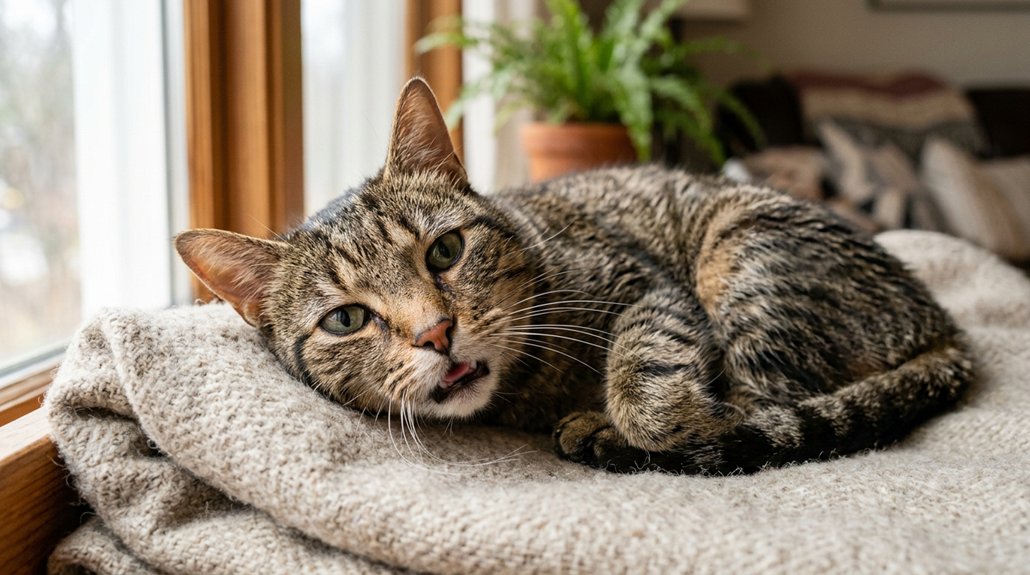
To determine if your cat has a fever, observe for lethargy, appetite loss, or increased hiding. Physical signs include warm ears or paws and rapid heart rate. Use a digital rectal thermometer to confirm a temperature above 102.5º F indicates a fever. Guarantee a calm environment for accurate measurement and never give human medications. Persistently high temperatures or concerning behaviors warrant veterinary attention. There’s more to explore on the specific causes and ideal care strategies.
Key Takeaways
- Observe if the cat’s body temperature exceeds 102.5º F, confirming fever presence.
- Look for symptoms such as lethargy, loss of appetite, and increased isolation.
- Feel for warm ears or paws, which may suggest fever.
- Notice any shivering or rapid heart rate indicating potential fever.
- Persistent symptoms or a temperature above 104º F necessitate immediate veterinary evaluation.
How to Identify Fever in Your Cat
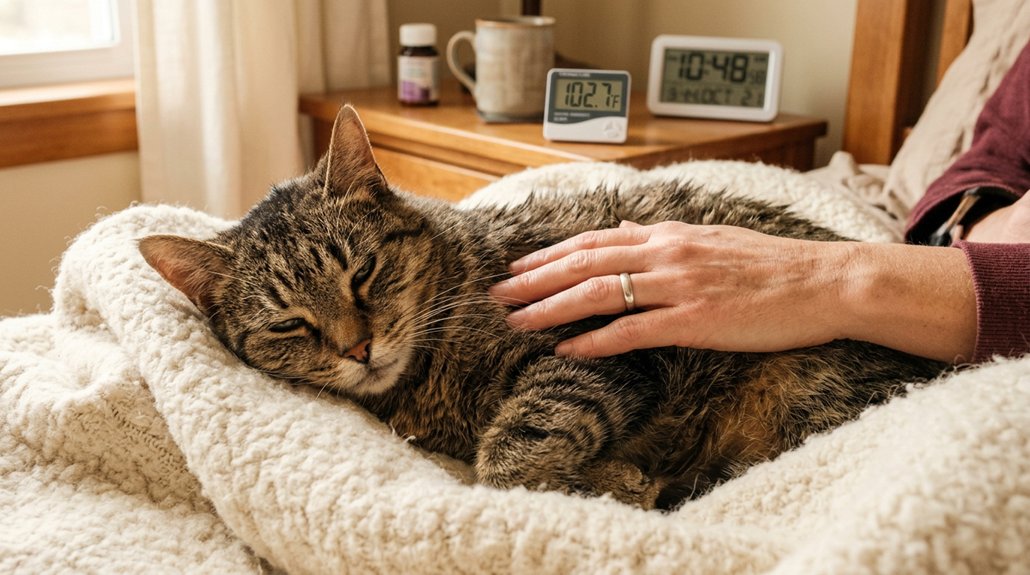
While it might be tempting to assume your cat’s sudden change in behavior is nothing serious, recognizing the signs of fever is crucial for timely intervention. Vigilance in observing your cat’s health can aid in fever prevention. A fever in cats is marked by a body temperature exceeding 102.5º F, with symptoms like lethargy, decreased grooming, and warm ears or paws. Cats may also exhibit loss of appetite or prefer hiding. Elevated temperatures can reach critical levels over 106º F, posing significant health risks. Particularly, shivering and a rapid heart rate can signal fever’s onset. Monitoring these signs guarantees your pet’s well-being. If any symptoms persist beyond 24 hours or temperatures exceed 104º F, seek medical attention promptly.
Safely Taking Your Cat’s Temperature
To guarantee an accurate assessment of your cat’s temperature, use a digital or pediatric rectal thermometer, and lubricate it with petroleum jelly prior to insertion. Gently restrain your cat by wrapping them in a towel, leaving their rear exposed, to minimize stress and movement. Insert the thermometer about one inch into the rectum and keep it steady for at least two minutes while providing reassuring strokes or a calming voice.
Using a Rectal Thermometer
Taking your cat’s temperature is a task that requires both precision and care. Using a digital or pediatric rectal thermometer provides the most accurate assessment of feline health. Prior to insertion, apply a small amount of petroleum jelly to the thermometer for comfort.
| Step | Description |
|---|---|
| Thermometer Type | Choose digital or pediatric rectal thermometer for accuracy |
| Lubrication | Apply petroleum jelly to the thermometer tip |
| Insertion Depth | Gently insert about one inch into the cat’s rectum |
| Reading Time | Hold in place for at least two minutes |
During this procedure, maintain a steady hand. Safely restrain your cat—consider getting assistance. The normal range for feline body temperature is 100.4º to 102.5º Fahrenheit. Readings above 102.5º F suggest a fever.
Calming and Restraining Tips
Many find that remaining composed themselves can greatly aid in calming their cat during temperature measurement. Implementing cat comfort techniques requires guaranteeing the area is quiet and distraction-free. Gently restrain your cat using a towel or blanket to cover its body, leaving only the head exposed. This calming restraint helps minimize movement and stress. Speaking softly or gently petting your cat further assists in soothing the animal, promoting a serene environment for temperature assessment.
Consider enlisting a second person to help hold the cat securely, freeing you to focus on proper thermometer insertion. Apply lubricant like petroleum jelly to the thermometer tip before insertion to guarantee it’s as smooth as possible. These steps prioritize comfort and safety while effectively measuring your cat’s temperature.
Common Causes of Fever in Cats
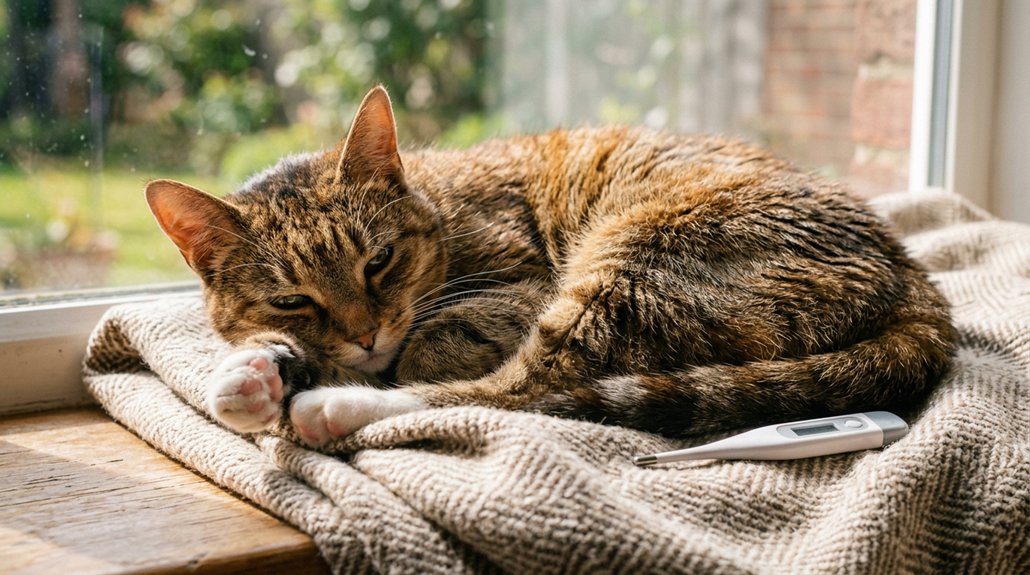
A fever in cats is typically an indication of an underlying issue that requires attention, often stemming from various causes. Fever symptoms might arise due to infections initiated by bacteria, viruses, or fungi, as the immune system responds to such invasions. Injuries might also elevate body temperatures through an inflammatory response. Additionally, consider the medications your cat is taking; some can induce fever as a side effect, necessitating vigilant monitoring. Moreover, tumors or autoimmune disorders like lupus can lead to persistent fevers. Outdoor cats face increased risks for certain diseases, particularly Cytauxzoonosis and Toxoplasmosis, which exhibit profound fever symptoms. Understanding these potential sources can guide you in identifying and addressing the underlying conditions causing your cat’s fever.
Recognizing Behavioral Changes in a Feverish Cat
When monitoring for fever in your cat, keen observation of behavioral changes is essential in identifying the condition. A cat with fever may display decreased temperature tolerance, often retreating into dark, secluded spaces as they attempt to regulate their discomfort. Lethargy and diminished interest in play highlight stress signals that are significant to note. A noticeable lack of appetite is also important—food refusal or decreased intake can be indicative of fever. Be aware that some cats may exhibit clingy behavior, seeking increased attention from you as they try to alleviate their distress. The combination of these behavioral observations can assist in recognizing signs of fever before more pronounced physical symptoms emerge, allowing you to take timely and informed action in consulting a veterinarian.
Identifying Physical Symptoms of Feline Fever
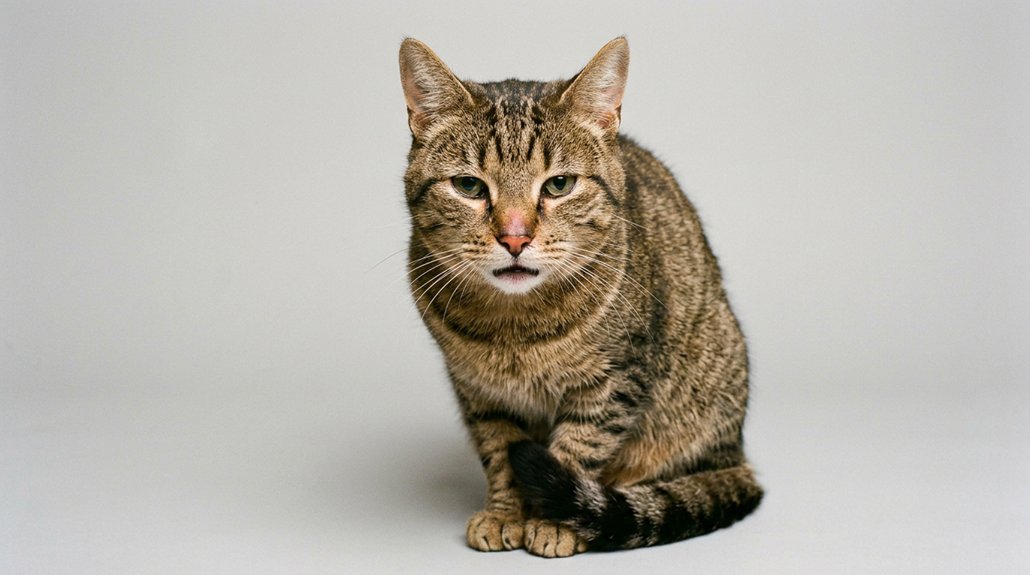
When evaluating your cat for a fever, it’s important to recognize both behavioral and physical signs. You might notice your cat exhibiting reduced appetite or increased lethargy, alongside physical indicators like warm ears and paws. Additionally, symptoms such as shivering or a rapid heart rate may accompany these changes, signaling the need for further investigation.
Detecting Behavioral Changes
Although cats are known for their independent and often enigmatic natures, certain behavioral changes can serve as telltale signs of a fever. Vigilantly observing behavioral indicators is essential in evaluating your cat’s health. Significantly, lethargy signs, such as decreased energy or disinterest in previously enjoyed activities, are key.
Consider these behavioral changes:
- Lethargy: Your cat might become less active or playful.
- Reduced Appetite: A sick cat may eat less or refuse food altogether.
- Increased Hiding: Cats might seek secluded, dark places for rest.
- Additional Symptoms: Look out for shivering, vomiting, or diarrhea.
Such changes can indicate more than just mood shifts; they’re potential red flags for underlying health issues, including fever. Early detection leads to timely intervention, ensuring your pet’s well-being.
Observing Physical Indicators
Fever in cats presents distinctive physical indicators that, when observed diligently, can provide crucial insights into their health condition. Contrary to fever myths, discerning genuine temperature signs is essential. Watch for lethargy, a marked decrease in activity and interest. Cats with fever may have warm ears and paws, hinting at elevated body temperature. Loss of appetite is common, possibly leading to complications.
While observing these symptoms, use this table for clarity:
| Indicator | Description |
|---|---|
| Warm ears/paws | Sign of temperature elevation beyond normal |
| Rapid heart rate | Body’s stress response during fever |
| Appetite loss | Refusal can lead to health issues |
Solitude-seeking is another sign; cats often hide to cope with discomfort. Detecting these physical indicators early can assist in providing appropriate care.
Immediate Actions When Your Cat Has a High Fever
Upon suspecting your cat has a high fever, which is typically any temperature above 102.5º F, it’s vital to verify this using a digital rectal thermometer for an accurate reading. Despite common fever myths, don’t administer human medications like aspirin or acetaminophen as they can be toxic to cats. Instead, guarantee your cat’s well-being by prioritizing hydration, as maintaining fluid balance is significant.
- Provide fresh water and encourage drinking.
- Offer a quiet, comfortable resting place.
- Record any additional symptoms, such as vomiting or behavioral changes, to assist your vet.
- Seek immediate veterinary attention if the fever persists over 24 hours or if your cat demonstrates severe lethargy, breathing difficulty, or refuses food and water for more than a day.
Effective Home Care Strategies for Cats With Fever
Maintaining your cat’s comfort at home when dealing with a fever involves more than merely watching the thermometer. Prioritize hydration by providing fresh water consistently; it’s vital for fighting fever. Designate a calm and quiet resting area to aid recovery. Observe your cat closely for signs of lethargy, appetite changes, or increased hiding. These can signal worsening symptoms. Avoid human medications; consult your vet for safe, targeted options. Document behavioral shifts and symptoms for thorough veterinary assessments if needed. Consider these home remedies and hydration tips:
| Home Remedies | Hydration Tips | Monitoring Symptoms |
|---|---|---|
| Comfortable rest | Fresh water access | Lethargy |
| Calming space | Quiet environment | Appetite loss |
| Safe temperature | Consistent hydration | Increased hiding |
Proper care is paramount.
Why You Should Avoid Human Medications for Cats
It’s vital to understand that human medications, such as acetaminophen and ibuprofen, can be highly toxic to cats, potentially causing liver failure, gastrointestinal bleeding, or even death. Due to significant differences in dosage and formulation between human and veterinary drugs, giving these to your cat can result in dangerous overdoses or ineffective treatments. To guarantee your cat receives the safest and most effective care, it’s important to seek vet-recommended treatments that address their specific health needs under professional supervision.
Risks of Human Drugs
When it comes to medicating your feline friend, it’s vital to understand the significant risks associated with using human drugs. Cats metabolize medications differently, posing serious threats to their health if human drugs are administered. Prioritizing medication safety is fundamental—many human medications like acetaminophen and aspirin can be toxic or fatal to cats.
Consider these risks:
- Overdose Potential: Cats are highly sensitive to drug overdose due to their unique metabolism.
- Toxic Reactions: Even small doses of certain human drugs can lead to severe health issues or death.
- Dosage Variability: Safe human dosages can be hazardous for cats.
- Lack of Regulation: Over-the-counter medications lack pet-specific guidelines, risking unintentional poisoning.
Always seek veterinary advice to guarantee safe, appropriate treatment alternatives.
Vet-Recommended Treatments
A vast array of human medications, most importantly acetaminophen and ibuprofen, pose significant risks to feline health, making veterinary guidance indispensable. These drugs can cause severe complications, such as liver failure and gastrointestinal bleeding. Instead, always consult your vet for cat-specific solutions. They can recommend safe antibiotic options for infections and tailor anti-inflammatory treatments just for your cat’s needs. You’ll likely find that supportive care is vital; vets often provide hydration through intravenous fluids to stabilize body temperature and guarantee recovery. Human medications lack precise feline dosing, risking overdose and adverse effects. Remember, understanding the underlying cause of fever is fundamental for proper treatment, and relying on professional veterinary insight secures your cat’s safety and well-being.
Understanding the Risks of Untreated Feline Fever
Addressing a feline fever proactively is essential, as leaving it untreated can lead to severe health repercussions for your cat. Proper fever management is critical to avoid complications like organ damage when body temperatures exceed 106°F. An elevated temperature can also weaken your cat’s immune response, increasing vulnerability to infections. Persistent fevers lasting more than 48 hours may indicate serious underlying conditions; hence, immediate veterinary evaluation is necessary.
Untreated fever can result in:
- Dehydration: Sick cats might not drink enough, worsening their health state.
- Behavioral changes: Unaddressed fever can lead to lethargy and appetite loss.
- Organ damage: High fevers can cause irreversible harm if not promptly managed.
- Increased infection risk: A compromised immune system leaves your cat unprotected.
Deciphering Unknown Fevers in Cats
Recognizing signs of a fever in your cat is essential, but pinpointing the cause when it remains unknown can be particularly challenging. A fever of unknown origin (FUO) in cats causes confusion due to the absence of an identifiable source and complicates treatment. Symptoms like lethargy, loss of appetite, and dehydration necessitate careful monitoring. The body’s immune response raises the temperature above 103.5º F (39.7º C) for days without an apparent reason. To decipher these puzzling fevers, a detailed physical examination and diagnostic tests, including a complete blood count, serum biochemistry, and urinalysis, are critical. Imaging may be required to detect underlying issues. Supportive care—hydration and antibiotics for potential bacterial infections—remains crucial while determining the precise cause aids prognosis.
Frequently Asked Questions
What Are the First Signs of Fever in Cats?
Identify fever symptoms by observing lethargy, decreased appetite, and warmer ears or paws. Use a temperature check for confirmation. Clinginess or hiding can also suggest fever, indicating discomfort. Always consult your vet for professional advice and diagnosis.
Will a Cat’s Fever Go Away on Its Own?
A cat’s fever, like Achilles’ vulnerability, may fade if mild and stress-induced, but closely monitor temperature. Persistent, high fevers hint at other causes, needing professional care to unravel underlying issues and guarantee your furry friend’s swift healing.
What Is “I Love You” in Cat Language?
In cat communication, “I love you” translates through slow blinking, purring, kneading, head-butting, and a high-tucked tail. Understanding feline emotions involves observing these affectionate behaviors, revealing a deep bond between you and your cat.
What Can I Give to My Cat for a Fever?
Imagine your veterinarian as the trusted lighthouse guiding your ship through stormy seas. For fever management in cats, rely on their expertise for safe medications. Never self-prescribe; instead, prioritize professional guidance and timely veterinary intervention.
Conclusion
In summary, when maneuvering through the stormy seas of a cat’s fever, understanding the warning signs and taking proactive steps can make all the difference. Always consult with a veterinarian before administering any medication, as human treatments can pose risks. By monitoring behaviors and symptoms closely, you can offer effective home care and address the root causes. Remember, leaving a fever untreated is like playing with fire—acting promptly guarantees your feline companion isn’t left out in the cold.