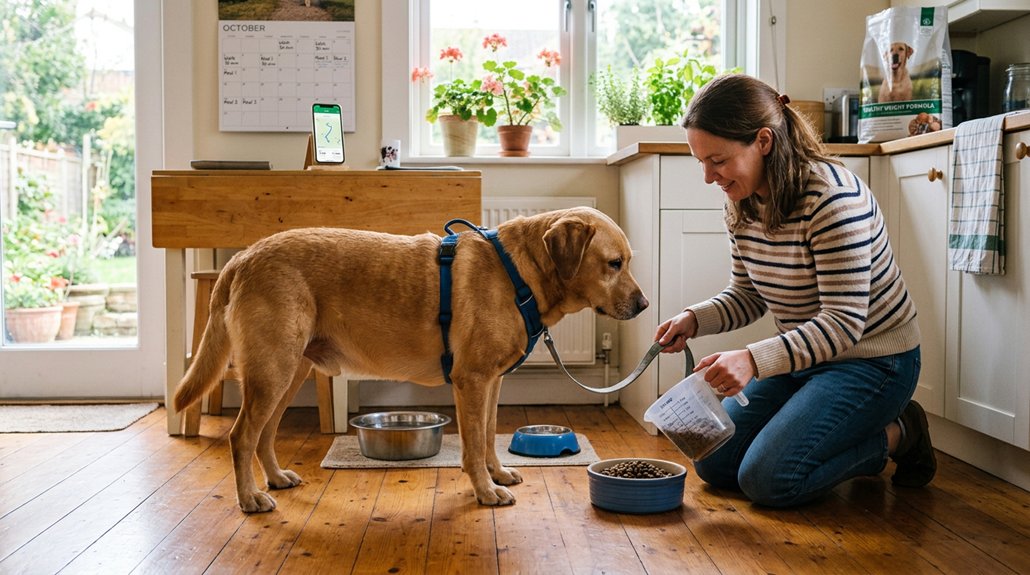
To help your overweight dog lose weight, consult your veterinarian to assess their Body Condition Score and create a tailored plan. Implement a calorie-restricted diet with precise portion control and select low-calorie, high-fiber foods. Schedule consistent aerobic exercise for at least 30 minutes daily and limit treats to 10% of their caloric intake. Regularly track progress through weigh-ins and adjust the plan as needed. Explore further strategies to guarantee sustainable results.
Key Takeaways
- Consult a veterinarian to develop a personalized weight loss plan and identify potential health issues.
- Measure and control food portions, ensuring a 10-15% caloric reduction from the current diet.
- Increase daily aerobic exercise to at least 30 minutes, incorporating activities like fetch or swimming.
- Limit treats to 10% of daily caloric intake, opting for low-calorie vegetables over high-fat options.
- Track weight progress bi-weekly and adjust diet or exercise based on recorded data and regular veterinary feedback.
Quick Start Checklist For Dog Weight Loss
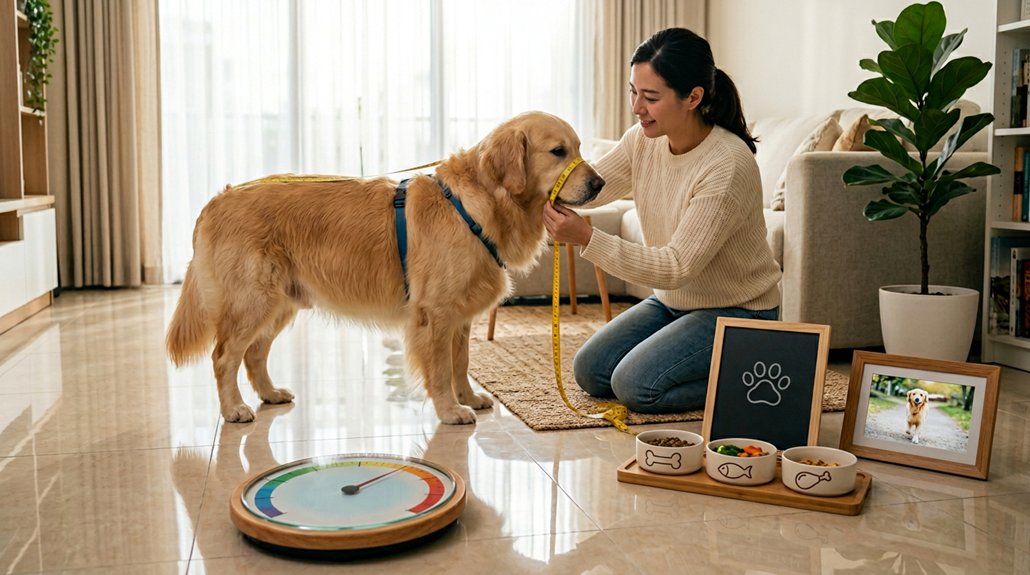
When beginning your dog’s weight loss journey, it’s vital to initiate a well-structured plan for ideal results. A common misconception is that any weight loss plan suits all dogs, when in fact, consulting a veterinarian is important to determine your dog’s ideal Body Condition Score (BCS). This guarantees a safe, tailored approach to their specific health needs. As an owner, you’re responsible for measuring food portions accurately and adhering to caloric limits, aiming for a 10-15% reduction if weight gain persists. Scheduled meals, not free-feeding, help regulate digestion. Limit treats to 10% of daily calories, opting for low-calorie options like vegetables. Confirm your dog gets at least 30 minutes of brisk exercise daily to improve health and facilitate weight loss.
Recognizing Overweight Signs In Your Dog
Understanding the physical signs of obesity in dogs is essential for maintaining their ideal health. Monitoring your dog’s body condition is vital. A visible waistline that tapers from the rib cage to the hips is a normal feature; absence of this can indicate excess weight. Difficulty feeling ribs without pressure signifies increased body fat. Be vigilant for a sagging stomach and movement difficulties, which may result from poor body condition and affect exercise routines.
Some breeds have a genetic predisposition to obesity, making weight awareness vital. Observe for these signs:
| Signs of Overweight | Implications on Health |
|---|---|
| Lack of waistline | Potential obesity risk |
| Rib coverage | High body fat percentage |
| Sagging stomach | Potential obesity |
| Movement difficulty | Reduced mobility |
Adjust your dog’s activities accordingly.
Work With Your Vet For A Personalized Weight Loss Strategy
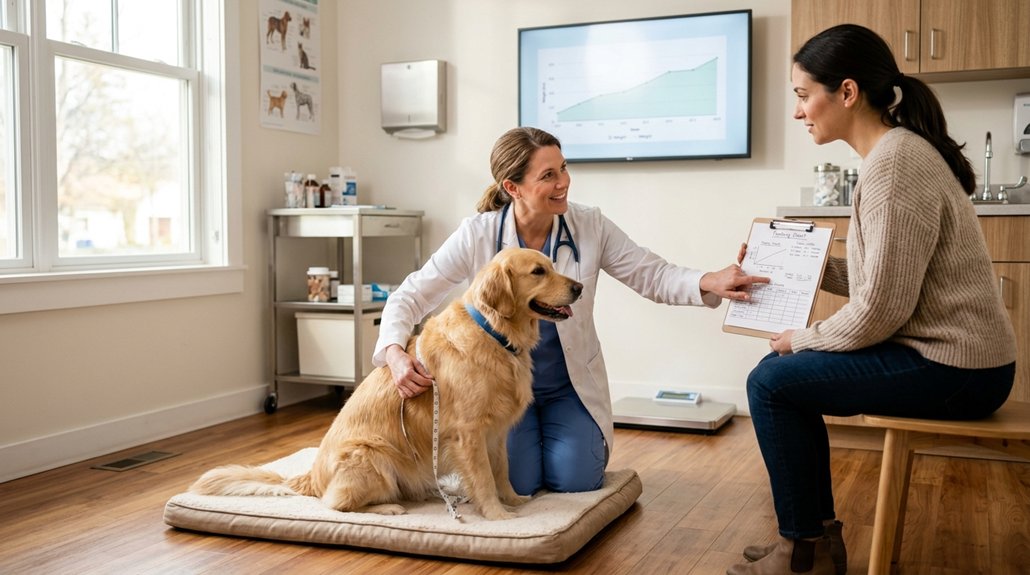
Collaborating closely with your veterinarian can be a significant step in facilitating your dog’s weight loss journey. During vet consultations, a thorough evaluation will uncover any underlying conditions like hypothyroidism or Cushing’s disease, often linked to your dog’s obesity. Your vet can help establish a safe target weight and craft personalized plans, incorporating calorie-restricted diets tailored specifically to your pet’s needs and lifestyle. Regular vet consultations are important to monitor progress and adjust strategies as necessary, ensuring the plan remains both effective and healthy for your dog. Furthermore, a veterinary team can guide you on selecting weight-loss diets featuring lower energy density and higher fiber, promoting satiety. Overall, your vet partnership is essential for a sustainable weight management strategy.
Selecting Nutritious, Low-Calorie Dog Food
When selecting dog food for weight management, focus on options with high fiber content to promote satiety and reduce caloric intake. It’s essential to understand the caloric density of these foods; aim for formulations that provide around 300 calories per cup. Work with your veterinarian to guarantee the chosen diet aligns with your dog’s specific nutritional needs and weight loss goals.
Choosing High-Fiber Options
While managing your dog’s weight, selecting high-fiber dog food is essential for curtailing excessive calorie intake and enhancing satiety. Fiber benefits come from digestible yet non-caloric components that occupy the digestive tract, promoting fullness. Aim for dog foods with 5-10% fiber content to optimize these effects.
Ingredient sources like beet pulp, pumpkin, and brown rice contribute both fiber and essential nutrients. Consult your veterinarian to verify that the chosen diet aligns with your dog’s weight-loss goals.
| Fiber Ingredient | Fiber Content (%) | Benefits |
|---|---|---|
| Beet Pulp | 6-8% | Digestive support |
| Pumpkin | 7% | Satiety, nutrients |
| Brown Rice | 3.5% | Energy, nutrients |
Selecting specially formulated, low-energy-density dog foods allows your pet to enjoy larger meals without increasing caloric consumption.
Understanding Caloric Content
Understanding the caloric content in your dog’s diet is essential for effective weight management. Aim for a caloric balance by choosing dog food with approximately 300 calories per cup. This promotes weight control while meeting nutritional needs. Opt for veterinary weight-loss diets, known for their lower energy density, higher fiber, and increased protein content. These compositions support lean muscle preservation during caloric restriction. Avoid over-the-counter weight-loss foods without veterinary advice, as they may not fulfill the necessary dietary requirements and could cause nutrient deficiencies. Focus on high-protein, natural ingredients for satiety without excess calories. Remember, treats shouldn’t exceed 10% of daily caloric intake; choose low-calorie options like vegetable pieces to maintain a balanced, weight-conscious diet.
Transitioning Diets Safely And Effectively
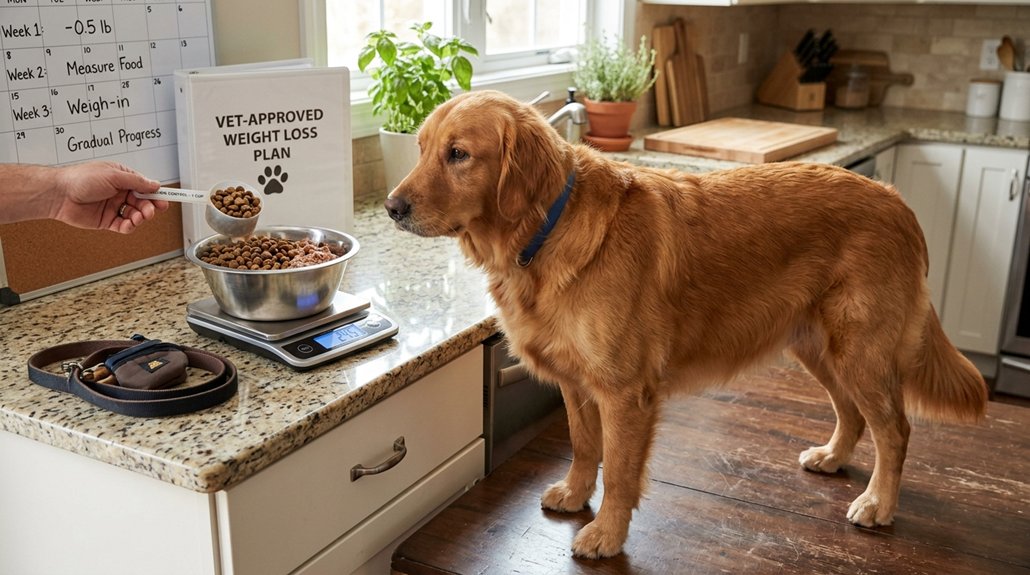
As you commence the process of shifting your overweight dog to a healthier diet, it’s crucial to prioritize a gradual approach to guarantee digestive stability and minimize stress. Address potential diet sensitivities and food allergies by observing your dog’s response as you gradually introduce the new food. Follow this protocol to switch diets safely:
- Initial Mix: Begin with 25% new food and 75% old food, monitoring for any digestive distress.
- Prolonged Transition: If signs of sensitivity arise, extend the shift over 10-14 days.
- Precise Measurement: Use a digital kitchen scale to accurately measure portions to maintain proper caloric control.
- Veterinary Consultation: Seek veterinary advice on suitable weight-loss diets that meet your dog’s nutritional needs and enhance food appeal where necessary.
Achieving Portion Control And Effective Meal Scheduling
To effectively manage your dog’s weight, precise portion measurements are essential; use a measuring cup to follow the veterinarian’s advice and avoid overfeeding. Implementing structured meal timings, such as once or twice daily feedings, can promote a regular digestive rhythm and aid in weight control. Regularly reassess and adjust meal sizes as the dog’s weight changes to guarantee caloric intake supports ongoing weight loss.
Precise Portion Measurements
Accurate portion control is paramount when aiming to help an overweight dog shed excess pounds, with tools like measuring cups or digital kitchen scales indispensable for precision. Here are some portion control tips and measuring techniques to assist you:
- Use Accurate Devices: Invest in a quality measuring cup or digital scale to precisely measure your dog’s food, reducing errors that could derail weight loss efforts.
- Adopt Veterinarian Guidelines: Follow feeding amounts tailored to your dog’s Body Condition Score (BCS) for ideal caloric management.
- Avoid Free Feeding: Implement scheduled meals to prevent accidental overfeeding, a common pitfall disrupting weight management.
- Reassess Regularly: As your dog’s weight changes, adjust portions to align with their current condition and nutritional needs, ensuring continuous progress.
Structured Meal Timings
When you establish structured meal timings for your overweight dog, you’re implementing an effective strategy for portion control and scheduling that can aid in weight loss. A consistent feeding routine, where meals are offered at the same time each day, helps regulate your dog’s digestive system. Use a measuring cup or kitchen scale for accurate portion sizing to adhere to veterinarian guidelines. Splitting daily food intake into smaller, more frequent meals can enhance satiety and reduce begging behaviors. Avoid free-feeding; serve measured meals and remove uneaten portions after 15-30 minutes.
| Aspect | Recommendation |
|---|---|
| Meal Frequency | Smaller, frequent meals |
| Feeding Routine | Consistent meal timings |
| Portion Control | Use a measuring cup or kitchen scale |
| Consult with Veterinarian | Regularly reassess feeding amounts |
Incorporate Daily Exercise For Effective Weight Loss
Engaging your dog in regular aerobic exercise is crucial to facilitating effective weight loss and enhancing overall wellbeing. Incorporating interactive play and aerobic activities in your dog’s routine can considerably improve their fitness levels. To guarantee ideal health benefits:
- Daily Engagement: Commit to at least 30 minutes of aerobic activity, like brisk walking, to support weight management and cardiovascular health.
- Structured Sessions: Include two structured exercise periods of 10-15 minutes each, which can involve activities like fetch or swimming.
- Diverse Activities: Keep your dog motivated with diverse activities such as obstacle courses, tailored to their age and breed.
- Monitor & Adjust: Adjust exercise intensity to match your dog’s capability, preventing injuries, especially in brachycephalic breeds.
This approach aids in sustainable weight loss and health.
Limiting Treats And Encouraging Healthy Snacking
Although it may be tempting to reward your dog with treats, it’s crucial to limit them to no more than 10% of their daily caloric intake to manage their weight effectively. This means that for a 600-calorie diet, only 60 calories can be from treats. Opt for healthy treat options, such as low-calorie sliced vegetables like carrots or green beans, to reduce caloric consumption. Avoid high-fat or sugary table scraps, which can contribute to unnecessary weight gain. Utilize non-food incentives like praise, playtime, or affection for positive reinforcement without additional calories. Always verify the caloric content on treat labels to confirm incorporation within your dog’s overall caloric allowance, promoting a balanced diet and supporting weight management goals.
Regularly Track Progress And Adjust The Weight Loss Plan
Start tracking your dog’s weight loss progress with regular bi-weekly weigh-ins, which are crucial for making necessary adjustments to the weight loss plan. This progress monitoring helps maintain accountability and guarantees the plan’s effectiveness. Keep detailed records of your dog’s food intake, exercise activities, and weight changes. This information identifies patterns, offering data-driven insights for optimizing the weight loss strategy.
Regular bi-weekly weigh-ins are crucial for optimizing your dog’s weight loss plan and ensuring progress.
To effectively manage your dog’s weight, consider:
- Conducting bi-weekly weigh-ins: Regular evaluations guide timely adjustments to the regimen.
- Maintaining a log: Record food, exercise, and weight for thorough progress monitoring.
- Veterinary check-ups: Monthly consultations assess progress and make diet or exercise modifications.
- Adjusting as needed: Use weight tracking feedback to tweak caloric intake or exercise routines, aiming for a weekly weight loss of 1-2%.
Frequently Asked Questions
How to Make an Obese Dog Lose Weight Fast?
To make an obese dog lose weight fast, you’ll need to focus on reducing its caloric intake through portion control and implementing a structured exercise regimen. Consult your veterinarian to develop evidence-based strategies for ideal health outcomes.
What Is the 90/10 Rule for Dogs?
The 90/10 rule for dogs guarantees 90% of calories come from primary food, allowing 10% for treats. This supports dietary adjustments and exercise routines, aiding weight management by controlling intake while accommodating moderate indulgences effectively.
Is a Dog Overweight at 20 Pounds?
A dog’s weight at 20 pounds isn’t necessarily indicative of being overweight; use weight assessment techniques like BCS evaluation for true canine obesity diagnosis. Consult your veterinarian for a professional assessment tailored specifically to your dog’s breed and size.
Is There a Fat Burner for Dogs?
There’s no clinically approved fat burner for dogs. Surprisingly, around 56% of dogs in the U.S. are obese. Focus on vet-approved weight loss supplements like L-carnitine, but prioritize diet and exercise for effective canine fat burning.
Conclusion
Think of yourself as a health coach for your dog, akin to a guide leading a hero on a transformative journey. By recognizing signs of overweight, collaborating with veterinarians, choosing nutritious diets, and strategically planning meals, you’re setting the stage for success. Incorporate regular exercise and limit treats like a disciplined mentor. As you consistently track progress and refine strategies, you’re equipped to guide your canine companion towards a healthier, more vibrant life. You’re the modern-day Virgil to your dog’s Dante.