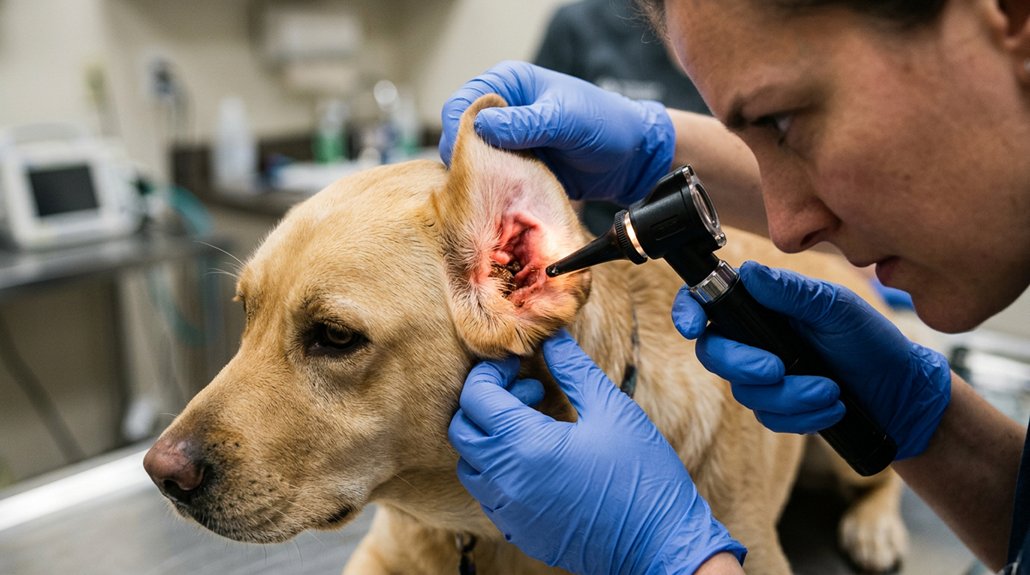
Dog ear infections often involve symptoms like persistent scratching, head shaking, and unpleasant discharge due to bacterial or yeast overgrowth. You’re likely to notice redness, swelling, or crusting around your pet’s ear. Treatment generally includes medicated ear drops, such as Otomax or Mometamax, for about a week. Severe infections might require oral antibiotics and anti-inflammatories. It’s essential to consult a vet at the first signs of infection to effectively manage your dog’s health. There’s much more to explore on prevention and care.
Key Takeaways
- Persistent scratching and head shaking are common signs of dog ear infections, indicating irritation and discomfort.
- Bacterial and yeast overgrowth in the ear canal are primary causes of infections, often due to moisture retention.
- Treatment typically involves medicated ear drops like Otomax or Mometamax prescribed for 7-10 days.
- Immediate veterinary consultation is crucial when symptoms appear to prevent worsening of the infection.
- Follow-up appointments ensure complete clearance of the ear infection and help prevent recurrence.
Quick Overview of Dog Ear Infections
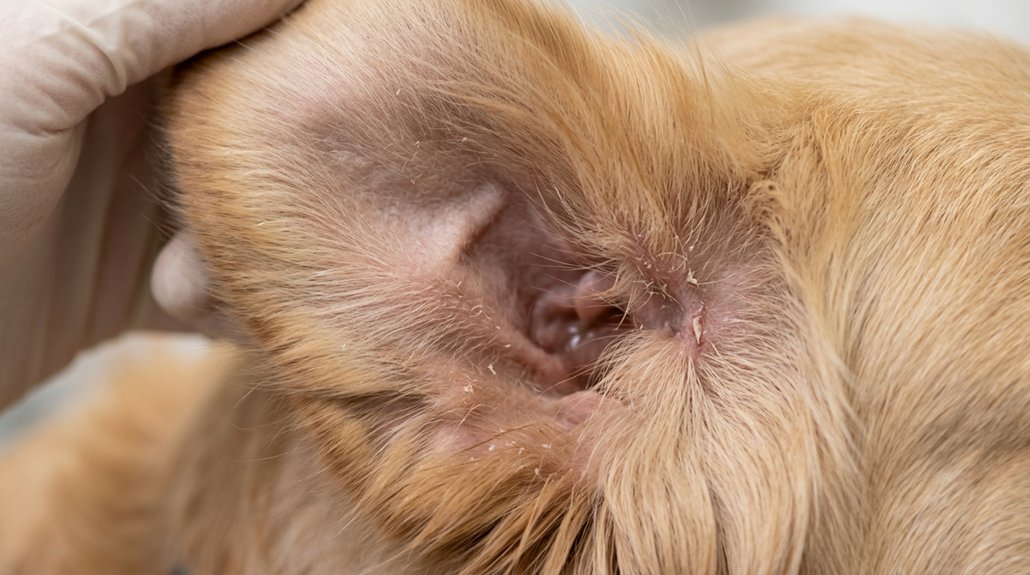
When it comes to dog ear infections, they primarily affect the outer ear, scientifically known as otitis externa. Understanding ear anatomy is essential; the outer ear captures sound waves, guiding them to the eardrum. Infections often arise when debris accumulates or due to underlying health issues. These can lead to bacteria and yeast overgrowth, resulting in different infection types. You might notice signs like persistent scratching, head shaking, redness, swelling, or a foul-smelling discharge. Veterinarians diagnose these infections via otoscopy and ear cytology, helping identify specific microorganisms. Treatment usually involves medicated ear drops, and sometimes oral antibiotics or antifungals, tailored to the infection’s severity. Regular ear cleaning and monitoring can help prevent future infections.
Understanding Ear Infections in Dogs: Causes and Risk Factors
Several factors contribute to the prevalence of ear infections in dogs, primarily driven by bacteria and yeast overgrowth. One significant cause is the anatomical structure of a dog’s ear, especially in long-eared breeds, where the design often traps moisture and debris, fostering an ideal environment for infection. Allergy triggers, such as reactions to certain foods or environmental allergens, lead to inflammation, increasing susceptibility to microbial invasion.
Environmental conditions also play a vital role. High humidity and excessive exposure to water can exacerbate the retention of moisture within the ear canal, further promoting bacterial and yeast growth. Mixed infections are common, necessitating precise identification of the microbial agents for effective treatment. Understanding these causes and risk factors aids in preventing and managing ear infections.
What Are the Common Signs of Dog Ear Infections?
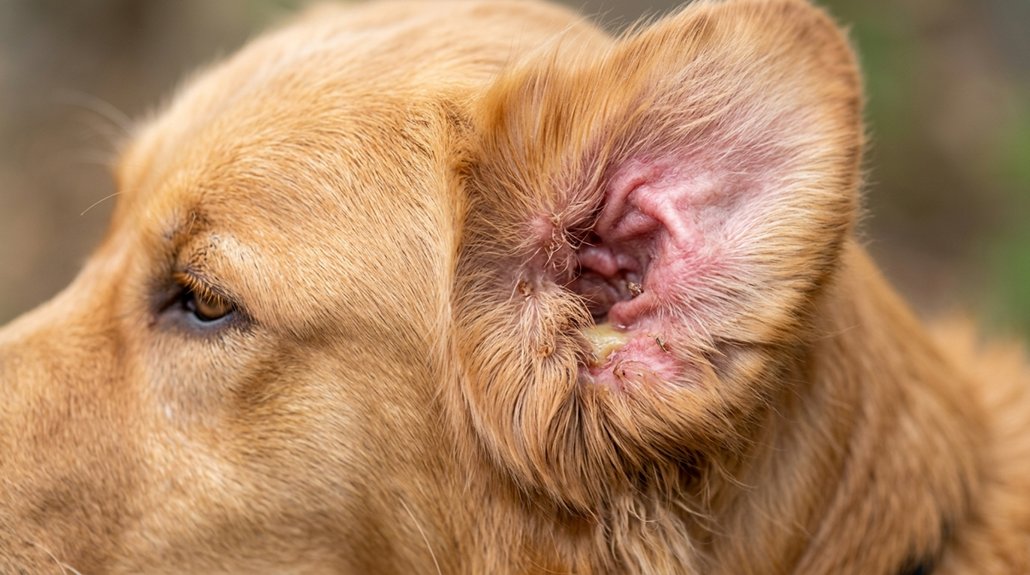
Curious about the signs of ear infections in dogs? Efficient symptom identification is vital. Common discomfort signs include persistent scratching and head shaking, reflecting irritation in your dog’s ear. Examine the affected area for visible symptoms such as redness or swelling in the ear canal. Crusting or scabs around the ear further signal an infection. An unpleasant smell emanating from the ear might indicate an underlying problem demanding attention.
Discharge is a significant identification factor; its color—brown, yellow, or bloody—may help determine the infection type. Behavioral changes are another key indicator. Your dog might become irritable or resist having their ears touched. Prompt recognition of these signs guarantees timely intervention, alleviating your pet’s discomfort and preventing further complications.
Preventing Future Ear Infections
Although ear infections in dogs can be common, taking preventative measures markedly reduces their occurrence. Prioritize ear hygiene by regularly cleaning your dog’s ears with vet-approved products to remove wax and debris. After swimming or bathing, verify their ears are thoroughly dry to prevent moisture retention, a key contributor to infections. Monitor your pet for signs of allergies, such as itching or redness, which can lead to inflammation, and discuss potential management strategies with your veterinarian.
In addition to these measures, diet considerations are essential. Feed your dog a balanced, nutrient-rich diet to support overall health and mitigate inflammatory responses that could exacerbate ear infections. Finally, schedule regular veterinary check-ups to facilitate early detection and management of any nascent ear health issues.
Treatment and When to Consult a Veterinarian
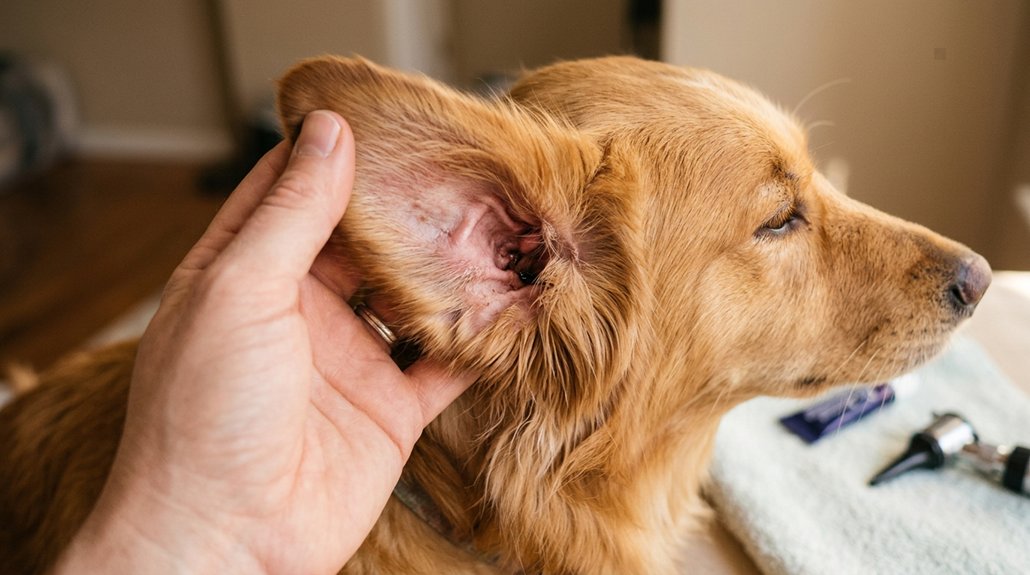
Addressing ear infections in dogs efficiently guarantees quick relief and a speedy recovery for your pet. Initially, most treatments involve medicated ear drops, used for 7-10 days. Common prescribed solutions include Otomax and Mometamax. However, in serious cases, oral antibiotics and anti-inflammatories may be necessary to alleviate pain and eradicate infection. Avoid resorting to home remedies without professional advice, as this can lead to chronic infections. Instead, consult a veterinarian if your dog shows symptoms like persistent scratching or head shaking. Here’s what to remember:
- Immediate Consultation: See a vet at the first signs of infection.
- Strict Adherence: Follow the vet’s treatment plan precisely.
- Follow-up: Schedule follow-ups to guarantee the infection is completely cleared.
How Urgent Is Veterinary Care?
When you notice symptoms like excessive scratching, redness, or a foul odor from your dog’s ears, immediate veterinary attention is vital. Delaying treatment can lead to severe complications such as hearing loss, systemic illness, or even neurological issues if the infection spreads. Prompt intervention not only alleviates your pet’s discomfort but is also critical for accurate diagnosis and effective treatment to prevent chronic conditions.
Importance of Immediate Attention
Once you notice signs of an ear infection in your dog, such as head shaking, scratching, or discharge, seeking immediate veterinary care becomes vital. This quick response helps in maintaining ideal ear hygiene and aids in infection prevention. Veterinary care guarantees:
- Early Intervention: Prompt treatment prevents the infection from worsening, avoiding severe complications like hearing loss.
- Targeted Diagnosis: Timely diagnosis through ear cytology and culture testing identifies specific causes, allowing for an effective treatment plan and avoiding unnecessary over-the-counter medications.
- Pain Management: Immediate care alleviates discomfort, enhancing your dog’s quality of life considerably.
Actively scheduling follow-up appointments with your veterinarian is important, particularly for dogs susceptible to recurrent infections, promoting long-term health and preventing relapses.
Risks of Delayed Treatment
If left untreated, ear infections in dogs can rapidly escalate from mild discomfort to severe health complications. Delaying treatment may lead to chronic conditions that necessitate surgical interventions, such as total ear canal ablation (TECA). These chronic complications cause significant pain and discomfort, often resulting in behavioral changes, like increased irritability or withdrawal. Untreated infections can also spread to inner ear structures, leading to otitis media or otitis interna, impairing hearing and balance. Immediate veterinary care is essential to prevent these issues. Without it, your dog could develop systemic illness, manifesting as lethargy and loss of appetite. By seeking timely diagnosis and treatment, you can avoid long-term problems, ensuring better health and quality of life for your pet.
Frequently Asked Questions
What’s the Best Treatment for a Dog’s Ear Infection?
You shouldn’t rely on home remedies for a dog’s ear infection. The best treatment involves veterinary intervention with prescribed medications like ear drops and possibly oral antibiotics. Regular follow-up and ear cleaning are essential components of managing the condition.
Can I Treat My Dog’s Ear Infection Without a Vet?
Sure, you could dabble with home remedies as a vet substitute, just like using duct tape for engine repairs. However, it’s essential to involve a vet for proper treatment and focus on preventive measures to avoid complications.
How to Tell if a Dog’s Ear Infection Is Serious?
You can tell a dog’s ear infection is serious if ear symptoms include odor, dark discharge, severe redness, or swelling. Infection causes may lead to behavioral changes, such as lethargy or irritability, demanding immediate veterinary intervention.
Does Cushing’s Cause Ear Infections in Dogs?
Cushing’s disease’s storm clouds cast a shadow over your dog’s ear health, leading to vulnerabilities. Excess cortisol weakens immunity, inviting recurring infections. Managing Cushing’s through veterinary care can improve ear health and reduce infection frequency.
Conclusion
Think of your dog’s ear as a thriving garden; neglect leads to weeds (infections) taking over. By staying alert to signs like unusual scratching or head shaking, you’re the diligent gardener preventing overgrowth. Just like a garden requires occasional expert care, don’t hesitate to consult a vet when needed. Studies indicate over 20% of dogs experience ear infections, but with preventive care, your furry friend’s ears can remain as lush and vibrant as a well-tended garden.