
To determine if your dog has a fever, use a digital rectal thermometer designed for pets to measure its temperature. A reading above 103°F indicates a fever, with normal temperatures ranging from 101°F to 102.5°F. Signs like lethargy, shivering, or loss of appetite suggest potential fever but aren’t definitive. Avoid relying solely on warm ears or a dry nose. Monitoring their temperature regularly can help assess their health accurately. There’s more to discover about symptoms and proper care.
Key Takeaways
- Check your dog’s temperature using a lubricated digital rectal thermometer designed for pets.
- A fever is indicated when the dog’s temperature exceeds 103°F.
- Monitor for behavioral changes such as shivering or increased panting.
- Watch for signs like loss of appetite, vomiting, or diarrhea.
- Red or glassy eyes might suggest the presence of an underlying health issue.
How to Accurately Take Your Dog’s Temperature
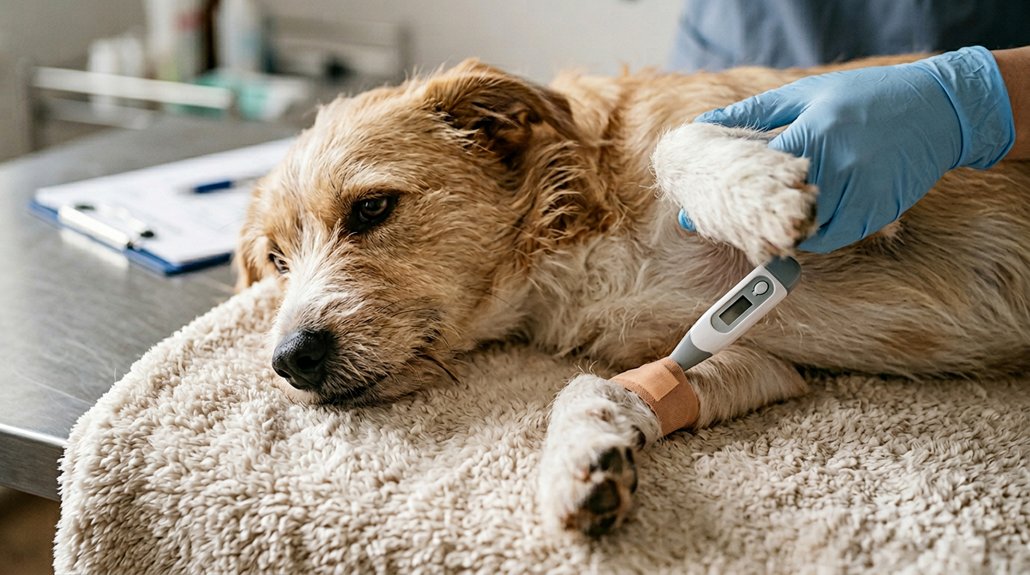
Accurate temperature measurement is essential in determining your dog’s health status, and using the right tools and technique is key. Begin by selecting a digital rectal thermometer specifically designed for pets, as it offers precision vital for reliable readings. Prior to insertion, verify the thermometer is properly lubricated to ease the process and minimize discomfort. Gently and calmly insert the thermometer approximately one inch into your dog’s rectum. Hold it steady until you hear a beep or receive a signal confirming the measurement’s completion. Be aware that normal canine body temperature ranges from 101°F to 102.5°F; readings exceeding 103°F suggest fever. Measure your dog’s temperature consistently over several days to establish a baseline, facilitating the detection of any significant fluctuations.
Identify Dog Fever Symptoms
Now that you’ve learned how to effectively measure your dog’s temperature, recognizing the symptoms of fever is the next step. Common indicators include lethargy and a reluctance to engage in play, signaling decreased energy levels. While warm ears and dry nose might suggest fever, they are fever misconceptions and unreliable as sole indicators. Look for behavioral changes like shivering and increased panting as these may denote elevated body temperature. Monitor for loss of appetite, vomiting, diarrhea, and distinctive red or glassy eyes. These symptoms often accompany underlying health issues necessitating professional veterinary evaluation. Be cautious with home remedies; they might address superficial symptoms but could mask more serious issues requiring specific treatment.
Normal vs. Fever Temperatures in Dogs

Have you ever wondered what temperature range is considered normal for your furry friend? Understanding this is vital in identifying fever symptoms. The normal temperature for dogs ranges between 101°F and 102.5°F. When your dog’s temperature exceeds 103°F, it’s classified as a fever. More concerningly, temperatures reaching 104°F suggest a high fever, while 106°F constitutes a life-threatening emergency. Consistent monitoring using a rectal thermometer designed for pets is the most accurate method to gauge their temperature. Recognizing deviations from their normal temperature can be critical in catching potential health issues early on. Identifying these fever symptoms promptly guarantees you can provide the necessary care for your dog before complications arise.
What’s Making Your Dog Run a Fever?
While it may seem concerning, a fever in your dog typically signals that their body is actively fighting off an underlying issue. Common culprits include heat stress and bacterial infections. Heat stress occurs when your dog is exposed to high temperatures for too long, compromising its thermoregulation. Bacterial infections often arise from infected ear conditions, bites, or cuts, leading to an immune response that increases body temperature. Dental problems like tooth infections or abscesses can also spur fevers. Additionally, exposure to toxic substances—certain foods and plants—may trigger a fever, as the body works to detoxify. There are instances when a fever appears without a clear cause, termed fever of unknown origin, indicating the need for thorough evaluation.
When to Seek Veterinary Care for a Feverish Dog

Recognizing when to seek veterinary care for a feverish dog is essential to ensuring their well-being. If your dog’s temperature exceeds 103°F, it’s time to contact your veterinarian, as this fever may necessitate medical intervention. Panic is warranted if the temperature reaches 106°F since this is life-threatening. Additionally, fever persisting beyond 24 hours is a critical warning sign, requiring professional evaluation to identify underlying causes. Watch for symptoms like lethargy, blood in vomit, or persistent vomiting, as they increase urgency for care. Fever remedies should never include human medications, which can be toxic to dogs. Always consult a veterinarian for safe treatment options tailored to your dog’s specific needs to avoid risking serious complications or worsening the condition.
Frequently Asked Questions
How Can You Tell a Dog Has a Fever Without a Thermometer?
Observe for fever symptoms like increased lethargy, decreased appetite, or shivering. Monitor temperature signs such as warm ears, hot nose, or red eyes. These behavioral and physical cues can suggest elevated body temperature in the absence of a thermometer.
Can You Tell by Touch if a Dog Has a Fever?
You can’t reliably tell if a dog has a fever by touch alone. Symptom recognition involves observing temperature indicators like lethargy. Accurate assessment requires measuring the dog’s core temperature with a digital thermometer for proper evaluation.
What Can You Give a Dog for a Fever?
You shouldn’t give dogs over-the-counter fever medications or herbal remedies without veterinary consultation. Human medicines like ibuprofen are toxic, and herbal remedies can be ineffective. Always seek professional advice to guarantee safe and appropriate treatment.
Can Dog Fever Resolve on Its Own?
Fevers can sometimes resolve on their own if you’ve caught it early and the symptoms are minor. However, don’t wait for a miracle; watch for persistent symptoms and explore treatment options with your vet for safety’s sake.
Conclusion
Detecting a fever in your dog is like acting as a detective piecing together a puzzle. You’ve got to accurately measure their temperature, recognize symptoms, and differentiate between normal and feverish ranges. Understanding potential causes and knowing when to consult a vet assures your pet’s health doesn’t get sidelined. Evidence suggests quick action is vital; a fever might signal an underlying issue. So, stay observant and ready to seek professional care when required.