
Your dog’s vomiting can be caused by factors like dietary indiscretion, rapid eating, or stress. More serious concerns include toxic ingestion or underlying medical conditions. Watch for signs like frequent vomiting, blood, lethargy, or dehydration, which signal urgent veterinary attention. Yellow or foamy vomit can indicate stomach issues, but bright red blood is alarming. Understanding these symptoms helps determine seriousness. Exploring further will provide insights on managing and preventing your dog’s vomiting effectively.
Key Takeaways
- Dogs often vomit due to dietary indiscretion involving spoiled food or inedible objects.
- Vomiting more than three times in one day may indicate severe health issues needing urgent care.
- Bright red blood in vomit or coffee ground-like substances signals immediate veterinary attention.
- Stress or rapid eating can lead to vomiting from stomach upset.
- Lethargy, diarrhea, or dehydration accompanying vomiting suggests a critical health scenario.
Why Do Dogs Vomit?

When your dog vomits, understanding the root causes is essential for determining the appropriate response. Various vomit triggers can impact your dog’s digestive health. Dietary indiscretion, such as consuming spoiled food or inedible objects, often irritates their stomach lining. A rapid eating pace can cause vomiting too, as air intake disturbs stomach equilibrium. Stress and anxiety, particularly during abrupt changes or travel, might also destabilize digestive processes. Recognizing nausea as a stress response is key.
Furthermore, chronic vomiting may signal more severe health issues, such as infections or gastrointestinal diseases, negatively impacting long-term digestive health. Ingesting toxic substances, like chocolate or xylitol, poses immediate risks, compelling vomiting as the body’s defense mechanism. Identifying these triggers aids in appropriate interventions and maintaining overall digestive health.
Common Causes of Dog Vomiting and When to Be Concerned
Understanding why dogs vomit lays the groundwork for recognizing the specific causes and determining when to seek veterinary care. Dietary indiscretion is common—dogs may consume spoiled food, grass, or foreign items, leading to stomach irritation. Rapid eating or excessive water intake can also trigger vomiting. Persisting episodes might signal underlying issues, such as infections or exposure to toxins like chocolate or xylitol.
Vomiting in dogs often stems from dietary indiscretion or rapid eating, but persistent issues warrant veterinary care.
- Guarantee dietary restrictions are in place to prevent accessing harmful substances.
- Consider allergy testing if you suspect food-related causes.
- Monitor vomiting frequency, color, and accompanying symptoms closely.
Persistent cases warrant veterinary attention, especially with additional signs like lethargy or diarrhea. Recognizing these triggers can help you take timely action and guarantee your pet’s well-being.
Signs Your Dog’s Vomiting Is Serious

Although dogs may vomit for benign reasons, there are clear indicators that the situation is serious and demands immediate veterinary care. Vomiting more than three times in one day is a red flag, signaling potential severe health issues that could include infections or toxins—conditions exacerbated by dietary changes or environmental factors that causes stress. Blood in vomit, whether bright red or resembling coffee grounds, requires urgent attention. Pay attention to additional symptoms such as lethargy, severe dehydration, or a painful, bloated abdomen, which could indicate life-threatening conditions. If vomiting is paired with diarrhea, it’s a critical scenario. Behavioral changes like excessive drooling, lip-smacking, or unexpected aggression before vomiting also warrant timely veterinary consultation to guarantee your dog’s well-being.
Different Types of Dog Vomit: What They Indicate
When evaluating your dog’s vomit, noting the color and consistency can provide critical insights into their health. Yellow vomit typically indicates bile irritation due to an empty stomach, whereas white, foamy vomit might suggest acid reflux or, in some cases, signify a more serious issue like bloat. The presence of blood, whether bright red or resembling coffee grounds, constitutes a medical emergency requiring immediate veterinary attention.
Yellow Vomit Causes
Yellow vomit in dogs often indicates the presence of bile, typically released when a dog’s stomach remains empty for too long, leading to irritation. Bile production in such cases is a natural bodily response, but frequent vomiting of yellow bile could point to underlying issues. If your dog’s episodes are sporadic, it generally isn’t a cause for concern. Yet, you should keep a watchful eye on vomiting frequency, as repetition may signal acid reflux or gastrointestinal disturbances.
Symptoms to watch for:
- Persistent vomiting with lethargy can suggest pancreatitis.
- Appetite loss and yellow vomit may indicate liver disease.
- Pain accompanying yellow vomit requires urgent veterinary attention.
Digestive troubles are not always serious but warrant further examination to guarantee your dog’s health.
Identifying Foamy Vomit
Foamy vomit in dogs can often reveal critical insights into their health, requiring careful observation. The foamy texture typically consists of air mixed with gastric fluids, often linked to acid reflux or an empty stomach. However, it’s not always benign. A common yet serious possible cause is bloat, also known as gastric dilation volvulus (GDV), necessitating immediate veterinary care. Frequent foamy vomiting might point to underlying gastrointestinal issues that require prompt attention. You might notice other signs such as lip-smacking, drooling, and restlessness, which are critical to monitor. While sporadic episodes might improve with home remedies like fasting and a bland diet, consistent occurrences shouldn’t be ignored and warrant a professional evaluation to rule out severe conditions.
Blood in Vomit
Recognizing variations in vomit, such as the presence of blood, can provide vital information about your dog’s well-being. Various vomit types reveal the blood significance: bright red blood or coffee ground-like substances in vomit necessitate immediate veterinary evaluation. Bright red vomit is alarming, often linked to gastritis, trauma, or inflammation. In contrast, brown or black vomit may suggest ulcers or gastrointestinal bleeding. Watch for:
- Lethargy and pain: Indicators of serious underlying issues.
- Thin, bloody vomit: Potentially signals internal bleeding or poisoning.
- Behavior changes: Monitor shifts to aid in diagnosing the problem’s severity.
Solid understanding and quick action are imperative. Your attention to these details can make a significant difference in evaluating and addressing your dog’s health.
When to Contact a Vet: Key Symptoms to Watch
How do you determine when your dog’s vomiting requires a visit to the vet? If your dog vomits more than three times in a day, consider the possibility of dietary intolerance or behavioral triggers. Still, this frequency suggests a more serious health issue requiring professional attention. Seek urgent care if you notice blood in vomit or stool, as this could indicate severe conditions. Be vigilant for signs of severe dehydration, like sunken eyes and dry gums, which necessitate a prompt vet visit. Additionally, immediate veterinary assessment is essential if vomiting coincides with severe lethargy, pain, or a bloated abdomen due to potential life-threatening conditions. Continuous diarrhea along with vomiting may point to serious infections or diseases demanding your vet’s intervention.
Home Management for Mild Vomiting Episodes
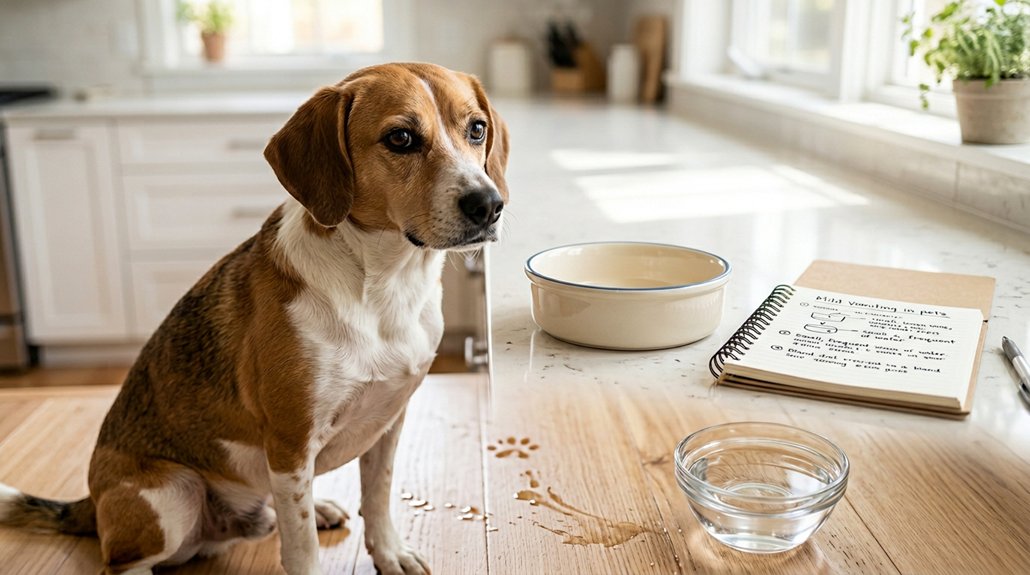
During mild vomiting episodes, it’s essential to manage your dog’s condition effectively to prevent escalation. First, withhold food for 8-12 hours to let your pup’s stomach settle, then provide a bland diet like boiled chicken and rice. Regular feeding schedules can help regulate recovery. Remember, hydration importance—offer small amounts of water frequently. Observe for any stress factors in your dog’s environment which might trigger these episodes.
Manage your dog’s mild vomiting by withholding food temporarily and ensuring frequent hydration with small water amounts.
Consider these home remedies:
- Introduce probiotics: They offer significant benefits in restoring gut health.
- Add ginger: Small amounts can alleviate mild nausea, promoting quicker recovery.
- Monitor activity levels: Keep your dog calm and rested during recovery.
Carefully observe for symptoms—if they persist, consult your vet for further guidance.
Veterinary Treatments and Recovery Strategies
Addressing your dog’s vomiting with professional veterinary treatments can greatly improve recovery outcomes. Veterinary diagnostics are key to understanding the cause and selecting appropriate treatment options. Commonly, anti-nausea medications like Metoclopramide or Cerenia are prescribed to manage symptoms and aid recovery. Fluid therapy is vital, especially when persistent vomiting leads to dehydration, ensuring your dog remains adequately hydrated. Dietary management is another important strategy, often involving short-term bland diets, such as boiled chicken and rice, to calm the digestive system. Additional supportive care may include gastroprotectants like Famotidine or Sucralfate, which help prevent gastric irritation and encourage mucosal healing. Effective, tailored treatment plans, developed from early diagnostic assessments, are essential for addressing underlying health issues and promoting ideal recovery.
Tips for Preventing Future Vomiting in Your Dog
To mitigate the risk of future vomiting in your dog, gradually adjust their diet and guarantee they follow a consistent feeding routine. Implementing safe environment practices by securing potential toxins out of reach is vital for their well-being. Regular veterinary check-ups can further safeguard against underlying health issues that may cause vomiting.
Diet and Feeding Routine
Although managing your dog’s diet effectively can seem challenging, implementing specific strategies can mitigate vomiting issues related to their feeding routine. Focusing on meal timing and food portioning is essential.
- Smaller, frequent meals: Serving smaller portions more often can prevent rapid eating, a common cause of upset stomachs.
- Consistent feeding schedule: Establishing routine meal times aids in regulating your dog’s digestion, reducing abrupt dietary shifts.
- Tailored diet: Choose food that meets your dog’s age, size, and health requirements, minimizing food sensitivities that could cause vomiting.
Avoid letting your dog eat table scraps and human foods, as these can introduce gastrointestinal issues. Additionally, using tools like puzzle feeders guarantees they chew thoroughly, further reducing vomiting risk. Implementing these steps can lead to a healthier, happier pet.
Safe Environment Practices
While your dog’s environment might seem safe, implementing specific safety practices can greatly mitigate potential vomiting issues. First, consider dog proofing your yard; remove toxic plants that could lead to gastrointestinal upset. Supervise your dog outside to prevent ingestion of harmful items like trash or chemicals. Securely store human foods, especially chocolate, and toxic substances, keeping them out of reach. Gradually introduce new foods over 7-10 days to avoid sudden dietary changes that could irritate their stomach. Make sure they always have access to fresh water, particularly in hot weather or post-exercise, to stave off dehydration-related vomiting. Finally, remove small toys or objects to prevent choking hazards that could cause vomiting due to blockages.
Frequently Asked Questions
How Do I Know if My Dog Throwing up Is Serious?
Evaluate dog health by examining vomiting causes: frequent episodes, blood presence, symptoms like lethargy or fever. A hard abdomen or vomiting over 24 hours are serious signs. Consult a vet urgently to prevent complications.
What Are Signs Your Dog Is Going to Pass Away?
You notice unsettling signs: weight loss, decreased appetite, lethargy, labored breathing, or seizures. These indicate the end of life is near. Implement canine comfort measures by consulting a veterinarian to provide peace during their final days.
What Can I Give My Dog to Stop Vomiting?
You can try home remedies by implementing dietary changes like providing a bland diet with boiled chicken and rice. Slowly reintroduce food after fasting. Don’t forget probiotics for gut health, and consult your vet if needed.
How Long Is Too Long for a Dog to Be Puking?
In the blink of an eye, if your dog vomits beyond 24 hours or more than thrice a day, potential causes could range from minor to severe. It’s essential to analyze vomiting duration and seek veterinary advice.
Conclusion
In the grand scheme of things, a dog’s occasional vomiting can be as harmless as a drop in the bucket. However, understanding the nuances—from causes to types—empowers you to recognize when it’s more than just a passing phase. By knowing the telltale signs of serious issues and when to contact your vet, you’ll have a leg up in keeping your furry friend healthy. With careful monitoring and preventive measures, you’re safeguarding your dog’s well-being.