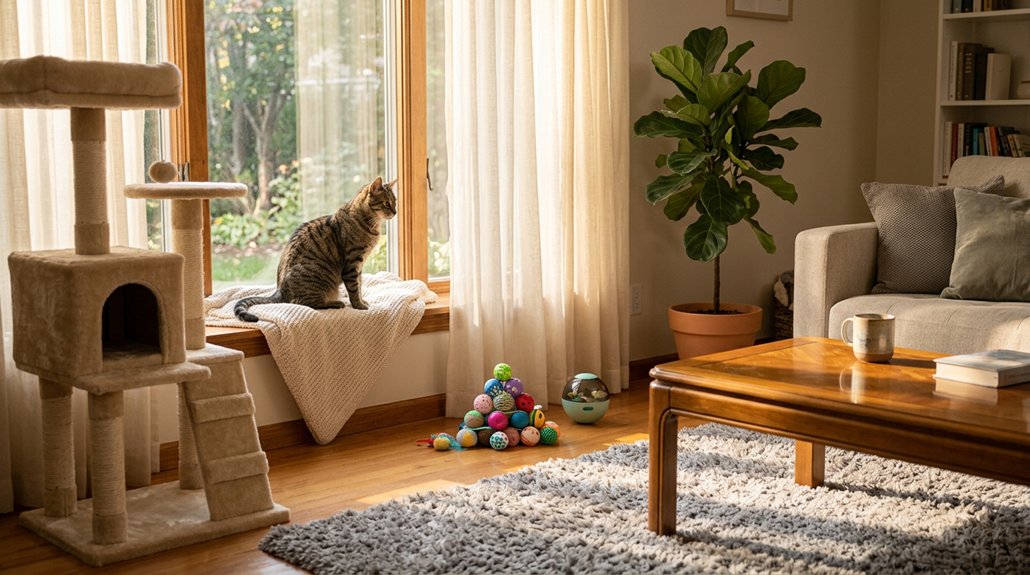
To guarantee your cat’s well-being while home alone, provide constant access to fresh food and water, and maintain litter box hygiene by removing waste daily. Engage them with puzzle feeders and window views for mental stimulation. Create comfortable napping spots and secure your home from hazards. Gradually acclimate them to solitude and consider professional companionship visits. Implement calming strategies like pheromone diffusers. There’s more to explore for ideal home-alone care strategies.
Key Takeaways
- Ensure constant access to fresh food and water with automatic feeders and fountains to maintain hydration and nutrition.
- Use interactive toys and puzzle feeders for mental stimulation and to prevent boredom during long absences.
- Arrange regular pet sitter check-ins for companionship and routine maintenance like feeding and litter cleaning.
- Create comfortable and secure napping spots with soft materials and safe surroundings for stress reduction.
- Gradually acclimate cats to alone time by initially leaving them for shorter periods to reduce anxiety.
Fresh Food and Water for Cats Alone
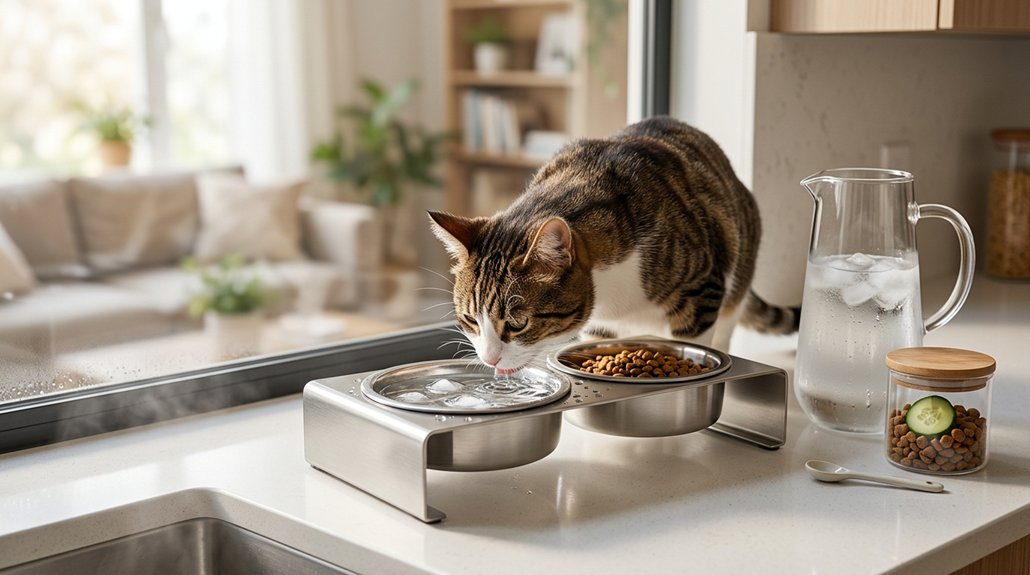
When you’re leaving your cat alone at home, ensuring they have constant access to fresh food and water is essential. Adequate cat hydration is critical; replace water daily to prevent dehydration risks. Consider multiple water bowls distributed throughout your home. This approach minimizes the chance of overturning, thereby maintaining hydration. An automatic water fountain further guarantees supply, encouraging increased consumption due to flowing water’s appeal.
Prioritize your cat’s food preferences by providing fresh meals before departure. Dry food, given its longer shelf life, can be left out safely for extended periods. In contrast, wet food should not exceed a few hours to avoid spoilage. Implement automatic feeders for consistent meal schedules, allowing you to monitor and adjust based on their eating habits.
Maintaining Litter Box Hygiene
To maintain peak litter box hygiene for your cat when you’re not home, establish a routine of daily waste removal to prevent odor accumulation and behavioral issues. Prioritize using clumping litter for its efficacy in moisture absorption, making maintenance less labor-intensive while enhancing cleanliness. Guarantee the litter box is placed in a quiet, accessible location and equip your home with one box per cat plus an extra to minimize stress and promote consistent use.
Regular Cleaning Routine
A clean litter box is essential for maintaining your cat’s health and happiness, and it starts with a daily routine of scooping waste to prevent litter box avoidance and secure proper elimination habits. Establish a consistent cleaning frequency by completely changing the litter and washing the box weekly. This process is a fundamental aspect of litter box maintenance to minimize odor and reduce bacteria buildup. Research shows that negligence in these practices may result in stress and anxiety for your cat, increasing the likelihood of inappropriate elimination behaviors. By keeping additional litter on hand, you secure a swift and efficient response when supplies run low, enhancing your pet’s comfort and hygiene. Prioritize these strategies to support your cat’s well-being when home alone.
Accessibility and Location
Maintaining an organized and hygienic environment extends beyond just cleaning; the location and accessibility of the litter box are equally significant factors. Ideal litter location in your home can mitigate stress, encouraging consistent usage and preventing behavioral issues. Make sure litter boxes are placed in quiet, easily accessible zones, minimizing stressors along access routes.
| Factors | Importance | Recommendations |
|---|---|---|
| Litter Location | Reduces stress | Place in quiet, low-traffic areas |
| Access Routes | Encourages regular usage | Make sure no obstacles; use low-sided boxes |
| Multiple Boxes | Prevents territorial disputes | Have one box per cat, plus an extra, in various home locations |
Cleaning daily and maintaining sufficient litter volume is essential for promoting a welcoming environment. Implementing these evidence-based practices fosters a healthier, stress-free living space.
Appropriate Litter Choice
Selecting the right litter is fundamental for maintaining box hygiene and odor control, which can greatly influence your cat’s well-being and behavior. Opt for natural, clumping litter with a fine texture that absorbs moisture swiftly, as cats often exhibit explicit scent preferences. Such litter minimizes unpleasant odors by trapping them and promotes a cleaner environment, reducing the likelihood your feline will avoid the box. Maintain a litter depth of one to two inches to guarantee comfort and ease of use. Scoop daily; it’s crucial for preventing cleanliness issues. Additionally, complete box sanitation with mild soap every couple of weeks is essential. Consider multiple boxes to alleviate territorial disputes in multi-cat homes. By implementing these strategies, you promote excellent litter box hygiene, fostering healthy cat habits.
Keeping Cats Entertained While Away
While you’re away, ensuring your cat remains entertained involves strategic enrichment interventions. Implementing interactive play through clever utilization of puzzle feeders can greatly heighten mental engagement levels, thereby reducing the likelihood of anxiety manifestations. Sensory enrichment is further achieved by positioning resting spots adjacent to windows, facilitating outdoor observation which double functions as both stimulation and relaxation. Introducing diverse elements like cardboard boxes or crumpled paper can provoke curiosity-driven explorative behaviors, a preventive measure against boredom-induced stress. Prioritize cat-safe toys devoid of hazardous components such as strings or small parts, ensuring risk-free amusement. Additionally, instituting ambient auditory stimuli, like classical music, can construct a serene environment, alleviating feelings of solitude while fostering a comforting auditory landscape.
Creating Comfortable Sleeping Spots
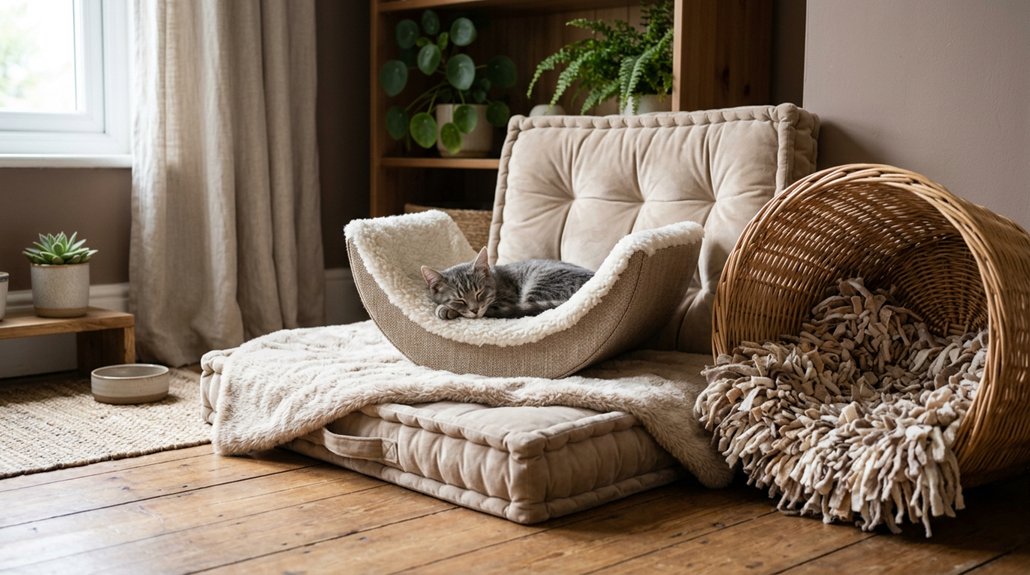
To complement mental stimulation, it’s paramount to create ideal sleeping environments for your feline companion. Cats sleep about 16 hours daily, so understanding their sleeping preferences is essential. Identify preferred napping spots and guarantee your cat can easily access these areas. Soft blankets or pillows that retain familiar scents can enhance comfort during cat naps. Keep doors open and arrange furniture to permit access to these quiet, low-traffic areas, thereby fostering a sense of safety and security.
Consider incorporating elevated resting areas using cat trees or shelves. Cats often have a predilection for higher vantage points, aiding in both observation and relaxation. By acknowledging and adapting to these preferences, you can meaningfully reduce stress and facilitate restful periods for your home-alone cat.
Scheduling Daily Companionship Visits
Ensuring your cat receives daily companionship visits is essential for mitigating anxiety and enhancing overall well-being. Companionship importance is underscored by data indicating that cats benefit considerably from social engagement to combat loneliness. Schedule visits at least once or preferably twice daily to optimize visit frequency, thereby ensuring consistent human interaction. Engage a reliable pet-sitting service or enlist trusted friends or family, providing them with a detailed log of your cat’s daily routine—this helps uphold her structured environment. Companionship visits not only bolster emotional security but also allow for health and behavior monitoring, facilitating early detection of potential issues. Select a sitter who incorporates interactive play and enrichment activities, cultivating a stimulating atmosphere to further alleviate your cat’s solitude.
Cat Proofing Your Home
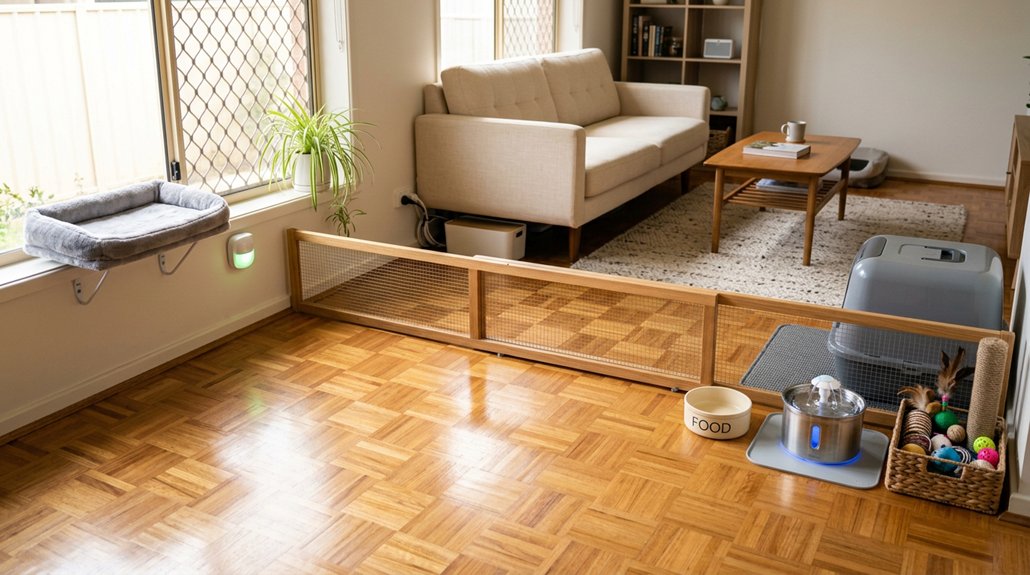
To guarantee your cat’s safety when left alone, it’s crucial to mitigate risks by removing toxic hazards like lilies and storing cleaning supplies securely. Employ cord management solutions and secure loose items such as hair ties to prevent ingestion-related injuries. Additionally, limit escape routes by using screens and barriers on windows and balconies, reducing the likelihood of falls.
Remove Toxic Hazards
While it may seem intimidating at first, cat-proofing your home by removing toxic hazards greatly enhances your pet’s safety. Begin with toxic plant identification; inspect for lilies, philodendrons, and azaleas, as these can cause severe health issues if ingested. Prioritize cleaning supply safety by securing chemicals and medications in locked cabinets or high shelves to prevent accidental ingestion or exposure. Enhance electrical cord safety by employing cord wraps or cable management techniques to mitigate chewing risks and potential electrocution. Implement choking hazard prevention by storing small objects like rubber bands and hair ties in areas inaccessible to your cat. Finally, apply window security measures, ensuring windows and screens are adequately secured to prevent your feline from escaping or encountering external dangers.
Secure Loose Items
Cat-proofing your home involves more than just removing toxic hazards; ensuring all loose items are secured is equally important for your feline’s safety. Felines are inherently curious, often leading them to investigate potentially dangerous items left unsecured. Hazard prevention begins by organizing small objects like paper clips and rubber bands into closed containers to avert ingestion or choking risks. You should also secure furniture and heavy items using anchors to maintain a secure environment against tip-overs if climbed. Eliminating dangling wires and cords minimizes chewing hazards, safeguarding curious cats from electrical dangers.
| Hazardous Item | Preventive Measure | Reason for Prevention |
|---|---|---|
| Wires/Cords | Use cord organizers | Prevents chewing and swallowing |
| Small Objects | Store in closed containers | Reduces choking risk |
| Heavy Furniture/Items | Use anchors for stability | Avoids injury from tip-overs |
Limit Escape Routes
Although curiosity is a natural trait for cats, allowing access to potential escape routes can lead to safety risks when they’re alone. It’s essential for effective escape prevention to secure your home environment. Close off hazardous rooms, such as basements and attics, by shutting doors to create safe zones. Eliminate climbing hazards by securing items like chairs that may be climbed on or tipped over, minimizing access to high spaces. Implement baby gates or barriers at staircases to prevent falls on different levels. Reinforce window and screen integrity using pet-safe materials to block potential escape routes. Lock all windows and balcony doors diligently, ensuring secure enclosures. These strategies collectively enhance the safety and well-being of your cat when unsupervised.
Preparing Cats for Extended Alone Time
When preparing your cat for extended alone time, it’s important to gradually acclimate them to solitude by initially leaving them home alone for short periods and incrementally increasing the duration. Begin cat independence training by maintaining a consistent daily routine for feeding, litter box cleaning, and playtime to mitigate anxiety. Implement puzzle feeders and interactive toys to provide mental stimulation and attenuate boredom. Arrange for a professional pet sitter for regular check-ins, service provision, and companionship. Calming aids like pheromone diffusers or cat-safe music can establish a tranquil environment, promoting relaxation. Follow this data-driven guide to support your cat’s adjustment to prolonged solitude through gradual alone acclimation.
“`markdown
| Strategy | Benefit |
|---|---|
| Short Durations | Reduces anxiety |
| Routine Maintenance | Provides predictability |
| Engaging Activities | Combats boredom |
| Pet Sitter Check-ins | Offers companionship |
“`
Exploring Pet Addition for Companionship
Consider adding another cat to your household, especially if your current feline shows signs of loneliness or if it’s a social breed like a Siamese or Ragdoll. Compatibility assessment is critical, focusing on temperament and energy levels, to promote a harmonious environment. Employ gradual introduction techniques, such as scent swapping and supervised meetings, to ease the shift and reduce stress for both cats.
Choosing Compatible Feline Friend
Many cat owners explore the option of introducing a second cat to their household to provide companionship, especially if their current feline exhibits signs of loneliness. Evaluate your cat’s temperament to determine compatibility with potential feline personalities. Sociable breeds like Ragdolls or Maine Coons typically adapt better to new friends. Gradual introductions are essential in minimizing stress. Initiate with scent exchange and spatial separation to alleviate territorial anxiety. Kittens often adapt swiftly, though adult cats of similar ages may better align behaviorally. Guarantee individual resources like food bowls, litter boxes, and resting spots to avoid disputes. Monitor interactions closely for signs of distress or aggression. Consulting a veterinarian or animal behaviorist can assist if difficulties arise during the acclimation phase.
Benefits of Companionship
Adding another feline companion can greatly enhance your cat’s emotional health. It can considerably mitigate loneliness and anxiety, thereby fostering improved well-being. Importantly, cat personality types play a significant role; certain breeds like Ragdolls and Maine Coons are predisposed to better adaptation due to their inherent sociability. Here are essential aspects:
- Mental Stimulation: A new cat offers cognitive challenges and diversions that decrease boredom.
- Socialization Support: Utilizing feline socialization tips is key in acclimatizing cats with varied social backgrounds.
- Stress Reduction: With companionship, cats often exhibit reduced anxiety and destructive behavior.
- Compatibility Assessment: Matching cats with compatible energy levels or ages leads to a balanced environment.
Adopting a second cat, considering these aspects, can create a harmonious home.
Transition Strategies for Cats
Fostering a multi-feline household, while beneficial, requires strategic planning to minimize stress during the acclimatization period. Gradual integration is essential for success when introducing another cat. First, assess pet personalities by arranging brief interactions between your resident cat and potential companions. This allows evaluation of compatibility before commitment. Choosing a cat of similar age or a naturally sociable breed enhances the likelihood of harmonious coexistence. Provision of individual resources, including food bowls, litter boxes, and resting areas, mitigates competitive behaviors. Vigilant observation is critical to address any territorial or anxious behaviors promptly. Patience is key throughout this process. Leveraging professional guidance from veterinarians or feline behaviorists provides tailored support to optimize the adjustment, ensuring smoother adaptations for all involved.
Ease Anxiety With Comfort Strategies
Understanding a cat’s behavior and environmental needs can greatly ease anxiety when they’re home alone. Implement targeted strategies to alleviate loneliness and promote comfort:
- Scent Objects: Place an item like your blanket or shirt in their favorite spot. The familiar scent reinforces security, reducing stress levels.
- Auditory Stimulation: Leaving the TV or radio on provides companionship through sound, decreasing feelings of isolation.
- Observational Activities: Arrange furniture near windows or install perches. Access to external views keeps your cat mentally engaged, effectively lowering anxiety and preventing boredom.
- Puzzle Feeders: Encourage active problem-solving by using puzzle feeders. This initiative distracts from an absence of human presence, fostering mental stimulation and diminishing separation issues.
Implementing these approaches guarantees your cat remains calm and balanced during your absence.
Bonding Rituals When You Return Home
Upon returning home, certain actions can greatly bolster the emotional connection between you and your cat. Engage in structured cat communication and establish a consistent return routine to alleviate your cat’s anxiety. Activities such as grooming and playtime reinforce positive behavior and serve as practical stress-reducing techniques. Consistency in your return routine, including snuggling or interactive games, enhances the overall emotional connection and promotes a sense of security.
| Bonding Activity | Benefit |
|---|---|
| Grooming | Reduces anxiety; initiates bonding ritual |
| Playtime | Enhances emotional connection; relieves stress |
| Treat Offering | Positive reinforcement; builds trust |
Reinforce bonding by offering treats as a form of positive reinforcement, solidifying your cat’s sense of normalcy and comfort in shared routines.
Frequently Asked Questions
What Is the 3-3-3 Rule for Cats?
The 3-3-3 rule outlines cat adjustment strategies, indicating: three-day initial stress, three-week comfort increase with identity emergence, and three-month full integration. It helps you identify feline anxiety triggers and manage each change phase effectively.
How to Leave a Cat Home Alone for 4 Days?
For cat care during a four-day absence, guarantee sufficient food supplies via automatic feeders. Maintain a clean litter box, guarantee ample water, and offer engaging toys. A daily visit from someone is essential for companionship and welfare checks.
What Is “I Love You” in Cat Language?
In cat communication, “I love you” translates through feline behavior, such as slow blinking, purring, or grooming. These actions demonstrate trust and bonding. Observing these cues helps in understanding your cat’s expressions of affection.
Can I Have a Cat if I Work 12 Hours a Day?
Yes, you can have a cat if you work 12-hour days. Prioritize work-life balance by ensuring cat enrichment through toys and interaction, monitoring stress. Consider automating feeding, providing ample stimulation, and potentially hiring a pet sitter.
Conclusion
When you leave your feline friend home alone, remember that your actions have a profound impact on their well-being. Will they have fresh water, a clean litter box, or engaging toys? These elements are essential, yet often overlooked. You might wonder, will a companion truly alleviate their solitude or just complicate matters? Data indicates anxiety-reducing strategies and brief rituals upon your return can greatly improve their emotional state. Are you ready to transform your cat’s solitary moments into joyful anticipation?