You’ll want to take your kitten to the vet within the first week of adoption for a thorough health check and to discuss vaccinations and preventive care. Regular vet visits every 3-4 weeks are necessary until your kitten reaches 16 weeks old, ensuring proper growth monitoring and vaccination updates. After this, annual wellness exams are advisable, with adjustments for senior cats. For a detailed understanding of vaccine schedules and recognizing urgent symptoms, explore further insights into ideal care practices.
Key Takeaways
- Schedule the first vet visit within the first week of adopting a kitten.
- Take kittens to the vet every 3-4 weeks until they are at least 16 weeks old.
- Transition to annual wellness exams after the kitten reaches 16 weeks of age.
- Conduct senior health screenings beginning at 11 years old for ongoing care.
- Address vaccinations, deworming, and preventive care during regular vet visits.
The Essential First Vet Visit for Your Kitten
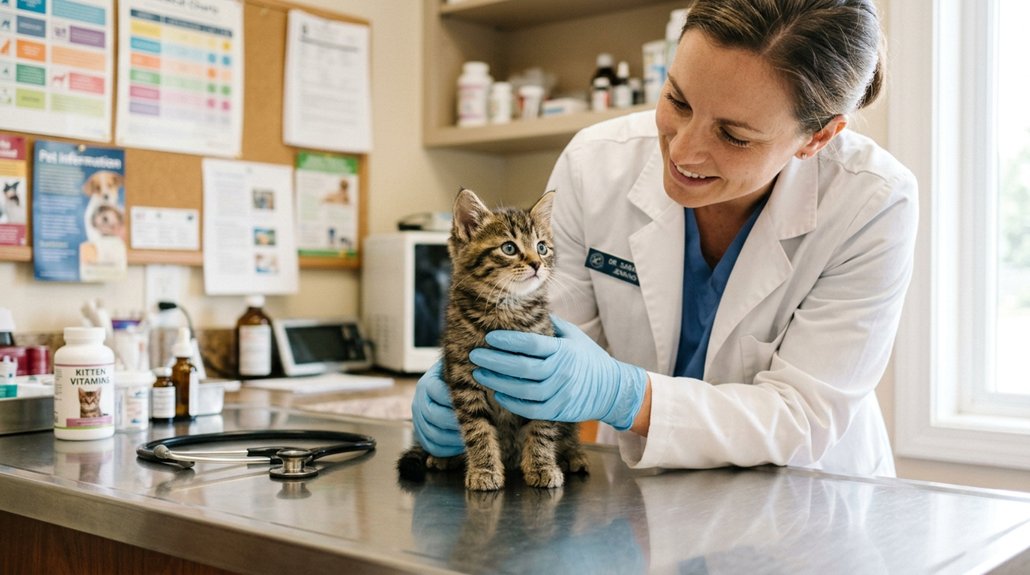
When you bring your new kitten home, it’s essential to prioritize scheduling the initial vet appointment within the first week of adoption. Early assessment is vital for ensuring ideal kitten health. Your veterinarian will conduct thorough vet assessments, examining your kitten’s overall condition, weight, and checking for any signs of distress, such as respiratory issues or failure to nurse. This visit also includes important discussions on vaccinations and establishing a timeline for these necessary shots. Deworming will be addressed, with stool samples possibly analyzed for gastrointestinal parasites. The vet will offer guidance on nutrition and preventive care strategies, contributing to your kitten’s long-term well-being. These early consultations set the foundation for your pet’s healthy development and future assessments.
How Frequently Should Kittens Visit the Vet?
After guaranteeing your kitten receives a thorough initial assessment, maintaining a schedule of regular veterinary visits becomes critical to your pet’s continued health. Kittens should have their first vet checkup within the first week of adoption. Following this, schedule appointments every 3-4 weeks until they are at least 16 weeks old to monitor kitten growth and address essential health needs. During these checkups, your vet will test for Feline Leukemia and Feline Immunodeficiency Virus between 8-12 weeks and check stool samples for common parasites. This vigilant approach confirms your kitten’s early development is on track. After 16 weeks, shift to annual wellness exams, which are crucial for ongoing health monitoring as your kitten grows into a healthy adult cat.
Kitten Vaccination Timeline and Importance
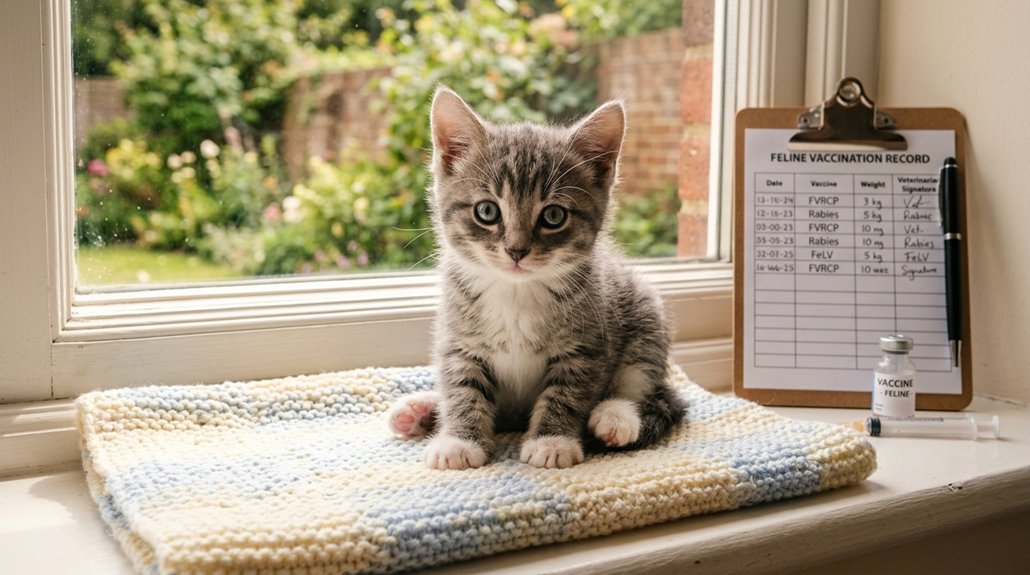
As you begin the journey of caring for your new kitten, guaranteeing they receive timely and appropriate vaccinations becomes an important component of fostering their long-term health. The kitten vaccination schedule starts when your kitten is around six weeks old. They’ll need subsequent vaccinations every 3-4 weeks until they’re at least 16 weeks old. Core vaccines crucial for your kitten include FVRCP, Feline Leukemia, and Rabies, with the latter typically given during their last visit before 16 weeks. These vaccinations provide significant health benefits by protecting against infections once maternal antibodies diminish. Additionally, regular deworming and preventive care tailored to their lifestyle are necessary throughout. Testing for Feline Leukemia and FIV is advisable between 8-12 weeks to guarantee a healthy start.
Urgent Symptoms Requiring Vet Attention in Kittens
When your kitten shows signs of respiratory distress, such as rapid breathing or wheezing, it’s essential to seek immediate veterinary care to rule out serious conditions. Similarly, persistent vomiting could indicate gastrointestinal issues requiring prompt intervention to prevent dehydration and further complications. If your kitten isn’t nursing or starts losing weight, these symptoms should also be treated as emergencies, as they can signify underlying health problems that need urgent attention.
Signs of Respiratory Distress
If you’re noticing any signs of respiratory distress in your kitten, immediate veterinary attention is essential. Breathing difficulties such as persistent coughing, wheezing, or labored breathing can be indicative of respiratory infections or other serious health issues. Rapid breathing or panting, especially when your kitten is at rest, should not be overlooked as it may signal an underlying condition requiring instant evaluation. Additionally, watch for nasal discharge that is green or yellow, often a sign of infection if paired with lethargy. Be particularly alert to dyspnea, or difficulty in breathing, especially if your kitten is breathing with an open mouth. Any sudden changes in your kitten’s breathing pattern or vocalization also warrant prompt vet intervention for a thorough examination.
Persistent Vomiting Indicators
Though it may be distressing to see your kitten vomit, it’s crucial to monitor the frequency and accompanying symptoms closely, as persistent vomiting demands immediate veterinary attention. Frequent vomiting in kittens can indicate serious conditions like gastrointestinal obstruction or infection, underlying vomiting causes that necessitate prompt evaluation. If your kitten vomits more than twice in 24 hours, contact a vet urgently. Other alarming signs include lethargy, diarrhea, or reduced appetite. Such symptoms exacerbate the risk of dehydration, which requires swift treatment options to prevent life-threatening complications. Seek timely veterinary care to explore potential treatment options, ensuring your kitten’s health and recovery prospects are optimized. Addressing these signs early bolsters your kitten’s chance of a swift and stable recovery.
Failure to Nurse
Persistent vomiting can be distressing, yet another urgent symptom requiring immediate attention is a kitten’s failure to nurse. If your kitten cannot nurse, it’s crucial to seek veterinary help immediately. This inability may indicate underlying health issues, necessitating bottle-feeding until they’re strong enough at around 3-5 weeks old. Failure to nurse can quickly result in dehydration and considerable weight loss, critical conditions that demand prompt intervention. Rigorous health monitoring is essential; watch for any additional signs such as vomiting or respiratory difficulties. These symptoms also require urgent veterinary examination. Early contact with a vet guarantees that orphaned kittens receive necessary nutrients and vaccinations, which are essential for survival. Timely intervention greatly impacts a kitten’s health, survival, and overall wellbeing.
Preparing for Vet Visits: A Guide for Kitten Owners
To guarantee a successful vet visit, start by preparing a list of questions regarding your kitten’s health and behavior to address any concerns. Bring documentation of your kitten’s current diet and medications to aid the vet in making precise health assessments. Additionally, carrying a fresh stool sample and noting any recent behavioral changes will provide your veterinarian with the detailed information needed to thoroughly evaluate your kitten’s well-being.
Essential Visit Preparations
Preparing for a vet visit with your kitten involves several important steps to confirm you address all health concerns and make the most of your appointment. Begin by noting any behavior observations and dietary habits. This information helps your veterinarian evaluate the kitten’s overall health. Key preparations include:
- Document observations: Note any health issues like lethargy, loss of appetite, or changes in behavior.
- Bring a stool sample: This helps check for parasites, vital for evaluating gastrointestinal health.
- List medications and foods: Make certain your vet has a complete picture for dietary evaluations.
- Foster a solid vet relationship: A good rapport can reduce anxiety for you both.
Questions to Consider
How thoroughly do you plan before taking your kitten to the vet? Efficient planning involves compiling a list of health issues and behavioral concerns to discuss during the visit. Confirm you address dietary questions by documenting your kitten’s current diet and medications. This information aids the vet in analyzing their health. Keep a keen eye on any notable behavioral changes and health observations leading up to the appointment—these details provide the vet a detailed picture of your kitten’s condition. Bringing a fresh stool sample for parasite testing is also beneficial. Establishing a positive rapport with the veterinarian is essential, as it may minimize your kitten’s anxiety during exams, confirming smoother visits and tailored advice for your furry friend’s well-being.
Items to Bring
As you prepare for your kitten’s upcoming veterinary visit, gathering the right items can greatly enhance the visit’s effectiveness. An essential component to bring is a fresh stool sample, which allows the vet to check for gastrointestinal parasites that may affect kitten behavior. It’s also beneficial to compile a list of any health or behavioral questions you’ve noticed since the last visit. To guarantee a thorough assessment, include details of your kitten’s diet, noting the brand of food and supplements used.
Bring these key items:
- A fresh stool sample
- List of health and behavior questions
- Details of your kitten’s diet and supplements
- Observations of any behavioral changes (e.g., lethargy, loss of appetite)
These preparations assist in addressing all concerns efficiently.
Prioritize Preventive Care for a Healthy Kitten
While fostering a robust start to your kitten’s life, it’s imperative to prioritize preventive care to guarantee their long-term health. Begin with an initial vet visit within the first week of adoption to establish essential health screenings. By integrating preventive measures, you’re safeguarding your kitten against common diseases. Kittens should see the vet every 3-4 weeks until they’re 16 weeks old, ensuring vaccinations and thorough health checks are up to date. These routine examinations provide an opportunity to catch potential health issues early, such as growth abnormalities or behavioral concerns. Regular monitoring allows for timely interventions, giving your kitten the best chance at a healthy future. Prioritizing preventive care keeps your kitten thriving and sets the foundation for lifelong wellness.
What Changes in Vet Care as Your Kitten Grows?
When your kitten moves from those early months to adulthood, the nature of their veterinary care evolves to suit their changing health needs. During kitten growth, frequent vet visits focus primarily on vaccinations and general health checks every 3-4 weeks until 16 weeks old. However, as you experience veterinary changes, different care emphasis emerges:
As kittens mature, veterinary care shifts focus from frequent checkups to tailored health needs in adulthood.
- Spaying/Neutering: Ideal around 5-6 months to prevent health issues and unwanted litters.
- Annual Wellness Exams: From 1-10 years, prioritize overall health and maintain vaccination schedules.
- Senior Health Screenings: At 11 years and older, biannual visits help manage risks like diabetes and kidney disease.
- Regular Lab Work: More critical for seniors; detect age-related issues early to guarantee a healthier aging process.
These veterinary changes promote lifelong health.
Frequently Asked Questions
What Is the 3-3-3 Rule for Kittens?
The 3-3-3 rule for kittens outlines their adjustment stages: stress in the first three days, settling within three weeks, and normalized behavior after three months. Use socialization tips and health checkups to support their adjustment.
How Often Are Kittens Supposed to Go to the Vet?
Imagine cradling your purring kitten, knowing you’ve guaranteed its health. You should take your kitten to the vet every 3-4 weeks for vaccinations and routine check-ups, guaranteeing they’re robust, well-immunized, and thriving.
What Is “I Love You” in Cat Language?
“I love you” in cat language often involves feline vocalizations and cat body language. Look for purring, slow blinking, bunting, upright tail positions, or grooming behaviors, indicating trust, affection, and a strong bond with your furry friend.
Where Should a Kitten Sleep on the First Night?
Place your kitten in a quiet, comfortable space, ideally a pet crate or box. Make certain it’s warm and includes comfort items like toys or a blanket to create secure sleeping arrangements, minimizing anxiety on their first night.
Conclusion
Making certain your kitten stays healthy isn’t just about reacting to illnesses; it’s about proactive care. Regular vet visits are essential despite any theories suggesting otherwise. These visits monitor growth, guarantee timely vaccinations, and address potential health issues early. You’re building a foundation of health that supports your kitten as it grows into a robust adult cat. Prioritizing preventative care might seem like extra effort now, but it’s the best way to secure a long, healthy life for your feline friend.