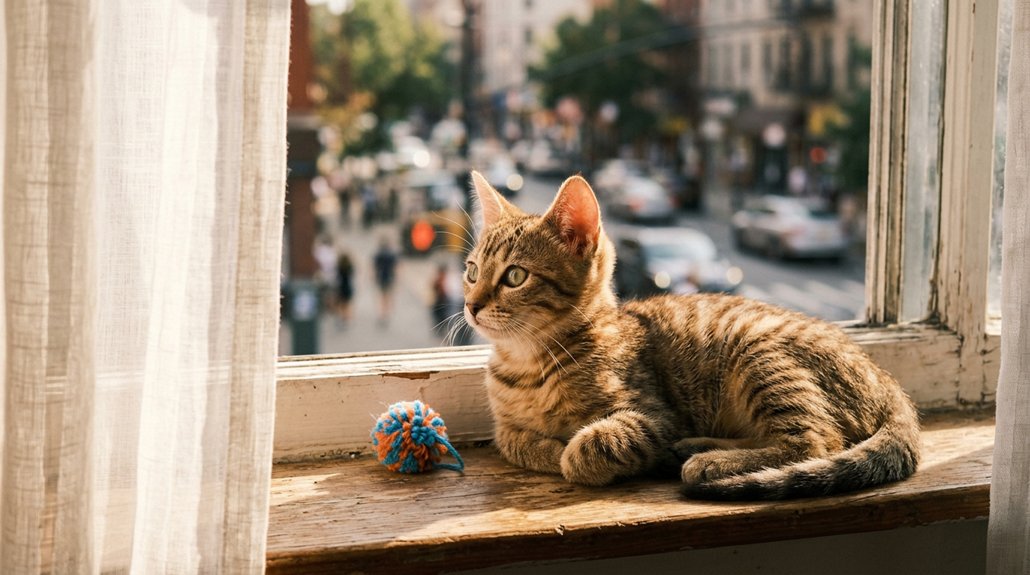
Your kitten might ignore you because of their independent nature, rooted in solitary instincts. Environmental stressors like loud noises or changes in routine can also lead them to retreat. Health issues or discomfort often result in withdrawal too, so keep an eye on their behavior. Providing a comforting environment with consistent routines can encourage positive interactions. Curious about enhancing your bond and understanding their behavior? You’ll discover effective strategies and insights.
Key Takeaways
- Kittens may ignore you due to their inherent independent nature and need for occasional alone time.
- Environmental stressors like loud noises and routine changes can cause kittens to withdraw.
- Ignoring behavior might signal health issues; monitor for reduced activity and poor grooming habits.
- Lack of early socialization can lead to solitary or aloof behavior in kittens.
- Creating a stable and comforting environment encourages kittens to engage more positively with humans.
Understanding Your Kitten’s Independent Nature
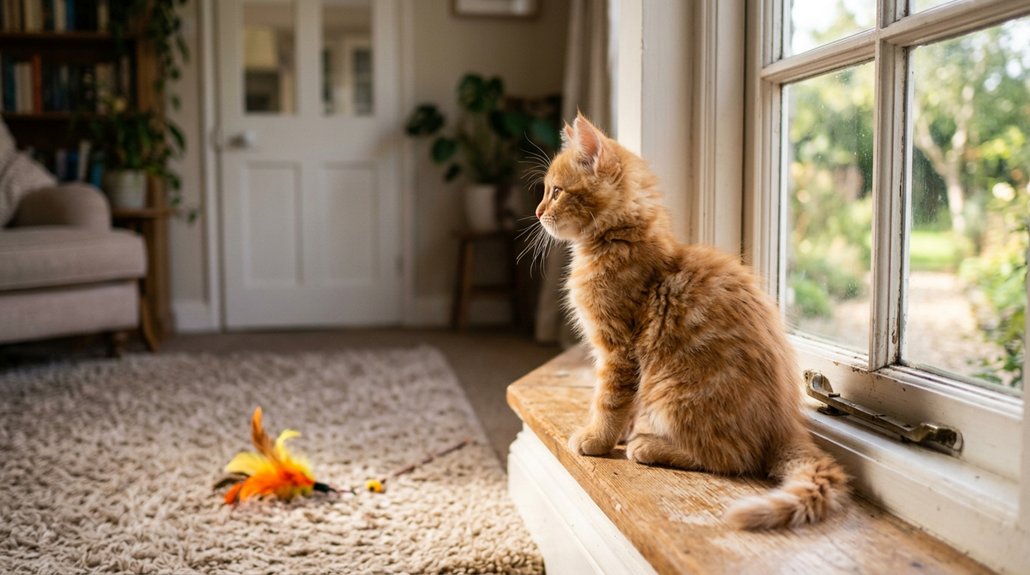
Understanding why your kitten might seem detached can begin with recognizing its inherent independent nature. Kittens often display solitary traits because their ancestors were solitary hunters. This independent behavior means your kitten might need alone time to recharge after social interactions. During the critical socialization period from 2-7 weeks, a kitten’s experiences can shape how it engages with humans later. If it wasn’t socialized effectively, it might lean towards being more solitary or even aloof. Each kitten’s personality also plays a pivotal role; some naturally enjoy less contact. It’s essential for you to respect this need for space and independent play. Pushing for interaction can cause withdrawal, whereas understanding their nature can foster stronger bonds over time.
Identifying Environmental Stressors and Routine Changes
While it’s natural to expect social behavior from your kitten, environmental stressors can considerably alter its interactions. Understanding stress identification is key to fostering a kitten-friendly space. Your kitten might be reacting to:
Environmental stressors can impact your kitten’s behavior; understanding them helps create a welcoming, kitten-friendly space.
- Loud Noises: Thunderstorms or construction can make them retreat.
- Unfamiliar Animals: New pets may make your kitten feel threatened.
- Routine Changes: A change in feeding times or new family members can unsettle your kitten.
- Lack of Stable Zones: Without safe, familiar areas, a kitten may become withdrawn.
Maintaining routine stability helps mitigate stress, giving your kitten a sense of security and encouraging them to engage more openly. Creating safe zones and adhering to consistent schedules reassures your kitten. By minimizing environmental disruptions, you’re paving the way for positive interactions.
Spotting Health Concerns Impacting Kitten Behavior
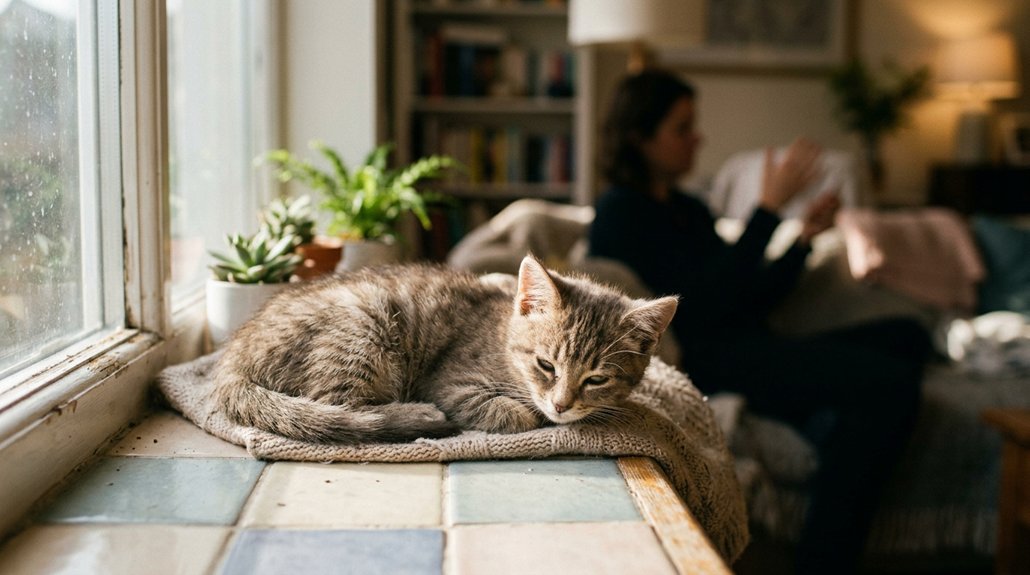
Beyond environmental factors, your kitten’s behavior might be influenced by underlying health concerns. Sudden withdrawal or ignoring behavior may signal issues like pain or discomfort, necessitating immediate veterinary attention. Making consistent behavioral observations can help identify signs such as reduced activity, decreased appetite, or poor grooming habits. These can all indicate that your kitten is disengaging due to illness. It’s crucial to understand that kittens are particularly vulnerable to various health problems, and seemingly aloof behavior might stem from hearing or vision impairments. Such conditions can interfere with their social interactions. Regular health screening through veterinary check-ups guarantees early detection of these issues, ultimately protecting your kitten’s well-being and helping them maintain a loving connection with you.
Creating a Comforting Space for Your Kitten
Crafting a nurturing environment for your kitten isn’t just about aesthetics; it’s integral to their emotional and physical comfort. A designated resting area with soft bedding offers security and encourages your kitten to seek your companionship. Make certain they have safe hiding spots to retreat to, giving them a sense of control over their surroundings. Positive reinforcement techniques using treats and toys can transform familiar spaces into safe havens, encouraging them to associate you with comfort and positive experiences. Keep the environment calm, minimizing noise and sudden movements to reduce stress, prompting them to engage more with you.
Consider enhancing their world with:
- Soft, inviting bedding in quiet areas
- Strategic hiding spots around the home
- High vertical spaces for viewing and confidence
- A consistent, soothing atmosphere
Promoting Positive Kitten Interaction
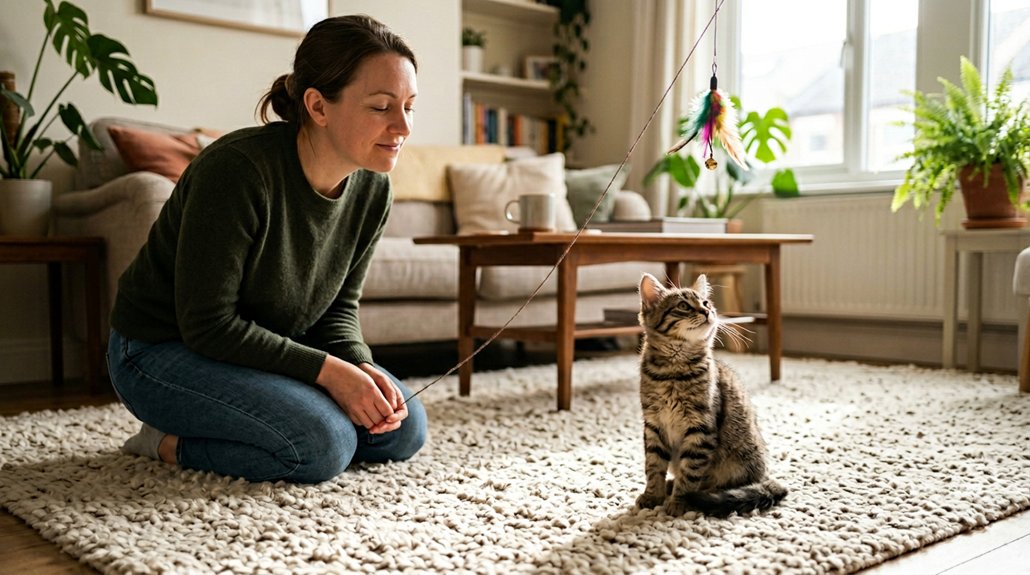
To foster a strong bond with your kitten, engaging directly in play can be transformative in their interaction patterns. Interactive play with wands or laser pointers stimulates their curiosity, encouraging them to seek your attention rather than remain aloof. Establishing a consistent routine for feeding and playtime further enhances their sense of security, making them more inclined to approach you.
Incorporating positive reinforcement, like treats, when your kitten engages with you strengthens your bond and reduces ignoring behavior. A stimulating environment filled with various toys and climbing structures allows them to choose social interaction on their terms. Approaching calmly and gently, letting them initiate contact, fosters safety. With patience and consistency, you’ll notice a significant shift in how your kitten perceives and interacts with you.
Frequently Asked Questions
Is It Normal for My Kitten to Ignore Me?
Yes, it’s normal for your kitten to ignore you sometimes. As they develop, bonding and attention-seeking behavior fluctuate. Be patient and offer consistent positive interactions to nurture deeper connections and encourage more engagement over time.
What Is the 3-3-3 Rule for Kittens?
Imagine your kitten, stepping tentatively into a new world, the 3-3-3 rule unfolds its magic: first, cautious adjustment days; next, revealing socialization stages; finally, affectionate confidence blooms in three months. Nurture this transformation, patiently.
What Is “I Love You” in Cat Language?
“I love you” in cat language involves cat communication signals like slow blinks, purring, kneading, and grooming. Your kitten’s elevated tail and affectionate behavior reflect feline affection, showing trust and a strong bond rooted in their instincts.
What Is a Red Flag Behavior in Cats?
“A stitch in time saves nine.” Red flags in feline socialization include ignoring attention-seeking cues or showing withdrawal. These behaviors can signal stress or health issues, warranting immediate attention to guarantee your kitten’s well-being remains ideal.
Conclusion
Understanding why your kitten seems aloof involves acknowledging their independent instincts, pinpointing potential stressors, and spotting subtle health signals. By creating a calm and comforting corner, you cater to your kitten’s need for security and stability. Promoting playful, positive interactions can forge a firm foundation for a flourishing friendship. With patience and perceptiveness, you’ll find that your feline friend’s fleeting focus can transform into a fulfilling bond, rich with warmth and whisker-twitching wonder.