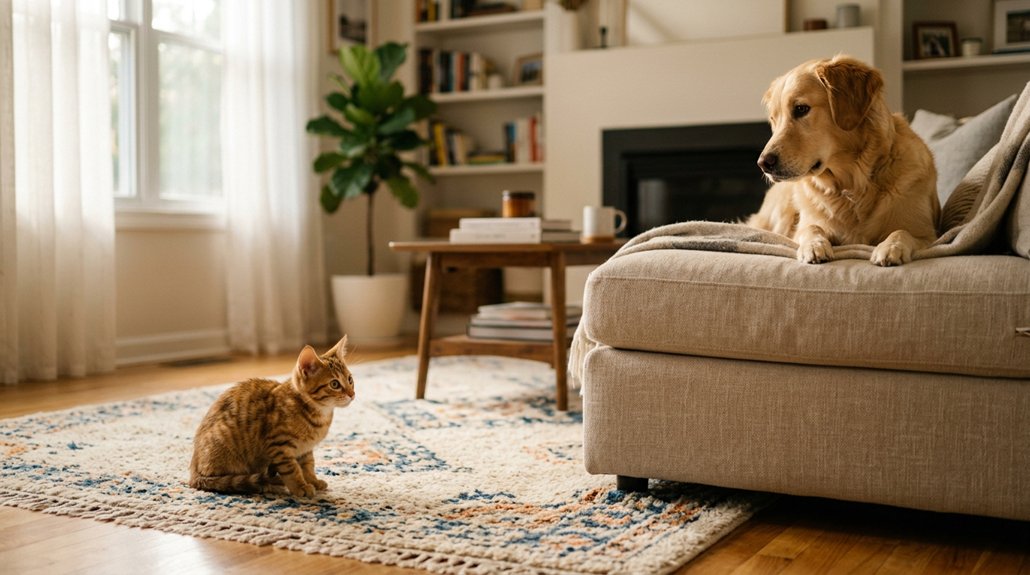
To safely introduce a kitten to a dog, start with several days of scent familiarization by swapping bedding or using grooming tools. Set up a quiet, dog-free sanctuary for the kitten to adjust. Gradually introduce them by allowing them to sniff through a barrier like a closed door. Employ positive reinforcement with treats when they’re calm. Once they’re accustomed to each other’s scents, controlled face-to-face meetings can begin. Continue for insights on ensuring a smooth shift.
Key Takeaways
- Begin with a few days of separation to allow scent familiarization between the kitten and dog.
- Encourage indirect scent interactions using closed-door sniffing sessions to build familiarity.
- Exchange scents between the kitten and dog using shared grooming tools like brushes or cloths.
- Monitor initial face-to-face meetings closely, ensuring both animals feel secure and unstressed.
- Gradually increase interaction time while observing for calm and positive behavior from both pets.
Overview of Kitten-Dog Introduction Process
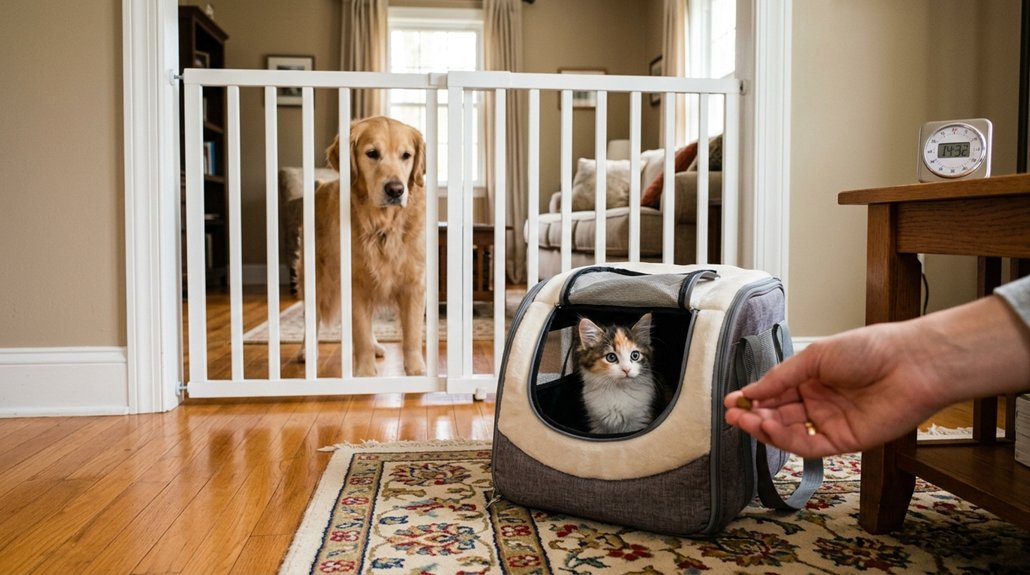
When introducing a kitten to a dog, begin with a carefully structured process to guarantee both animals feel secure and comfortable. Start by maintaining separation for the initial 3-4 days to allow for scent familiarization. During this period, you can enable indirect interactions, like sniffing under a closed door. Observe their body language closely, making sure no signs of stress or aggression are present. Use shared grooming tools for scent exchanges to promote familiarity. Progress to controlled face-to-face meetings in a neutral setting where the dog stays leashed. Let the kitten approach at its own pace. Employ positive reinforcement to reward calm behavior, reinforcing a sense of security. This clinical approach guarantees a smooth introduction, minimizing potential stress for both pets.
Setting Up a Safe Sanctuary for Your Kitten
As the initial period of scent familiarization concludes, focus on establishing a safe sanctuary for your kitten. Begin by selecting a quiet, dog-free room equipped with sanctuary essentials: a secure door, litter box, food and water bowls, scratching post, and comfortable bedding. Incorporate vertical spaces, such as cat trees and shelves, to give your kitten escape options, reinforcing its sense of security.
| Sanctuary Essentials | Vertical Spaces |
|---|---|
| Litter box, food bowls | Cat trees, shelves |
| Scratching post, bedding | Safe escape options |
| Hiding places, tunnels | Reinforce security |
Cat-proof the space by removing poisonous plants, securing cords, and eliminating hazards. Include hiding spots or tunnels for stress relief. Strictly control access, ensuring no dog encounters until the kitten adapts.
Gradually Introducing Your Kitten to Dog Scents
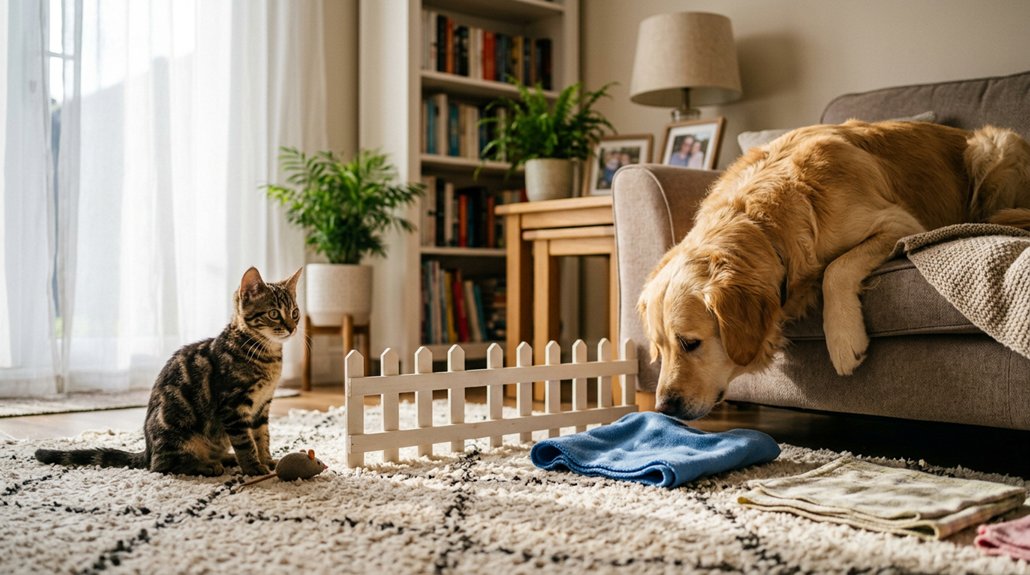
To foster familiarity between your kitten and dog, begin by allowing the dog to sniff the kitten’s scent through the door of its sanctuary, facilitating indirect olfactory introductions. Use shared grooming tools to interchange scents, effectively merging their olfactory profiles. Gradually place items with the kitten’s scent, such as bedding or toys, in the dog’s environment to encourage curiosity while maintaining a calm atmosphere to support positive acclimatization.
Using Shared Grooming Tools
Introducing your kitten to dog scents through shared grooming tools can greatly ease the tension of their first few interactions. Utilize a single grooming brush for both your kitten and dog to facilitate scent familiarity. This approach leverages the grooming benefits by allowing scents to naturally transfer between them, thereby reducing initial anxiety. As you groom, the shared scents linger, fostering a positive association with each other’s aromas before they meet face-to-face. This scent-sharing methodology considerably diminishes the likelihood of territorial behavior, ensuring a smoother introduction. Continuously using this technique enhances comfort levels over time, minimizing stress during further interactions. By gradually integrating scents via grooming tools, you pave the way for a harmonious shared living space and improve long-term pet relationships.
Establishing Scent Familiarization
Building on the shared grooming tools strategy, the next step is establishing scent familiarization. Utilize a single grooming brush to groom both the kitten and the dog, promoting scent association by transferring their scents. Introduce positive reinforcement by placing the kitten’s bedding or toys in the dog’s area, allowing exploration of new scents in a stress-free setting. Use a clean cloth to gently rub the kitten, then let the dog smell it, fostering a connection without direct confrontation. Permit the dog to sniff under the door of the kitten’s sanctuary room, maintaining physical separation while encouraging scent familiarity. Gradually increase the exposure time to each other’s scents, progressing to visual introductions when calmness and comfort are consistently displayed by both pets.
Introducing Sounds to Ease Familiarization
Although introducing a kitten to a dog’s sounds may initially seem intimidating, it’s essential for fostering a smooth shift between pets. Begin sound acclimation by letting the kitten hear the dog from a distance, behind a closed door. This controlled exposure allows the kitten to become familiar with the dog’s sounds without direct contact. Utilize soft music or ambient noise to create a calming environment, which helps mask any sudden loud noises that might cause stress.
Gradually extend the duration of these sound sessions, carefully observing both pets for signs of comfort or distress. Incorporate sound exposure during feeding times, offering positive reinforcement, such as treats or soothing words, to reward calm behavior. Sound cues like your gentle voice or toys can enhance positive associations, reinforcing comfort over time.
How to Safely Use Barriers for Visual Introductions
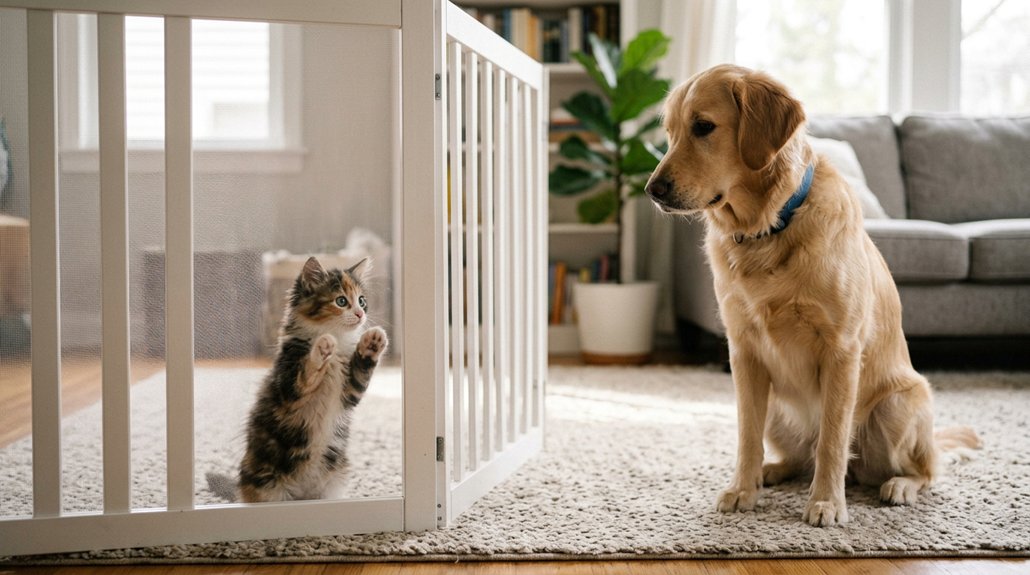
Utilizing sturdy barriers, like baby gates or pet pens, is paramount for guaranteeing safe visual introductions between a kitten and a dog without direct contact. Choose barrier types that are tall enough to prevent any jumping and secure enough to remain stable. Position these in a neutral space, avoiding areas that could trigger territorial behaviors. Use distance management effectively, adjusting the proximity as needed over time. To begin:
- Select the appropriate barrier types: Guarantee sturdiness and height.
- Arrange barriers in a neutral area: Avoid territorial zones.
- Manage distance carefully: Gradually decrease as comfort grows.
- Closely monitor body language: Watch for signs of stress or aggression.
These steps are significant for fostering a safe, stress-free introductory phase. Adjust as needed for smoother changes.
Addressing Common Introduction Challenges
When introducing a kitten to a dog, managing aggressive tendencies requires a controlled approach. Exercise the dog beforehand to minimize hyperactivity and carefully monitor body language to identify signs of stress. Address fearful responses by gradually decreasing barriers, allowing both animals to acclimatize to each other’s presence through scent and visual exposure.
Managing Aggressive Tendencies
Successfully managing aggressive tendencies when introducing a kitten to a dog requires astute observation and deliberate control. Pay close attention to your dog’s body language, identifying aggression triggers like raised hackles or intense staring. Upon detecting such signs, immediately separate them to reduce risks.
Here’s a concise plan:
- Observe: Look for stiff posture, intense staring, or raised hackles.
- Intervene: Separate pets at any sign of aggression and use tools like scent exchanges or visual barriers for controlled familiarity.
- Structure: Conduct brief, controlled interactions using a leash to maintain control.
- Distract: Use toys or treats to redirect aggression towards positive actions, rewarding calmness.
If challenges persist, professional advice from a behaviorist is recommended for tailored guidance.
Overcoming Fearful Responses
Introducing a kitten to a dog can be intimidating when fear responses come into play, which might inadvertently provoke aggressive behavior in the dog. Watch for fearful body language such as cowering or lip licking in either pet, as these signs indicate stress. Guarantee your kitten has escape routes, allowing them to retreat if the dog becomes too imposing.
Use calming techniques, like exercising the dog beforehand to expend excess energy. Provide a secure sanctuary for the kitten, minimizing their exposure to potential threats. Gradually increase the time they spend together, always rewarding calm behavior with treats to constructively reinforce positive experiences. If either pet’s fear or aggression persists, reassess your approach and consult a professional to guarantee both pets’ safety and comfort.
Using Treats and Praise for Better Interactions
If you want to foster a harmonious relationship between your kitten and dog, leveraging high-value treats combined with timely praise is essential. Implement effective treat strategies to reinforce calm behavior when they meet. Here’s how:
Harness high-value treats and timely praise to cultivate a peaceful bond between your kitten and dog.
- Offer high-value treats: Reward your dog for maintaining a calm demeanor around the kitten to reinforce positive associations.
- Incorporate praise timing: Immediately praise both pets following desired behaviors. This quick feedback reinforces good habits.
- Increase interaction gradually: Encourage gentle sniffing and exploration with treats, fostering positive engagement.
- Monitor body language: Pay close attention to stress signals. Reward relaxed postures to maintain a peaceful environment.
Utilize short, frequent training sessions with these strategies, ensuring both pets learn to coexist peacefully over time.
Ongoing Supervision Tips
Assuring safety and comfort as your pets get accustomed to each other relies heavily on vigilant supervision. For safe interactions, continuously monitor behavior for signals like growling or stiff posture—indicators that warrant immediate separation. Your kitten should always have access to hiding spots and elevated spaces to retreat if it feels threatened. A leash on your dog during initial interactions allows you to intervene promptly should tensions rise.
Maintain caution:
| Signs of Trouble | Actions | Goals |
|---|---|---|
| Growling/Hissing | Separate immediately | Maintain safe interactions |
| Stiff Posture | Provide calm environment | Reduce stress or aggression |
| Escalating Tension | Leash control | Guarantee manageable behavior |
Gradually extend their time together, remaining vigilant for any behavioral changes indicating discomfort or aggression.
Frequently Asked Questions
How Long Does It Take for a Kitten to Accept a Dog?
Acceptance varies greatly, but expect several days to weeks. Kitten behavior, alongside dog integration, plays an important role. A high prey drive in dogs or dominant tendencies may extend the process. Gradual introductions and rewards aid smooth acclimatization.
What Is the 7 7 7 Rule for Dogs?
The 7-7-7 Rule helps with dog behavior and kitten temperament. You’ll find 45% less stress in introductions. Give your dog seven days to adjust, seven weeks to settle, and seven months to fully acclimate to family dynamics.
What Is the 3-3-3 Rule for Kittens?
The 3-3-3 rule for kittens involves three days of initial adjustment, three weeks to adapt to their new environment, and three months for full socialization strategies and environmental adjustments, revealing their true personality. Patience is essential.
Is It Easy to Introduce a Kitten to a Dog?
Introducing a kitten to a dog isn’t easy, depending on kitten behavior and dog temperament. High-energy or prey-driven dogs complicate the process, requiring careful monitoring and gradual introductions. Patience and structured guidance enhance successful outcomes in familiarizing both pets.
Conclusion
Successfully introducing a kitten to your dog is a delicate dance, requiring patience and precision. By creating a serene environment, using gentle sensory exposure, and providing careful management during initial meetings, you can lay a harmonious foundation for their relationship. Remember, hiccups in the process are simply learning curves. With consistent positive reinforcement, you’ll nurture a bond that goes beyond coexistence to true companionship, ensuring your furry family members thrive together safely and happily.