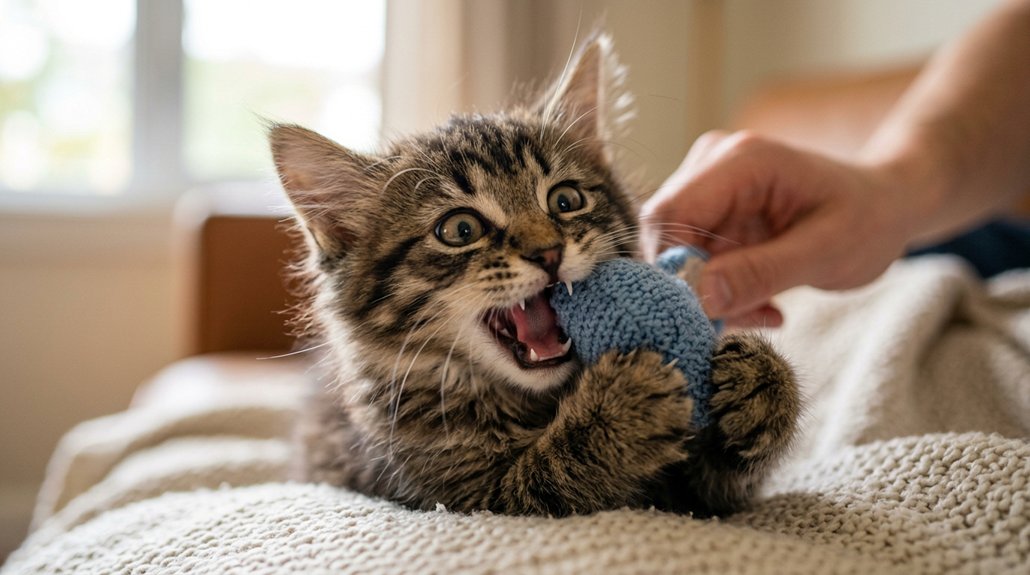
Kittens bite due to their natural instincts, teething discomfort, and need to explore. It’s essential to distinguish playful from aggressive biting by observing body language. To manage biting, disengage immediately and redirect to toys with positive reinforcement. Avoid reinforcing bad behavior by using hands in play. Replace punishment with interactive play to combat boredom and stress. If biting persists, consider professional help. Discover effective strategies to nurture a well-behaved feline companion.
Key Takeaways
- Kittens bite due to natural predatory instincts and exploration needs.
- Teething causes gum discomfort, leading kittens to bite to alleviate pain.
- Immediate disengagement and positive reinforcement redirect biting to toys.
- Consistent interactive play and toys mimic hunting, preventing boredom-induced biting.
- Aggressive biting requires professional advice from a feline behaviorist.
Reasons for Kitten Biting
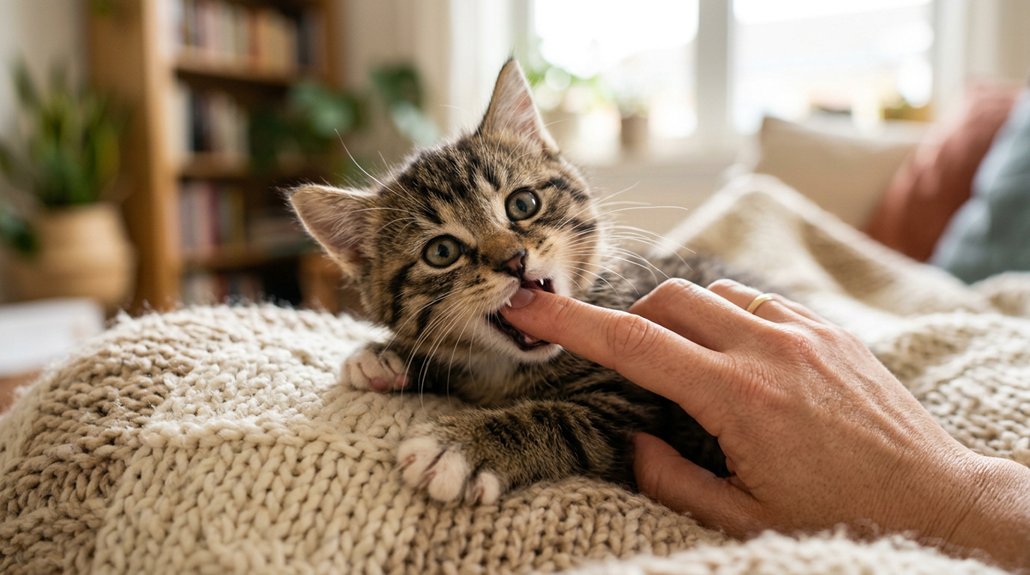
Understanding why your kitten bites is essential to addressing this common behavior. Kittens naturally engage in biting due to predatory instincts, which are vital for their hunting skills. Young kittens explore their world by mouthing objects, an action that aids in motor skill development. Teething, occurring from two to six months, adds another layer, as biting offers relief from gum discomfort. Without sufficient maternal guidance or sibling play, kittens may struggle with bite inhibition, increasing the chance of excessive nipping. Stress or fear can also manifest as biting, particularly in unknown or threatening environments, pointing to health implications if left unchecked. Providing environmental enrichment can help combat biting, ensuring your kitten’s environment stimulates and satisfies natural instincts without adverse behavioral outcomes.
Recognizing Play vs. Aggressive Biting in Kittens
Once you’ve identified the reasons behind your kitten’s biting behavior, distinguishing between playful and aggressive biting becomes essential for effective intervention. Recognizing these differences helps you respond appropriately. Playful signals, like relaxed body language and gentle nibbles, indicate your kitten is practicing hunting skills. Conversely, aggressive cues manifest through tense posture and dilated pupils, often resulting from fear or overstimulation.
| Behavior Type | Characteristics |
|---|---|
| Playful Biting | Relaxed body language |
| Gentle, short nibbles | |
| Aggressive Biting | Tense body posture |
| Dilated pupils |
Socialization with littermates teaches kittens important bite inhibition. Without it, playful energy may turn overly aggressive. By understanding these cues, you can redirect their behavior towards toys, ensuring safe and positive interactions.
Proven Methods to Manage Kitten Biting
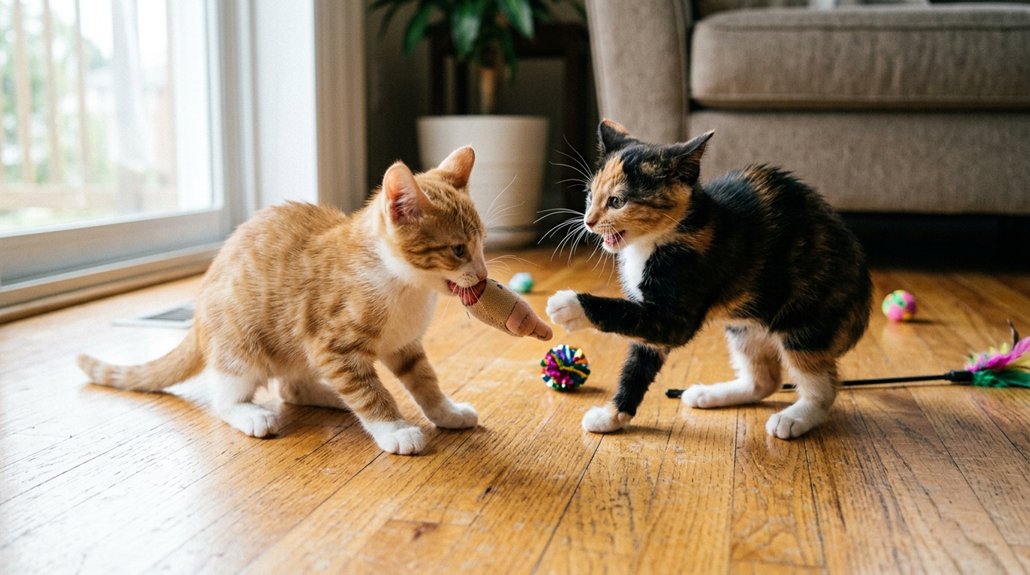
Effectively curbing kitten biting hinges on employing proven strategies that guide them towards desired behaviors. Developing robust playtime strategies is essential for biting prevention. Implement the following methods:
- Immediate Disengagement: If your kitten bites, promptly say “no” and withdraw your attention. This teaches them that biting leads to an end in playtime, fostering recognition of undesirable consequences.
- Positive Reinforcement: Redirect them with toys in place of fingers or toes, and reward appropriate behavior with treats or praise. This strategy reinforces good habits and discourages nipping.
- Engage Daily: Schedule multiple daily play sessions with diverse toys like wand toys and crinkle balls. This mimics hunting instincts, effectively channeling energy and minimizing playful biting.
Compassionate, consistent application of these tactics will yield results.
Common Mistakes in Managing Kitten Biting
While implementing successful methods can guide your kitten away from biting, it’s equally important to recognize common pitfalls that can undermine these efforts. Responding with loud noises or jerky movements can escalate aggression, breaking vital interaction boundaries and damaging your bond. Engaging in play with hands or feet reinforces biting behavior by encouraging your kitten to see you as prey. Instead, focus on positive playtime engagement using toys rather than hands. Punishment like scolding can instill fear rather than learning, making positive reinforcement indispensable. Provide ample interactive play to prevent boredom-induced biting. Additionally, pay attention to signs of overstimulation; failing to cease play when necessary can cause defensive bites, reinforcing the importance of understanding your kitten’s limits.
Knowing When Your Kitten Needs Professional Help
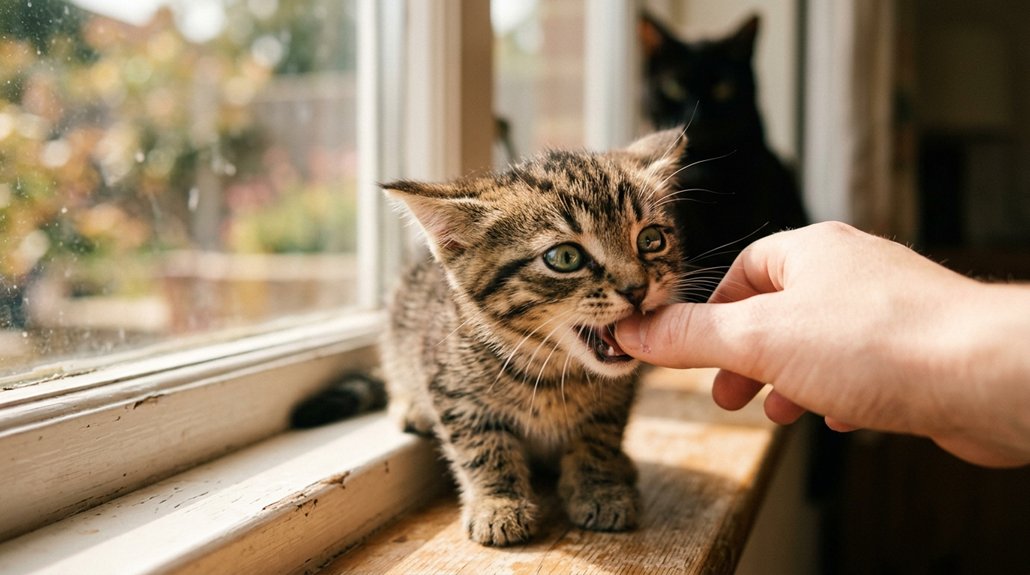
If your kitten’s biting persists beyond the usual 4-6 month age range, it might be time to seek professional help. Warning signs like continuous biting could indicate inadequate socialization or behavioral issues. It’s vital to consult a veterinarian to rule out medical conditions such as pain or injury. Here’s when to reflect on seeking help:
- Persistent Biting: If biting is aggressive or doesn’t subside, consult a feline behaviorist for strategies tailored to your kitten.
- Health Indicators: Regular veterinary check-ups can identify health issues that may cause biting, assuring your kitten’s comfort.
- Additional Resources: Animal welfare organizations offer information and support to improve socialization skills.
Taking these steps helps create a healthy environment, ensuring your kitten’s well-being and harmonious integration into your home.
Frequently Asked Questions
How to Correct a Kitten From Biting You?
To correct a kitten from biting you, initiate behavioral training by redirecting playful behavior with toys instead of hands. Use calm reinforcement to encourage gentle play, saying “no” to biting, and ensuring engaging daily play sessions.
What Is the 3-3-3 Rule for Kittens?
The 3-3-3 rule outlines a kitten’s adjustment. Expect hesitance in the first three days, gradual exploration after three weeks, and ease with socialization strategies in three months. Understanding kitten behavior helps you support their adjustment compassionately.
Will Kittens Grow Out of Biting?
Like a river flows naturally to the sea, kittens typically outgrow biting as their playfulness and natural instincts align. With your guidance, they’ll learn to redirect those playful nibbles onto toys rather than your fingers.
How Can I Bond With My Kitten Without Biting?
To bond with your kitten without biting, engage in playful interactions using safe toys like wand toys. Rotate toys to keep them excited, reinforcing gentle play with positive reinforcement, like treats, encouraging friendly behavior and building trust.
Conclusion
Think of your kitten as a young artist, enthusiastic to explore their canvas—the world—sometimes with the wrong brushstrokes. Understanding their intentions helps you guide this budding painter into creating a harmonious masterpiece. By recognizing signs, using proven techniques, and avoiding common pitfalls, you nurture not just their behavior but their spirit. Yet, if the colorful palette becomes too chaotic, seeking professional help guarantees their masterpiece—and your relationship—remains vibrant and joyful. Treat these moments as strokes on the canvas of companionship.