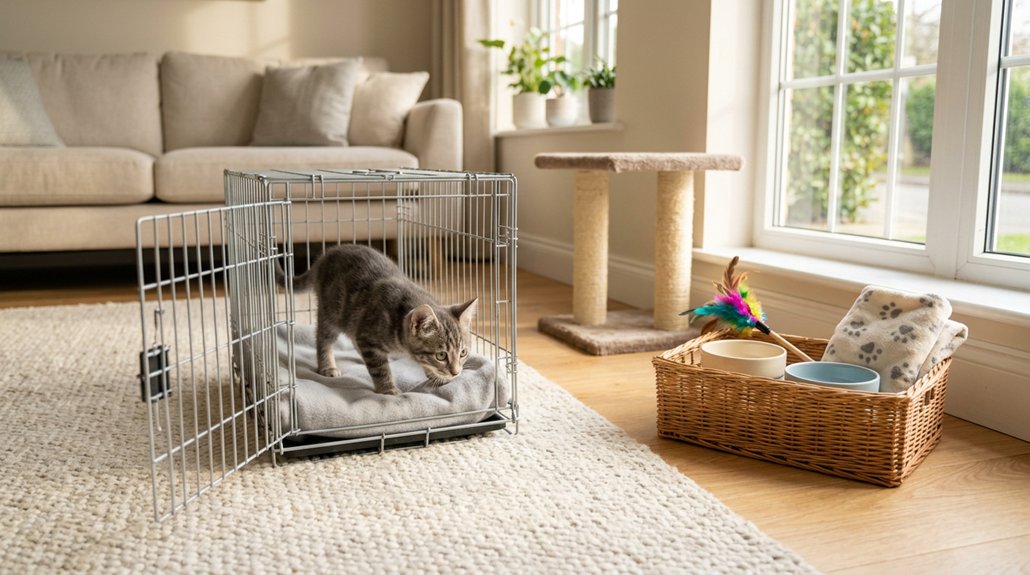
To prepare your home for a new kitten, start by choosing high-quality supplies, including kitten food and shallow bowls. Kitten-proof your space by removing toxic plants and securing cords. Designate a quiet area with a soft bed, litter box, and food stations to foster their comfort. Gradually introduce other pets, guaranteeing interactions are calm and rewarding. Establish peaceful routines with consistent feeding times and early veterinary care. Discover further strategies to guarantee your kitten’s smooth integration.
Key Takeaways
- Choose kitten food meeting AAFCO standards, and provide 3-4 small meals daily with clean water for hydration.
- Remove toxic plants and secure electrical cords to prevent accidental poisoning and injuries.
- Designate a quiet, confined space for the kitten with essentials like a bed and litter box.
- Familiarize pets with the kitten’s scent before direct interactions and monitor for stress signs.
- Schedule a vet visit within the first week to establish a health baseline and start vaccinations.
Choose Essential Kitten Supplies
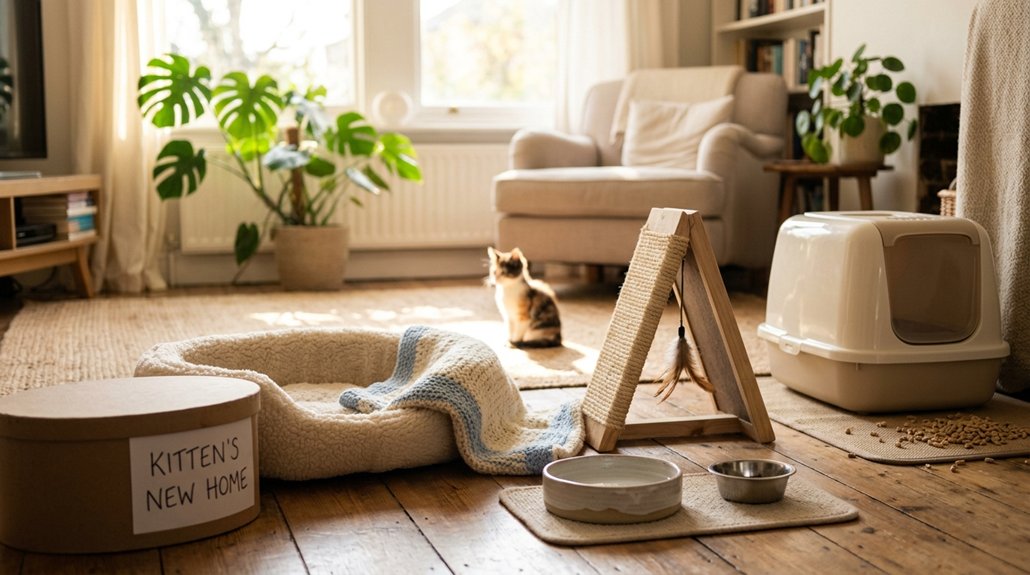
When preparing for a new kitten, it’s crucial to select essential supplies that guarantee their health and comfort. Start with high-quality kitten food designed to support their rapid growth and development. Look for options rich in nutrients that provide a balanced diet during their early months. Use shallow, non-slip bowls made of stainless steel or ceramic to minimize spills and prevent bacterial buildup, promoting a clean feeding environment. Make sure the bowls are easily accessible and appropriately sized for your kitten’s needs. Consider their water intake, especially if shifting from milk, by providing fresh water regularly. Properly feed your kitten to establish a routine that supports their nutritional requirements, helping your new pet thrive in their new home.
Kitten-Proof Your Home for Safety
To guarantee your kitten’s safety, start by removing toxic plants like lilies and philodendrons, as ingestion can be extremely harmful. Secure any loose electrical cords by using covers or bundling them together to prevent your kitten from chewing or getting entangled. These actions are essential to creating a safe environment for your new pet, considerably reducing the risk of accidents.
Remove Toxic Plants
Although the joy of bringing a new kitten home is unparalleled, ensuring their safety is paramount. Many common household plants, like lilies, philodendrons, and azaleas, are toxic to cats, causing severe health issues if ingested. Begin by practicing plant identification to ascertain which plants are hazardous, and remove them promptly. Consult your veterinarian for a thorough list of toxic varieties.
Opt for safe alternatives when adding greenery to your home. Choose non-toxic options like spider plants, Boston ferns, or bamboo palms. To further protect your kitten, place plants out of reach or use barriers, as curiosity often leads them to explore. Regularly check for new plants or arrangements.
| Toxic Plants | Safe Alternatives |
|---|---|
| Lilies | Spider Plants |
| Philodendrons | Boston Ferns |
| Azaleas | Bamboo Palms |
| Inspect often | Consultation advised |
Secure Loose Cords
Ensuring your home is kitten-proof involves a critical task: securing loose cords. Implement effective cord management to prevent potential hazards. Start by bundling loose electrical cords with cable ties or organizers, minimizing the risk of chewing or tangling. Employ safety measures such as covering exposed cords with protective sleeves or tubing to deter bites. Secure flat-lying cords using double-sided tape; the sticky surface discourages play. Additionally, attach cords to walls or furniture with adhesive hooks or cable clips, keeping them out of reach and reducing risks. It’s essential to regularly inspect cords for damage, replacing any compromised ones to maintain a safe environment. These steps effectively protect both your kitten and your home from unnecessary dangers.
Introduce Other Pets Gently
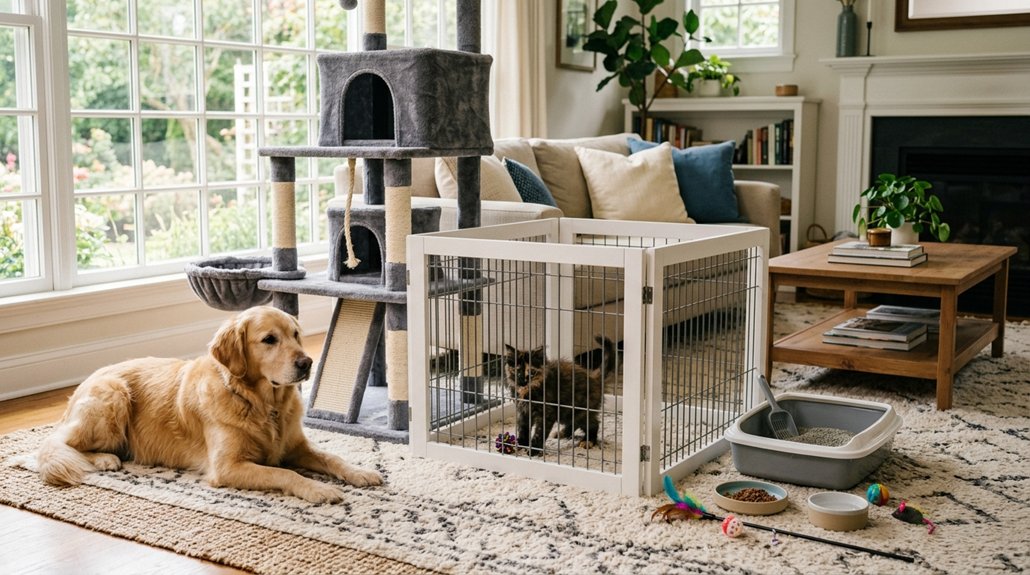
To introduce your new kitten to other pets, begin with gradual scent familiarization by using techniques like scent-swapping. Follow this with controlled initial meetings, using barriers to allow safe visual contact. Monitor their body language closely during these interactions, intervening if you notice any signs of stress or aggression.
Gradual Scent Familiarization
Wondering how to introduce a new kitten to your household without causing stress for your existing pets? Begin with scent exploration to guarantee a smooth shift. Start by swapping bedding or blankets between your new kitten and resident pets, promoting gradual exposure to each other’s scents. This controlled substrate exchange helps all pets acclimate without direct interaction.
Enhance this process by using a cloth or paper towel to gently rub the new kitten, then place it near your other pets, letting them sniff it daily for several days. Monitor their behavior closely; curiosity or relaxation signifies comfort, while stress or aggression suggests the need for more time. As comfort with scents increases, lengthen exposure periods, preparing pets for future supervised meetings.
Controlled Initial Meetings
The next stage in introducing your new kitten to existing pets involves controlled initial meetings. Start with scent swapping by placing a cloth rubbed on the new kitten near your existing pets. This method lets them get familiar without direct contact. For visual contact, use a barrier like a baby gate to keep them safely separated initially. Make certain these meetings are supervised thoroughly. Utilizing such techniques can help guarantee a controlled environment, minimizing stress for both parties.
| Step | Details |
|---|---|
| Scent Swapping | Place kitten-scented cloth near existing pets |
| Visual Contact | Use a baby gate for safe, separated observations |
| Short Sessions | Keep initial interactions brief |
| Positive Reinforcement | Reward calm behavior with treats and praise |
Following these steps fosters a more harmonious introduction.
Monitor Interactions Closely
As you move past the initial controlled meetings, it’s important to closely monitor interactions when introducing your new kitten to other pets. Be vigilant for stress signals and use these interaction tips to guarantee a smooth shift:
- Supervision is Essential: Always supervise encounters to prevent aggressive or fearful reactions. If you observe stress signals like growling or hiding, intervene immediately to separate them.
- Short, Positive Encounters: Keep interactions brief to prevent overwhelming your pets. Gradually increase the length and frequency as they show comfort.
- Safe Havens: Confirm existing pets have access to separate spaces. These retreats allow them to feel secure and minimize anxiety when needed.
Create a Calm Safe Space for Adjustment
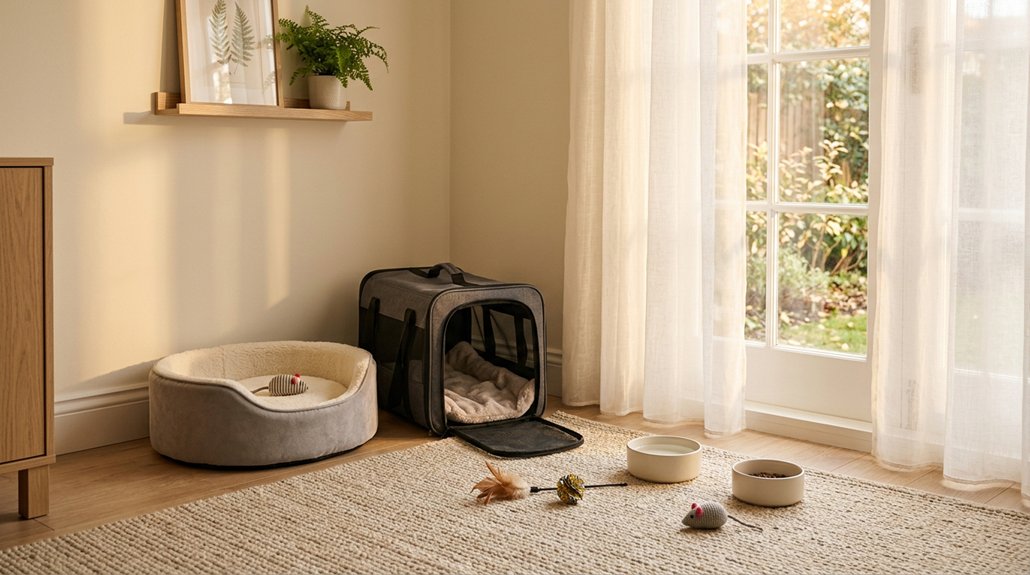
When welcoming a new kitten into your home, creating a calm safe space for their adjustment is essential. One of the key kitten adjustment tips is to designate a quiet, confined area like a spare bedroom or laundry room. This provides a retreat that minimizes stress and maximizes safety. Safe space benefits include reducing the risk of accidents and supporting your kitten’s comfort. Make sure the area is free of hazards; keep toxic plants, medications, and small objects out of reach. Equip the space with a soft cat bed, shallow food and water bowls, and a low-sided litter box with kitten-safe litter. Maintain proper ventilation and natural light. Allow your kitten to explore at their own pace with gentle supervision to build trust.
Provide Balanced Nutrition and Fresh Water
Balanced nutrition and access to fresh water are fundamental cornerstones of your kitten’s growth and well-being. Opt for high-quality kitten food formulated for their specific nutritional needs, guaranteeing it meets AAFCO standards. Introduce them to a variety of food textures—soft wet food for hydration methods and crunchy dry food for dental health. Here are three essential steps to follow:
- Introduce New Foods Slowly: Shift over seven days, mixing increasing amounts of new and old food to prevent digestive issues.
- Provide Fresh Water: Supply clean, fresh water daily in stainless steel or ceramic bowls to reduce bacteria.
- Consult Your Vet: Discuss any specific dietary requirements, vitamins, or minerals necessary for your kitten’s optimum health.
These steps will guarantee a robust start to their life.
Make Mealtime Stress-Free
To guarantee your kitten’s mealtimes are stress-free, place their food and water bowls in a quiet, private area away from high-traffic zones and the litter box. Use shallow, non-slip bowls for easy access and introduce a mix of wet and dry foods to support hydration and dental health. Maintain consistency by establishing a regular feeding schedule with several small meals daily to prevent digestive issues and stress.
Calm Feeding Environment
Creating a calm feeding environment for your new kitten is essential, as it minimizes stress and promotes positive mealtime habits. By addressing kitten anxiety and feeding preferences, you can guarantee a smooth changeover to their new home. Here’s how:
- Strategic Placement: Position food bowls in a quiet, low-traffic area. This setting reduces distractions, providing your kitten with a peaceful dining experience and addressing their anxiety.
- Separate Feeding: If you have multiple pets, feed them separately. This reduces competition and stress, allowing each pet to eat without feeling threatened.
- Proper Bowl Selection: Use shallow, non-slip bowls. These bowls are easier for kittens to access, facilitating a comfortable mealtime and catering to their feeding preferences.
This approach fosters a serene and enjoyable eating routine.
Consistent Feeding Schedule
A consistent feeding schedule is essential for helping your kitten feel secure and develop healthy habits. Establish a meal routine by feeding them at the same times daily, allowing them to anticipate meals and reduce anxiety. For kittens under six months, divide daily food portions into 3-4 small meals, supporting their growth and energy needs. Position food bowls in a quiet area, away from high-traffic zones and litter boxes, to minimize distractions and encourage relaxed feeding habits. Always provide fresh water alongside meals to promote hydration and overall health. Keep an eye on your kitten’s appetite and feeding habits; any changes could signal health concerns requiring veterinary attention. Consistency in meal routine will contribute to your kitten’s well-being.
Balanced Diet Choices
When selecting a balanced diet for your new kitten, confirm it’s high-quality and meets AAFCO standards to support healthy growth. To fulfill their nutritional requirements, consider the following feeding options:
- Diverse Diet: Offer both wet and dry food. Wet food aids in hydration, while dry food supports dental health, preventing future health issues.
- Gradual Change: Introduce new foods slowly over a week. Mix small amounts of new food with their current diet to prevent digestive upset.
- Feeding Routine: Adhere to a regular schedule based on your kitten’s age. Small, frequent meals match their high energy levels.
Finally, make sure fresh water is always available. This promotes hydration, supporting overall health and preventing urinary tract issues.
Ensure a Peaceful Night for Your Kitten
Why is it important to guarantee a peaceful night for your kitten? Providing a secure nighttime routine and calming environment aids in your kitten’s overall well-being and adjusts them to their new home efficiently. To establish this, confine your kitten to a designated, kitten-proofed safe space at night. This minimizes distractions and potential hazards, ensuring they sleep soundly. Include a comfortable cat bed and familiar toys to make it inviting. Equip the area with a shallow litter box and water, so all essential needs are met without wandering. Gradually shift them to their nighttime routine by limiting playtime before bed. Avoid disturbing them by maintaining low lighting and noise levels, ensuring a peaceful atmosphere conducive to restful sleep.
Set Consistent Feeding and Play Schedules
To foster your kitten’s health and happiness, a consistent feeding and play schedule is essential. Establishing a routine with set feeding techniques and playtimes reduces anxiety and supports healthy development.
- Feeding Techniques: Offer meals at the same times daily. Divide portions into smaller meals to prevent overeating, aiding in digestion. This is particularly crucial during growth phases.
- Playtime Frequency: Schedule two to three interactive sessions daily. Kittens need mental and physical stimulation to channel their bursts of energy positively.
- Variety in Stimulation: Use different toys and play methods to engage your kitten and nurture their playful instincts.
Monitor and adjust these practices as your kitten grows, ensuring their needs evolve with their developmental stages. This consistency is key to their overall well-being.
Schedule Early Veterinary Visits
As you maintain consistent routines with feeding and play, prioritizing your kitten’s health with early veterinary visits is equally important. Schedule an initial visit within the first week of bringing your kitten home. This establishes a health baseline and initiates kitten vaccinations. Discuss a tailored vaccination schedule with your veterinarian, covering core vaccines like feline viral rhinotracheitis, calicivirus, and panleukopenia. Regular check-ups are crucial for ongoing health monitoring, tracking growth, and planning for spaying or neutering around six months. Maintain a detailed record of vaccinations and treatments to keep your kitten’s healthcare up-to-date. Promptly address any signs of illness, such as changes in appetite or behavior, with your veterinarian to guarantee swift diagnosis and treatment.
Encourage Healthy Play and Exercise
A key component of raising a healthy kitten is guaranteeing they get adequate play and exercise. To encourage playful behavior and essential physical exercise, provide a variety of interactive toys, like wands and balls. These not only develop motor skills but also promote socialization.
Interactive toys like wands and balls are vital for kitten play and social development.
- Engage in Daily Play Sessions: Dedicate 15-30 minutes daily to stimulate mental and physical activity, preventing obesity.
- Implement Food Dispensing Fun: Use food-dispensing toys to turn mealtime into an engaging activity, reducing both boredom and anxiety.
- Create Climbing Opportunities: Equip your home with cat trees or shelves to satisfy climbing instincts and boost agility.
To maintain interest and guarantee ongoing mental stimulation, regularly rotate toys, keeping a keen focus on engaging with diverse sights, smells, and textures.
Frequently Asked Questions
Where Should a Kitten Sleep the First Night?
Make certain the kitten’s first night is secure by setting up a cozy sleeping environment with soft bedding materials in a quiet room. Position them near your bedroom to provide comfort, making sure the area is safe from hazards.
What Is the 3 3 3 Rule for Kittens?
The 3 3 3 rule for kittens helps you facilitate a smooth introduction by outlining adjustment periods: three days of stress, three weeks for routine settling, and three months for full comfort. Patiently guide your kitten in adjusting routines.
What Is “I Love You” in Cat Language?
“I love you” in cat language involves 63% of felines using slow blinks, indicating trust. Understand cat communication by noting feline affection through head rubs, purring, kneading, and grooming. Recognize these as profound, affectionate gestures cats use with you.
What Color Is Most Calming to Cats?
Cats find blue and green to be the most calming colors. Incorporating these colors aligns with cat preferences, helping reduce stress. Use soothing shades in their space to promote relaxation and support their well-being effectively.
Conclusion
Welcoming a new kitten into your home is an exciting journey. Did you know that kittens can sleep up to 20 hours a day? Ensuring a peaceful environment supports their growth and development. By kitten-proofing your space, providing quality nutrition, and scheduling early vet visits, you’re setting the stage for a healthy, happy feline family member. Remember to establish consistent feeding and play routines, integrating them gently with other pets for a seamless adjustment into your home.