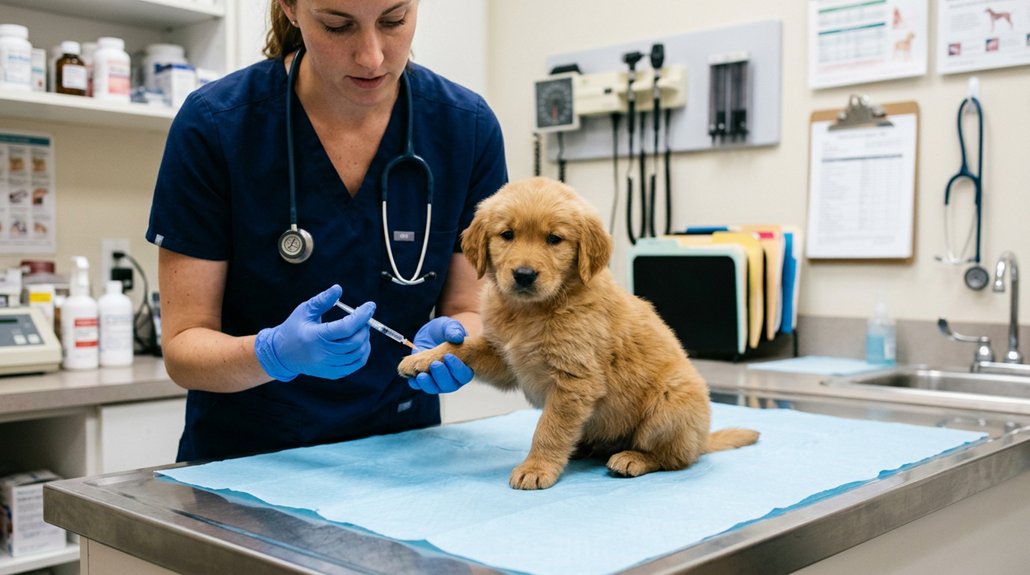
You should begin your puppy’s vaccination schedule with the first DHPP dose at 6-8 weeks. Follow up with a second dose and optional vaccines like Bordetella at 10-12 weeks. Complete the series with a final DHPP booster and rabies vaccine at 14-16 weeks. Expect thorough health assessments at each appointment. Watch for mild side effects, and consult a vet for severe reactions. You’ll gain an extensive understanding of puppy vaccinations by exploring further.
Key Takeaways
- The puppy vaccination schedule begins with the first DHPP dose at 6-8 weeks of age.
- Second DHPP booster and optional vaccines are administered at 10-12 weeks.
- Final DHPP booster and rabies vaccine are given at 14-16 weeks.
- Full vaccination, ensuring complete protection, is typically achieved between 16-18 weeks.
- Regular vet appointments include health assessments and vaccine needs based on the puppy’s lifestyle.
Why Puppy Vaccinations Matter
Although often overlooked, puppy vaccinations are an indispensable component of nurturing a healthy and happy pet. Protecting your puppy’s health is paramount, as these vaccinations shield them from diseases like distemper, parvovirus, and rabies—ailments that can be lethal. During their first year, vaccinations play a pivotal role in developing your puppy’s immunity, ensuring they grow into strong, robust dogs. Many vaccination myths may suggest otherwise, but scientific evidence confirms vaccinations are critical for your puppy’s well-being. Moreover, these vaccines serve a broader purpose by reducing disease transmission in your community. To optimize your puppy’s health, initiate their vaccination schedule at 6-8 weeks, continuing every 2-4 weeks until around 16 weeks, and maintain regular vet consultations.
Core and Optional Vaccines: What They Protect Against
Understanding which vaccines are essential for your puppy helps protect them from serious diseases. Core vaccines like DHPP and Rabies offer critical protection against viral infections that are both contagious and lethal. Optional vaccines, such as those for Bordetella and Leptospirosis, are important if your puppy is exposed to specific environments and regional threats, ensuring thorough disease prevention.
Core Vaccines Benefits
When you’re caring for a new puppy, ensuring their health through the administration of core vaccines is imperative. Core vaccines, such as DHPP and Rabies, shield puppies from critical, life-threatening diseases, dispelling prevalent vaccine misconceptions. These immunizations aren’t just essential for your pet’s well-being; they play a vital role in public health. Canine Distemper affects multiple systems, while Rabies, a legal requirement, can spread to humans. Parvovirus poses severe gastrointestinal threats, making swift veterinary action essential. Core vaccines foster immunity, achieving full defense one to two weeks post the final booster at 16-18 weeks. By vaccinating, you’re not only safeguarding your puppy but also reducing disease transmission risks, promoting broader community health and safety.
Optional Vaccines Explained
While core vaccines are fundamental for all puppies, optional vaccines cater to specific lifestyle needs and environmental risks. The Bordetella vaccine is essential for preventing kennel cough, especially in social environments like dog parks. For regions plagued by ticks, the Lyme disease vaccine is key for effective prevention. The Leptospirosis vaccine serves not only your puppy but also reduces transmission risks to humans. Though canine coronavirus isn’t always necessary, it can be vital if your puppy is frequently around other dogs. These are vaccination alternatives that should be considered depending on your puppy’s environment and lifestyle.
| Vaccine | Purpose | Recommended For |
|---|---|---|
| Bordetella | Prevents kennel cough | Social environments |
| Leptospirosis | Protects against bacteria | High exposure risk areas |
| Canine Coronavirus | Mitigates gastrointestinal issues | Frequent dog interactions |
| Lyme Disease | Prevents tick-borne illnesses | Tick-infested regions |
Disease Prevention Strategies
In protecting your puppy’s health, both core and optional vaccines play an important role. Core vaccines like DA2PP and rabies are crucial in preventing disease transmission of severe illnesses, including distemper and parvovirus, which can devastate multiple body systems. These prevention methods guard against highly contagious conditions with no cure, guaranteeing your puppy stays healthy.
Optional vaccines further tailor disease prevention strategies to your puppy’s specific lifestyle. For instance, Bordetella vaccination reduces the risk of kennel cough, a common concern in dense canine environments. Likewise, Lyme disease vaccination is essential if your puppy encounters tick-infested areas. Starting vaccination schedules at 6-8 weeks of age guarantees early protection, with boosters prolonging immunity, enhancing overall preventive care for your pet’s environment and well-being.
Your Puppy’s First-Year Vaccine Schedule: Key Milestones
You’ll need to follow a precise vaccination schedule during your puppy’s first year to guarantee they’re protected against preventable diseases. Starting with the DHPP vaccine at 6-8 weeks, you’ll continue with boosters and additional lifestyle vaccines at 10-12 weeks, culminating with essential immunity-building doses at 14-16 weeks. Any deviations could compromise your puppy’s health, establishing timely vaccinations as critical for their foundational protection.
Critical Vaccine Timing
Understanding the critical timing of your puppy’s vaccination schedule is essential for building their immunity against deadly diseases. Adhering to precise vaccine timing guarantees your puppy develops a strong immune response. Here’s a typical schedule to visualize:
- 6-8 weeks: Initiate vaccinations with the first DHPP dose, laying the essential groundwork against distemper, hepatitis, parvovirus, and parainfluenza.
- 10-12 weeks: Administer the second DHPP booster, coupled with lifestyle vaccines like Bordetella and Leptospirosis, bolstering protection as advised by your veterinarian.
- 14-16 weeks: Deliver the final DHPP booster alongside the rabies vaccine to complete the core vaccine series.
- 16-18 weeks: Achieve full vaccination, establishing firm protection, enabling safe outdoor activities.
Prompt adherence enhances your puppy’s immunity, safeguarding against serious diseases.
Essential Core Vaccines
While ensuring your puppy’s health, it’s essential to prioritize their important core vaccines during the first year. The essential vaccines, dismissing common puppy vaccination myths, include DA2PP and Rabies. Understanding the vaccination timeline’s importance is key. Puppies start their DA2PP at 6-8 weeks, with boosters every 2-4 weeks until 16 weeks, maximizing protection.
| Vaccine | Timing |
|---|---|
| DA2PP | 6-8 weeks |
| DA2PP | Every 2-4 weeks |
| Rabies | 14-16 weeks |
| Fully Vaccinated | 16-18 weeks |
The final DA2PP and Rabies shots, administered at 14-16 weeks, critically bolster immunity before exposure to pathogens. Consulting your vet customizes this schedule, adapting to your puppy’s unique health and environmental factors, ensuring they become fully vaccinated, noticeably reducing the risk of disease.
What to Expect at Your Puppy’s Vaccination Appointment?
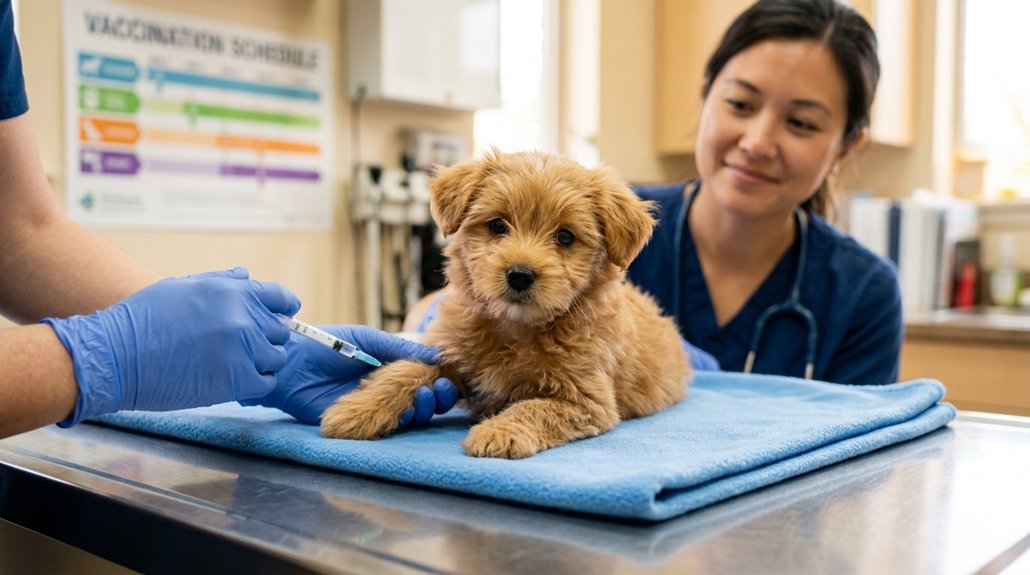
When you bring your puppy to their vaccination appointment, anticipate a thorough and caring approach by the veterinary team. They’ll assess your puppy’s health through a gentle physical examination. This helps address any vaccination anxiety by understanding your puppy’s behavior and confirming they’re fit for vaccination. Expect the following:
The veterinary team will provide a thorough and gentle health assessment to ease your puppy’s vaccination experience.
- History Review: The veterinarian will ask about your puppy’s lifestyle, previous medical history, and environments they frequently encounter.
- Examination: A detailed check-up will determine if your puppy is ready for the vaccines.
- Tailored Vaccines: Based on the gathered information, vaccines are chosen to suit your puppy’s specific needs.
- Positive Reinforcement: Treats and praise will be given to reduce stress and reward good behavior during the process.
This confirms a comfortable experience for both you and your puppy.
Managing Reactions and Side Effects After Vaccinations
After guaranteeing a smooth vaccination appointment for your puppy, it’s important to be prepared for managing potential reactions and side effects. Mild reactions, like increased sleepiness, soreness at the injection site, or a slight fever, are common and usually subside within a day or two. Focus on maintaining your puppy’s comfort, providing a quiet space to rest. Moderate symptoms such as reduced appetite and mild lethargy may also arise but are generally short-lived. However, if serious reactions like vomiting, diarrhea, or facial swelling occur, seek immediate veterinary care. To alleviate vaccine anxiety, observe your puppy for 24 hours post-vaccination, noting any unusual behaviors, and inform your veterinarian of any previous adverse reactions to guarantee your puppy’s safety in future.
Puppy Vaccination Costs: What to Expect
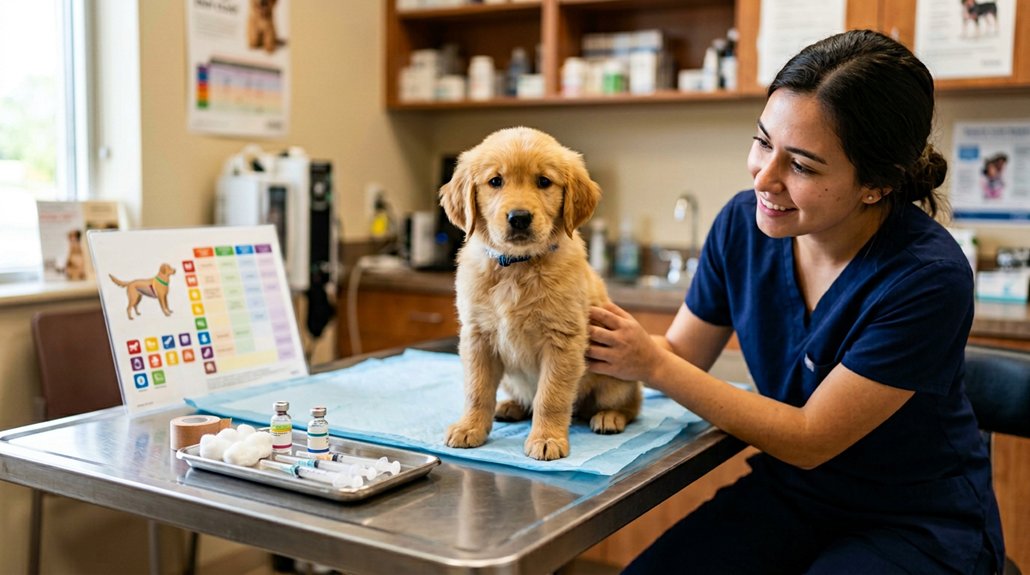
Understanding the costs associated with puppy vaccinations is essential for budgeting and ensuring your pet’s health is a top priority. Expect a vaccination pricing range of $75 to $100, which may vary depending on your location and whether the clinic is urban or rural. Here’s a numeric breakdown for clarity:
Budgeting for your puppy’s vaccinations is key, with costs usually ranging from $75 to $100.
- Core vaccinations like DHLPP are typically administered in a series at 6, 12, and 16 weeks.
- Rabies vaccinations cost about $15 to $20, often included in the overall package.
- Low-cost options at shelters may charge $20 or offer free vaccinations.
- Municipal clinics might sponsor rabies vaccinations at reduced prices.
Budgeting tips include exploring local resources to potentially reduce costs, ensuring affordability without compromising your puppy’s health.
Post-Vaccination Care: Next Steps for Keeping Your Puppy Healthy
While ensuring your puppy’s health remains a priority post-vaccination, it’s important to monitor them for any mild side effects that may occur. Increased sleepiness or slight swelling at the injection site is normal. Provide a quiet, comfortable space to aid post-vaccination wellness. Avoid public areas until complete immunity is achieved, usually by 16-18 weeks. Offer water and light meals as part of puppy recovery tips, noting that appetite may decrease temporarily. Schedule a vet visit if severe reactions—like breathing difficulties or vomiting—arise.
Here’s a quick reference table for post-vaccination care:
| Symptom | Care Action | Time Frame |
|---|---|---|
| Sleepiness | Rest | 1-2 Days |
| Swelling | Monitor | 1-5 Days |
| Loss of Appetite | Hydrate | 2-3 Days |
| Virus Avoidance | No public exposure | Until 18 Weeks |
| Severe Reactions | Contact Vet | ASAP |
Frequently Asked Questions
What Is the 7 7 7 Rule for Puppies?
The 7-7-7 rule signifies puppies receiving vaccinations at 7, 14, and 21 weeks, essential for puppy health. This structured schedule underscores vaccination importance, aiding their immunity and prepping them for safe socialization and outside exposure.
How Long After a 2nd Puppy Vaccination Can They Go Out?
After the second vaccination, wait 1-2 weeks before taking your puppy out. This guarantees ideal immune response. Prioritizing puppy health and understanding vaccination benefits minimizes risks from parvovirus and distemper, safeguarding their well-being effectively.
Can I Take My 8 Week Old Puppy Outside to Pee?
Yes, you can take your 8-week-old puppy outside to pee. Make certain potty training happens in clean areas and prioritize outdoor safety by supervising, using a leash, and avoiding interactions with other animals until fully vaccinated.
How Many Shots Before a Puppy Is Fully Vaccinated?
A puppy’s considered fully vaccinated after three core vaccines (DHPP) and a rabies shot. The importance of vaccinations can’t be overstated—they’re essential for protecting your puppy’s health against serious diseases. Consult your vet for additional lifestyle-specific vaccines.
Conclusion
Steering your puppy’s vaccination schedule is like building a fortress of health around your furry companion. Each vaccine is an essential brick in this fortress, protecting against formidable foes like parvo and distemper. Trust this shield of medical armor to safeguard your puppy‘s first adventures and beyond. Stay vigilant and informed about potential reactions, just as a gardener tends to new sprouts. With these steps, you’ll guarantee your puppy blossoms into a robust, healthy, lifelong companion.