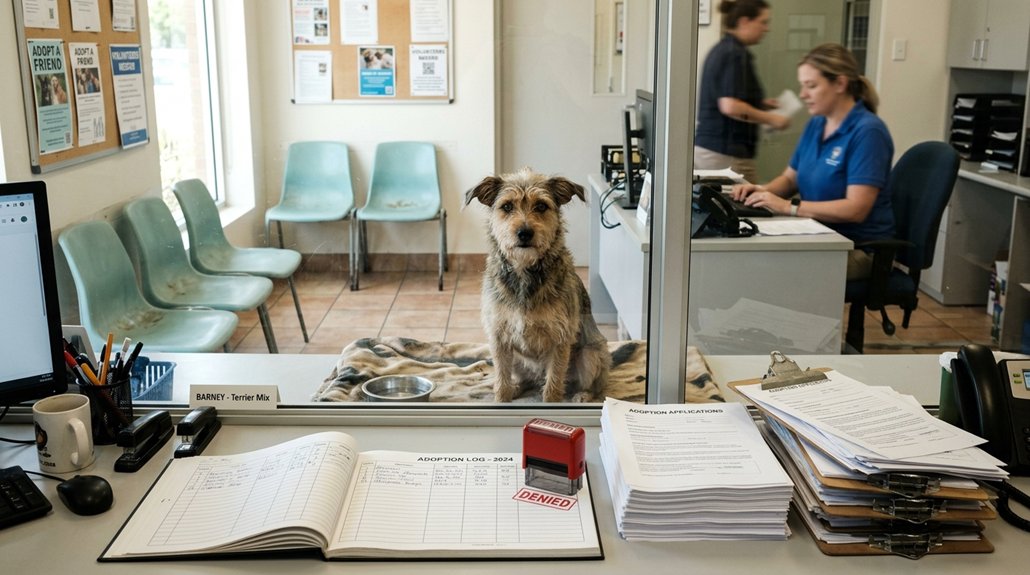
Your dog adoption application might be denied due to overlooked aspects like unvaccinated or unspayed existing pets, insufficient time or knowledge for dog training, and a home environment that’s unsafe or unsuitable. Financial preparedness and landlord permission (if renting) are also essential. Misguided expectations about pet responsibilities can be a factor too. Understanding these details is crucial for approval, and there’s more to uncover that could enhance your chances of a successful application.
Key Takeaways
- Applications often get denied if existing pets are not spayed, vaccinated, or regularly updated on health checks.
- Unsuitable living conditions, including lack of secured fencing or landlord permission, may lead to application rejection.
- Insufficient time commitment for training and exercise can result in adoption application denial.
- Failure to demonstrate financial readiness for pet care and unexpected costs can cause application rejection.
- Misguided expectations about breed-specific needs and responsibilities can hinder adoption approvals.
Common Reasons for Dog Adoption Denials
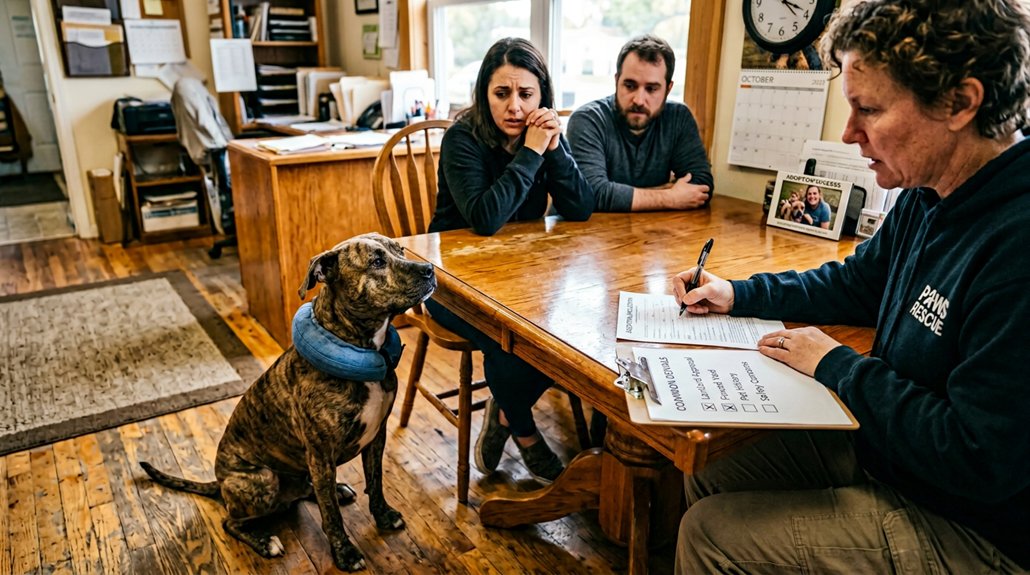
When it comes to adopting a dog, understanding why applications sometimes get denied can help you prepare more effectively and address potential issues beforehand. One significant reason for denial revolves around existing pets not being spayed or vaccinated, which raises pet health concerns and questions about responsibility. You’ll want to guarantee your current pets are up-to-date with their health requirements.
Additionally, training challenges can also play a part in declined applications. If you don’t have enough time for proper training and exercise, adoption centers might question your ability to meet a new dog’s needs. Confirming you have sufficient time allocated for your prospective pet’s training and care can make all the difference. Prioritize these areas and your application will stand a much better chance.
Importance of Matching Pets and Owners
While many people may feel an immediate emotional connection to a pet, successfully adopting a dog involves more than just a heartfelt bond. It requires meticulous attention to lifestyle compatibility and energy assessment. Shelters work to guarantee a harmonious match, looking deep into both a pet’s and family’s needs to prevent future rehoming. Consider these aspects during the adoption process:
- Activity Level: Verify the dog’s energy aligns with your daily routine.
- Age Suitability: Match the dog’s age with your family dynamics and capabilities.
- Temperament Check: Harmonize the pet’s nature with your household’s disposition.
- Commitment Realism: Acknowledge what’s truly involved in pet care.
- Home Safety: Secure your living space to prevent escapes or injuries.
These considerations foster a joyful, lasting relationship between you and your furry friend.
How Your Home Environment Can Impact Approval
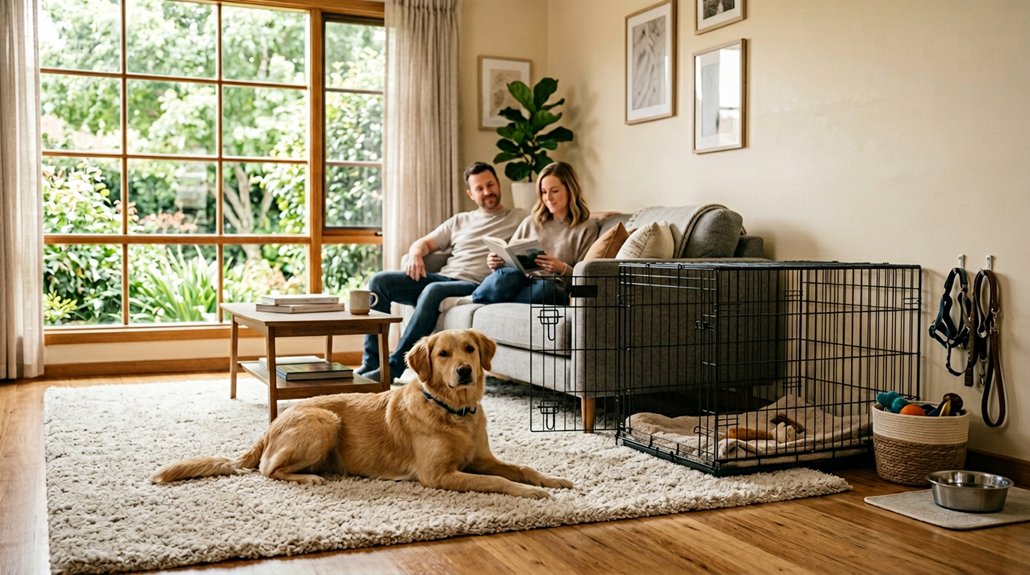
When you’re hoping to adopt a dog, taking a close look at your home environment can make all the difference in your application’s success. From ensuring you have secured fencing to verifying your spaces are free from hazards like exposed cords or harmful substances, creating a safe and welcoming environment is fundamental. If you’re renting, having documentation of your landlord’s permission for pet ownership is also essential, as safety and suitability are key factors in the approval process.
Safety Assessments and Improvements
Understanding that shelters conduct thorough safety assessments before approving dog adoption applications is key to fostering a successful adoption journey. Your home plays a vital role in the approval process. The fencing security must be impeccable, as loose boards or low walls can lead to potential escape, driving a denial. Prioritize pet proofing measures by removing exposed cords, securing trash cans, and keeping harmful substances out of reach. Shelters look for environments that can offer safe, engaging spaces for dogs.
- Check for open windows or unsecured gates
- Confirm no loose fence boards or gaps
- Eliminate access to trash and harmful substances
- Secure electrical cords to prevent chewing hazards
- Create comfortable, safe nooks for resting and play
These efforts are essential to keeping your furry friend safe.
Importance of Home Suitability
Even though you might think your home is perfect for a new pet, shelters have specific criteria that guarantee the well-being and safety of the dogs they place. The home layout plays an essential role—spaces should be pet friendly with secure fencing and limited escape routes. A well-considered environment enhances a pet’s comfort and minimizes hazards.
| Aspect | Importance | Considerations |
|---|---|---|
| Secure Fencing | Prevents escapes | Regularly check for gaps |
| Space Availability | Affects comfort | Ensure room for exercise |
| Safety Measures | Reduces hazards | Cover cords, remove toxins |
It’s not about having a perfect home, but one that meets basic safety and comfort standards. Issues like landlord restrictions and unvaccinated pets can also impact approval. Empathy towards these needs boosts adoption chances.
Financial Readiness: A Key to Successful Adoption
When you’re considering adopting a dog, planning financially is as important as choosing the right breed. You’ll need to account for not just immediate expenses, like food and adoption fees, but also ongoing veterinary care and those unexpected costs that pop up. Being financially prepared assures shelters you’re ready to commit long-term to a healthy and happy life for your new companion.
Budgeting for Pet Expenses
While adopting a dog may seem like an exciting adventure, it’s crucial to be financially prepared for the ongoing costs that come with pet ownership. Utilizing effective budgeting tips and expense tracking can make a significant difference in ensuring your pup’s needs are met without financial strain. Expect expenses to add up quickly, from initial veterinary visits to day-to-day care essentials. It’s wise to account for potential surprises, like emergency care costs, with a cushion in your budget. Here’s a glimpse of what to plan for:
- Initial setup costs: $1,000 to $2,000
- Annual food and supplies: Varies by size and dietary needs
- Regular vet visits: $300 to $500 per year
- Grooming and maintenance: Dependent on breed
- Emergency fund: Essential for peace of mind
Planning thoroughly supports both your financial health and your dog’s well-being.
Vet Care Affordability
If you’re considering adopting a dog, understanding the financial commitment involved in vet care affordability is essential for a successful adoption. With ongoing costs like routine check-ups and necessary treatments averaging $1,000 to $2,000 annually, cost management becomes vital. Shelters often require proof of your financial preparedness by asking for records of prior vet care for current pets, ensuring you can support a new addition’s well-being. It’s not just about the immediate adoption fee; you need to maintain this financial commitment for over a decade. Lacking adequate financial resources is a frequent reason for adoption denial, as shelters prioritize animal welfare. By having a solid financial plan, you’re showing that you’re prepared for responsible pet ownership.
Planning for Unexpected Costs
Moving beyond vet care affordability, the significance of planning for unexpected costs can’t be overstated in the journey toward successful dog adoption. Unforeseen expenses like emergency veterinary care can suddenly strain finances if you’re unprepared. Your adoption readiness hinges on budgeting for emergencies and anticipating these unexpected veterinary expenses. Many shelters require a clear financial plan, ensuring you’re prepared for the long-term responsibilities of pet ownership—a 10 to 15-year commitment. Here’s a glimpse into what you might face:
- Sudden illness requiring immediate medical treatment.
- Emergency surgeries that could save your dog’s life.
- Medications for chronic conditions discovered later.
- Special diets due to health issues that arise.
- Costs for professional behavioral training if needed.
Being prepared safeguards your dog’s future.
Myths About Dog Adoption That Lead to Rejection
Misconceptions about dog adoption can often impede the approval of applications, leaving potential adopters disappointed and animals without homes. A common responsibility misconception is that dogs will teach children responsibility. However, without adults taking primary charge, neglect can occur. Likewise, relying on exercise motivation by adopting a dog can be misguided. If you’re not genuinely committed to a long-term fitness routine, a dog’s physical needs may go unmet.
Adopting dogs for protection can lead to unmet expectations and mistreatment if the dog doesn’t fit that role. Surprising someone with a pet often ends in mismatched expectations, leading to higher rates of abandonment. Furthermore, another dog for addressing a pet’s separation anxiety might not resolve issues and complicates their integration.
How to Boost Your Dog Adoption Chances
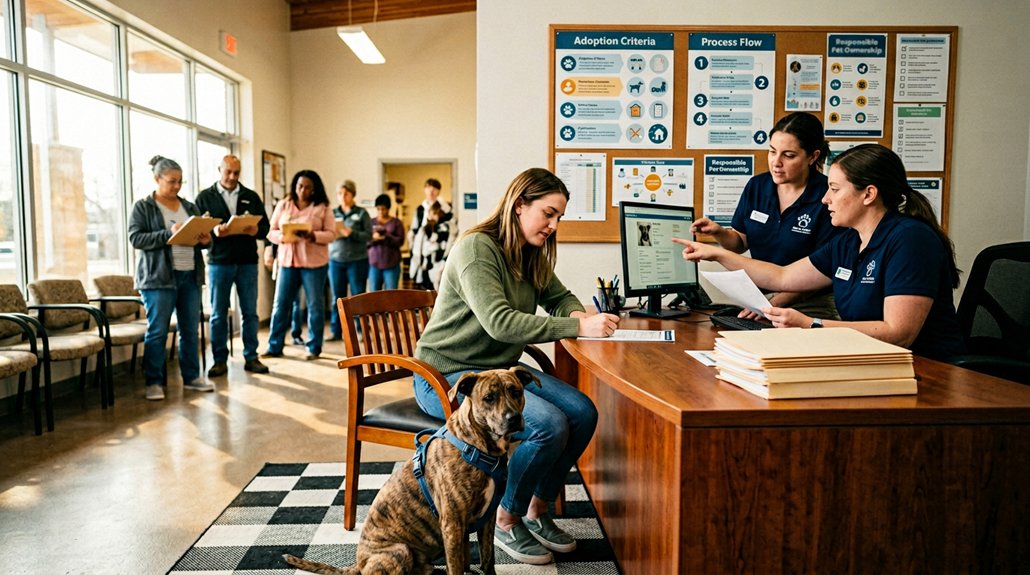
Guiding through the dog adoption process can be challenging, but by understanding a few key strategies, you can increase your chances of welcoming a furry companion into your home. Start with these application tips: familiarize yourself with the adoption organization’s policies so you can tailor your application. Engage with shelter staff by visiting in person—this shows commitment. Make sure your application is complete, including references and proof of a pet-friendly home. Express your long-term plan for care, highlighting training, veterinary needs, and budget considerations. Finally, be flexible about breed, size, and age, focusing instead on energy and temperament that suit your lifestyle.
- Tailor your application to the organization’s requirements.
- Engage directly with shelter staff.
- Complete every detail in the application.
- Plan for long-term care and budget.
- Stay open to different dog profiles.
Frequently Asked Questions
Is It Hard to Get Approved to Adopt a Dog?
Yes, it can be challenging. You’ll need to navigate strict adoption requirements and a thorough application process. Ensuring your home’s safe and demonstrating financial stability are essential, but preparation and patience can help you succeed.
Why Do People Get Denied for Adoption?
You’re overwhelmed by the meticulous adoption process, right? Common reasons for denial include having an escape-artist home, a financial black hole, and living in a pet-prohibited fortress. It’s frustrating, but they’re ensuring the pets’ safety and happiness.
What Is the 3-3-3 Rule for Dog Adoptions?
The 3-3-3 rule outlines a vital adjustment period: expect stress during the first days, increasing comfort in three weeks, and full acclimation by three months. It’ll guide your patience, understanding, and empathy as your dog settles in.
What Is the Hardest Dog to Get Adopted?
Picture a graying, shy pit bull peeking through kennel bars—these difficult breeds face overwhelming adoption barriers. Their large size, special needs, or high energy demands mean you’ve really got to have commitment and resources to adopt them.
Conclusion
In the dog adoption journey, rejections can be disheartening, but they’re often steps toward finding the best match for both you and the dog. Isn’t it better to wait for the right fit than face future heartbreak? By understanding the process, ensuring your home is welcoming, and proving your financial and emotional readiness, you can improve your chances. After all, the ultimate goal is a lifelong bond filled with love, joy, and wagging tails.