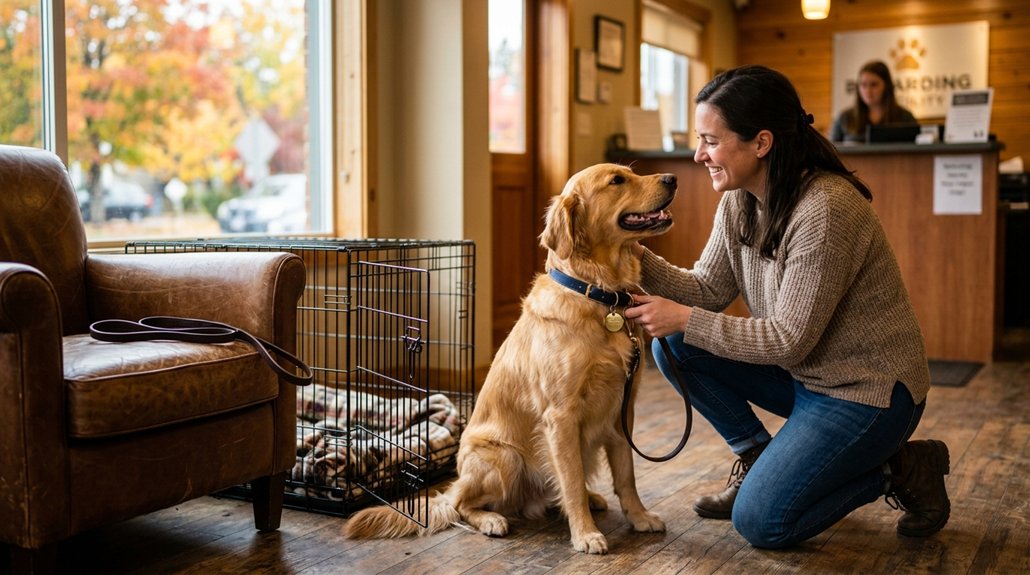
Before bringing your dog home, create a secure and welcoming environment by designating a cozy bed, organizing toys, and establishing feeding areas. Secure any danger zones and stock up on essential supplies like a collar, ID tag, and chew toys. Schedule a veterinary visit for immediate health checks and vaccinations. Establish routines to help your dog adjust quickly, and use positive reinforcement. Building trust through bonding activities is vital. Discover more about ensuring a smooth adjustment for your new pet.
Key Takeaways
- Designate a cozy and safe spot in your home with a dog bed and familiar items.
- Conduct a thorough home inspection to identify and secure all potential hazards.
- Gather essential dog supplies like ID tags, suitable bowls, toys, and a playpen.
- Schedule a veterinary visit to ensure health check-ups and update necessary vaccinations.
- Establish a peaceful routine to help the dog adjust and feel secure in their new environment.
Create a Safe and Welcoming Space for Your Dog
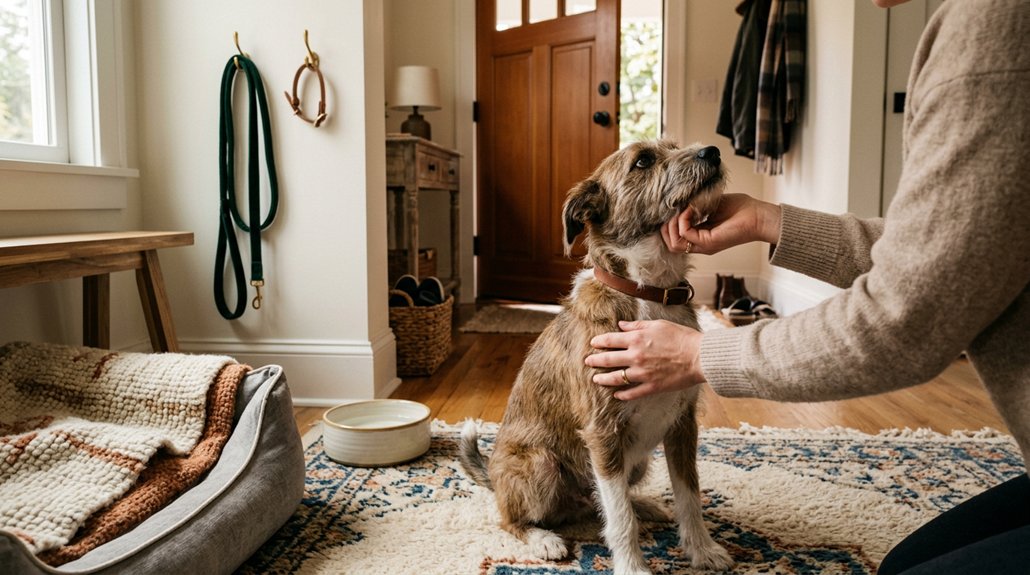
Creating a safe and welcoming space for your dog is vital as they embark on their new journey at home. Start by designating a specific dog bed where your pet can rest comfortably. Guarantee the feeding area is easy to clean, promoting healthy eating habits. Organize toy storage effectively, allowing easy access to play items while maintaining a tidy home environment. Establish safe zones using familiar items like blankets or toys to promote adjustment comfort as your dog acclimates. Space security is significant, so consider crate training with a roomy crate or playpen for your pup’s security and peace of mind. This setup not only assures safety but also eases their shift into your home, offering a balanced blend of familiarity and structure.
Secure Danger Zones in Your Home
Ensuring your home is free from hazards is a critical step in preparing to welcome your new dog. Begin with hazard identification by inspecting your space thoroughly. Look for accessible dangers like shoes, clothes, and personal care products that might tempt your dog to chew or ingest them. Use safety equipment such as cabinet locks to secure harmful substances, including cleaning chemicals and tools, preventing potential poisoning or injury. Install screens or gates to block access to fireplaces, reducing the risk of burns. Additionally, remove small, chewable objects from surfaces within your dog’s reach to eliminate choking hazards. To further enhance safety, place toxic houseplants and other hazardous items out of reach or secured behind furniture, ensuring a pet-friendly environment.
Gather Essential Supplies for Your New Dog
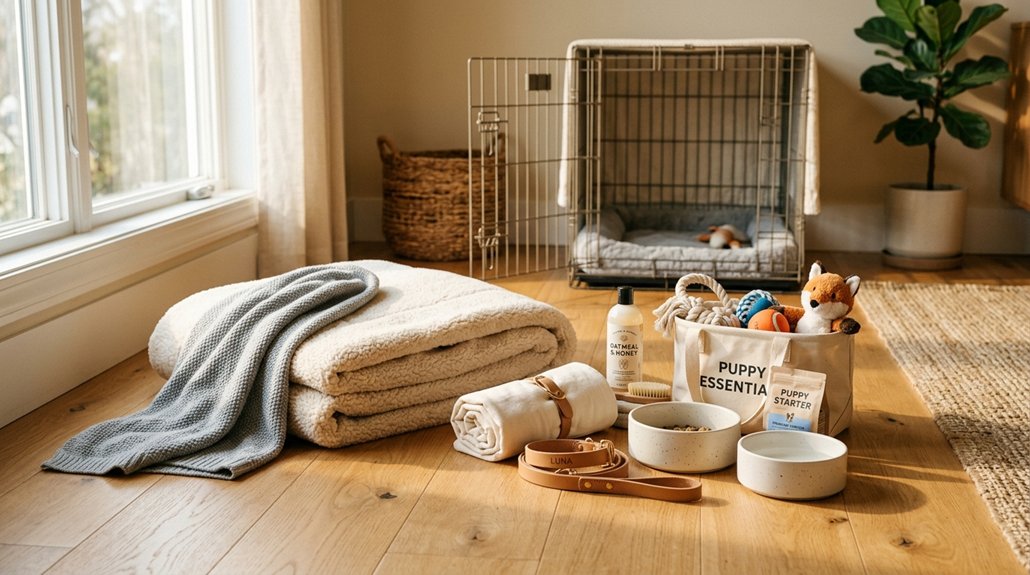
A few well-chosen essentials can make all the difference when welcoming a new dog into your home. First, consider collar options that include a secure place for an identification tag, complemented by a reliable leash for walks. Investing in a suitable harness can offer additional control and safety. For food choices, start with a small bag of their current food to maintain consistency during the initial adjustment, preventing any gastrointestinal issues. Your home should also have food and water bowls sized appropriately for your dog’s needs. A comfortable bed and durable chew toys like Nylabones will guarantee they feel at ease. Finally, a crate or pet playpen can provide a safe, den-like space and gather cleaning supplies to handle any accidents.
Plan Your Dog’s Initial Adjustment Period
When bringing your new dog home, it’s vital to establish a consistent daily routine that includes feeding, walking, and playtime, which will provide the stability they need to adapt smoothly to their new environment. Initially, set up a quiet and safe space where your dog can retreat as they gradually explore different areas of your home. Always use positive reinforcement to encourage good behavior and foster a trusting relationship as they get acquainted with their surroundings and household members.
Establish Consistent Daily Routine
Establishing a consistent daily routine is essential for your new dog’s adjustment period, as it helps create a sense of security and predictability in their new environment. Start by setting a dependable feeding schedule to assure your dog of regular nourishment. Likewise, implement a structured potty training regimen by having scheduled breaks to prevent accidents. Develop an exercise routine that includes daily walks to burn off energy and promote good health. Engage in bonding activities such as playtime and training sessions to strengthen your relationship. Each of these steps contributes to a harmonious initial adjustment.
- Create a feeding schedule for consistency
- Schedule regular potty training breaks
- Plan daily exercise routines like walks
- Include bonding activities for trust-building
Gradual Environmental Exploration
As you prepare to welcome your new dog into your home, it’s essential to implement a strategy for gradual environmental exploration to guarantee a smooth changeover. Start by allowing your dog to explore one room at a time, fostering safety and comfort while minimizing overwhelming feelings. Utilize baby gates to create safe spaces, offering limited access initially, then gradually expanding their territory as they adjust. Embrace sensory exploration by introducing your dog to different household sounds and scents, all while monitoring their reactions. Provide positive reinforcement when they remain calm, reinforcing desirable behavior. Establish a consistent routine for feeding, walking, and play, fostering predictability and security. Observe their body language closely, intervening to provide reassurance if anxiety or discomfort arise.
Set House Training Rules and Daily Routines
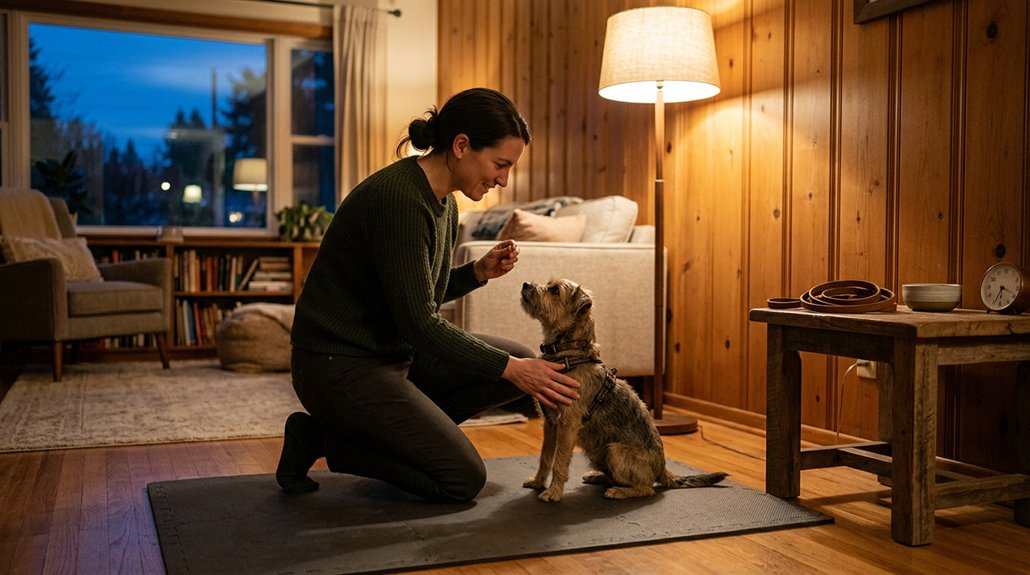
Creating a structured environment is essential to effectively set house training rules and daily routines for your new dog. Establishing consistency helps your dog learn expected behaviors and reduces their anxiety. Begin by identifying bathroom signals unique to your dog and reinforce them with proper reinforcement. This can be accomplished by using treats and praise immediately after they successfully use the designated bathroom area. Consistent supervision is vital during the initial weeks to prevent accidents and clarify approved bathroom spots.
Establish a consistent routine to teach expected behaviors and reduce your dog’s anxiety.
- Regular scheduled feeding: Predictability aids digestion and bathroom timing.
- Set bathroom breaks: Take the dog to designated areas regularly.
- Specific playtimes: Helps burn energy and maintain a routine.
- Patience is key: Consistency and understanding make for successful house training.
Prepare for Your Dog’s Health Care
With your new dog’s house training rules and routines set, the focus naturally shifts to ensuring their health care is addressed promptly. Schedule a veterinary appointment within the first week of bringing your dog home. This visit should include thorough health check ups and necessary vaccinations to establish a healthy foundation. Confirm your pet’s vaccination records are current and verify if they’re spayed or neutered to reduce future health risks. Keep an eye out for signs of anxiety or discomfort during the adjustment, as these can impact their well-being. To sustain your dog’s health, set reminders for booster vaccinations and routine check-ups. Finally, assemble a pet first-aid kit with essentials like gauze and antiseptic for handling minor emergencies.
Introduce Your Dog to Other Pets Smoothly
When introducing your new dog to existing pets, a gradual approach can ease the adjustment and mitigate stress. Begin by allowing them to sniff each other through a gate or barrier, minimizing stress and preventing territorial disputes. Choose a neutral location for their first meeting. Monitor their interactions closely, focusing on behavioral observations to guarantee relaxed body language and prevent aggression. Keep these initial encounters short and reward calm behavior with treats and praise. Utilize gradual introductions over several days, being patient and allowing plenty of time for both your new dog and existing pets to adjust. It may take multiple meetings for a peaceful relationship to develop.
- Allow sniffing through a barrier
- Choose a neutral meeting location
- Monitor interactions for relaxed behaviors
- Keep meetings short and positive
Build Trust Through Early Bonding Activities
Engaging in early bonding activities is vital for building trust with your new dog. Focus on spending quality time together through interactive play with toys like Nylabones or treat-stuffed Kongs, ensuring experiences are enjoyable and rewarding. Incorporate gentle positive interactions by using calm affirmations and treats for desired behaviors, establishing a foundation of security and confidence in your relationship.
Quality Time Together
How do you guarantee a seamless changeover when welcoming a new dog into your home? Begin by spending quality time to foster an emotional connection and gain playtime benefits. Engage in short, calm interactions upon arrival to help them acclimate to your presence and voice. Use treats and praise while introducing simple commands or playing with toys to reinforce positive associations and instill trust. Quietly sit nearby, allowing your dog to approach you, which can reduce anxiety and build confidence. Consistent routines are essential; they offer predictability, fostering security and encouraging trust. Additionally, incorporate gentle grooming to deepen your bond. Consider these activities:
- Sit quietly to allow your dog to approach.
- Introduce simple commands.
- Consistent playtime routines.
- Gentle daily grooming.
Gentle Positive Interactions
While welcoming a new dog into your home, it is essential to focus on gentle positive interactions to build trust early on. Start by using treat reinforcement and praise to create positive associations. This helps your dog feel secure and accepted in their new environment. Engage in fun playtime with safe toys to establish a positive atmosphere, promoting trust through enjoyable and interactive activities. Spend quiet moments on the floor, allowing the dog to approach at their own pace, fostering a safe, anxiety-free environment. Use a calm, soothing voice to convey comfort and reassurance. Light grooming activities, like brushing, can enhance physical contact and create a bonding experience, helping the dog associate handling with positive, comforting moments.
Frequently Asked Questions
What Is the 7 7 7 Rule for Dogs?
The 7 7 7 rule outlines the canine adjustment timeline: your dog takes seven days to adapt, seven weeks to settle, and seven months to fully trust. Meeting their needs consistently guarantees smooth shifts and strong bonds.
What Happens in a Dog’s Final Hours?
In a dog’s final hours, they might coincidentally exhibit disorientation and decreased appetite. You’ll notice labored breathing. Focus on end of life care, finding coping mechanisms, and providing comfort in a familiar space. It’s essential for their peace.
What Is the 3-3-3 Rule for Dogs?
The 3-3-3 rule guides you through adopting a dog by focusing on Socialization Strategies and Adoption Readiness over three phases: initial adjustment, settling, and full assimilation, ensuring a smooth shift for you and your new pet.
What Is “I Love You” in Dog Language?
In the symphony of dog communication, “I love you” resonates through nuzzles, wagging tails, and playful gestures. Recognizing these canine behaviors showcases your expertise in understanding their silent expressions of love and unwavering affection towards you.
Conclusion
Bringing your dog home is like commencing an epic journey—think Odysseus, but with wagging tails and puppy eyes. You’ve secured your home, gathered essential supplies, and planned the shift. From setting house training rules to health care, you’re ready to guide your dog through this new chapter. Remember, trust is built through consistent bonding activities. As you introduce your dog to other pets, patience is key, ensuring harmony in your household’s very own ‘Animal Farm.’