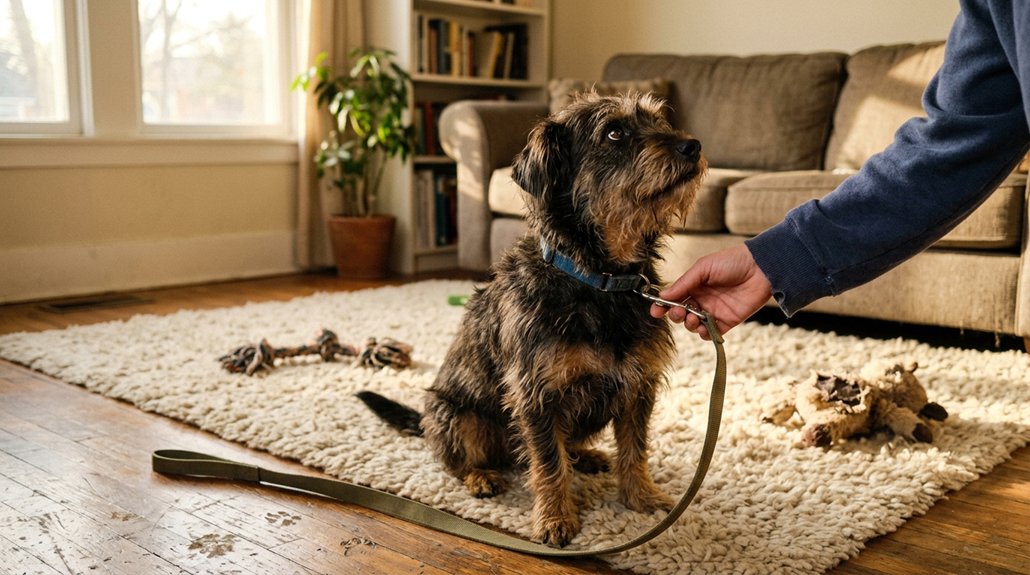
When you adopt a dog, you’re embracing a rewarding yet demanding journey that requires understanding and patience. Shelter dogs, including 20-25% purebreds, often arrive due to life’s changes, not just behavioral issues. Early challenges like house training and adapting routines are common, but consistent bonding activities foster trust and security. You should adopt a supportive mindset, adjusting your expectations and celebrating small milestones. As you continue, you’ll uncover deeper insights into successful adoption.
Key Takeaways
- Adopting a dog requires adjusting to routine changes and potential house training accidents in the initial phase.
- Many shelter dogs enter due to owners’ life changes, not because of behavioral issues.
- Building trust with a rescue dog takes time; patience and consistency are crucial for successful bonding.
- The adoption journey brings increased emotional well-being, shared responsibility, and enriched life experiences for owner and pet.
- Shelter dogs may show anxiety initially, but structured routines and secure environments aid adaptation.
Realities of Dog Adoption

Although adopting a dog can be deeply rewarding, it’s important to understand the realities involved. Shelter stories often highlight how many dogs end up there due to circumstances beyond their control, not just behavioral issues. As a new adopter, you’ll face an adjustment period where fostering connections and emotional healing takes precedence. It might involve steering through training techniques for dogs with past traumas, who need time and patience to acclimate. The adoption realities require an understanding of the dog’s background—emphasizing their need for a loving home and support. Utilize community resources to aid this change, ensuring a smooth integration. Recognize that you’re not just offering a home, but providing a safe space for lasting bonds to form.
Common Initial Challenges in Dog Adoption
When you bring a new dog into your home, initial challenges are inevitable and require preparedness. Be ready for routine disruptions as your new pet adjusts, potentially altering your sleep and meal schedules. House training accidents can occur, while dogs explore boundaries, possibly leading to lost personal items. Behavioral adjustment requires patience strategies and targeted stress management, especially for dogs with anxiety triggers due to past trauma. Establish social integration by connecting with groomers, vets, and trainers, creating an effective support network. Emotional resilience is crucial to handle compassion fatigue, which can arise from these challenges. Prioritize environmental enrichment to reduce stress and facilitate smoother changes. With time and effort, these initial hurdles can be overcome, paving the way for a harmonious life together.
Strengthening Your Bond With Your New Dog
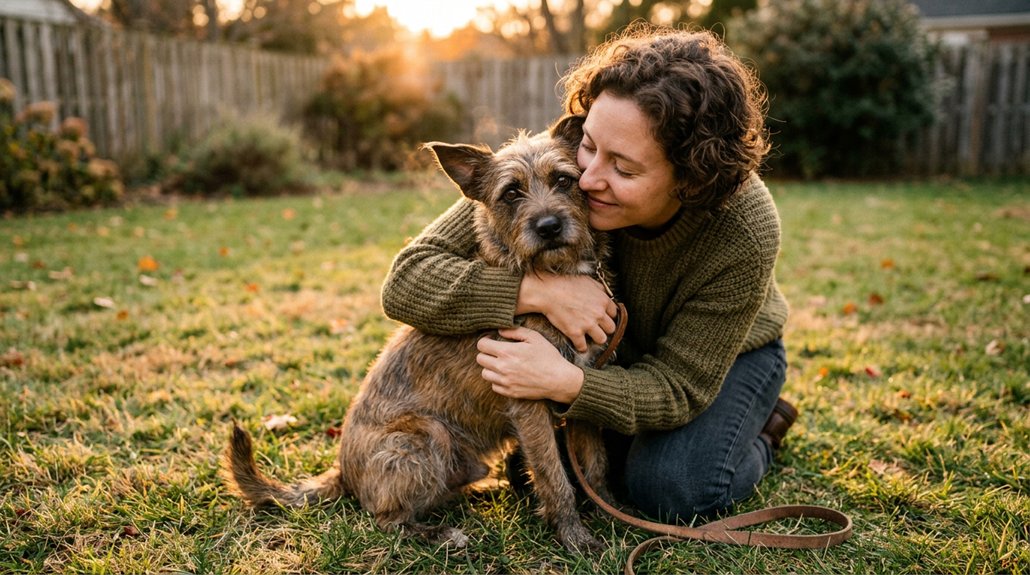
Incorporating a clear routine is pivotal for fostering a secure environment, which is essential to strengthen the bond with your new dog. Establishing this predictability can markedly aid their adjustment. Engage in bonding activities and prioritize trust building by providing spaces where your dog can retreat. Reward calm behaviors and set consistent boundaries. This approach enhances confidence and solidifies your partnership. Utilize positive reinforcement training as it facilitates shared learning experiences, cementing your connection.
Maintain daily interactions and gradual acclimatization to nurture a lasting relationship. Assure your dog of their safety and love through regular quality time, which reinforces the bond you share. Below is a summarized guide:
| Activity | Purpose | Outcome |
|---|---|---|
| Routine Establishment | Predictability | Security and Trust |
| Positive Reinforcement | Learning and Achievement | Stronger Connection |
| Quality Time | Emotional Support | Lasting Relationship |
Debunking Myths About Rescue Dogs
Have you ever wondered why many misconceptions persist about rescue dogs? These myths often stem from misunderstandings about the nature of shelter animals. A common purebred misconception is that shelter dogs are mostly mixed breeds; however, 20-25% are indeed purebreds. Health myths also abound, but most rescue dogs undergo vaccinations, deworming, and vet checks, ensuring they’re often healthier than presumed. Many end up in shelters due to owners’ financial or lifestyle changes, not behavioral problems. The belief that older dogs can’t be trained is incorrect—dogs of all ages can learn with persistence. Additionally, shelter dogs are fully capable of forming deep bonds; their resilience and need for companionship enable strong connections with new, caring families.
Manage Expectations With Patience and Understanding
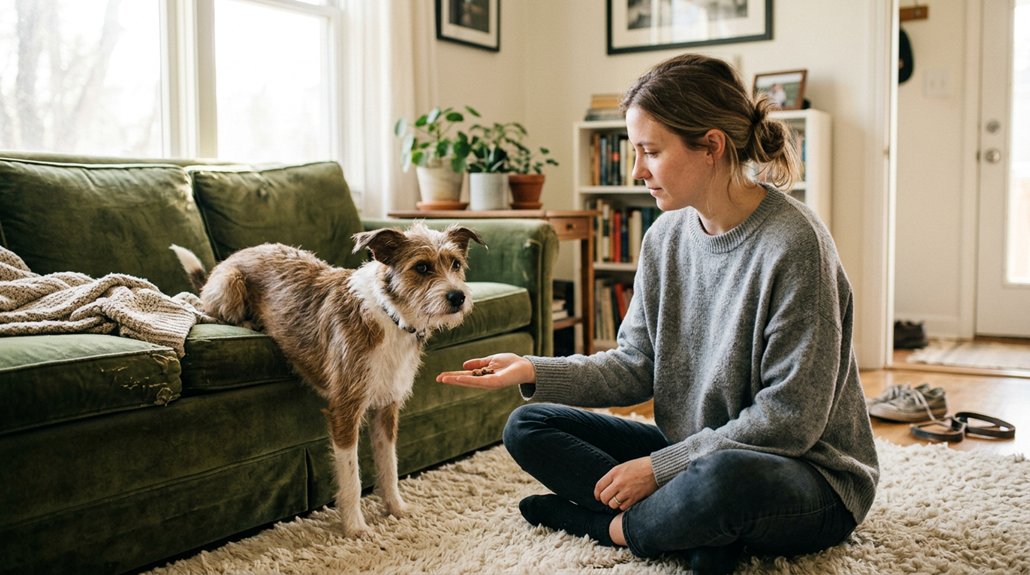
Despite the myths surrounding shelter dogs, it’s important to approach the adoption process with realistic expectations, emphasizing patience and understanding. The adjustment period for any adopted dog, particularly a rescue, is critical. You must adopt a positive mindset, accept that acclimation might take weeks or months, and set realistic goals for training and bonding. Each dog is unique, and those from shelters might exhibit anxiety or behavioral quirks initially. Recognizing these challenges and fostering an empathetic approach can enhance your bond. New owners often underestimate the time and commitment needed, leading to frustration if they’re not prepared for the reality. Celebrate incremental milestones, like relaxed body language or the dog following you, as signs of growing trust and comfort.
Create a Dog-Friendly Home
When preparing your home for a new dog, prioritize safety and comfort to facilitate a smooth shift. Utilize puppy proofing tips to guarantee all potentially harmful items, like chemicals and small objects, are securely stored out of reach. Dogs are inherently inquisitive, and maintaining a safe space is essential to prevent ingestion of dangerous substances. Designate a specific area with a comfortable bed and toys for security and relaxation. Employ baby gates or closed doors to establish safe boundaries, effectively preventing access to off-limits areas. Remove choking hazards such as loose cords, and consistently keep small objects away. In addition, establish a consistent routine for feeding, walking, and playtime, as structured environments benefit your dog’s adjustment and overall well-being.
Recognize Progress in Your Dog’s Behavior
As you integrate your new dog into your home, observing specific behavioral changes can provide insights into their adjustment progress. Key behavior signals indicate their emotional state and adaptation level:
- Normal eating and sleeping patterns suggest your dog is settling comfortably, providing confidence indicators that they’re adapting to their new environment.
- Trust development manifests when your dog follows you from room to room. This behavior implies they feel safe and embrace your presence.
- Relaxed postures, such as a wagging tail, are strong confidence indicators. These signs show your dog feels secure and confident.
- Quicker recovery from startle responses and engaging behaviors like eye contact are bonding cues. They demonstrate your dog is ready for deeper connection and is adjusting well to surroundings.
Move Beyond the Hero Role in Adopting Dogs
To truly support your adopted dog, adopt a partnership mindset that emphasizes mutual growth and understanding. By focusing on being a stable and supportive presence rather than seeking instant heroics, you’ll ease your dog’s adjustment and reduce pressure on your relationship. Prioritize creating a safe, structured environment that nurtures trust and companionship, fostering a lasting bond between you and your new pet.
Embrace Partnership Mindset
Adopting a dog involves recognizing that you’re entering a partnership, not commencing a mission to rescue a creature in distress. This partner mindset is essential in creating a harmonious relationship. By viewing yourself as a guide, you’re offering emotional safety, allowing the dog to adapt at their own pace. The hero complex can derail this process, adding undue pressure and fostering unrealistic expectations. Here’s what adopting with a partnership mindset entails:
- Patience: Accept that the dog may take time to trust and comfort.
- Consistency: Provide predictable routines to foster stability.
- Freedom: Let the dog express themselves without the demand for instant perfection.
- Support: Focus on empowerment rather than fixing past trauma.
Understanding these principles fosters a nurturing environment for both of you.
Supportive Role Essential
When adopting a dog, it’s essential to move beyond the hero mindset and embrace a supportive role. This shift requires patience as you understand your dog’s unique needs. Many shelter dogs experience anxiety during their initial change into a new home. Providing supportive environments where your dog can adjust at their own pace is significant. Adopting a dog isn’t about being a savior; it’s about partnership dynamics built on mutual respect and consistency. As a consistent leader, establish routines and predictability to create security for your dog. Understand that bond-building takes time, and expecting immediate loyalty can set unrealistic expectations. By fostering a supportive environment, you’ll enable your dog to thrive and gradually develop trust within their new human family.
Enjoy the Long-Term Joys of Adopting a Dog
Though the decision to adopt a dog might initially appear overwhelming, the long-term joys much outweigh immediate challenges. Entering into a long-term commitment with an adopted pet results in shared adventures that enhance your life. Here are four key benefits:
- Enhanced Emotional Well-being: Studies indicate that pet ownership boosts happiness while reducing loneliness, resulting from deepening bonds.
- Nurturing Relationships: Engaging in activities like daily walks and training not only improves the health of both parties but strengthens connections.
- Loyalty and Appreciation: Rescue dogs often display profound loyalty, being appreciative of the care provided by your family.
- Inspiration to Others: Each successful adoption saves a life and encourages your community to embrace pet adoption, fostering a culture of compassion.
Frequently Asked Questions
What Does No One Tell You About Owning a Dog?
Owning a dog entails unexpected challenges, such as understanding its unique behaviors and past traumas. Emotional bonds aren’t instant; they require patience and time. Support networks are vital to navigate these complexities and build mutual trust and affection.
What Is the 3-3-3 Rule for Dog Adoptions?
When adopting, you hit the ground running: the 3-3-3 rule describes adoption challenges across a dog’s adjustment period—three days of stress, three weeks finding routine, three months achieving stability. Consistent patience fosters a successful changeover.
What Is the 7 7 7 Rule for Dogs?
In the 7-7-7 rule, dogs spend 7 days adjusting, 7 weeks settling into routine, and 7 months for true personality emergence. Expect initial training challenges, but gradual improvement in dog behavior with patience and understanding.
What Did Jesus Say About Adoption?
Imagine a sanctuary inviting the lost. Jesus’ teachings often center on inclusivity, mirroring adoption perspectives. He emphasized community and love, highlighting how believers become part of God’s family, reflecting the profound commitment found in adoption.
Conclusion
Initiating the journey of dog adoption is enriching, but it’s not all rainbows and butterflies. You’ll face hurdles, but remember, growth often blossoms from gentle persistence. Dismiss mythical misconceptions; reality is your best guide. With patience and a warm environment, your dog’s behavior will evolve beautifully. While you may not wear a cape, your impact is profound. Embrace the delightful chaos, and you’ll find lasting joy with your new furry companion. Happy trails on this rewarding adventure!