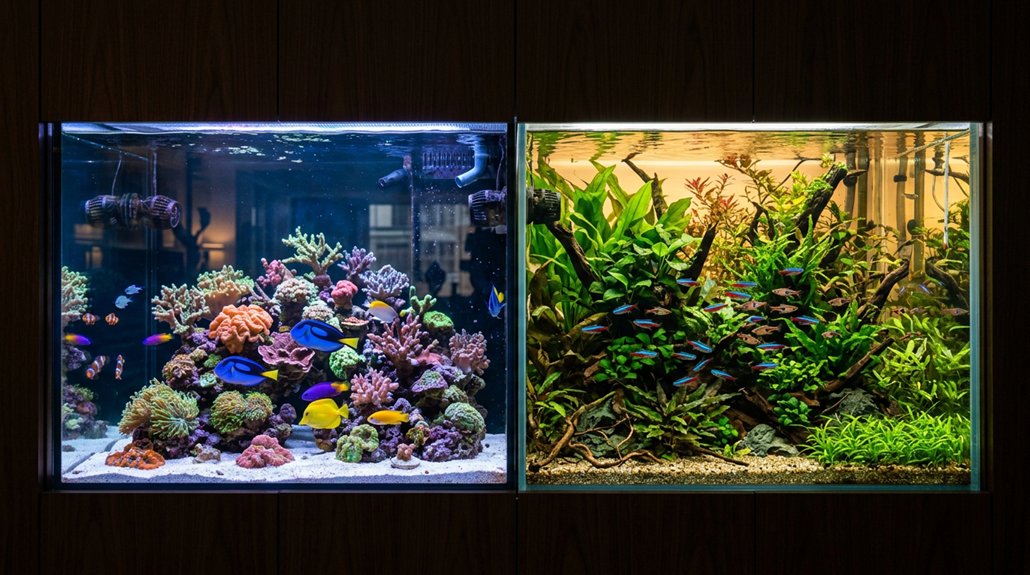
Freshwater aquariums are usually easier and cheaper for you to start, because they need simpler chemistry, less specialized equipment, and fewer consumables. Saltwater systems demand tighter control of salinity, alkalinity, calcium, and magnesium, plus more testing, dosing, and equipment like skimmers, pumps, and RO/DI water. Freshwater also gives you more forgiving livestock options. If you want a precise comparison, the differences get more interesting from there.
Key Takeaways
- Freshwater aquariums are generally easier for beginners because water chemistry is simpler and more forgiving of small parameter changes.
- Saltwater and reef tanks need tighter control of salinity, alkalinity, calcium, and magnesium, plus more frequent testing and dosing.
- Saltwater setups usually cost more upfront and over time due to specialized equipment, salt mix, supplements, and pricier livestock.
- Freshwater tanks need simpler equipment, while marine tanks often require skimmers, strong circulation, RO/DI water, and reef-capable lighting.
- Both use the nitrogen cycle, but saltwater systems usually demand stricter maintenance, bigger tanks, and more stable water conditions.
Freshwater vs Saltwater: Which Is Easier?
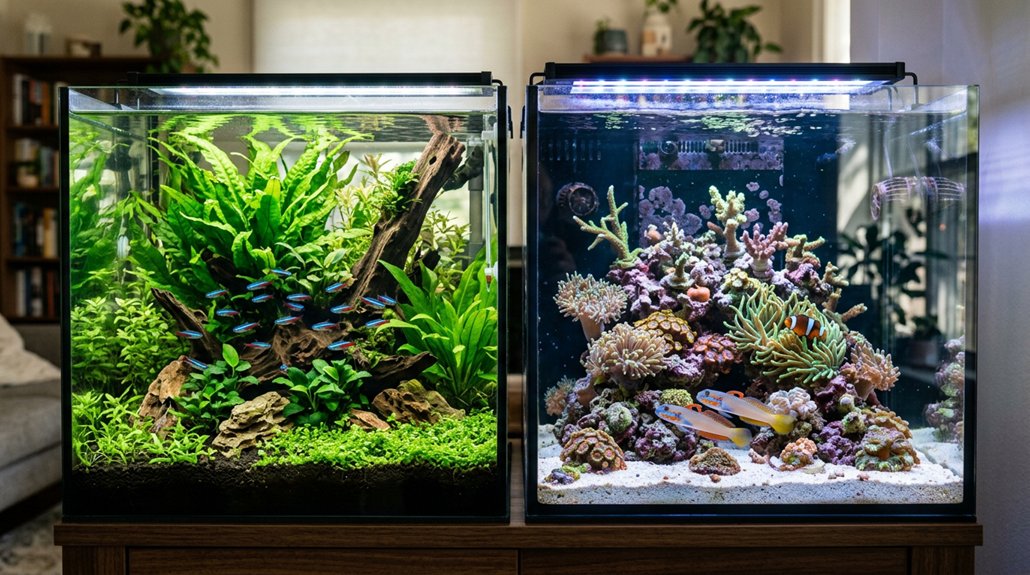
When comparing freshwater vs. saltwater aquariums, the easier option for most beginners is freshwater. You’ll usually manage simpler chemistry, because pH, ammonia, nitrite, and nitrate are the primary variables, and many freshwater species tolerate small swings. Equipment is also less specialized, so your system is more forgiving if you miss a maintenance interval. That consistency builds beginner confidence by reducing failure points during cycling, quarantine, and routine testing. Saltwater aquariums, especially reefs, demand tighter salinity control, precise lighting, protein skimming, and regular adjustment of alkalinity, calcium, and magnesium. These requirements raise the learning curve. Still, skills you gain in freshwater transfer directly to marine systems, so freshwater is an effective старт for hobby progression and preparation before you move into saltwater.
Freshwater vs Saltwater Costs
Saltwater aquariums, especially reef systems, are typically more expensive to start and maintain than freshwater tanks. Your startup costs rise because reef-grade systems often need specialized lighting, protein skimmers, circulation pumps, and RO/DI water treatment, while a basic freshwater tank usually relies on simpler hardware. If you choose larger or acrylic displays, your initial investment climbs further. Your ongoing supplies also cost more: you’ll repeatedly buy marine salt, test kits, calcium, magnesium, alkalinity supplements, and replacement media. Livestock adds another expense, since marine fish and corals are often pricier than common freshwater species. Freshwater setups usually keep costs lower with less expensive consumables, simpler dosing, and fewer automated systems, making long-term maintenance more economical overall.
What Equipment Each Aquarium Needs
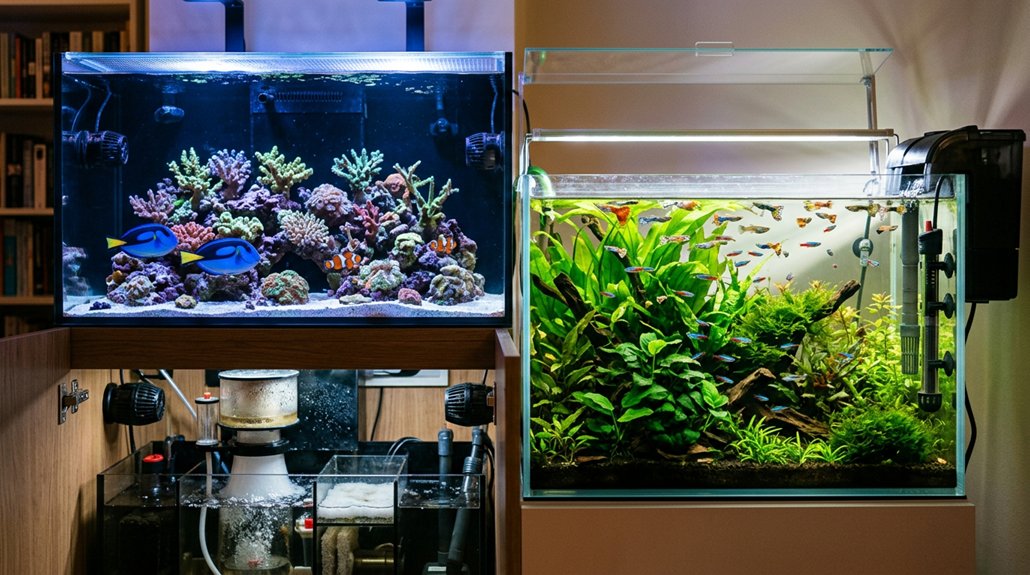
When you set up a freshwater aquarium, you’ll usually need a filter, a submersible heater, suitable lighting, and test kits for ammonia, nitrite, nitrate, and pH. A saltwater system adds a protein skimmer, strong circulation and return pumps, reef-capable lighting, salinity measurement, and, in many marine builds, RO/DI water plus a salt mix. For either system, you can also add automation such as auto top-off units, dosing pumps, and timers to stabilize water chemistry and reduce maintenance.
Essential Gear
Saltwater systems demand more specialized gear: a protein skimmer, strong circulation, sump or refugium support, and reef-capable lighting. You’ll also need RO/DI water for salt mixing, a refractometer or hydrometer for salinity control, live rock or biological media, and auto top-off to stabilize specific gravity. Reef tanks may further require dosing and calcium, magnesium, alkalinity testing.
Optional Extras
Beyond the basic setup, each aquarium type has a different set of optional extras that can improve stability and performance. In saltwater, you’ll often add a protein skimmer, live rock, and perhaps deep sand beds to enhance biological filtration and reduce dissolved organics. Reef systems may also need RO/DI water, marine salt mix, reactors, circulation pumps, and specialized LED lighting for coral and zooxanthellae. Freshwater tanks usually rely on simpler tools: a heater, filter, and proper lighting, though planted systems may need CO2 injection, high-output lighting upgrades, and liquid or substrate fertilizers. For both, automation options like auto top-off units and dosing pumps can improve consistency. These additions aren’t mandatory, but they can markedly increase stability, especially in demanding marine or planted aquaria.
How Maintenance Differs Between Them
In saltwater aquariums, you’ll usually perform more frequent testing and dosing because pH, salinity, calcium, alkalinity, magnesium, and nutrient levels must stay tightly controlled. You’ll also rely on purified water and marine salt mixes for water changes and top-offs, whereas freshwater systems are typically less chemically demanding and more tolerant of routine variation. As a result, marine tanks require closer monitoring and more consistent corrective action to maintain stability.
Routine Care Needs
Freshwater aquariums generally demand less intensive routine monitoring, with weekly checks of pH, ammonia, nitrite, and nitrate often being sufficient, while saltwater and reef systems usually require testing two to three times per week for salinity, alkalinity, calcium, and magnesium. You’ll usually find freshwater care more forgiving, with simpler filter cleaning and fewer chemistry corrections. In marine systems, you’re tracking more variables, so daily testing may be warranted during instability, and reef dosing often becomes part of your schedule.
- Freshwater: basic chemistry checks.
- Saltwater: salinity and ion balance.
- Reef: supplementation, equipment tuning, and organism-specific feeding.
RO/DI top-offs and precise salt mixing add control requirements, while protein skimmers and live rock need periodic inspection. Reef tanks also need tighter supplementation discipline than most freshwater setups.
Water Change Demands
Saltwater aquariums typically require more frequent and more exacting water changes than freshwater systems, because marine livestock—especially corals and invertebrates—rapidly deplete trace elements and are more sensitive to dissolved waste accumulation. You’ll usually follow 10% weekly or 20% biweekly changes, with frequent testing to confirm salinity, nitrate, and mineral levels. Before any change, you’ll mix RO/DI water with commercial sea salt to the target specific gravity, then match temperature and salinity. Reef systems often need reef dosing of calcium, alkalinity, and magnesium between changes. Protein skimmers can reduce organics and lower change volume, but they don’t replace scheduled partial exchanges. Freshwater tanks are generally more forgiving, and many community setups can use 10–25% monthly changes with less exacting oversight.
Stability And Monitoring
Because marine systems are less chemically forgiving, you’ll need to monitor saltwater aquariums more closely than freshwater tanks, testing pH, ammonia, nitrite, nitrate, salinity, calcium, alkalinity, and magnesium on a regular schedule. Your testing frequency should be higher because reef organisms react quickly to ionic shifts, and salinity stability is critical near SG 1.025. Top off evaporation with RO/DI water, not saltwater, to prevent concentration spikes.
- Check salinity daily, especially after heat or heavy aeration.
- Dose calcium, alkalinity, and magnesium consistently; automated systems help.
- Inspect skimmer performance and bioload weekly.
Freshwater tanks usually need fewer parameters tracked and tolerate occasional misses better, but saltwater chemistry can swing fast, so disciplined monitoring isn’t optional.
Freshwater vs Saltwater Tank Aesthetics
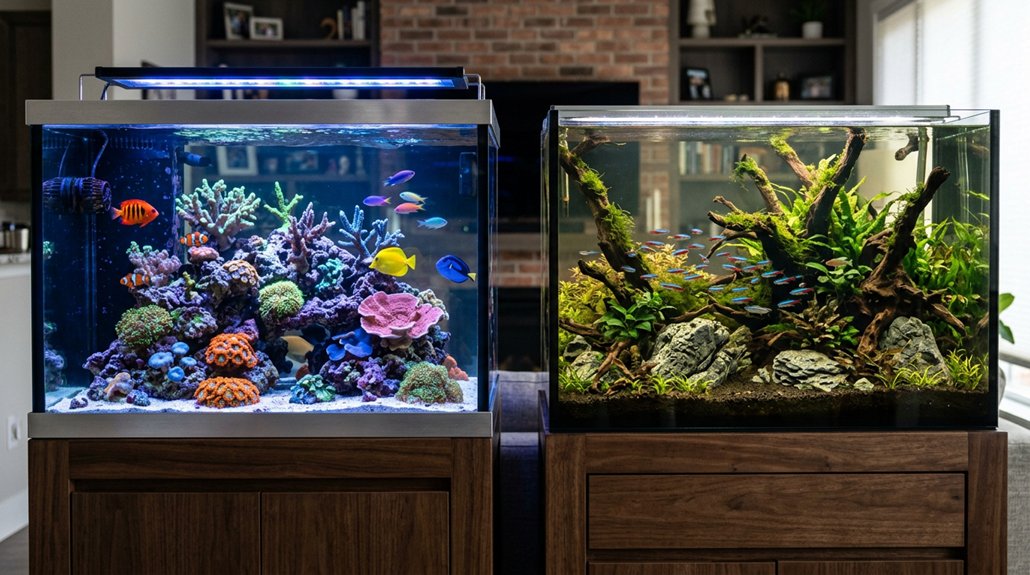
Visual contrast is one of the clearest differences between aquarium types: freshwater aquascapes usually favor earthy greens, browns, driftwood, stone, and tightly controlled plant composition, producing a natural, minimalist look with strong foreground–midground–background depth, while saltwater reef systems tend to present vivid neon-to-pastel fish and corals against high-texture live rock, creating a denser, more intricate “ocean in miniature” appearance. In your freshwater tank, naturalistic minimalism comes from layered planting, carpeting species, and sleek hardscape lines. In your reef tank, a neon coralscape depends on three-dimensional rock architecture, open coral placement, and high-color contrast. Broad-spectrum grow lights enhance freshwater chlorophyll and plant form, whereas reef lighting intensifies fluorescence and pigment expression. Both styles can be striking, but they signal different visual priorities.
Aquarium Size and Material Choices
When you’re choosing between freshwater and saltwater systems, tank size and material have a direct impact on both stability and equipment layout: freshwater aquariums can often begin at around 50 litres, while marine reef setups typically need a practical minimum of about 300 litres to accommodate greater biological and mechanical demands. Bigger volumes dampen swings, so you’ll usually get a more forgiving system. Consider these points:
- Glass is cheaper and suitable for most standard tank footprints.
- Acrylic costs more, but it’s lighter and supports curved or custom builds.
- Reef cabinets must reserve sump and pump space, plus extra height for aragonite substrate.
Those material tradeoffs affect weight, footprint, and access. Match the tank to your stand, room dimensions, and maintenance workflow before you buy.
Water Chemistry and Cycling Basics
Both freshwater and saltwater aquariums depend on the same nitrogen cycle, so you’ll need to monitor ammonia, nitrite, and nitrate regularly as beneficial bacteria convert toxic waste into less harmful compounds. During nitrogen cycling, test water frequently to catch spikes before they stress livestock. In marine tanks, you’ll also manage salinity stability by mixing RO/DI water with artificial sea salt and verifying specific gravity with a refractometer or hydrometer. Reef systems often need calcium, alkalinity, and magnesium maintained within narrow ranges, because corals and other invertebrates consume them. Protein skimmers can help by removing dissolved organic compounds and improving gas exchange. Regular partial water changes with temperature- and salinity-matched water further dilute pollutants and keep chemistry consistent.
Is Saltwater Harder to Keep?
Saltwater aquariums are generally harder to keep than most freshwater tanks because they demand tighter control of salinity, alkalinity, calcium, and magnesium, along with more frequent testing and dosing to keep conditions stable. You’ll also manage RO/DI water, evaporation top-off, and equipment like protein skimmers, circulation pumps, and reef lighting, which increases system complexity. Yet “harder” depends on your livestock compatibility and goals: a planted CO2 freshwater tank or discus setup can be equally demanding. 1. Stable salinity targets. 2. Precise coral support equipment. 3. Careful acclimation techniques. Live rock can speed cycling, but you still need disciplined maintenance. The hobbyist community and expert resources can reduce the learning curve, especially when you quarantine, test, and adjust methodically.
Frequently Asked Questions
Should I Get a Freshwater or Saltwater Aquarium?
You should get a freshwater aquarium if you want lower cost, simpler aquarium maintenance, and easier fish compatibility; choose saltwater only if you’re ready for higher salinity control, specialized lighting, and more intensive chemistry management.
Can I Use a Saltwater Aquarium for Freshwater?
Yes, you can use it, but you’ll need a full tank conversion: drain, rinse, and recondition all surfaces. For example, a 55-gallon reef can become a freshwater planted tank if substrate compatibility is corrected.
Is It Better to Fish in Freshwater or Saltwater?
You’ll usually find freshwater better for beginners: fish are hardier, breeding behaviors are easier to observe, and catch and release ethics are simpler to maintain. Saltwater’s diversity is greater, but it’s technically demanding and costlier.
Is a Saltwater Tank More Expensive Than a Freshwater Tank?
Yes—conveniently, your saltwater tank’s “simple” setup usually costs more. You’ll face higher equipment costs and greater maintenance complexity from skimmers, RO/DI systems, specialized lighting, marine salts, and testing, unlike most freshwater systems.
Conclusion
Whether you choose freshwater or saltwater, your aquarium becomes a small engineered ecosystem, and you’re the steward maintaining its balance. Freshwater tanks are often the simpler machine: fewer variables, lower costs, and easier cycling. Saltwater systems are the finer instrument: richer aesthetics, more equipment, and tighter chemistry control. If you can monitor parameters, adjust carefully, and stay consistent, you’ll keep either world stable. In aquariums, as in nature, harmony comes from precision.