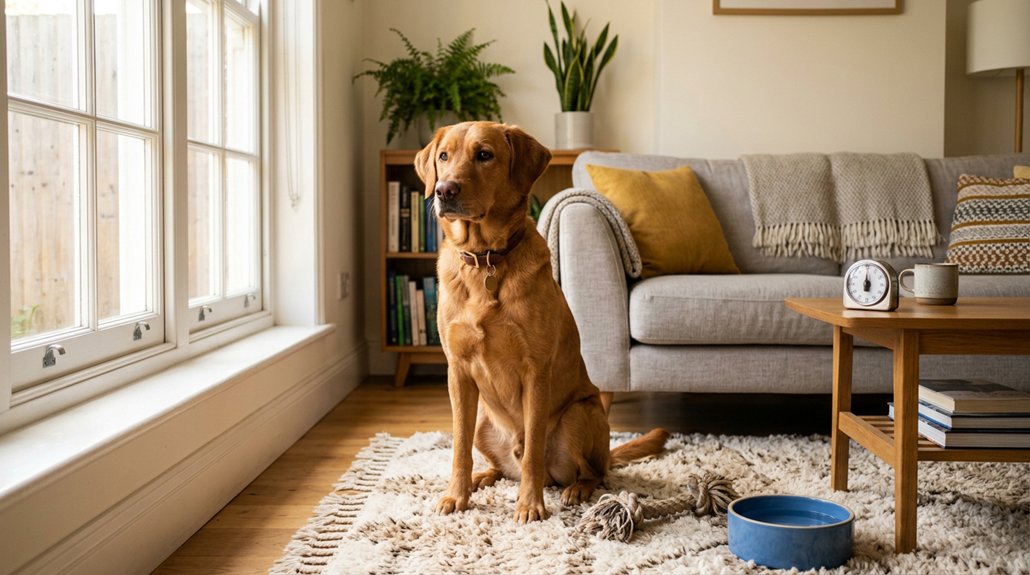
When choosing a dog that can be left alone, prioritize breeds known for independence, like Greyhounds or Chow Chows, which handle solitude well. Consider your routine; these breeds align with schedules that involve away time, as long as you’re mindful of their exercise and mental stimulation needs. Senior dogs are also great for busy lifestyles, requiring less exercise and thriving on established routines. A detailed approach guarantees your future pet’s well-being, enhancing your lifestyle compatibility further.
Key Takeaways
- Choose independent breeds like Greyhounds or Chow Chows, which handle being alone better.
- Consider older dogs for a calmer demeanor and lower exercise needs, ideal for solitary environments.
- Ensure the breed’s exercise requirements match your lifestyle to avoid separation anxiety.
- Provide mental stimulation through toys and puzzles to keep your dog engaged when alone.
- Limit absences to four hours for adult dogs to prevent stress and anxiety.
Finding Dogs That Chill When Alone
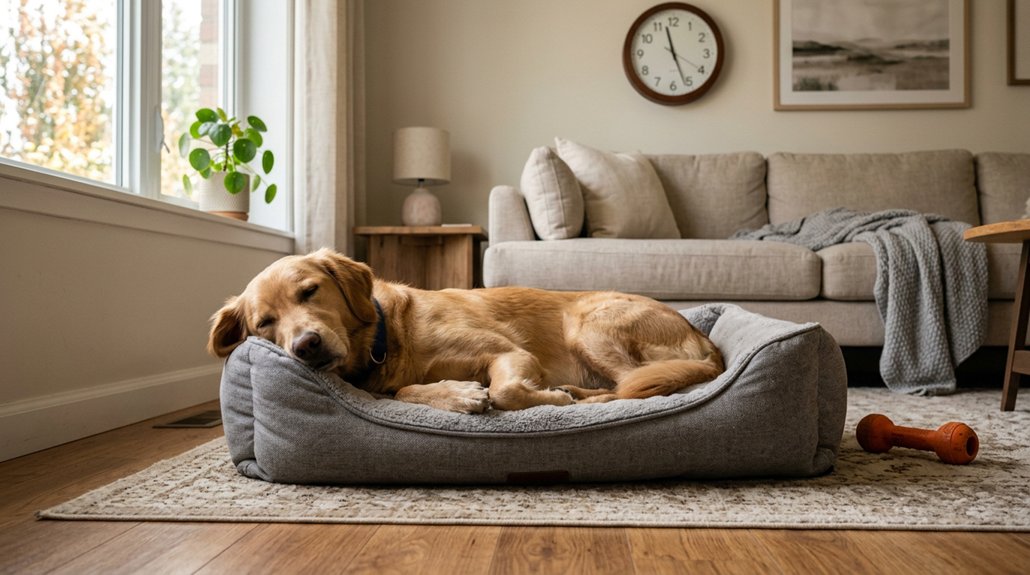
When selecting a dog breed capable of handling solitude, it’s essential to contemplate their innate characteristics and adaptability. Certain breeds, like the Greyhound and Bullmastiff, exemplify the best breeds for alone time due to their independent nature. Likewise, Chow Chows thrive when left alone for a full workday, provided they’ve been appropriately trained. The Basenji, with its inherent independence, can self-entertain, rendering it suitable for owners who face long absences. Though Boston Terriers are adaptable, they need engaging toys to maintain their sanity during alone time. Ultimately, while identifying breeds that can chill alone, focus on those known for minimizing separation anxiety, reinforced by gradual acclimatization. This guarantees they stay comfortable when solitude becomes necessary.
Align Breeds With Your Schedule
Selecting a breed that matches your schedule involves understanding your daily routine alongside the innate characteristics of different dogs. Consider dog breeds known for their independent breed personality, such as Greyhounds and Chow Chows, which can handle alone time without significant anxiety. Assess your typical absence duration, remembering that most adult dogs shouldn’t be left alone for more than four hours, though some can adapt longer. If your lifestyle is especially busy, opt for older dogs or less energetic breeds, like Basset Hounds or Bullmastiffs, as they adapt better to such schedules. For breeds like Boston Terriers that thrive on company, confirm your routine allows for daily walks and engaging toys to prevent boredom during alone times. Aligning your dog choice with your schedule is essential for their well-being.
Check Exercise and Mental Needs
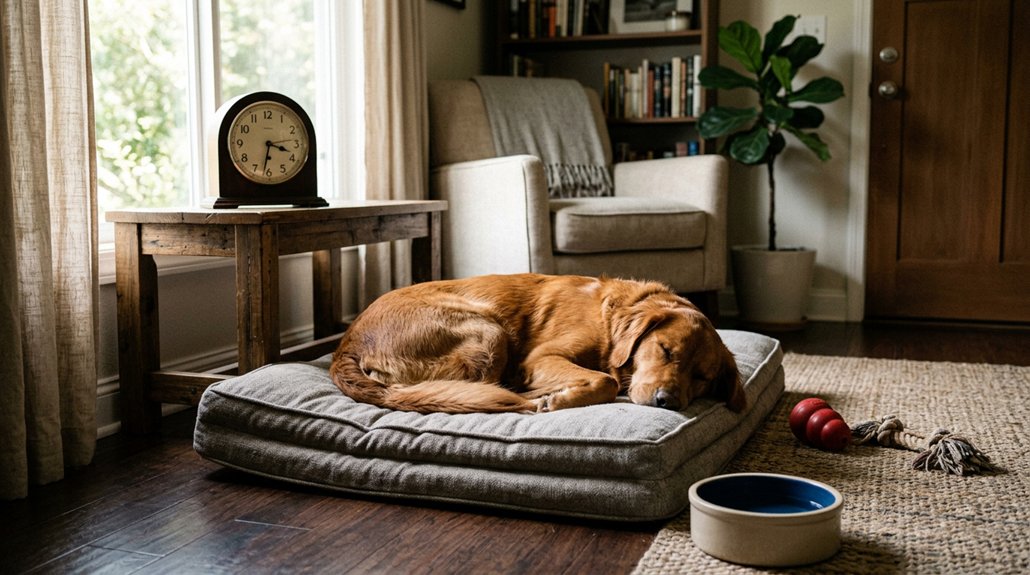
Understanding your dog’s specific exercise and mental needs is essential for a harmonious companionship. Examining the exercise requirements reveals how diverse breeds differ: Greyhounds need about 60 minutes daily, whereas Chow Chows need frequent potty breaks but less intensive physical activity. High-energy breeds like Basenjis require substantial physical exertion to prevent destructive behaviors, contrasting with low-energy dogs like Basset Hounds, which adapt better to alone time. Mental stimulation is equally important; engaging toys and puzzles keep your dog occupied, reducing boredom when alone. A routine walk before departing helps alleviate anxiety, preparing them for solitude. Assess each breed’s energy levels—some dogs flourish with active lifestyles, while others enjoy lounging. Successful companionship balances varying exercise and mental stimulation needs.
How Older Dogs Fit in Busy Lifestyles
For busy individuals seeking the companionship of a dog that can handle solitude, considering an older dog might be an astute choice. Senior dog benefits include their need for less exercise and fewer breaks, fitting seamlessly into a hectic schedule. Established routines make them more adaptable, minimizing separation anxiety typically seen in younger dogs. This adaptability provides a significant adoption advantage over puppies by reducing the risk of destructive behavior when alone. Older dogs often exhibit a calmer demeanor, capable of managing alone time for extended periods. Despite their lower exercise requirements, it’s essential to engage them with regular mental stimulation to guarantee their ongoing health and happiness. As a result, an older dog can be the perfect fit for your dynamic lifestyle.
Training Tips for Independent Dogs
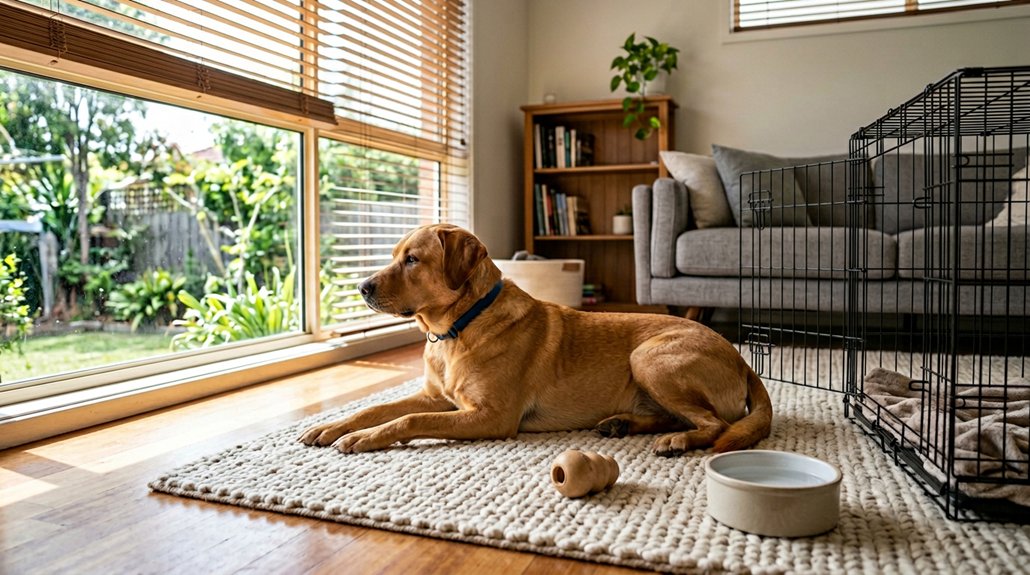
Training independent dogs requires a strategic approach to guarantee they’re comfortable during times of solitude. Begin with basic commands like “sit” and “stay” to establish trust and clear boundaries. This foundation may reduce their anxiety when left alone. Integrate bonding exercises that reinforce these commands, fostering a deeper connection. Gradually increase the duration of time your dog spends alone. This methodical increment conditions them to solitude, decreasing separation anxiety risks. Rewarding independence with mentally stimulating toys and puzzles further enhances their capacity to manage isolation constructively, preventing boredom and destructive behavior. Establish consistent routines by feeding and exercising them at the same times each day to ensure predictability. Finally, consider crate training, creating a comforting, secure space when you’re away.
Frequently Asked Questions
What Breed of Dog Can Be Left Alone During the Day?
If you’re looking for independent breeds, consider the Chow Chow or Greyhound. They’re naturally self-reliant and do well with crate training. Their temperament and ability to handle solitude make them suitable for being left alone during the day.
What Is the 3-3-3 Rule With Dogs?
Coincidentally, the 3-3-3 Rule aligns beautifully with how dogs naturally adapt. For the first three days, expect stress and anxiety. By three weeks, their true canine behavior emerges, and in three months, they’ll feel at home.
How Do You Say “I Love You” in Dog Language?
To say “I love you” in dog language, mimic their affectionate behaviors: use dog body language by maintaining gentle eye contact, leaning into them softly, and responding to canine vocalizations with soothing tones, enhancing your bond and communication.
What Dogs Can You Leave for 8 Hours?
Dogs like Bullmastiffs and Basenjis, with independence as solid as a rock, tolerate alone time up to 8 hours. Standard Poodles and Greyhounds also manage well, while ensuring they get enough prior and post-exercise.
Conclusion
You’ve explored the art of choosing a dog that can thrive independently. Yet, here’s the ultimate question: can you find the perfect companion that’s both independent yet affectionate? It’s more than just matching breeds and schedules; it’s about understanding their exercise and mental needs. With older dogs, you might find a serene fit for busy lifestyles. Mastering training techniques guarantees independence. So, are you ready to discover that ideal balance—a dog that’s alone but never leaves your side?