
Before getting a dog with allergies, you need to identify potential triggers like environmental allergens or specific food ingredients. Establishing daily routines, such as frequent paw cleaning and bathing with hypoallergenic shampoos, is crucial. Selecting a breed less prone to allergies, maintaining a clean home, and using air purifiers help manage symptoms. Antihistamines and hypoallergenic diets can provide relief. Expert veterinary support guarantees long-term health management. There is more insightful information to discover about managing dog allergies effectively.
Key Takeaways
- Research allergy-prone breeds to make an informed decision.
- Familiarize yourself with potential environmental allergens like pollen and dust mites.
- Establish a rigorous cleaning and grooming routine to minimize allergen exposure.
- Consult with a veterinarian about allergy testing and management strategies.
- Prepare your home with air purifiers and hypoallergenic furnishings to create an allergy-safe environment.
What Causes Dog Allergies and How to Spot Them?
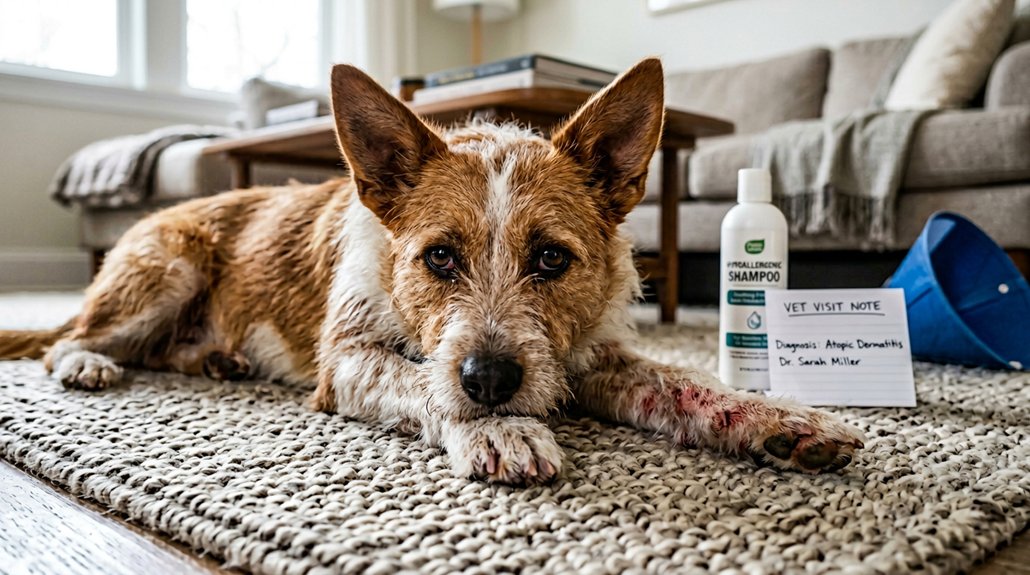
While dog allergies might seem perplexing, they’re primarily caused by an overreaction of your dog’s immune system to specific allergens. This immune response can be triggered by various allergy triggers, including environmental factors like pollen, dust mites, molds, and flea saliva. Additionally, certain food ingredients, such as chicken or beef, can also incite allergic reactions. Signs typically appear as excessive scratching, red or inflamed skin, recurrent ear infections, and, if related to food, gastrointestinal issues like vomiting or diarrhea. Dogs of any age can develop allergies, though it often occurs between six months and three years, with older dogs experiencing new allergies due to immune changes. Identifying these allergens requires a vet’s thorough examination and possibly allergy testing for effective management.
Daily Routines to Minimize Allergens and Manage Symptoms
After identifying the allergens behind your dog’s discomfort, implementing daily routines can greatly minimize exposure and manage symptoms effectively. Start by establishing a paw cleaning habit every time your dog comes inside. This reduces their exposure to outdoor irritants like pollen and dust. A consistent bathing routine, using oatmeal-based or hypoallergenic shampoos, is also essential. Weekly baths not only soothe their skin but remove allergens that accumulate in their fur.
Establish daily routines like paw cleaning and oatmeal baths to minimize allergen exposure and soothe your dog’s skin.
Maintain a clean home environment to further control allergens:
- Use air purifiers with HEPA filters to capture airborne allergens.
- Regularly vacuum and dust areas your dog frequents to manage indoor dust mites and mold spores.
- Adhere to a strict schedule for flea and tick prevention to avoid exacerbating allergic reactions.
Is Your New Pup Prone to Allergies? What to Consider

Are you considering adopting a new dog and wondering if they’re prone to allergies? Understanding breed selection is vital since certain breeds like Golden Retrievers, Bulldogs, and Dalmatians are genetically predisposed to allergies. These allergies can manifest through skin issues, ear infections, or gastrointestinal problems, and symptoms may appear as early as six months. To guarantee the health of your new pup, it’s important to familiarize yourself with these potential health challenges. Additionally, consider environmental factors like local allergens, which vary by region. Conducting allergy tests can be beneficial for anticipating and managing these issues. Preparing for possible allergies requires a willingness to engage in early intervention and establish a strong relationship with your veterinarian for ongoing support.
Effective Treatments and How to Manage Dog Allergies
Managing dog allergies effectively requires a multifaceted approach, combining dietary adjustments, environmental control, and appropriate medication. Consider antihistamine options like Benadryl, Claritin, and Zyrtec, used under your vet’s guidance to determine proper dosages based on your dog’s weight. Regular flea prevention is essential, especially for dogs with flea allergies, as even a single bite can trigger severe itching and discomfort.
Effective management of dog allergies involves dietary changes, environmental control, and vet-guided antihistamines, ensuring your dog’s comfort.
- Antihistamine Choices: Utilize options like Benadryl, Claritin, or Zyrtec.
- Flea Management: Implement strict flea prevention protocols.
- Immediate Relief: Bathe your dog using oatmeal-based shampoos and apply anti-itch sprays for quick comfort.
When dealing with food allergies, hypoallergenic diets may require an eight to 12-week trial to effectively pinpoint and manage allergens.
Getting Your Home Allergy-Ready
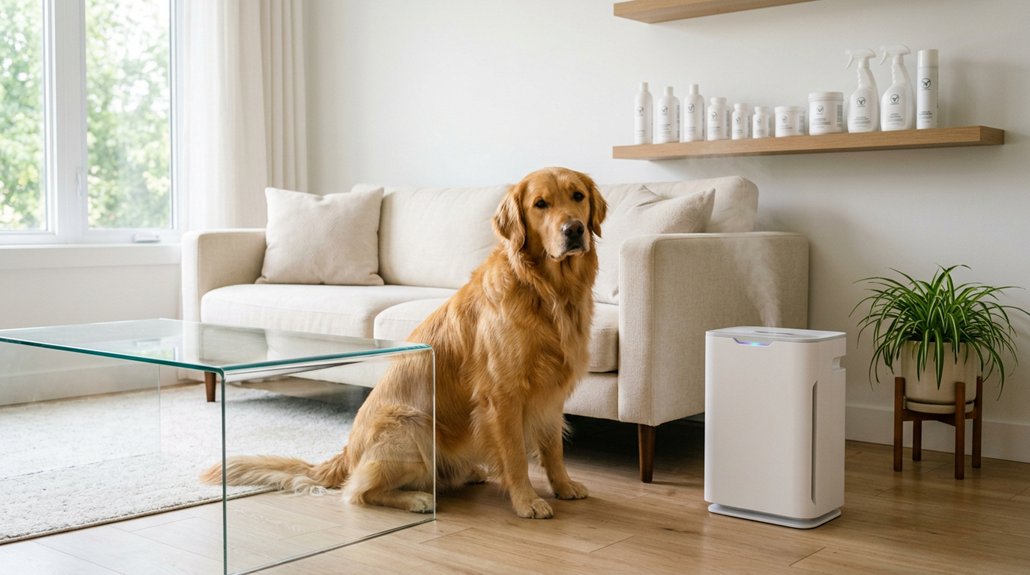
Transforming your home into an allergy-safe haven for your dog involves a few strategic modifications that can make a significant difference. Start by equipping your space with HEPA air purifiers, which are effective in capturing airborne allergens, ensuring allergen reduction for both your dog and any allergic residents. Incorporate rigorous cleaning strategies by using a high-quality vacuum to regularly clean carpets and upholstery to trap dust and dander. During high pollen seasons, keep windows closed and rely on air conditioning to prevent external allergens from infiltrating. After outdoor activities, routinely wipe your dog’s paws and coat to eliminate pollen and dust. Finally, select hypoallergenic bedding for your dog to diminish their exposure to dust mites, enhancing their indoor safety.
Frequently Asked Questions
What Is the 3 Day Rule for Allergies?
The 3 Day Rule entails observing allergy symptoms in your pet for three days after introducing new foods or allergens. Different pet breeds may react variably, so it’s essential to monitor carefully and consult a veterinarian for guidance.
What Are the Worst Months for Dog Allergies?
The worst months for dog allergies are March to June due to seasonal triggers like tree and grass pollen. Allergy symptoms can spike again from August to October as ragweed pollen peaks, causing discomfort for sensitive dogs.
Can I Take Hydroxyzine Before Allergy Testing?
No, you shouldn’t take hydroxyzine before allergy testing. It interferes with accurate results by suppressing reactions. Follow your veterinarian’s instructions and stop hydroxyzine usage 5 to 7 days prior to testing to guarantee effective allergy evaluation.
Can Allergies Trigger Lupus Flare?
Yes, allergies can trigger lupus flares. Allergy symptoms provoke systemic inflammation, demonstrating a lupus connection. They increase cytokine production, stressing the immune system, which exacerbates lupus symptoms and heightens sensitivity to allergens in individuals with lupus.
Conclusion
Just like tuning a radio to the right frequency, maneuvering through dog allergies requires precision and care. With approximately 10% of dogs affected by allergies, understanding the causes and symptoms is key. Picture your home as a sanctuary—organize routines to minimize allergens and consider breeds prone to fewer allergic reactions. Equip yourself with effective treatments and strategies to keep both you and your furry friend comfortable. It’s not just about managing symptoms; it’s about creating harmony.