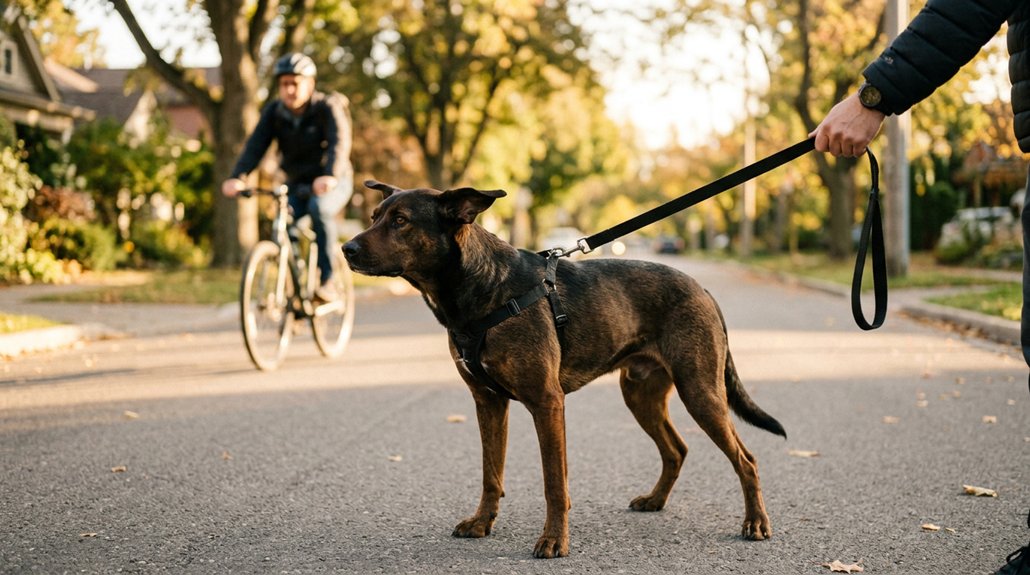
To stop leash reactivity in dogs, start by recognizing early signs like stiff posture or intense staring. Use a no-pull harness and reward calm behavior with treats. Begin in distraction-free settings, gradually exposing your dog to triggers while maintaining a safe distance. Practice calming cues like “Look at That” to redirect attention. Consistent reinforcement and gradual exposure help desensitize your dog. If challenges persist, professional guidance can offer tailored strategies for success. Discover more effective techniques ahead.
Key Takeaways
- Use a no-pull harness for better control and reduce pulling during walks.
- Reward calm behavior with high-value treats to create positive associations with triggers.
- Gradually expose the dog to triggers at a safe distance, reinforcing calmness.
- Monitor and recognize early signs of discomfort or stress in your dog’s body language.
- Seek professional guidance for tailored strategies and improved handling confidence.
Quick Steps for Calming Your Reactive Dog
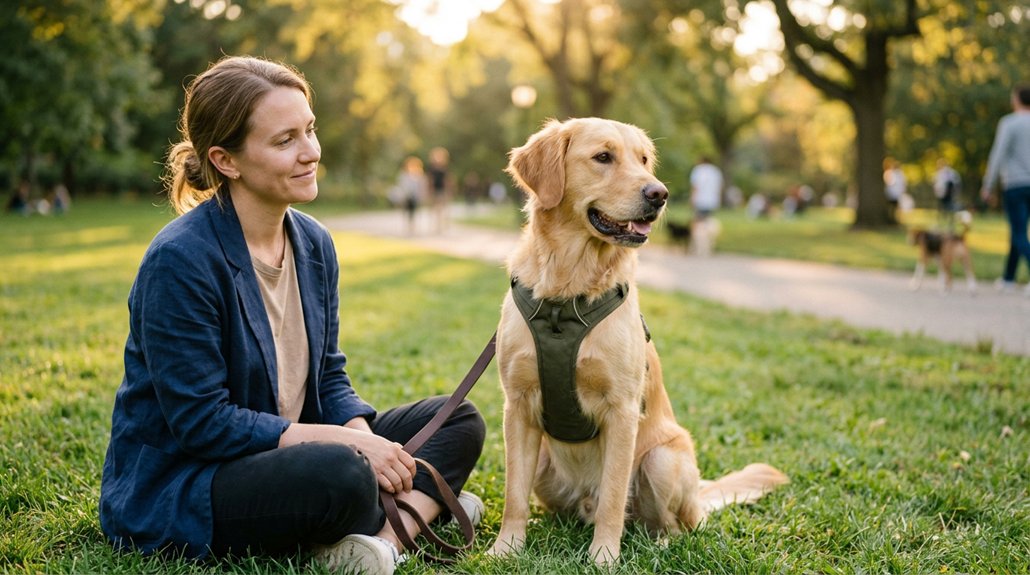
When dealing with leash reactivity, there are straightforward actions you can incorporate to help your dog remain calm. Incorporate a consistent reward system using treats to reinforce calm behavior. This positive reinforcement encourages your dog to associate calmness with rewards, making walks more pleasant. Use a no-pull harness that clips at both the chest and back. This type of harness provides better control without causing your dog stress or discomfort. Maintain a safe distance from other dogs and stimuli to prevent reactivity, gradually decreasing that distance as your dog becomes more comfortable. Practice cues like “Look at That” to help your dog focus on you instead of triggers. Patience is key—progress takes time, but your efforts will pay off.
Spotting Leash Reactivity Signs in Your Dog
To effectively address leash reactivity, you first need to recognize your dog’s body language by looking for cues like stiff posture, raised hackles, or intense staring. Identifying common triggers such as other dogs or unfamiliar people is essential in anticipating and mitigating reactions. By spotting these behavioral warning signs early, you can intervene promptly with desensitization techniques to prevent escalation and promote a calmer walking experience.
Recognizing Dog’s Body Language
Leash reactivity in dogs often reveals itself through a series of observable body language cues. Understanding these signals can help you gauge your dog’s emotional states. Watch out for body signals like raised hackles, a stiffened posture, or a wagging tail held high. These could indicate excitement or stress. Additionally, signs such as yawning, lip licking, or turning away might suggest your dog feels anxious or overwhelmed.
Here are common body language cues:
| Behavior | Emotional State | Possible Action |
|---|---|---|
| Raised Hackles | Excitement/Stress | Create Distance |
| Stiff Posture | Tension | Redirect Focus |
| Wagging Tail High | Overstimulation | Calm Your Dog |
| Yawning/Lip Licking | Anxiety | Provide Reassurance |
| Cowering/Hiding | Fear | Offer a Safe Space |
Identifying Common Triggers
Understanding your dog’s body language lays the groundwork for addressing leash reactivity. Quickly spotting triggers—like strange people, unfamiliar dogs, or unusual clothing—is key in managing these responses. Environmental factors play a significant role. Crowded environments, for example, may provoke heightened reactions. It’s vital to monitor your dog during social interactions, especially when they’re on a leash, as they can perceive threats more intensely when restrained. Some dogs react differently depending on the setting, so observing your dog in various contexts is essential. When recognizing signs of discomfort, keep a distance from identified triggers during training. Implementing careful practices helps prevent reinforcing negative behaviors. With consistent effort, you’ll control environmental factors and support better social interactions for a calmer, happier dog.
Behavioral Warning Signs
When you’re dealing with a leash-reactive dog, recognizing the behavioral warning signs early can make a world of difference in managing their reactions effectively. Look for behavioral cues such as barking, lunging, or growling—these often signal emotional triggers like anxiety or fear. Pay attention to more subtle signs of discomfort, including raised hackles, stiff posture, and averted gazes. These indicate that your pup feels threatened or is on high alert.
| Behavioral Cues | Emotional Triggers |
|---|---|
| Barking/Lunging | Anxiety/Fear |
| Growling | Feeling Threatened |
| Raised Hackles | On High Alert |
| Stiff Posture | Uncomfortable Situation |
| Averted Gazes | Discomfort |
Observing these signs allows you to intervene early, preventing escalation to aggressive behavior and ensuring calmer, more comfortable walks.
Preparation: Tools and Environment for Training Success
Getting started on leash reactivity training requires the right tools and environment to set your dog up for success. Begin with a no-pull harness that clips at both the chest and back; it offers better control and reduces pulling during training sessions. An arsenal of high-value treats is essential, rewarding your dog’s calm behavior in trigger scenarios to reinforce positive associations. Opt for environments free from distractions initially, gradually increasing stimulus exposure as your dog becomes more comfortable. Include a calm, non-reactive dog in the setup to foster positive experiences around fellow canines. Always keep the leash loose and stay aware of your surroundings, preventing overwhelming encounters. Strategic preparation helps condition your dog’s behavior, promoting successful reactivity reduction.
Leash Reactivity Training Steps
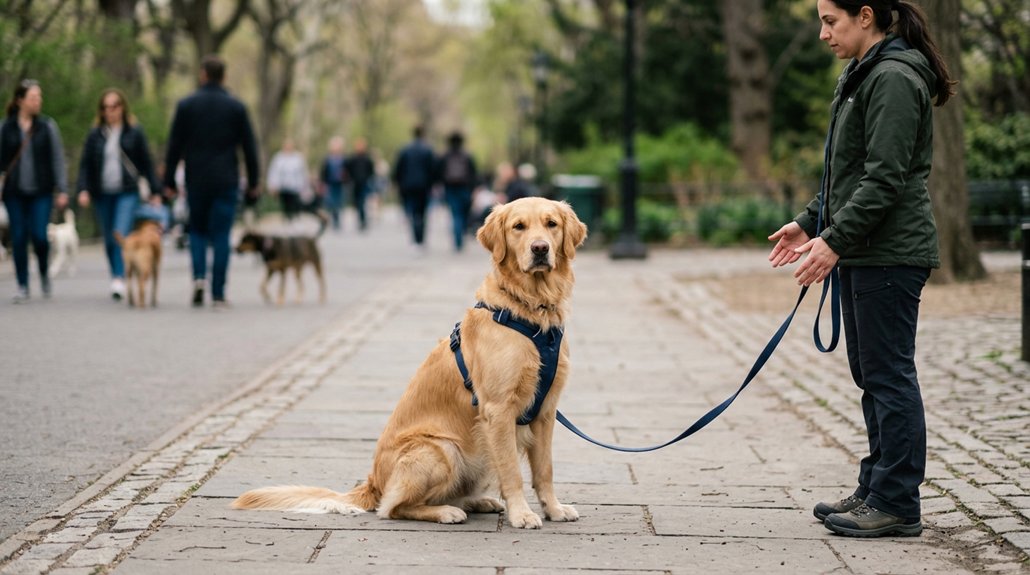
When addressing leash reactivity, your first step is to recognize early signals of discomfort in your dog, such as tense body posture or excessive barking. Implement counter-conditioning techniques by associating triggers with positive experiences, ensuring you’re guiding your dog toward calm behavior with patience and rewarding cues. Avoid head-on encounters with triggers, instead choosing to approach at angles, which can alleviate stress and promote better responses.
Recognize Early Discomfort Signals
Recognizing early discomfort signals in dogs is essential for managing leash reactivity effectively. Understanding your dog’s body language allows you to catch subtle stress cues before they escalate. Watch for telltale signs like licking lips, yawning, or averted gaze. These indicators suggest your dog might need more distance from a trigger. You should also be aware of more pronounced signals, like growling, barking, or a stiff posture, signaling anxiety or threat perception.
Implement Counter-Conditioning Techniques
Understanding the early signals of discomfort in your dog sets the stage for implementing effective counter-conditioning techniques. Start with gradual exposure by identifying a safe distance where your dog remains calm around their trigger. Use positive reinforcement like treats or praise to reward this calm demeanor. Employ a clicker or a rewarding word to mark progress, consistently fostering positive associations. As your dog becomes more comfortable, gradually reduce the distance to the trigger, maintaining structured sessions. Incorporate another calm, non-reactive dog to assist, modeling the desired behavior. Keep an eye on your dog’s body language to avoid overwhelming them, adjusting distances when necessary. Consistent practice in controlled settings is essential to boost your dog’s confidence and minimize reactive responses.
Avoid Head-On Approaches
Leash reactivity can be minimized by steering clear of head-on approaches during dog encounters. Dogs naturally prefer side greetings, which feel less threatening and reduce reactivity. They often react negatively when faced directly, so opting for a side approach allows for more relaxed and spaced encounters. When walking your dog, use obstacles like parked cars or trees to create a buffer space, helping decrease stress and anxiety levels for both pets. Keep your dog’s leash loose to maintain a calm atmosphere—tight leashes can signal stress and escalate reactions. If your dog begins to react, gradually increase the distance instead of pushing forward. This method helps your dog gradually learn to feel relaxed and comfortable around other dogs over time.
Dealing With Leash Reactivity Triggers
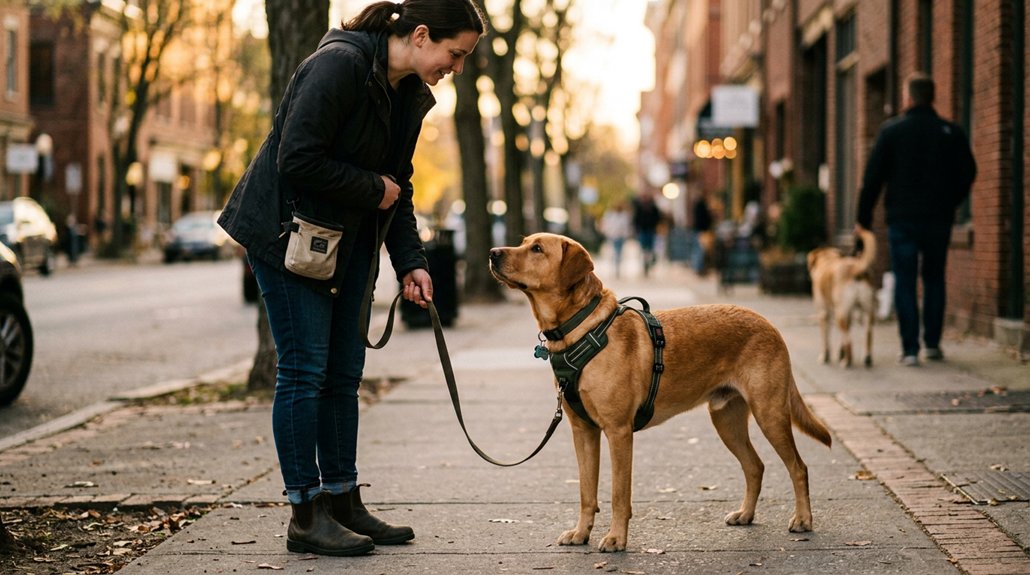
Dealing with leash reactivity triggers requires strategic observation and intervention. Begin by identifying your dog’s specific triggers—like other dogs or certain environments—and monitor their body language for stress signals. This is key to effective trigger management. Once identified, implement gradual exposure in a controlled setting. Start at a distance where your dog feels safe, progressively decreasing the gap as they become more comfortable, desensitizing them over time. During encounters with triggers, reinforce calm behavior using treats and praise; these positive associations can considerably reduce reactive responses. Always verify to move away if your dog shows signs of discomfort, maintaining their comfort limits. The aim is to foster a sense of security for your pet, gradually diminishing their reactivity.
Thinking About Calling in the Pros?
Ever wondered why professional help might be the key to managing your dog’s leash reactivity? Professional guidance offers tailored strategies, essential for addressing the unique complexities of your dog’s behavior. Experienced trainers provide insights into effective training techniques, helping you craft a structured progress plan. By seeking expert advice early on, you can prevent reactive behaviors from escalating, ensuring a smoother training journey. Attending workshops and seminars led by trainers enriches your understanding of canine behavior, equipping you with invaluable training resources. Plus, building a support network with qualified trainers provides continuous encouragement and advice. Don’t underestimate the impact of professional intervention—it can transform your approach and improve both your confidence and your dog’s success on leash.
Frequently Asked Questions
How Do I Get My Dog to Stop Being Reactive on a Leash?
Focus on leash training with gradual behavior modification. Identify triggers and keep a safe distance, using rewards to build positive associations. Implement the “Look at That” cue and gradually decrease distance as your dog’s comfort increases.
How to Snap a Dog Out of Reactivity?
To snap your dog out of reactivity, create a calm environment and use positive reinforcement. Reward calm behavior consistently. Gradually expose them to triggers at manageable distances, maintaining a relaxed demeanor to guide the dog’s focus.
What Dog Breed Is Most Likely to Be Reactive?
Breeds wearing their enthusiasm on their sleeves, like Terriers or Herding dogs, can show leash reactivity due to breed tendencies. You’ll manage with breed-specific training focused on behavioral traits and consistent, solution-oriented approaches.
How Do I Stop My Dog Reacting to Other Dogs on Walks?
Gradually use desensitization techniques and positive reinforcement. Start by maintaining enough distance where your dog stays calm. Reward them with treats for non-reactivity. Consistency and patience will eventually help your dog associate walks with positive experiences.
Conclusion
You’ve leashed up for a walk, but something’s lurking—a glance, a growl, a lunge. With each technique and tool in hand, you’re not just controlling your dog; you’re transforming the walk into a dance of understanding. Imagine it: calm greetings, serene strolls, triggers fading into the background. You’re so close to this harmony. Yet, if the road seems intimidating, don’t fret—consider a professional’s guidance to turn potential chaos into calm assurance. What path will you choose?