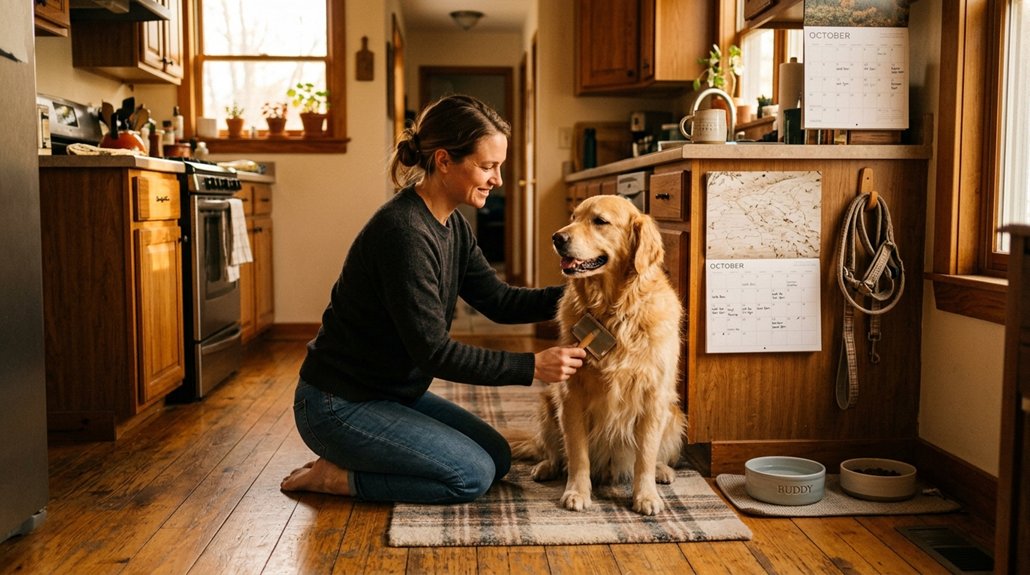
Adjusting your lifestyle for a new dog involves creating a safe and welcoming home environment. Dog-proof your space and establish consistent routines for feeding, walking, and potty breaks to provide security and predictability. Manage stress with calming techniques and use positive reinforcement to build trust. Proper socialization and play opportunities aid in integration with family and pets. Prioritize health through regular vet visits and respecting the dog’s needs guarantees a harmonious relationship. Enhance the bond with further insights.
Key Takeaways
- Establish a consistent daily routine for feeding, walking, and potty breaks to create predictability for your new dog.
- Dog-proof your home by removing hazards like cleaning products and organizing safe acclimation zones for the dog’s comfort.
- Implement positive reinforcement techniques to promote good behavior and strengthen your bond with the dog.
- Schedule regular veterinary visits and maintain an up-to-date health record to ensure your dog’s well-being.
- Encourage family engagement in pet care tasks to foster shared responsibility and strengthen relationships with the new dog.
Preparing Your Home for Your New Dog
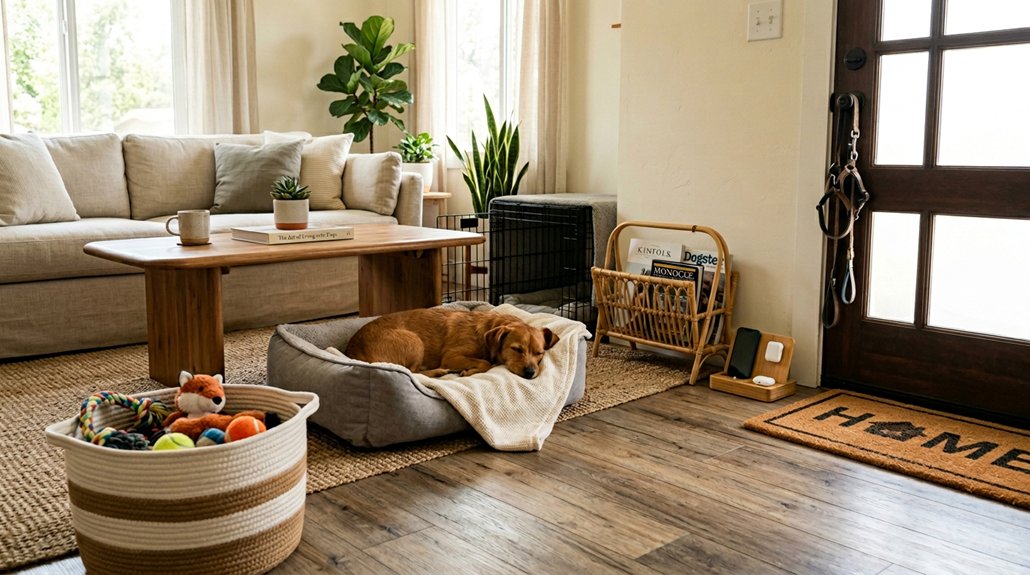
When preparing your home for your new dog, guaranteeing a safe and welcoming environment is essential, as this facilitates a smoother changeover for both of you. Start by dog proofing furniture and removing hazards like cleaning products and poisonous plants. This proactive approach wards off potential injuries and encourages exploration without risks. Create acclimation zones, such as designating a quiet sleeping area in a crate or personal bed. This choice gives your dog a comforting space that’s temperature-regulated and comfortable. Additionally, establish a consistent feeding area to guarantee a calm and organized routine, especially helpful if you have multiple pets. Don’t forget to have high-quality food and chew toys ready to support your dog’s health and happiness from day one.
Establishing a Daily Routine With Your Dog
Engage in building a structured daily routine with your new dog to cultivate a sense of security and predictability. Consistent schedules involving dog walking, meal timing, and potty breaks are essential in this adjustment phase. Begin with positive reinforcement during these activities—it’s key to encouraging good behavior. In the first month, focus on creating rules and structure, allowing your dog to understand expectations.
| Activity | Time | Purpose |
|---|---|---|
| Dog Walking | Morning/Evening | Physical Exercise |
| Meal Timing | Regular Times | Nutritional Needs |
| Mental Games | Afternoon | Mental Stimulation |
| Potty Breaks | After Meals | House Training |
| Quiet Time | Evening | Wind Down and Bonding |
Remember that regular activity helps manage energy levels and reduces anxiety, enabling a smooth adjustment into their new home.
Understanding Immediate Stress Management
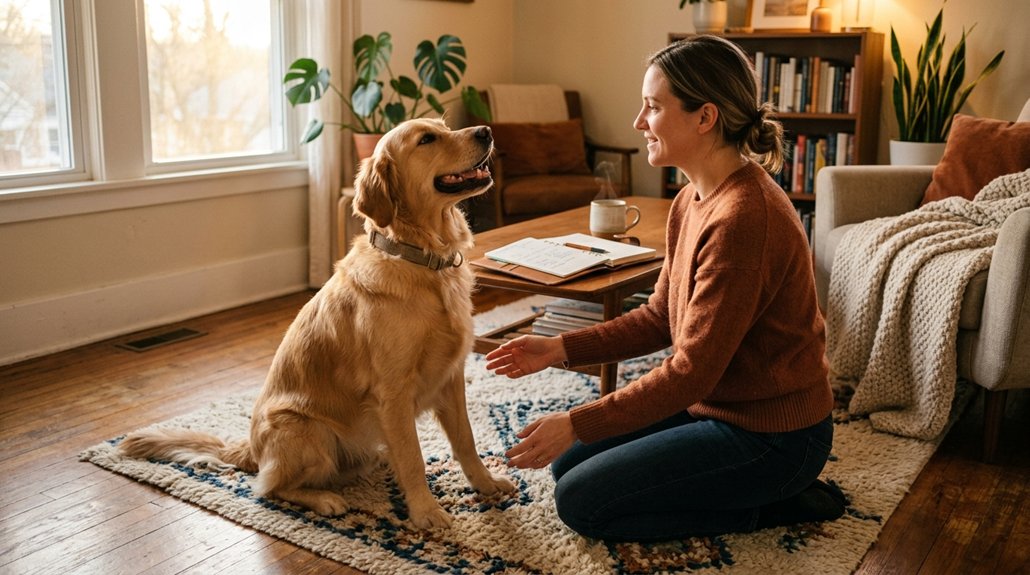
When bringing a new dog home, it’s essential to manage the initial stress from their change from shelter to household. Start by creating a calm environment that allows your dog to explore at their own pace, minimizing new introductions and experiences that could overwhelm them. Utilizing the 3-3-3 Rule can guide you in facilitating their adaptation, ensuring a structured routine and positive reinforcement to foster security and trust.
Managing Initial Shelter Stress
Bringing a new dog home from a shelter is an exciting time, though it’s crucial to understand that your new pet may experience significant initial stress as they adjust to their new environment. Often, stress hormone normalization can take roughly 10 days. During this period, behaviors influenced by the shelter environment might lead to shelter behavior misconceptions. Your dog’s actions initially may not reflect their true personality due to chronic stress effects. It’s important to observe them closely to support a smoother shift.
Here’s a helpful overview:
| Adjustment Phase | Key Focus |
|---|---|
| Day 1-3 | Decompression |
| Day 4-10 | Hormone Normalization |
| Day 11-21 | Routine Establishment |
| Week 4-12 | Home Integration |
| Ongoing | Monitoring & Support |
Understanding this process helps you better address their needs.
Creating a Calming Environment
To effectively manage the immediate stress your new dog may experience, it’s essential to methodically create a calming environment. Start by designating a quiet area, like a crate or room, to offer your dog a safe space for decompression. Incorporate elements like calming scents, such as lavender, to enhance tranquility. Employ soothing, soft music or white noise to further ease anxiety. Gentle massage can promote relaxation, easing tension and bonding you with your dog. Watching their body language helps you recognize when intervention is needed, ensuring your pet feels secure and understood.
- Create a designated calm space with minimal distractions.
- Use calming scents to promote relaxation.
- Introduce soft music or white noise for soothing effects.
- Apply gentle massage techniques to relieve stress.
- Monitor body language for timely support.
Facilitating Adaptation With Routine
If you’ve just welcomed a new dog into your home, establishing a consistent daily routine is paramount for facilitating adaptation and managing immediate stress. Start by creating a predictable schedule involving regular potty breaks, meals, and exercise to provide stability. This routine flexibility is essential, allowing for adjustments as your dog becomes accustomed to their new environment. Incorporate behavioral enrichment through positive reinforcement techniques, rewarding your dog during these scheduled activities to enhance their sense of security. During the first three days, prioritize decompression by limiting stimuli and offering a safe space, like a quiet room or crate. Gradually introduce new experiences, carefully observing your dog’s reactions to manage stress effectively and guarantee a smoother adjustment to their new home.
Strengthening Trust Through Positive Reinforcement
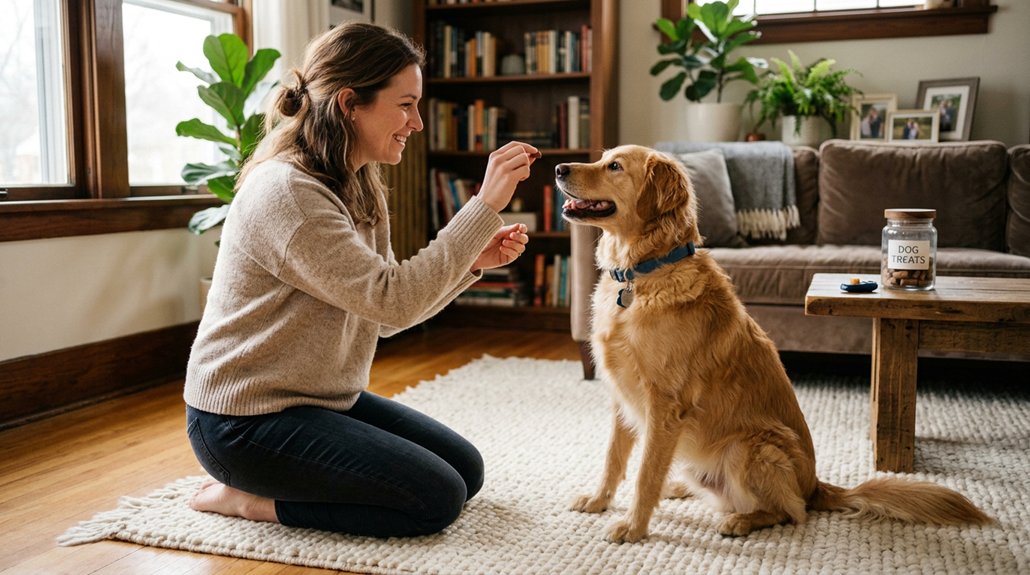
Building a trusting relationship with your new dog hinges on the strategic use of positive reinforcement, a technique that can turn the complex task of pet training into a rewarding experience. Begin with trust exercises and bonding activities, employing reinforcement techniques like treats and praise. Use communication signals, such as consistent words or clicker training, to foster positive interactions. Integrate training games that are both fun and educational, enhancing your dog’s learning while evaluating behavior. Develop a reward system, ensuring your dog knows desirable behaviors are encouraged. Understand the value of behavior evaluation, adjusting your methods based on your dog’s responses.
Strategic positive reinforcement builds trust and transforms dog training into a fulfilling experience.
- Utilize treats and praise for trust exercises
- Employ communication signals effectively
- Engage in training games regularly
- Establish a consistent reward system
- Continuously evaluate behavior adaptations
Helping Your Dog Get Along With Family and Pets
While bringing a new dog into your family is an exciting experience, it requires careful planning and strategic interaction to guarantee all household members and pets coexist harmoniously. For successful family introductions, introduce your new dog to each family member one at a time, supervising closely, especially around children, to ascertain comfort and safety. It’s essential to establish pet boundaries by allowing your dog to explore its environment gradually, while monitoring interactions with existing pets. Separate feeding areas can help prevent territorial disputes. Use positive reinforcement to reward calm behavior during introductions, building trust and minimizing anxiety. Consistency is key—establish clear household rules for interactions, and make certain everyone reinforces them, fostering a peaceful coexistence for all.
How to Navigate the Initial Adjustment Period
A harmonious household is a wonderful goal, and now that you’ve introduced your new dog to family members and pets, your focus turns to maneuvering the early days of assimilation. Begin by embracing the 3-3-3 Rule—giving your new dog time to decompress, adjust to routines, and settle. Establish consistent daily activities, as routines reduce adjustment challenges and increase security. Create bonding opportunities through gentle walks and play, building trust gradually. Introduce your dog slowly to others; calm supervised interactions ease anxiety. Scrutinize your dog’s behavior for stress signs; patience aids their adaptation.
Embrace the 3-3-3 Rule for your dog’s peaceful adjustment and stress-free assimilation into the family.
- Maintain a calm environment, minimizing overwhelming stimuli.
- Allow your dog to explore surroundings at their pace.
- Regular feeding and exercise bolster security.
- Bonding activities foster trust with family and pets.
- Handle adjustment challenges by monitoring stress signs.
Prioritizing Health and Regular Vet Visits
With your new dog, it’s essential to prioritize regular veterinary visits to keep health issues at bay. Schedule routine check-ups at least once a year for adult dogs, and more frequently for puppies and seniors. Stay attentive to health indicators like changes in appetite, behavior, or coat condition, and consult your vet promptly to guarantee your dog remains in peak health.
Scheduling Routine Checkups
When you bring a new dog into your home, scheduling routine veterinary checkups becomes an important part of guaranteeing their long-term health and well-being. Start with a vet appointment scheduling within the first week of adoption to establish health baselines and vaccinations. Regular checkups, at least annually for adults and bi-annually for puppies and seniors, are vital for preventive care planning. Make sure your vet discusses critical elements like vaccination schedules, parasite control, and dental health. Keep a meticulous health record for your dog, including vaccinations and any notable health issues for thorough care insights.
- Establish a health baseline within the first week
- Plan annual or bi-annual visits based on age
- Discuss preventive care elements during visits
- Maintain an up-to-date health record
- Consult on diet based on individual needs
Monitoring Health Indicators
As you embrace the responsibility of pet ownership, it’s imperative to consistently monitor your dog’s health indicators to guarantee they remain in peak condition. Regular vet check-ups, ideally every six months for adult dogs, are essential for health tracking. Puppies need more frequent visits. Prioritize vaccinations, parasite prevention, and dental care during these appointments. Use a body condition score chart to assess their fitness, as obesity can cause severe health issues. Symptom awareness is key; observe changes in behavior, appetite, or energy levels. These are often warning signals of health problems requiring immediate attention. Maintain a health log to track vet visits, vaccinations, and notable health changes. This repertoire aids in efficient communication with your veterinarian, ensuring thorough care.
Encouraging Family and Pet Interactions
Introducing a new dog to your family can be a rewarding experience, but it’s important to foster interactions that are safe and positive for everyone involved. To enhance family bonding and enforce pet etiquette, supervise introductions, allowing your dog to meet family members individually. Teach children to pet gently and respect the dog’s space, building mutual trust and understanding. Set clear family rules about where your dog can go, creating a structured environment that’s calming for the dog and family alike. Encourage everyone to take part in routines like feeding and walking, cultivating shared responsibility. Utilize positive reinforcement to reward good behavior, nurturing a harmonious relationship.
Supervise and encourage gentle interactions to build trust and establish a structured, harmonious family environment.
- Supervise introductions individually
- Emphasize gentle interactions
- Establish clear boundaries
- Encourage shared responsibilities
- Reward positive behavior
Creating Socialization and Play Opportunities
To foster a well-adjusted dog, it is crucial to create safe play environments that promote positive social interactions from an early stage. Start with supervised playdates in controlled settings where your dog can interact with well-mannered companions, gradually introducing more complex social experiences like visiting dog parks. Establishing structured playtime routines will not only enhance your dog’s social skills but also provide the mental and physical stimulation needed for healthy development.
Safe Play Environments
When adjusting your life with a new dog, ensuring their play environments are both safe and stimulating is essential for their well-being. Implementing safety measures in play areas helps prevent injuries, so look out for hazards like toxic plants or sharp objects. Gradually introduce new environments, allowing for sensory enrichment through environmental exploration. Engaging in agility training and providing interactive toys boosts mental stimulation and physical health. Puppy playdates or supervised dog park visits can be beneficial for social skills and confidence.
- Agility training: Use equipment to enhance physical and mental prowess.
- Puppy playdates: Socialize with well-behaved peers in secure environments.
- Safety measures: Regularly check spaces for potential dangers.
- Interactive toys: Stimulate cognitive and emotional development.
- Outdoor safety: Keep playtime supervised during outdoor adventures.
Positive Social Interactions
A dog’s socialization is crucial for their confidence and behavior, providing them with the ability to interact positively with people and animals. Start within low-stress environments and gradually introduce your dog to new situations, allowing them to adapt comfortably. Supervised playdates are a great way to boost their social skills. Pairing your dog with compatible, well-mannered friends guarantees productive interaction and play. Regular visits to dog parks foster social opportunities, but always monitor interactions closely.
Using positive reinforcement, like treats or praise during social encounters, encourages good behavior. Here’s a brief guide:
| Activity | Benefits |
|---|---|
| Supervised Playdates | Enhances social skills, provides exercise |
| Dog Parks | Encourages social opportunities |
| Treats/Praise | Reinforces desirable behavior |
| Gradual Introduction | Reduces anxiety |
Structured Playtime Routines
If you’re aiming to maintain your dog’s well-being, establishing structured playtime routines is crucial. Playtime benefits both your dog’s physical and mental health, and structured games are pivotal to this process. Align play sessions with your dog’s energy levels, dedicating 15 to 30 minutes for peak engagement. During these sessions, focus on:
- Socialization: Invite well-mannered dogs for supervised playdates.
- Enrichment: Use puzzle feeders or interactive games to stimulate your dog’s mind.
- Safe Environment: Guarantee playtime is in a distraction-free area for concentration.
- Varied Activities: Include fetch, tug-of-war, and obedience games to keep it fun.
- Body Language Monitoring: Watch for stress signs to make necessary adjustments.
Sustaining a Strong Long-Term Relationship
Creating a strong, lasting relationship with your dog goes beyond simple companionship. It requires behavioral consistency and establishing an emotional connection through consistent routines like feeding schedules and regular exercise. This provides security, enhancing your bond over time. Employ positive reinforcement techniques during training to encourage good behavior and build trust. This approach fosters a deeper bond, ensuring your dog feels supported and understood. Designate relaxing spaces and offer ample downtime to cater to their emotional well-being. Recognizing and respecting their body language and comfort levels allows for more effective communication, further strengthening your relationship. Finally, engage in activities like play and enrichment exercises. These not only fulfill their natural instincts but also deepen your mutual enjoyment and connection.
Frequently Asked Questions
What Is the 7 7 7 Rule With Dogs?
The 7-7-7 Rule helps guide puppy integration by suggesting it takes seven days to decompress, seven weeks to learn daily routines, and seven months to fully adjust, becoming comfortable and confident in their new environment.
What Is the 3-3-3 Rule With Dogs?
Imagine adopting Buddy, who struggles with stress management. The 3-3-3 rule helps his dog adjustment: 3 days decompressing, 3 weeks learning routines, and 3 months settling in. Tailor expectations, understanding every dog’s experience may differ.
What Is the 10 10 10 Rule for Dogs?
The 10 10 10 rule suggests allocating 10 minutes daily for each: dog care, effective training techniques, and bonding. This structured routine guarantees physical exercise, behavioral discipline, and emotional connection, promoting a healthy, balanced relationship with your dog.
How Do You Say “I Love You” in Dog Language?
Dogs recognize human emotions, synchronizing heartbeats with owners during affectionate interactions. In dog communication, say “I love you” by mirroring canine emotions: use slow blinks, gentle petting, and engaging play to foster trust and affection.
Conclusion
Adjusting your lifestyle for a new dog fosters a lasting bond. Did you know that 74% of dog owners say their pets improve their mental health? Establishing a routine, managing stress, and maintaining regular vet visits create a stable environment for both you and your dog. By fostering trust, encouraging interactions, and ensuring socialization and play, you’ll not only enrich your pet’s life but enhance your family’s well-being too. Your dedication makes this rewarding journey truly worthwhile.