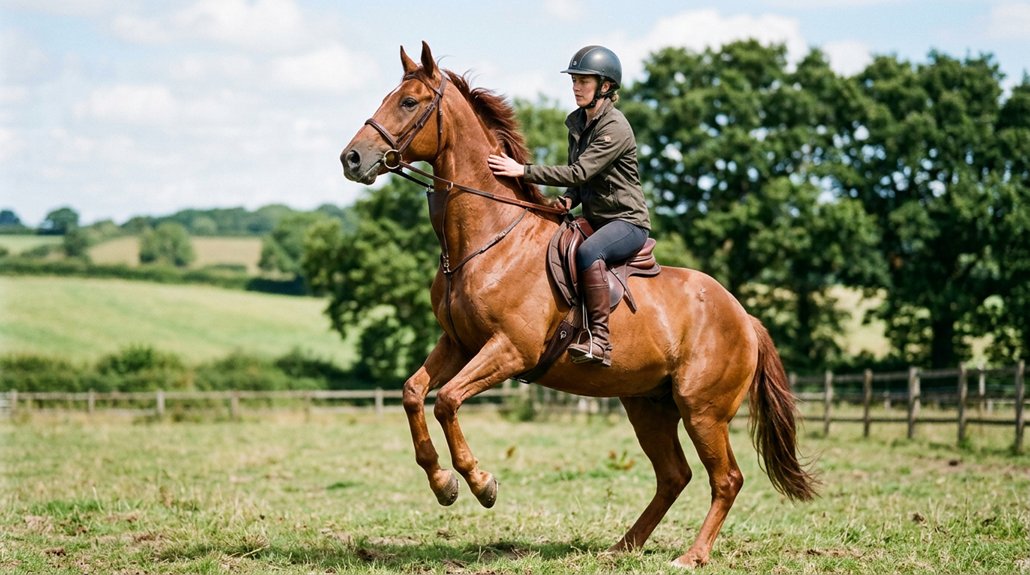
When your horse is easily startled, focus on understanding its instincts and creating a soothing environment. Keep the stable clutter-free and introduce routines to lower anxiety. Pay attention to health issues that might heighten sensitivity, and use positive reinforcement for calm behavior. Be mindful of your emotional state, as it can influence your horse. By analyzing these aspects, you’ll address the root causes of spooking and explore effective strategies to manage it further.
Key Takeaways
- Gradually expose the horse to potential startling stimuli to decrease reactivity through desensitization.
- Implement consistent routines in the horse’s environment to foster a sense of predictability and security.
- Ensure regular veterinary checks to rule out health issues contributing to increased startle responses.
- Use calm and confident body language when handling the horse to communicate safety and reduce anxiety.
- Incorporate relaxation techniques, such as playing soft music or providing a calm companion animal, to create a soothing environment.
Understanding Horse Spooking: What You Need to Know
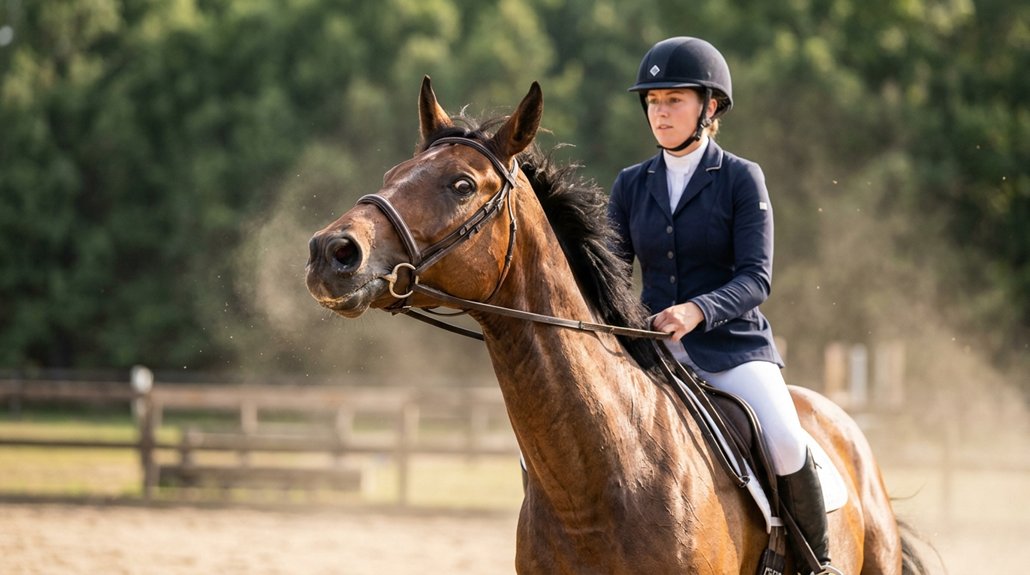
Understanding horse spooking begins with recognizing it as an intrinsic survival mechanism rooted in their evolutionary history as prey animals. This horse instinct is finely tuned to detect threats, prompting a flight response to unfamiliar stimuli like sudden sounds or movements. Each horse’s reaction varies based on age, breed, and temperament; some breeds inherently exhibit more pronounced flight responses.
Your horse’s past interactions and experiences play a vital role too. Limited exposure to diverse, positive situations often heightens fearfulness, making spooking more likely. Additionally, your emotional state can influence your horse. When you’re anxious, your horse might mirror this tension, seeing it as validation of their fears. Ensuring a supportive environment with regular veterinary checks helps manage and understand these natural instincts.
Identify Signs of Fear in Your Horse
Recognizing the signs of fear in your horse is essential for ensuring their well-being and maintaining a positive bond. By understanding fear signals and body language, you can immediately address their discomfort. Pay attention to heightened body tension, wide eyes, and ears fixed on the threat. These physical cues often indicate your horse’s perception of danger. Note if the horse’s head is raised or stiff, a clear sign of alertness or anxiety. Fearful behaviors might include snorting, shying away, or bolting, which are instinctive efforts to evade something perceived as threatening. Remember, fear responses are typically short-lived and linked to specific stimuli, like sudden noises. Close observation helps differentiate between fear and other conditions, ensuring proper care.
Recognize Common Startling Triggers
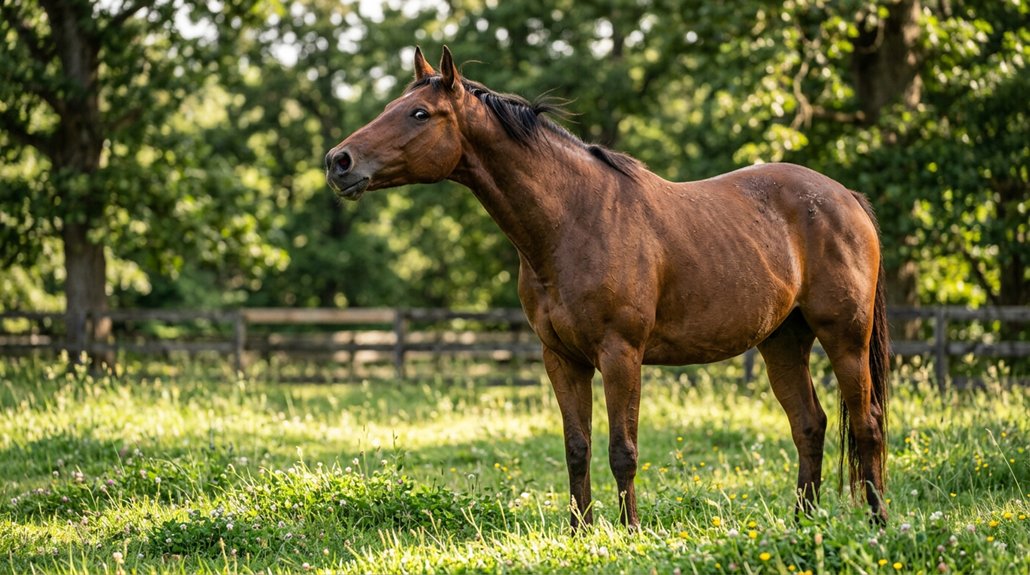
After noticing the signs of fear in your horse, it’s important to explore what might be causing these reactions. Environmental factors play a significant role in startling a horse. Noisy objects like spray bottles and barking dogs can trigger spooks due to their unpredictability. Visual changes, such as shadows or sudden shifts in light, often lead to hesitation, impacting your horse’s confidence. Additionally, sudden movements in familiar surroundings create an unsettling environment, heightening anxiety and spooking behavior. Recognizing the impact of breed sensitivity is also vital; some breeds are naturally more reactive. A horse’s past experiences can intensify startling reactions, especially if they associate certain stimuli with negative encounters. Identifying these triggers helps manage and minimize startling situations.
Assess Health and Medical Influences on Reactivity
While considering your horse’s sudden reactivity, it is vital to assess any health or medical issues that might be contributing to its easily startled nature. Pain, discomfort, or vision impairments can greatly increase a horse’s tendency to startle. Regular veterinary assessments play an important role in identifying underlying medical problems contributing to heightened anxiety or spooking behaviors. Neurological disorders might exacerbate fearful reactions, emphasizing the importance of thorough health monitoring. Using video recordings to document your horse’s behavior offers veterinarians valuable insights in pinpointing health-related causes. Additionally, remember that isolation can trigger increased anxiety, affecting your horse’s startle response and overall temperament. It is critical to implement routine checks to help safeguard your horse’s well-being and stability.
Boost Rider Confidence to Calm Your Horse
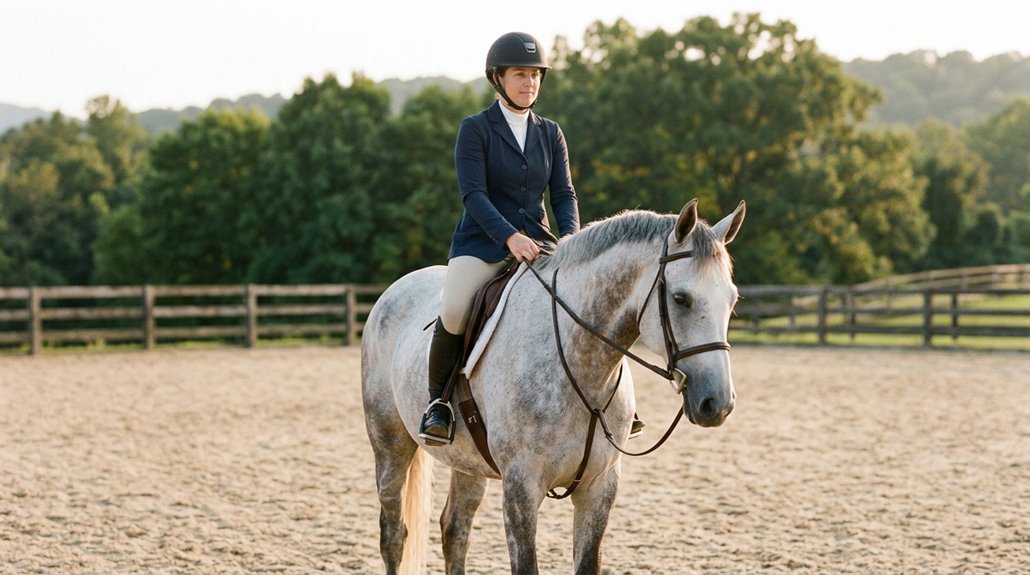
Enhancing your confidence as a rider is vital when calming a horse that startles easily, for your demeanor directly affects your horse’s behavior. It’s essential to project a calm presence through confidence building and rider posture. Here’s how:
- Maintain a relaxed posture and steady breathing to signal calmness, which reduces your horse’s anxiety.
- Practice deep seat riding for a secure balance; it fosters confidence and makes unexpected situations manageable.
- Regularly expose yourself to unfamiliar stimuli in a controlled environment to enhance your confidence, reassuring your horse during startling events.
- Seek training resources like workshops or video libraries to improve riding skills, important for handling reactive horses effectively.
These strategies help strengthen the rider-horse bond through calm, positive interactions.
Desensitizing Your Horse to Fear
Desensitizing your horse to fear involves a carefully structured approach that gradually introduces them to potentially startling stimuli in a safe manner. Employing desensitization techniques like gradual exposure can substantially reduce their fear response. Begin by presenting harmless items, such as spray bottles or plastic bags, from a distance, using the “advance and retreat” method to let your horse explore at their own pace. This incremental exposure bolsters their confidence, while consistent repetition is essential to prevent fear’s resurgence. Starting early, ideally during the foal stage, secures lasting results. Empathize with your horse’s experience, and be patient—improvement takes time. Your analytical understanding of their behavior can guide effective desensitization, fostering a more trusting relationship between you and your horse.
Using Positive Reinforcement to Calm Your Horse
Harness the power of positive reinforcement to help your horse remain calm and curious in stressful situations. Proper treat timing and reward frequency are critical to effectively redirect fear responses. Here’s how you can implement this approach:
Utilize positive reinforcement for calming horses by perfecting treat timing and managing reward frequency.
- Set Clear Expectations: Define what actions earn rewards to guide your horse towards desired behaviors.
- Strategic Timing: Offer treats the moment your horse displays calmness or inquisitiveness towards a scary object. This immediate feedback reinforces positive behavior.
- Control Reward Frequency: Adjust it to maintain interest and motivation; too often can make rewards less special, while too rarely might reduce effectiveness.
- Regular Practice: Routine and consistent training sessions build trust, helping your horse recognize safety in new or intimidating environments.
Implementing these steps enhances your bond and fosters a composed equine partner.
Creating a Calm Environment for a Startled Horse
When dealing with a horse that’s easily startled, creating a calm environment is essential to minimizing anxiety and stress. Start with stable organization; make certain the space is clutter-free to prevent hidden surprises. Familiarize your horse with consistent paths and maintain order in the turnout area to reduce startling from misplaced objects. Natural barriers like trees and fences can limit sensory stimulation by shielding the horse from unpredictable stimuli. Keep the environment peaceful by minimizing noise from barking dogs or machinery, promoting a tranquil retreat. Introduce soothing elements such as slow, soft music or calm companion animals to provide comfort. By thoughtfully managing these aspects, you’ll create a secure haven where your horse can relax and thrive without fear.
Frequently Asked Questions
Why Do Horses Get Startled so Easily?
Horses get startled easily due to their flight response, especially when environmental factors surprise them. Breed differences play a role, with some breeds being more reactive. Implementing gradual training techniques can help them handle stimuli more calmly. Remember, patience’s key.
How to Calm a Startled Horse?
To calm a startled horse, use grounding techniques by breathing deeply and staying present. Send calming signals through soft voice and gentle touch. Analyze the situation, ensuring awareness of your body language to not transfer anxiety.
What Is “I Love You” in Horse Language?
In equine communication, “I love you” is shown through mutual grooming, soft nuzzles, or following you around. These are signs of positive horse emotions, indicating trust and attachment that signify your horse’s affectionate bond with you.
What Is the 1/2/3 Rule in Horses?
Imagine you’re guiding a horse through a maze; the 1/2/3 Rule lets them pause and think. It enhances desensitizing techniques by respecting fear responses, fostering calm decisions over instinctual panic, strengthening trust.
Conclusion
When your horse spooks, imagine yourself as the anchor in a stormy sea, providing stability. Recognize fear’s whispers and decode its language, so you’re armed with understanding. Be the artist painting a picture of calm in your horse’s world, crafting a soothing environment. With confidence as your shield and desensitization as your tool, transform their reflexes with patience. Remember, growth mirrors the pace of a gentle stream—steady and sure. Together, you’ll create harmony over hurdles.