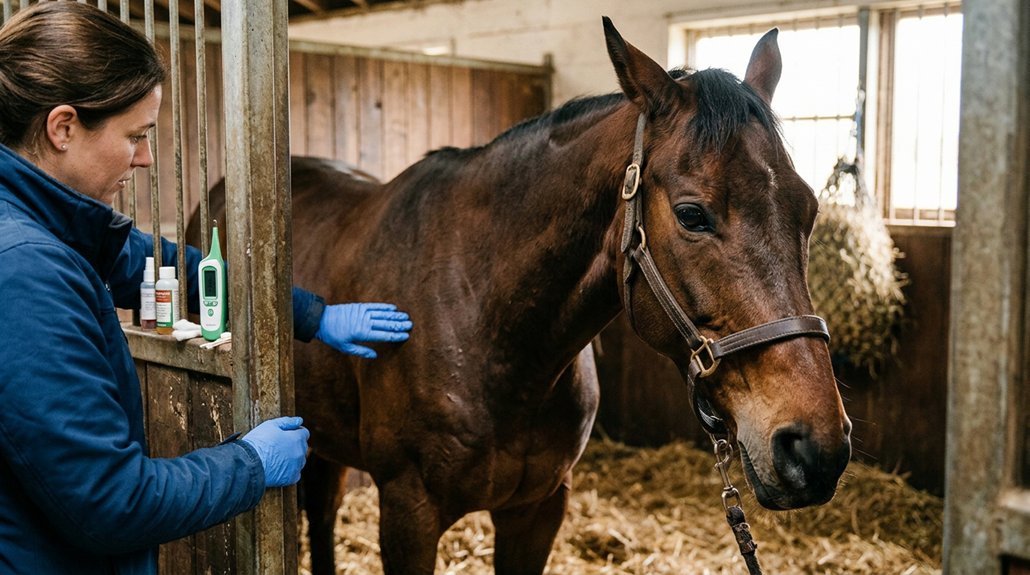
You need to quickly recognize colic in horses by observing signs like restlessness, abdominal pawing, or rolling. Causes vary from dietary imbalances and dehydration to poor dental care. If colic is suspected, immediately consult a veterinarian, remove feed, and guarantee water access. Monitor symptoms and prepare for possible medical or surgical interventions. Understanding these initial steps and preventive measures can save your horse’s life, and there’s even more valuable information to uncover.
Key Takeaways
- Horses with colic show restlessness, excessive pawing, rolling, increased heart rate, and loss of appetite.
- Key colic causes include dietary imbalances, inadequate water intake, and poor dental care.
- Consult a veterinarian immediately if colic symptoms are recognized in a horse.
- Medical treatments for colic often involve fluid therapy and pain relief.
- Prevent colic by ensuring proper diet, regular deworming, and consistent feeding schedules.
Recognizing Colic in Horses
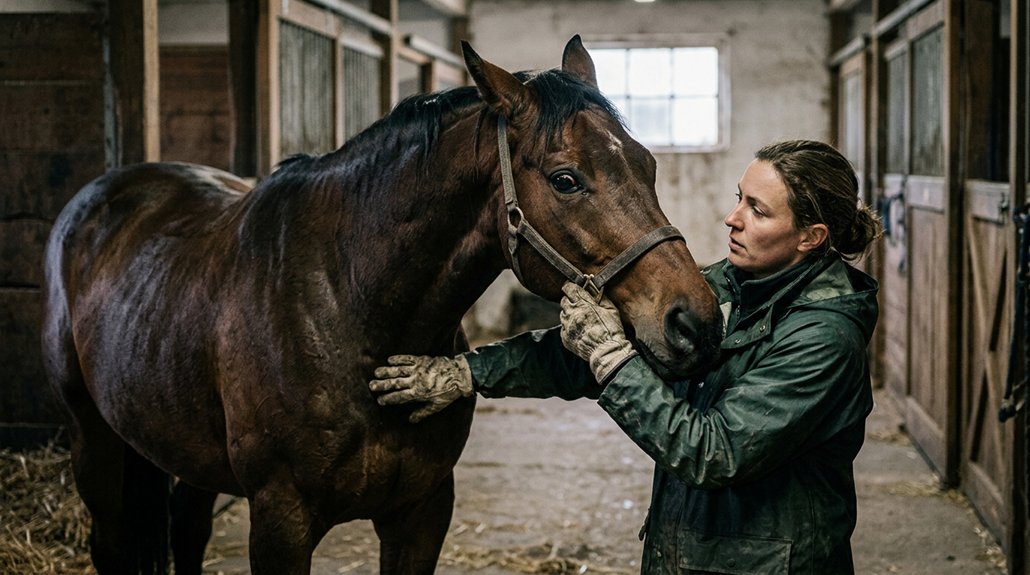
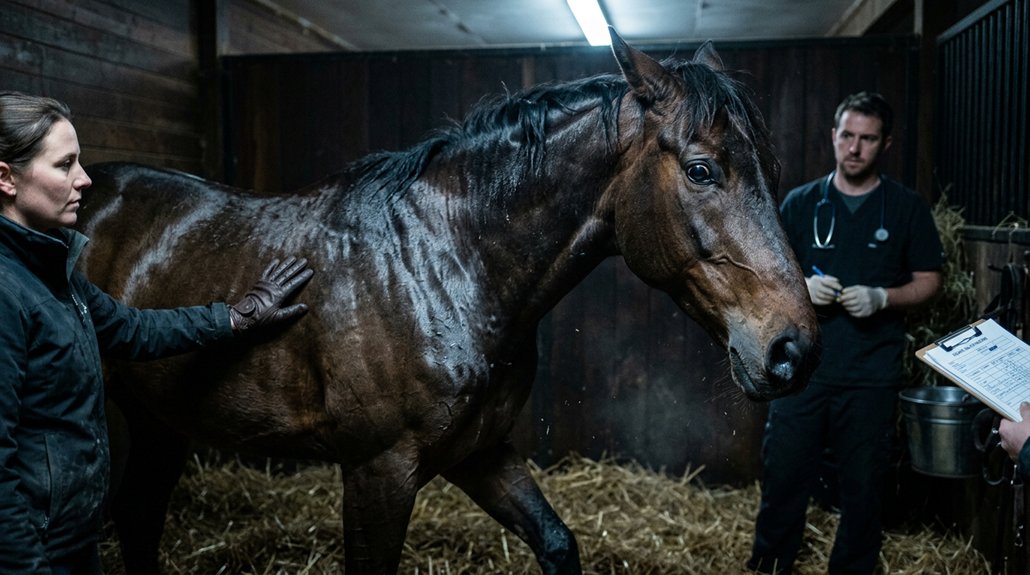
While recognizing colic in horses can be challenging, identifying key signs early is vital for effective intervention. Colic prevention hinges on vigilance in observing changes in behavior, which greatly affects equine wellness. You should monitor for restlessness, excessive pawing, or rolling, as these behaviors often signal discomfort and abdominal pain. Horses experiencing colic might show a loss of appetite, decreased water intake, or adopt unusual postures, such as lying flat or stretching. Sweating, teeth grinding, and an elevated heart rate further indicate distress. Swift action is essential—consulting a veterinarian at the onset of symptoms guarantees timely intervention. This vigilance is key to maintaining equine wellness by preventing potential complications associated with colic episodes.
Spotting Colic Symptoms
When you’re monitoring your horse for colic, pay attention to key behavioral indicators such as restlessness, excessive pawing, and rolling behavior, which signal discomfort. Physical symptoms like loss of appetite, reduced water intake, increased heart rate, and changes in manure consistency are essential early warning signs. Observing these indicators promptly and seeking veterinary guidance is important for preventing further complications and ensuring effective treatment.
Key Behavioral Indicators
One of the primary indicators of colic in horses is a noticeable change in their behavior. Misconceptions about colic often lead to overlooking critical behavioral changes. Horses may become restless, frequently turning to inspect their abdomen, or shifting weight uncomfortably. They might excessively paw the ground, roll, or attempt to lie down oddly. Watch for distress behaviors, like kicking or biting their flank, and a marked disinterest in food and water. A withdrawn demeanor or refusal to lie down can also signal potential colic. Increased heart rate and sweating are integral indicators, hinting at severity. Recognizing these changes early can differentiate a serious colic episode from simple discomfort, allowing prompt intervention and reducing potential complications.
Physical Symptoms Overview
Spotting physical symptoms of colic in horses is essential for timely intervention. Recognizing key signs such as excessive pawing, rolling, or abdominal focus like kicking can indicate abdominal discomfort. You might observe distress signs, including sweating, increased heart rate, or restlessness, which importantly signal possible colic episodes. A reduction in appetite or refusal to eat often accompanies pain, making immediate assessment vital. Additionally, check for abdominal distension or odd postures such as lying flat or stretching. Behavioral shifts, such as unusual vocalizations or lethargy, may also hint at colic and require rapid veterinary evaluation. Understanding these indicators helps dispel colic myths and supports effective preventive measures, ensuring you’re proactive in safeguarding your horse’s health.
Early Warning Signs
Recognizing early warning signs of colic in horses can greatly impact the outcome of this serious condition. Restlessness, a primary indicator, often manifests as a horse turning to look at its abdomen or repeatedly lying down and getting up. Watch for mild discomfort signals like pawing at the ground or kicking at the belly. Elevated heart rates above 45 beats per minute, sweating, and changes in respiration denote stress factors requiring immediate attention. A sudden loss of appetite or unwillingness to drink water can suggest abdominal pain. Pay attention to peculiar postures such as lying flat, stretching, or sitting, which indicate severe discomfort. These signs collectively warrant quick veterinary assessment to prevent further complications.
Immediate Steps When Colic Strikes
When colic strikes your horse, it’s crucial to act swiftly and methodically. Being prepared for such emergencies enhances colic prevention and guarantees you’re ready to tackle the issue head-on. Immediately consult a veterinarian for guidance and do not administer any medications without their advice. Allow your horse to lie down comfortably and refrain from unnecessary walking, which might worsen the condition. Remove all feed but keep fresh water available. Gather important information regarding the horse’s behavior and recent changes for the veterinarian.
| Action | Reason | Notes |
|---|---|---|
| Consult veterinarian | Accurate assessment | Support diagnostics |
| Allow comfortable rest | Eases discomfort | Walk only if instructed |
| Remove all feed | Prevents further irritation | Keep clean, fresh water available |
| Detailed information | Aids in diagnosis | Include behavior, diet, and routine changes |
Understanding Why Colic Happens
Though colic manifests in various forms, understanding its root causes is essential for prevention and management. Intestinal health can be compromised by dietary imbalances such as high grain and low forage. Poor dental care contributes to inadequate chewing, leading to maldigestion. Sudden changes in feeding routines and hydration importance can’t be overstressed; inadequate water intake is a known colic trigger. Stress factors, including transportation or intense training, impact gastrointestinal motility, and environmental influences like prolonged stall confinement exacerbate these effects. Fermentation issues, often resulting from dietary strategies or stress, can cause excessive gas or spasmodic contractions in the intestines. By understanding these elements, you can devise effective preventive strategies that focus on maintaining intestinal health and minimizing colic risks.
Types of Colic: Gas, Spasmodic, and More
Understanding the various types of colic is essential for effective management and treatment, as each type presents distinct challenges and requires specific approaches. Gas colic results from excessive gas due to dietary changes. Spasmodic colic involves irregular gut contractions triggered by stress or diet changes. Sand colic occurs from sand accumulation in the intestines, often while grazing. Impaction colic involves blockage from indigestible material, linked to inadequate water intake. More severe types include torsion colic, displacement colic, and strangulation colic, all involving intestinal misalignment or twisting requiring immediate veterinary care.
| Type of Colic | Key Features |
|---|---|
| Gas Colic | Excessive gas, dietary changes |
| Spasmodic Colic | Irregular gut contractions, stress |
| Sand Colic | Sand accumulation, grazing |
| Impaction Colic | Blockage, inadequate water intake |
| Torsion/Displacement/Strangulation Colic | Intestinal twisting, requires urgent intervention |
How the Vet Diagnoses Colic
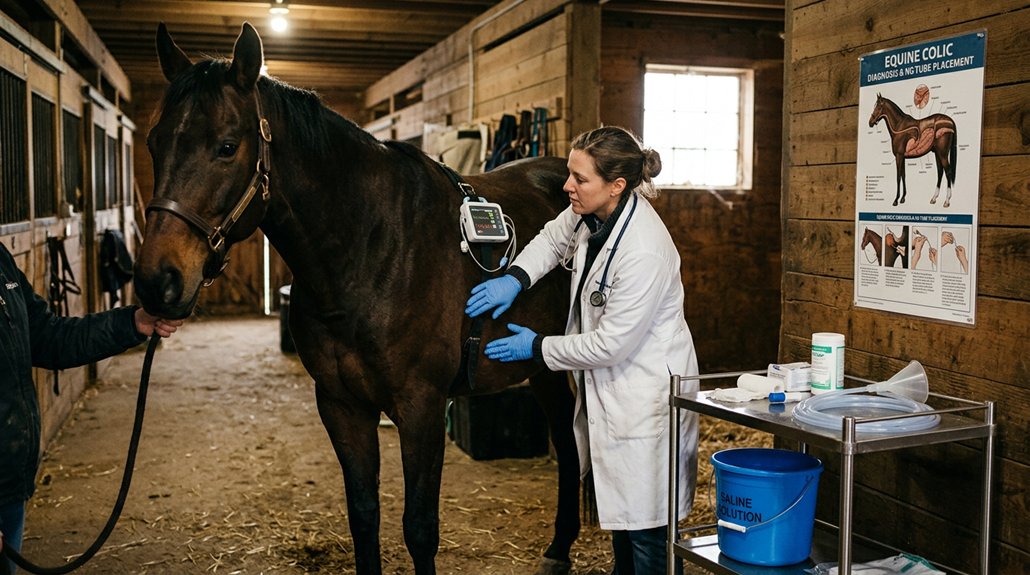
Diagnosing colic in horses is a detailed process requiring precise veterinary expertise to identify the root cause of discomfort and plan appropriate treatment. Initially, a rectal examination is performed to assess gastrointestinal abnormalities and pinpoint pain sources. Veterinarians utilize ultrasound scans to visualize internal organs, detecting obstructions, fluid buildup, or contributing issues. Blood work is essential for evaluating overall health, revealing dehydration, electrolyte imbalances, and potential underlying conditions. In certain cases, tube insertion into the horse’s stomach is executed to relieve pressure and collect fluid samples, assisting in distinguishing colic types. These diagnostic tools collectively empower veterinarians to determine whether surgical intervention is necessary or if medical treatment alone will suffice, ensuring a tailored approach to resolving colic-related issues.
Medical and Surgical Treatments for Colic
When managing equine colic, you’ll need to understand both medical and surgical treatment options. Medical interventions typically include fluids and pain relief medications, while surgical procedures become essential for severe cases like strangulations or torsions. Post-treatment care focuses on dietary adjustments and close monitoring to guarantee successful recovery and prevent future episodes.
Medical Intervention Options
Although veterinary intervention is essential for managing colic in horses, the approach can range from medical to surgical treatments depending on the underlying cause. Initial steps often involve administering pain relief using colic medications like NSAIDs, which alleviate discomfort. Fluid therapy plays a significant role by rehydrating the horse and facilitating the passage of gastrointestinal impactions. Surgical intervention becomes critical when colic is due to conditions, such as strangulating lesions, that impede blood flow and require urgent surgical correction. A thorough veterinary evaluation, including diagnostic procedures like rectal examinations and ultrasound scans, is key to identifying the need for surgical intervention. Since the severity of clinical signs doesn’t always reflect the underlying issue, early intervention minimizes complications and improves recovery outcomes.
Surgical Procedures Explained
While medical treatments can provide relief for many cases of colic, surgical procedures become necessary when underlying conditions like strangulating lesions impede blood flow and threaten the horse’s life. Common surgeries include enterotomy for obstruction removal, colopexy to stabilize the colon, and resection and anastomosis to excise damaged intestine sections. These procedures often use standing techniques, minimizing anesthesia-related surgical risks and enhancing recovery strategies. Pre-surgical evaluation uses imaging tools like ultrasound and rectal exams to accurately assess colic severity. Post-operative care is vital; it involves monitoring and gradually resuming feeding and activity to guarantee proper healing and avert colic recurrence. Understanding these procedures helps you make informed decisions for your horse’s health and well-being.
Post-Treatment Care Essentials
To guarantee effective recovery after colic treatment, it’s vital to adhere to specific post-treatment care protocols that address both medical and surgical interventions. Start by following nutrition guidelines, making sure of a gradual reintroduction of food. Begin with hay, then introduce small grain portions to avoid digestive upset. For surgical cases, keep the incision clean and monitor for infection. Administer any prescribed pain relief or anti-inflammatories as directed to manage discomfort.
Recovery monitoring is essential; watch for signs of colic recurrence, observe behavior, and maintain proper hydration. Always have fresh, clean water available, and consider electrolytes if advised. Regular veterinary follow-ups are important to assess recovery progress, adjust care plans, and detect complications early, guaranteeing your horse regains peak health.
Diet and Care Tips to Prevent Colic
Successfully preventing colic in horses involves keen attention to diet and care strategies. Forage management is essential; make certain your horse consumes 1-2% of its body weight in forage daily to promote digestion and mitigate colic risks. Employ gradual diet adjustments over 7-10 days to maintain gut microbial balance and avoid digestive disturbances. Hydration strategies are important: provide unlimited access to clean, fresh water, aiming for 5-10 gallons daily per horse to prevent dehydration-related colic. Feeding consistency is paramount; stick to a regular schedule without skipping meals to uphold digestive stability and minimize colic episodes. Regular deworming and parasite management, including fecal analysis, is necessary to control parasite loads that contribute to colic, further supporting your horse’s health.
Stress: Managing and Mitigating Its Impact on Colic
To mitigate stress-related colic in horses, focus on reducing environmental stressors by maintaining consistent routines and minimizing sudden changes. Promote regular socialization through controlled interactions with other horses to enhance mental well-being and stability. Consistent social environments not only decrease anxiety but also contribute positively to overall digestive health.
Reducing Environmental Stressors
When addressing colic risks in horses, it’s vital to recognize the impact of environmental stressors on their digestive health. Strategic management of these stressors through environmental enrichment and routine management is essential. By providing a calm, consistent environment, you can mitigate anxiety and reduce colic risks. Here’s how you can achieve this:
- Consistent Environment: Stick to a routine to minimize sudden changes in your horse’s daily activities.
- Environmental Enrichment: Offer stimulating environments through varied turnout areas to engage your horse physically and mentally.
- Careful Exposure: Manage introductions to known stressors like travel and training, gradually increasing exposure.
- Monitor Behavior: Regularly observe for any behavioral changes that signal stress to intervene early.
Incorporating these methods can greatly diminish colic episodes.
Promoting Consistent Socialization
Although environmental stressors greatly impact a horse’s digestive health, fostering consistent socialization plays a vital role in managing and mitigating stress that contributes to colic. Horses naturally thrive on social interactions, and those facing isolation are at an increased risk of stress-related colic. Encouraging group turnout not only facilitates companionship benefits but also reduces anxiety by promoting natural behaviors like grazing and movement, both essential for digestive health. Regular socialization guarantees stress reduction, creating a calmer environment that lessens colic risk, especially for horses with a history of colic. Monitoring and addressing changes in social dynamics can help you proactively identify stressors, assuring your horse remains healthy and content. Consistent companionship is key to their well-being and colic prevention.
Preparing for Colic Emergencies: Essential Tips for Horse Owners
For horse owners, understanding how to effectively prepare for colic emergencies is essential to safeguarding your horse’s health. Start by verifying that emergency contacts, including your veterinarian’s phone number, are easily accessible. Financial planning is critical; set aside funds for potential treatments since costs can range considerably.
- Vet Contact: Always have your veterinarian’s details readily available for immediate consultation.
- Budgeting: Plan financially for colic treatments, considering the variability in treatment costs.
- Know Your Clinics: Identify the nearest animal hospital that can manage equine emergencies to facilitate quick transport.
- First Aid Preparedness: Assemble a colic-specific first aid kit with essentials like a thermometer and gauze after consulting your vet.
Regularly review your emergency plan with all relevant parties to verify smooth execution.
Frequently Asked Questions
Can a Horse Survive Colic Without a Vet?
A horse might survive colic without a vet if symptoms are mild, but it’s risky. Home remedies can fail, worsening the condition. Prioritize colic prevention through diet management and regular vet checkups for better outcomes.
What Triggers Colic in Horses?
Diet changes and stress factors are primary triggers for colic in horses. Abrupt dietary shifts disrupt gut microbiota, while stress from environmental changes can impair gut motility, both increasing colic risk. Adjust diets gradually; manage stress carefully.
What Happens if Colic Is Left Untreated in Horses?
If left untreated, colic could invite unpleasant surprises, escalating into chronic colic. You’d end up managing more than just tummy trouble, emphasizing the importance of early colic prevention to avoid costly and emotional detours.
Conclusion
In understanding colic in horses, remember that prompt recognition and action are key. Recognizing symptoms early can lead to quicker interventions and better outcomes. Notably, up to 80% of colic cases resolve without surgery, emphasizing the effectiveness of timely medical attention. Implementing preventive measures like proper diet and stress management can greatly reduce occurrences. Prepare for emergencies by having your vet’s contact information readily available and ensuring your horse receives regular check-ups, promoting overall health and wellbeing.