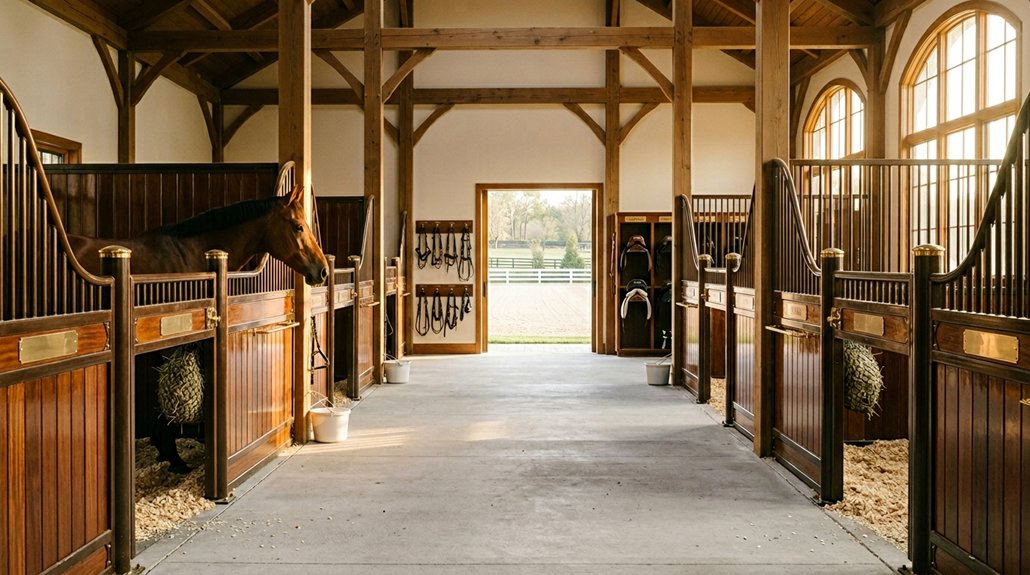
When selecting a horse facility, prioritize clean and secure maintenance, diverse services tailored to your needs, and qualified staff. Consider location, guaranteeing it’s convenient yet offers quick access to care services. Review feeding routines for consistency and nutritional adequacy. Evaluate health protocols, confirming staff have emergency training and readily available supplies. Checking these aspects guarantees a safe, supportive environment for your horse, and there’s more important information to uncover that can aid in your decision.
Key Takeaways
- Ensure the facility offers a range of services, including full-service, self-care, and specialized care options for horse care.
- Verify the facility maintains clean stalls, secure fencing, and clutter-free pastures to ensure high maintenance standards.
- Check for consistent feeding routines and adherence to individual nutritional needs tailored for each horse.
- Look for clear health protocols, structured healthcare schedules, and emergency preparedness to ensure horse safety.
- Assess the qualifications and availability of staff to ensure knowledgeable and effective horse care and communication.
How to Choose the Right Boarding Facility
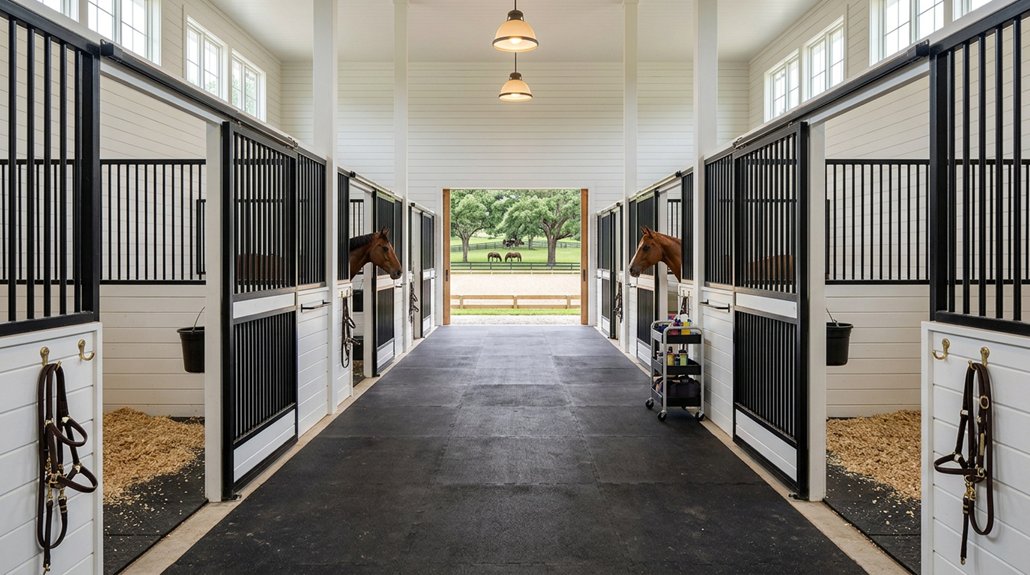
Choosing the right boarding facility for your horse requires careful consideration to guarantee their well-being and your peace of mind. To enhance your boarding experience, begin by comparing the range of services offered. Whether you require full-service, self-care, or specialized care, match these options to your experience level and time commitment. Conduct a facility comparison by inspecting maintenance standards—clean stalls, secure fencing, and clutter-free pastures indicate a commitment to safety. Review feeding routines and verify that health protocols, including emergency procedures, are robust and clear. Consider staff qualifications and regular communication practices to stay updated on your horse’s care. Thoroughly visiting and evaluating barns, paddocks, and arenas will ensure you’re making an informed decision.
Exploring Different Types of Boarding Facilities
When exploring different types of boarding facilities, you’ll want to carefully evaluate the level of care responsibilities you’re willing to undertake, as each facility type offers varying degrees of involvement. Next, assess the specific offerings of each facility, including services like feeding, health checks, or specialized care, to guarantee they align with your needs. Finally, consider the cost factors associated with each option, as prices can vary considerably based on the range of services and amenities provided.
Evaluating Care Responsibilities
Guiding through the diverse landscape of horse boarding facilities requires an understanding of the various care responsibilities that accompany each option. The care dynamics and owner involvement can vary greatly:
- Full Service Boarding: This option provides extensive care from experienced staff, managing daily tasks like feeding and stall cleaning, perfect for busy or novice owners.
- Self-Care Boarding: Ideal for experienced individuals seeking flexibility, it requires owners to handle all aspects of care, offering control but demanding significant time and knowledge.
- Partial Care Boarding: A hybrid approach where responsibilities are shared, balancing convenience and control, often at a lower cost.
- Specialized Facilities: These cater to unique needs like training or rehabilitation, offering tailored services not found in standard options.
Understanding these care responsibilities is vital for finding the right fit.
Assessing Facility Offerings
Maneuvering the diverse options of horse boarding facilities requires a clear assessment of what each has to offer to match your specific needs. Full-service facilities provide extensive boarding facility amenities, featuring expert staff handling feeding, cleaning, and health checks, perfect for busy or novice owners. Alternatively, self-care boarding gives you complete control but demands time and knowledge. Partial care offers a middle ground, facilitating learning from qualified staff while still engaging in your horse’s care. For unique needs, specialized facilities guarantee tailored care. Open barn arrangements enhance social interactions, though they may present social challenges.
| Type of Boarding | Key Features |
|---|---|
| Full-Service | Expert staff, thorough care |
| Self-Care | Owner-managed, flexible |
| Partial Care | Balanced service, affordability |
Determining Cost Factors
While selecting a horse boarding facility, determining cost is an essential factor that varies markedly based on the type of service you choose. It’s important to align services with your budget constraints through facility comparisons. Here’s a breakdown to guide your decision:
- Full-Service Boarding: Offers thorough care, with prices ranging from $500 to over $1,000 monthly depending on location and amenities.
- Self-Care Boarding: More affordable, costing between $150 to $400 monthly, but requires extensive personal involvement in horse care.
- Partial Care Boarding: Provides a balanced approach, moderately priced from $300 to $700 per month, ideal for shared responsibilities.
- Specialized Facilities: High-cost services tailored for specific needs, often exceeding $1,200 per month.
Consider the location’s influence; urban facilities generally come at a premium.
Location and Accessibility: What Matters Most?
When considering a horse facility, proximity to essential services such as equine veterinarians and farriers is vital to guarantee timely care and emergencies. You’ll also want to think about the ease of commute from your home or workplace; minimizing travel time can greatly enhance your ability to maintain consistent routines. Don’t forget to factor in traffic patterns and use tools like Google Maps to efficiently evaluate potential locations and verify they’re accessible to your daily life.
Proximity to Essential Services
Selecting a horse facility located near vital services isn’t just about convenience; it’s about safeguarding the well-being of both you and your horse. Service availability and local amenities play an essential role. Here’s what you should look for:
- Veterinarians and Farrier Services: Proximity matters for urgent care and routine maintenance, assuring your horse’s health isn’t compromised.
- Riding Areas and Trails: Access to nearby trails or training arenas enhances your riding experience and offers your horse the exercise it needs.
- Feed Stores and Supply Vendors: Being close to these resources simplifies daily management tasks and reduces your time on errands.
- Emergency Access: Verify the facility is situated in a location that allows quick entry and exit, especially during emergencies.
Ease of Commute
Choosing a horse facility isn’t solely about the amenities provided; the ease of commute significantly impacts your daily routine and your horse’s well-being. Assess the facility’s proximity to your home or work to guarantee manageable commute options, ideally within a 30-minute travel time for daily visits. Access to local riding trails and arenas can optimize your horse’s training time. Confirm veterinarians and farrier services are within a 15-30 minute drive for emergencies. Consider road conditions and traffic patterns to minimize stress during peak hours. Utilize maps and tools to identify accessible routes. Prioritize a location offering convenience for everyday visits and efficient access to essential services.
| Consideration | Ideal Travel Time |
|---|---|
| Daily Visits | Within 30-minute commute |
| Emergencies | 15-30 minute drive |
| Training Access | Nearby local facilities |
| Road Conditions | Reliable, low-traffic |
Checking Facility Safety and Conditions
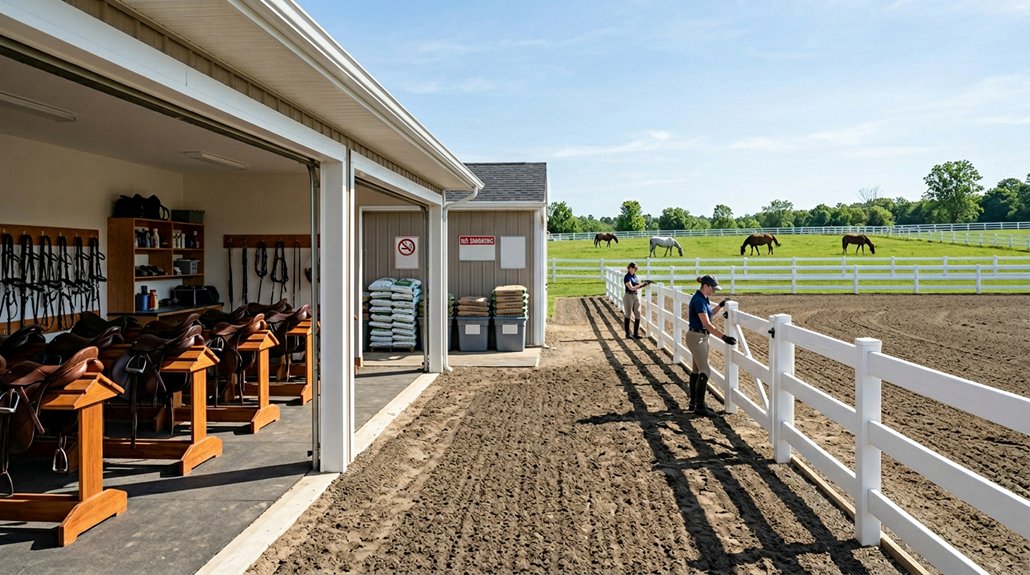
Here’s what to look for:
- Stall Cleanliness: Guarantee stalls are clean, dry, and well-bedded with smooth walls and safe flooring to avoid splinters or trips.
- Pasture Safety: Inspect pastures for cleanliness, checking for clutter, toxic plants, and muddy conditions.
- Drainage Systems: Verify proper drainage to manage water flow, preventing standing water and hoof problems.
- Feed Storage: Confirm feed and hay are stored in rodent-proof containers.
Exploring Feeding Routines and Nutrition Protocols
A good feeding routine forms the backbone of a horse facility, guaranteeing the well-being and health of its equine residents. Structured feeding schedules should provide consistent meal times, catering to each horse’s unique nutritional needs. You’ll want to make certain free-choice access to high-quality forage, allowing horses to engage in their natural grazing habits, vital for their digestive health and nutritional balance. Additionally, evaluate the types of grain and supplements offered, tailoring them for any horses with specific dietary restrictions. Detailed documentation, such as feeding charts, is essential for tracking individual diets and medications. Regular assessments of feeding practices guarantee uninterrupted supply and high feed quality. This attention to detail prevents health issues and maintains the nutritional integrity of the facility.
How Ready Is Your Facility for Health Concerns and Emergencies?
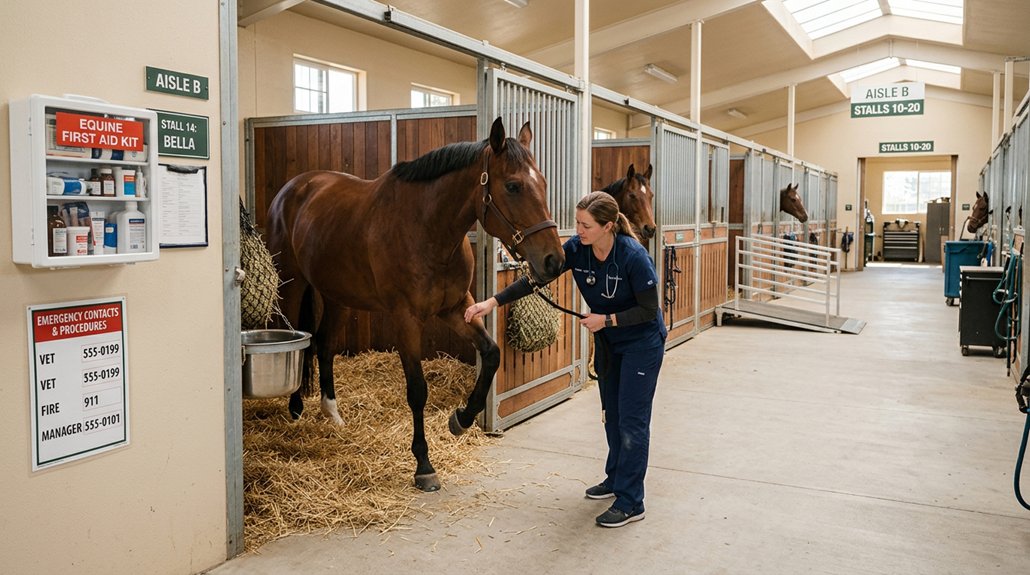
How prepared is your facility when it comes to addressing health concerns and emergencies? To guarantee the health and safety of your horses, it’s crucial to have thorough health protocols and strong emergency readiness. Here’s a checklist to evaluate your facility:
Evaluate your facility’s readiness for equine health emergencies with strong protocols and preparedness.
- Healthcare Protocols: Confirm structured schedules for vaccinations and deworming are followed rigorously.
- Emergency Procedures: Make certain you have quick access to veterinarians’ contacts and a clear notification protocol for owners in crises.
- Knowledgeable Staff: Having trained personnel available 24/7 ensures immediate response to any health issues.
- Emergency Supplies: Regularly stock first aid kits and essential medications to address emergencies promptly.
Implementing these elements will greatly minimize risks and guarantee a rapid, efficient response during any health-related events.
Frequently Asked Questions
What Is the 1/2/3 Rule in Horses?
The 1/2/3 rule in horse care suggests turnout should be 1 to 3 hours per day, varying per individual needs and facility capabilities. It encourages natural behaviors and is essential in selecting facility features for healthy horses.
What to Look for in a Good Horse Boarding Facility?
You’ll want to find a place with excellent boarding amenities and stringent facility safety measures. Check for well-maintained grounds, experienced staff, and robust health protocols to guarantee your horse’s well-being and your peace of mind.
What Is the 20% Rule in Horse Riding?
The 20% rule in horse riding is about focusing on key training techniques that maximize results with limited effort. Coincidentally, improving these specific skills also boosts rider stamina, ensuring efficient progress for both you and your horse.
What Are the 3 F’s for Horses?
The 3 F’s for horses are Feed, Fit, and Fun. You’d want well-planned feeding schedules, tailored exercise routines, and stimulating activities for your horse to guarantee its physical fitness, mental happiness, and overall well-being.
Conclusion
When choosing a horse facility, you’ll find that every detail matters. The types of boarding facilities, their location, and accessibility all play essential roles in your decision. Safety and the condition of the facilities can’t be overlooked, as they impact your horse’s well-being. Delving into feeding routines guarantees proper nutrition, while emergency readiness isn’t just a theory—it’s a necessity. Being thorough and detail-oriented in your selection process will secure a harmonious and healthy home for your horse.