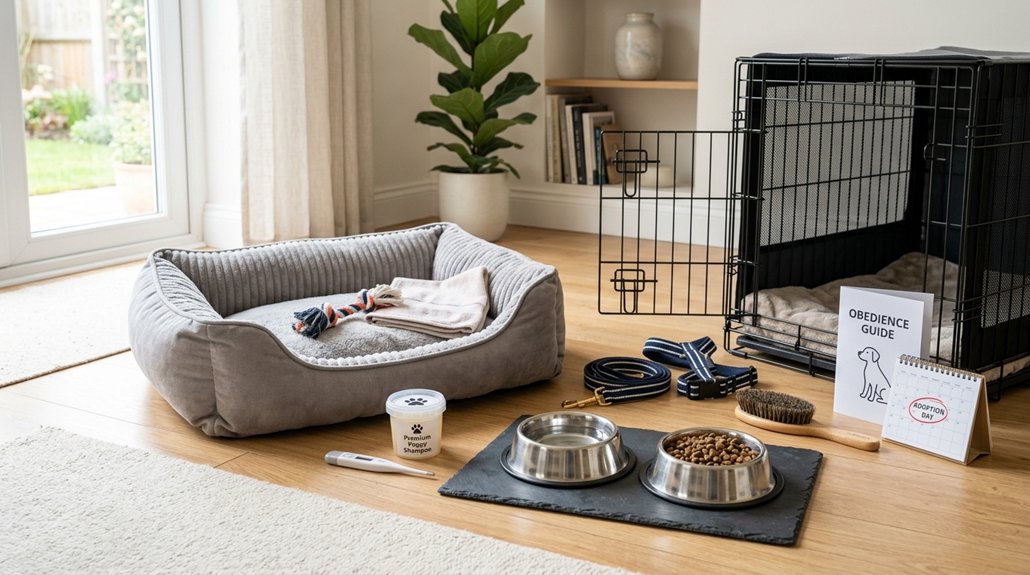
When welcoming your first dog, you’ll need essential supplies for their well-being. Start with quality dog food and suitable bowls, and invest in a comfy bed and size-appropriate crate. Grooming tools like brushes and nail trimmers are crucial for hygiene. Make certain you have house training aids like pee pads, and equip your pup with a safe collar, ID tags, and a reliable leash. These basics guarantee health and comfort, with further insights available for deeper understanding.
Key Takeaways
- Start with familiar dog food and gradually mix in new food to aid digestion.
- Select a suitable bed, and ensure the crate is the right size and safe.
- Use appropriate grooming tools like a curry brush or slicker brush for coat maintenance.
- Install pee pads for indoor relief and effective house training with odor control.
- Choose a breakaway collar with personalized ID tags and a fixed-length leash for safety.
Essential Food Supplies for Your New Dog
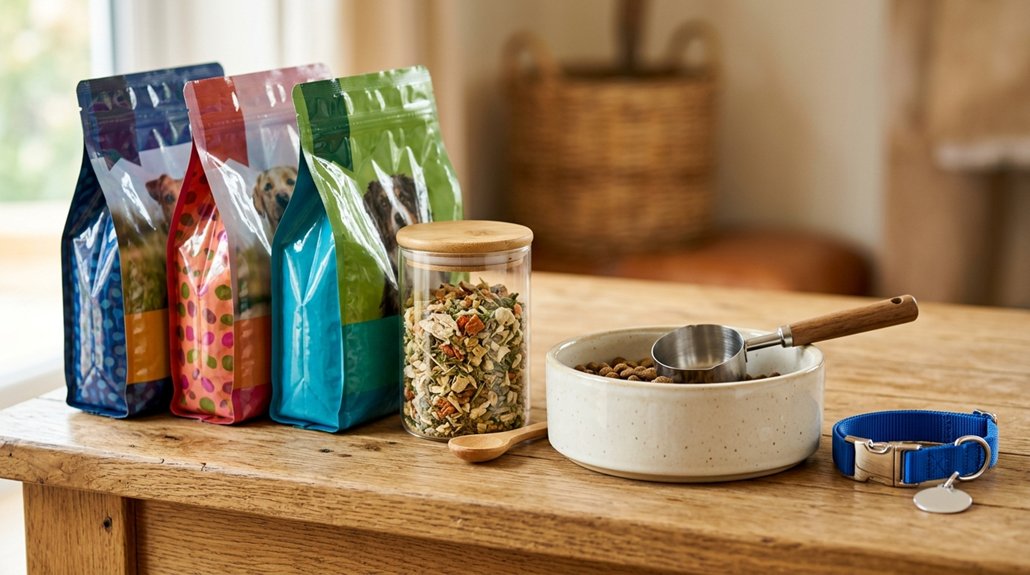
When bringing home your new dog, it’s essential to focus on important food supplies to guarantee their dietary needs are met. Begin with the brand they’re familiar with to ease their digestive system into this new chapter through effective change strategies. Mix the current brand with gradually increasing amounts of any new food over several days. Utilize high-quality food and water bowls, preferably stainless steel or ceramic, for durability and hygiene. If your dog eats too quickly, a slow feeder or puzzle bowl can promote healthier eating habits. During this change period, it’s important to perform regular dietary monitoring. Observe changes closely and consult a veterinarian to address any concerns. Incorporate low-calorie treats for training, rewarding good behavior without overloading calories.
Selecting the Right Bed and Crate: Comfort and Safety
Selecting the right bed and crate for your dog is essential for ensuring their comfort and safety. Begin by choosing a bed that caters to your dog’s needs, such as orthopedics for seniors or cushioning for extra support. Make sure the crate is the right size, includes safety features, and has added comforts, like a kennel pad or blanket, while regularly inspecting both for wear and tear.
Choosing the Ideal Size
How do you guarantee that both comfort and safety are prioritized when choosing the ideal bed and crate size for your dog? First, evaluate your dog’s current size and weight, and anticipate dog growth to assure long-term suitability. The bed should allow ample space for your dog to stretch comfortably and contemplate orthopedic options for senior dogs. When it comes to crate change, select a crate with a sturdy, escape-resistant design. The interior must be spacious enough for your dog to stand, turn, and lie down. Regular assessment is vital as your dog grows or their needs evolve.
| Aspect | Important Feature | Reason to Keep in Mind |
|---|---|---|
| Bed Size | Orthopedic Support | Essential for older dogs |
| Crate Design | Escape-Resistant | Safety during crate change |
| Regular Check | Adjust for Dog Growth | Assures continuous comfort and safety |
Ensuring Safety Features
Although selecting the right bed and crate might seem straightforward, integrating essential safety features elevates both comfort and security for your dog. Opt for orthopedic or heated bed material options for senior dogs to support joint health and warmth. Crate anxiety solutions include providing a cozy kennel pad or blankets to create a soothing environment that helps mitigate stress during acclimation. It’s vital that crates are spacious enough for your dog to stand, turn, and lie comfortably without restraint. Make certain crates are constructed from durable materials to withstand chewing and escape efforts.
- Regularly inspect collars and harnesses to prevent choking hazards during crate use.
- Gradually introduce your dog to new spaces, using treats to foster positive associations.
- Make certain all materials are free from harmful chemicals.
Enhancing Coziness and Comfort
Transforming your dog’s living area into a sanctuary for relaxation and safety begins with careful consideration of their bed and crate. Selecting a sturdy, spacious crate is vital for creating cozy retreats, providing your dog with a secure environment where they feel safe during acclimation. A comfortable bed is equally essential; consider an orthopedic bed for seniors and a cuddly style for puppies—both promote restful sleep and support various positions. Enhance comfort by adding a kennel pad or blanket, reinforcing the crate as a positive space. Regularly inspect and adjust the bed and crate size to accommodate growth or address changing needs. Proper crate use aids house training and prevents anxiety by offering a familiar, secure space.
How Pee Pads Simplify House Training for New Owners
Embracing the challenge of house training a new dog can be overwhelming, yet integrating pee pads into the process offers substantial relief for new owners. These pads play a crucial role in potty training by providing a designated space for your pet to relieve themselves indoors, effectively reducing accidents and decreasing anxiety for both you and your dog. They’re particularly useful during inclement weather or when you’re not home.
Pee pads are designed for convenience:
- Odor control and leak-proof backing guarantee a clean environment.
- Consistent placement helps reinforce positive potty training habits.
- Monitoring usage allows you to adjust your training strategy effectively.
Ultimately, pee pads serve as an efficient tool to simplify the house training journey, guaranteeing minimal stress and mess.
Choosing a Safe Collar With Personalized ID Tag
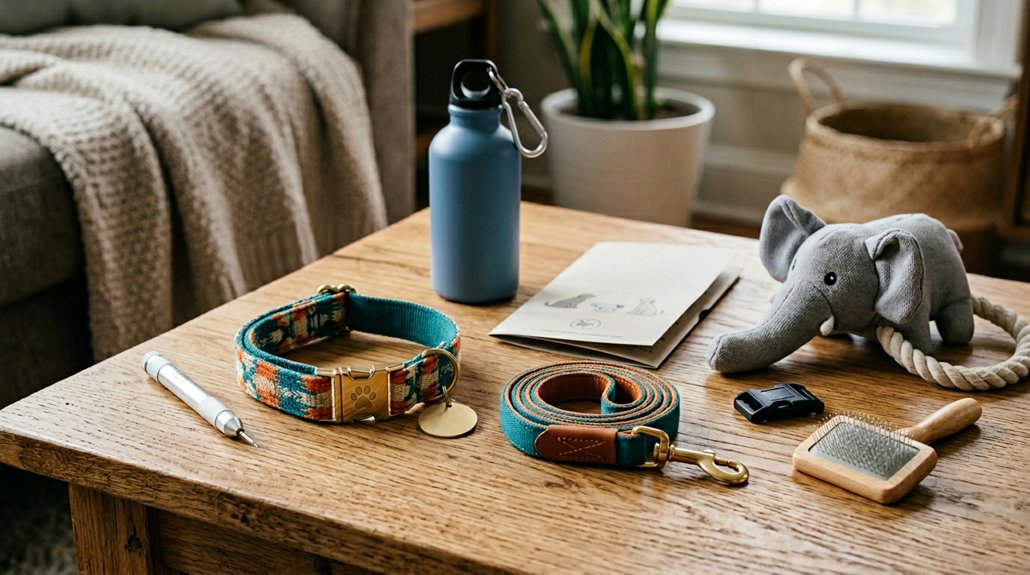
After establishing a comfortable environment with pee pads for house training, guaranteeing your dog’s safety takes precedence with a reliable collar and personalized ID tag. Explore collar types that promise safety, like the breakaway collar, which prevents choking risks for adventurous dogs. Personalized ID tags offer crucial identification options, enabling quick reunions by including your dog’s name and your contact information. Opt for reflective tags to enhance visibility in dim conditions. To guarantee effectiveness, regularly inspect the fit, confirming it comfortably allows two fingers between the collar and neck. Select durable materials such as nylon or leather, suited for frequent use and providing comfort. A well-chosen collar not only prevents loss but also helps maintain your dog’s welfare efficiently.
Picking the Right Dog Leash and Accessories
Selecting the right dog leash is essential for safe and controlled walks. It’s recommended to choose a fixed length leash, as it offers superior safety over extendable options. When evaluating leashes, consider factors like size, age, and your dog’s pulling behavior to guarantee the leash materials can withstand their energy. Comfort grips, especially dual grips, enhance handling techniques, allowing for seamless adjustments during unpredictable walks. Don’t forget essential accessories:
- Poop bags: Maintain cleanliness and show responsible pet ownership by always having these handy.
- Collars: Opt for one with a name tag for easy identification. Customization adds personal flair and visibility.
- Handling aids: Items like dual grips give you extra control, making walks pleasant and manageable especially for strong dogs.
Essential Treats and Toys: Train Your Pup Right
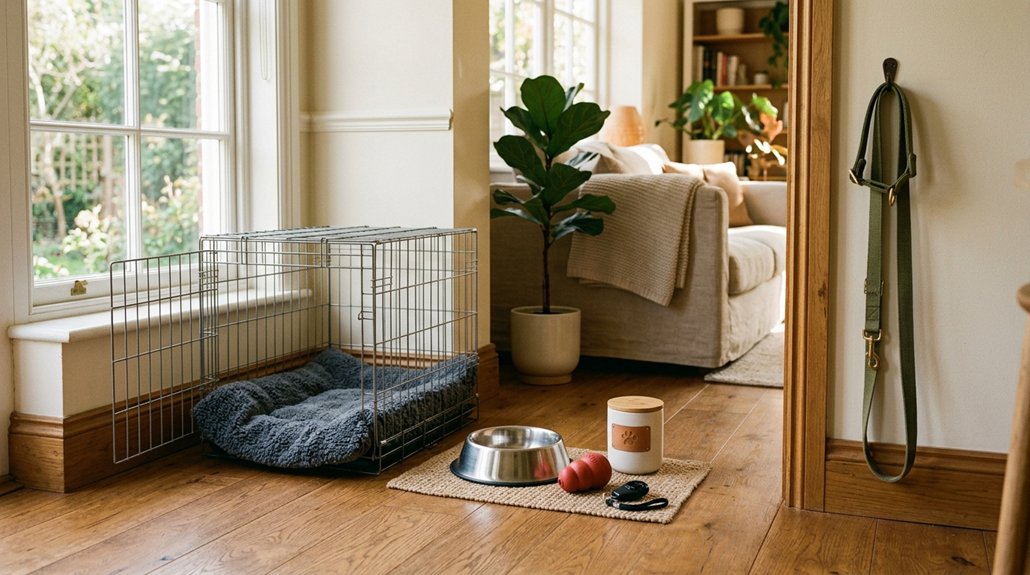
To effectively train your new dog, it’s important to incorporate a variety of treats and toys into your routine. The right treat types such as low-calorie snacks for everyday use and high-value treats like freeze-dried liver are essential. They act as motivators and reward success during training games and basic command practice. Puzzle or treat-dispensing toys are excellent for mental stimulation, reducing boredom and promoting positive behavior.
Choose healthier treats with whole food ingredients like carrots or banana slices. Monitor and maintain a balanced diet to support your puppy’s health. Consistency in training, combined with quality treats, enhances learning and socialization. By using a thoughtful mix of treats and toys, you’ll foster a well-behaved, happy companion.
Preparing Grooming and Health Supplies for a Happy Pup
Maintaining your dog’s hygiene and health is essential, which starts with assembling the right grooming tools and health supplies. Invest in quality brushes, de-shedding tools, and dental care products to keep your pet comfortable and healthy while reducing shedding and promoting oral cleanliness. Additionally, regular vet visits for vaccinations and check-ups are important in tracking your dog’s health and ensuring a long, happy life.
Essential Grooming Tools
A well-prepared arsenal of essential grooming tools is important for maintaining your dog’s health and hygiene. Proper grooming frequency depends on your dog’s coat type. For regular coat maintenance, choose a brush tailored to their specific needs—opt for the Four Paws Magic Coat Curry Brush for short-haired dogs and the Hertzko Self Cleaning Slicker Brush for long-haired breeds.
Invest in these grooming essentials:
- De-shedding Tool: The FURminator Undercoat deShedding Tool effectively reduces shedding, essential for double-coated breeds.
- Nail Trimmers: Prevent discomfort with regular trimming to avoid overgrown nails that can lead to health issues.
- Dental Products: Use dog-specific toothbrushes and toothpaste to establish a routine, preventing dental problems from an early age.
Regular grooming enhances hygiene and strengthens your bond with your dog.
Health Maintenance Essentials
Taking thorough care of your dog’s health involves several vital components that guarantee their well-being. Prioritize preventive care by establishing regular veterinary visits for vaccinations and check-ups. Dental hygiene, essential for avoiding common diseases, necessitates a toothbrush and pet-safe toothpaste. Flea and tick control, guided by veterinary advice, prevents infestations and related illnesses. Maintaining a medical history record guarantees seamless veterinary visits and effective health management. Grooming tools tailored to coat type, such as brushes and deshedding tools, are indispensable for coat health.
| Essential Item | Purpose |
|---|---|
| Toothbrush & Toothpaste | Dental hygiene and disease prevention |
| Flea & Tick Products | Protection against infestations and diseases |
| Regular Vet Visits | Preventive care and health monitoring |
| Medical History Record | Management of health and vaccination status |
Verify these essentials are part of your dog’s care regimen.
Frequently Asked Questions
What Is the 3-3-3 Rule for Dogs?
The 3-3-3 rule outlines a dog’s adjustment period: three days to decompress, three weeks to feel at home, and three months to fully settle. Expect new pet behaviors like stress initially, then gradual trust and comfort.
What Is the 7 7 7 Rule for Dogs?
Wouldn’t it be ironic if you thought love alone made a harmonious change? The 7-7-7 rule outlines socialization tips and training methods for easing your dog’s stress, fostering trust, forming bonds, revealing your pup’s true personality.
What Do I Need to Buy for My First Dog?
You’ll need puppy essentials like a collar, ID tag, and sturdy leash. Invest in training tools such as high-quality treats and durable toys. Add grooming supplies and a cozy bed to guarantee comfort and effective care for your dog.
Is $500 a Lot for a Dog?
Coincidentally, $500 seems substantial, but in cost comparison terms, it’s just a starting point for initial investments. You’ll quickly see ongoing expenses for food and vet care overshadow that amount. Prepare for regular financial commitments.
Conclusion
Bringing home your first dog is like planting a garden; each supply is an essential seed in nurturing a flourishing bond. As you gather food, a cozy bed, pee pads, a personalized collar, and more, you’re laying the groundwork for a thriving relationship rooted in care and trust. These essentials symbolize the tools needed to tend to your pup’s physical and emotional needs, ensuring your garden of companionship blossoms into a loyal, joyous, and healthy partnership.