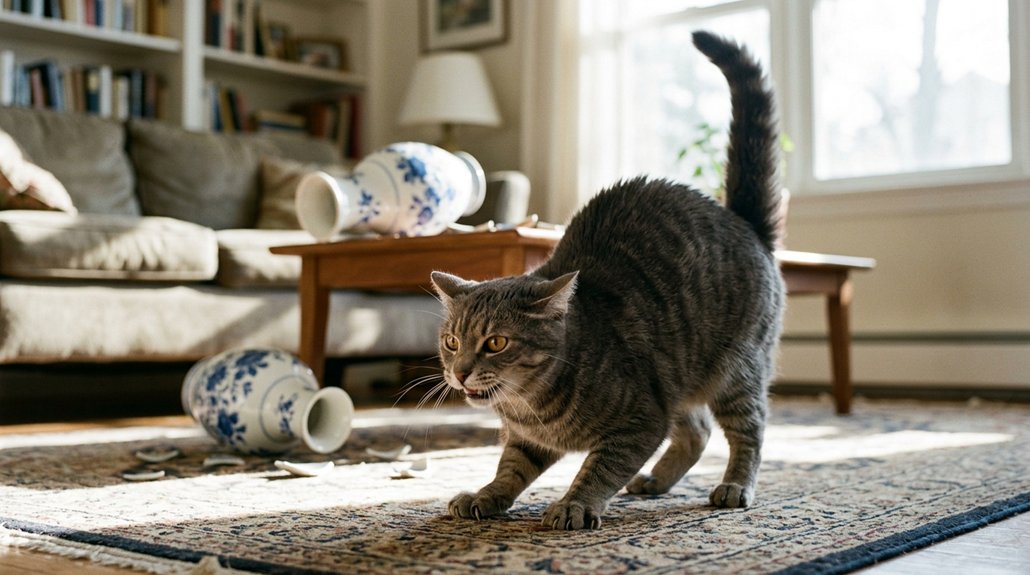
Sudden aggression in cats often results from pain-related medical conditions, such as arthritis or dental disease, and can be exacerbated by stressors like loud noises or changes in their environment. Recognizing signs like hissing and crouching helps pinpoint triggers, including territorial stress or new individuals. Identifying these factors allows you to manage aggression effectively, guaranteeing your cat’s comfort and well-being. Discovering strategic solutions guarantees a harmonious environment and better understanding between you and your furry friend.
Key Takeaways
- Sudden aggression in cats can be triggered by fear linked to past negative experiences.
- Territorial instincts may cause aggression due to perceived invasion of their space.
- Loud noises and external stressors can lead to redirected aggression.
- Pain-related medical conditions, like arthritis, frequently influence aggressive behavior.
- Environmental changes, including new pets or furniture rearrangements, provoke defensive aggression.
Uncovering Common Reasons for Aggressive Behavior in Cats
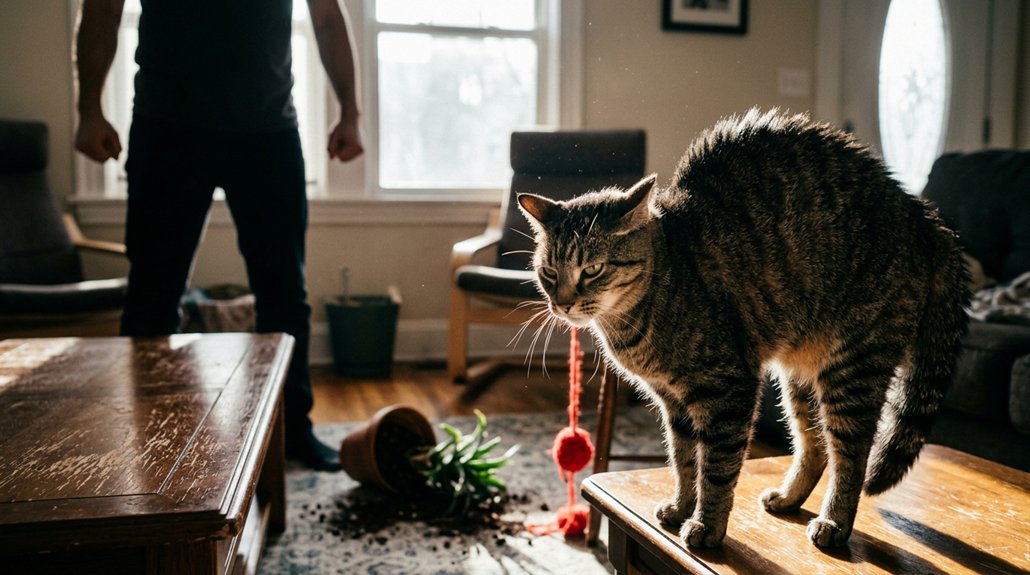
When exploring the causes of sudden aggression in cats, it is crucial to take into account various factors that can contribute to this behavior. One primary catalyst is the fear response, where anxiety stemming from past negative experiences triggers defensive feline behavior. This might include hissing or crouching when a perceived threat emerges. Another significant reason is territorial aggression. Cats sometimes demonstrate aggression if they believe their space has been invaded by new pets or unfamiliar individuals. Consequently, their behavior towards perceived intruders becomes hostile. Additionally, external stressors like loud noises or outdoor animals can provoke redirected aggression. In situations where a cat can’t directly address a stressor, they might lash out at nearby humans or other pets, showcasing their heightened stress.
Medical Conditions That May Cause Cat Aggression
While identifying environmental triggers for feline aggression is beneficial, examining the medical conditions underpinning sudden aggression is equally important. Pain-related issues like arthritis or dental disease can provoke aggressive responses during interactions, underscoring the necessity for a thorough pain assessment. Neurological disorders or hyperthyroidism may cause temperament shifts, requiring an all-encompassing veterinary evaluation to manage these conditions. Cognitive dysfunction in older cats often leads to irritability and heightened aggression, making mental health assessments essential. Additionally, infections or other medical problems could trigger aggression, demanding prompt veterinary attention to diagnose and treat underlying health concerns. Recognizing signs such as hiding or vocalization aids in discerning pain-induced aggression.
| Medical Condition | Management Strategy | Importance |
|---|---|---|
| Pain / Arthritis | Pain assessment | Understanding discomfort |
| Hyperthyroidism | Veterinary evaluation | Health-related behavior changes |
| Cognitive Decline | Mental health assessment | Addressing irritability |
How to Identify Behavioral Triggers in Cats
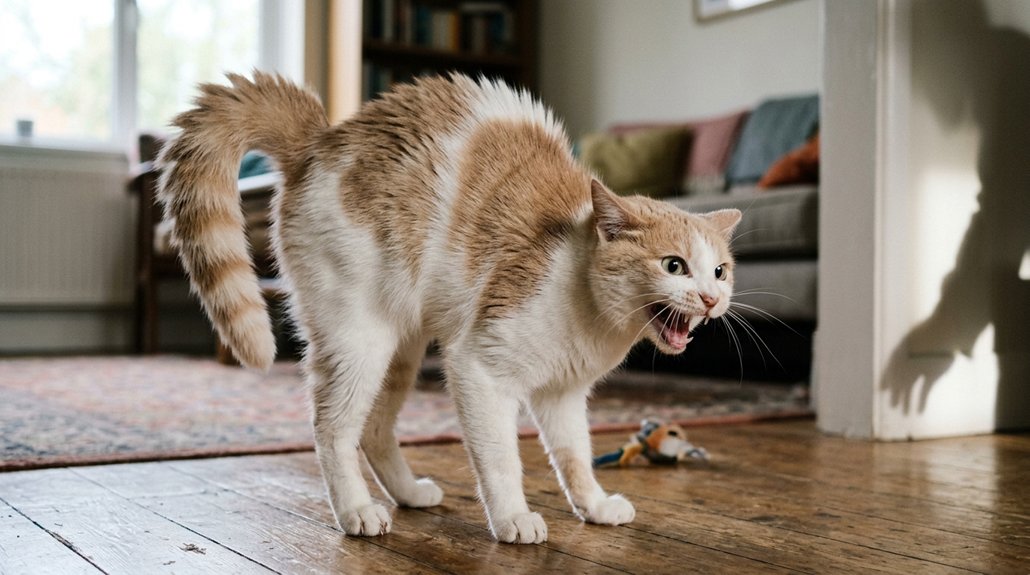
How do you pinpoint the specific behavioral triggers leading to sudden aggression in cats? Start by employing observational techniques. Watch for specific situations like unfamiliar people, loud noises, or other pets that precede this aggression. Document incidents meticulously; noting time, location, and context can reveal patterns. Recognizing body language is essential. Signs such as flattened ears, dilated pupils, or a crouched stance indicate fear or stress, often precursors to aggression. Avoid unnecessary environmental changes to minimize triggers, particularly for territorial or stress-sensitive cats. Meanwhile, consulting with a veterinarian or animal behaviorist can help you understand documented triggers, offering strategies for management. These steps foster a deeper understanding of your cat’s behavior, facilitating a calmer environment for both.
Environmental Factors That Speed Up Aggressive Reactions
Even minor environmental changes can markedly affect a cat’s behavior, accelerating aggressive responses. Territorial stress arises when cats encounter environmental triggers such as moving to a new home or rearranging furniture. These changes compel cats to re-establish their territory, often leading to aggression. The presence of new pets or individuals can instigate territorial aggression, manifesting in defensive actions such as hissing or swatting when they perceive threats. Loud noises, like thunderstorms or fireworks, may startle cats, provoking fear-induced aggression. Lack of environmental enrichment compounds frustration, resulting in play aggression towards humans or other pets. Additionally, visual stimuli, such as observing another animal through a window, can incite redirected aggression, causing the cat to lash out at those nearby rather than the actual source.
Quick Actions When Your Cat Becomes Aggressive
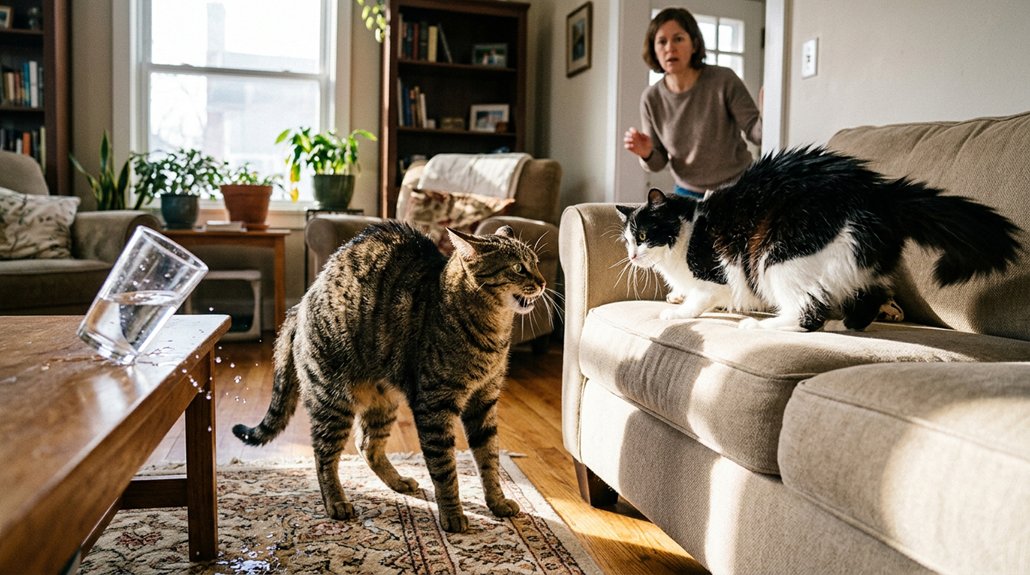
When confronted with sudden aggression in cats, it’s vital to take immediate steps to manage the situation effectively. First, stop any interaction and give your cat the space needed to calm down, as engaging can worsen aggression. Recognizing aggressive signals, like flattened ears and dilated pupils, helps you act before the behavior escalates. Documenting triggers and context offers valuable insights for future consultations. Always refrain from physical punishment; it increases fear, exacerbating aggressive behavior. Employ calm techniques to diffuse tension. If aggression persists or escalates, consulting a veterinarian or animal behaviorist is important; they can identify and address medical or behavioral issues. These precise strategies guarantee your cat’s safety and well-being, minimizing stress and enhancing your relationship.
Frequently Asked Questions
Why Is My Cat Acting so Aggressive All of a Sudden?
Your cat’s sudden aggression could stem from stress triggers or medical issues. Observing their feline body language can reveal signs of discomfort or fear. Consider recent changes and consult a vet to rule out health concerns.
How Do You Discipline a Cat for Attacking Me?
When your cat’s aggression springs like a sudden storm, don’t retaliate with fury. Effective discipline involves understanding behavior—redirect aggression towards toys and reward calmness with treats, fostering trust and reducing resistance. Seek expert guidance.
How Do You Calm Down an Aggressive Cat?
To calm an aggressive cat, use gentle handling and stress relief techniques. Provide environmental enrichment and a safe space. Implement behavioral training and positive reinforcement for calm behavior. Consulting professionals may offer further strategies tailored to your cat’s needs.
Why Is My Cat Biting Me Hard All of a Sudden?
Your cat’s biting could be due to sudden changes in its environment causing stress, underlying health issues, or even play aggression. Fear responses might also contribute to this behavior. Evaluate these factors to address the sudden aggression.
Conclusion
When dealing with sudden aggression in your cat, remember you’re piecing together a complex puzzle. Medical conditions like pain or discomfort might be the underlying culprits, while behavioral triggers and environmental changes could fuel the fire. It’s essential to watch for subtle signs and act swiftly, as a cat’s aggression can escalate like a sudden storm. Arm yourself with patience and understanding, and consult a veterinarian to navigate your feline’s behavior back to calm seas.