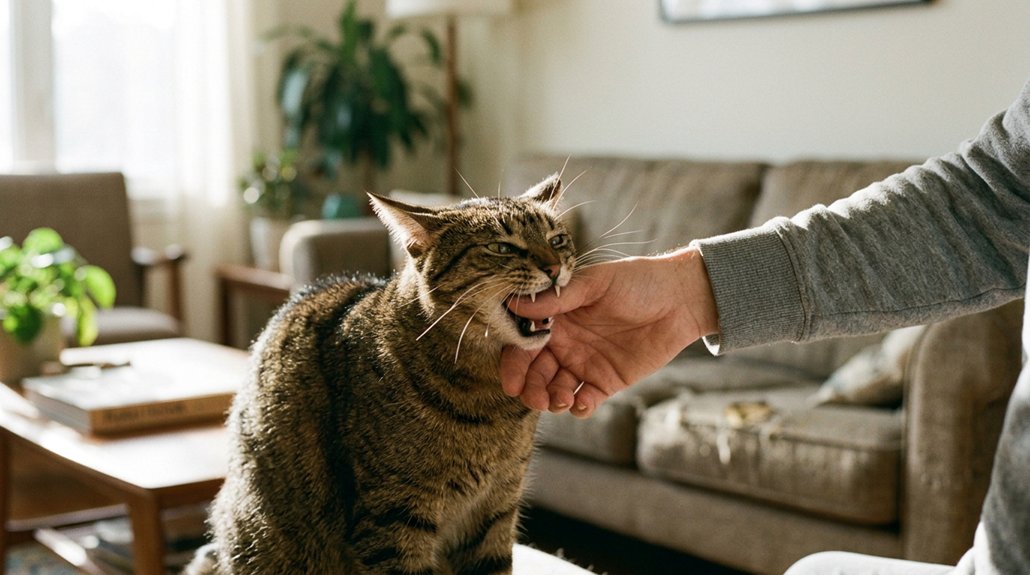
Cats bite due to fear, pain, or overstimulation. Fear-induced bites often involve defensive body language like hissing and flattened ears. Painful conditions warrant a veterinary check-up. Playful biting mimics hunting instincts. Identify signs of overstimulation, such as tail flicking or dilated pupils, to prevent biting. Redirect energy using toys and establish clear boundaries. Persistent bites may indicate health issues needing professional intervention. Continue to explore management techniques for thorough solutions.
Key Takeaways
- Cats bite due to fear, pain, or playful hunting instincts, requiring different management approaches.
- Differentiating playful from aggressive biting involves recognizing feline body language, such as tail flicking and flattened ears.
- Redirecting playful energy with interactive toys prevents human-targeted biting and fulfills hunting instincts.
- Regular play sessions and calming techniques, like pheromone diffusers, reduce stress and minimize aggressive behavior.
- Veterinary consultation is essential for sudden biting changes to rule out health issues or provide specialized behavioral advice.
Quick Actions for Cat Bites
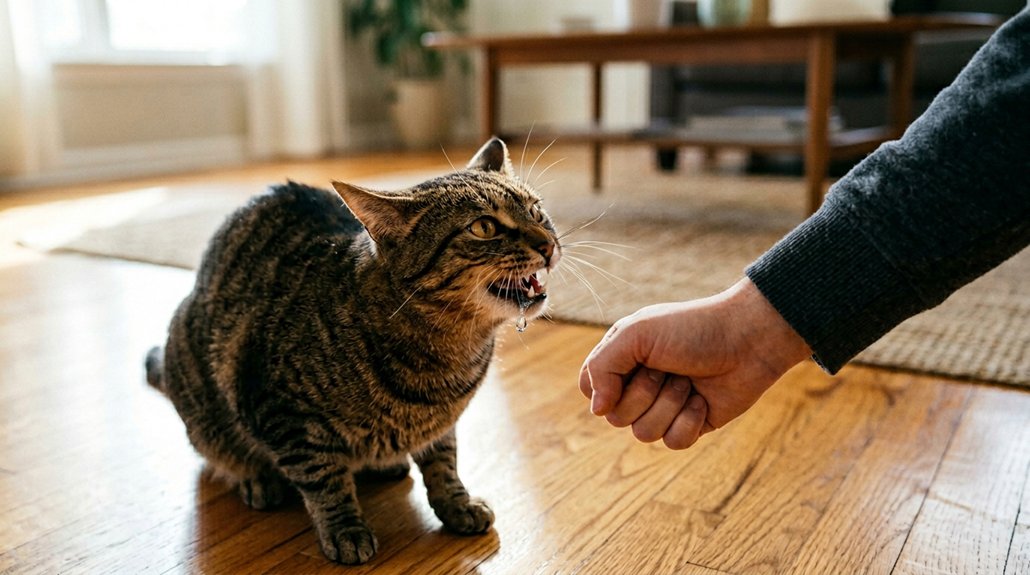
Swiftly addressing a cat bite is essential to prevent complications. Initiate bite prevention immediately after an incident by thoroughly cleansing the wound. Wash the site under warm, soapy water for a minimum of five minutes to diminish infection risk. Apply gentle pressure on the bite to staunch bleeding, then cover it with a sterile bandage to guarantee ideal wound care. Vigilantly monitor the area, watching for signs of infection like redness, swelling, or discharge, while noting any fever or chills. If symptoms arise, consult a healthcare professional who may advise antibiotics, particularly for deep injuries. Remember, punishing the cat may exacerbate behaviors and harm the relationship, so focus on preventive measures instead of responding punitively.
Understanding Fear, Pain, and Play Biting in Cats
After effectively managing a cat bite incident, it’s important to comprehend the underlying causes of such behavior, such as fear, pain, and play instincts, to foster a safer interaction environment with your feline companion. A fear response may manifest in biting as a defensive mechanism, particularly when cats feel trapped or threatened, indicated by hissing or flattened ears. Pain signals caused by health issues like arthritis or dental problems can also alter cat behavior, necessitating a veterinarian consultation if sudden aggression arises. Additionally, biting motivations during playful interaction simulate hunting instincts, with cats often pouncing lightly and quietly. Analyzing context and symptoms allows differentiation between playful and fear-induced biting, ensuring effective management strategies tailored to your cat’s specific needs.
Spotting Overstimulation Signs
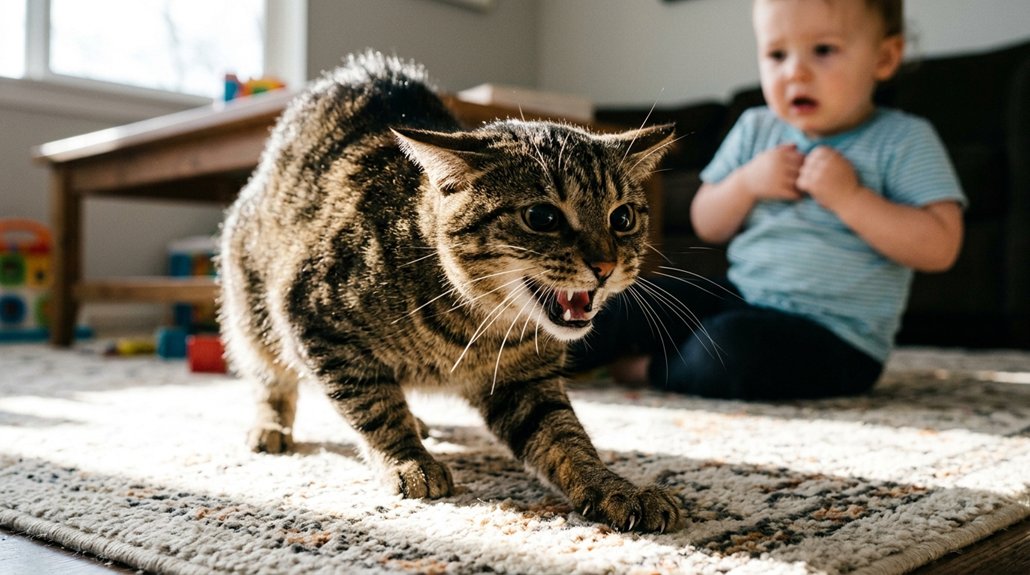
To prevent biting incidents, it’s essential to recognize stress indicators like flicking tails, flattened ears, and sudden vocalizations in cats. Understanding their body language, such as dilated pupils or a shift from purring to growling, provides insights into their emotional thresholds. Identifying triggering stimuli like overstimulation during petting allows you to respect their individual tolerance levels, ultimately minimizing the likelihood of aggressive behavior.
Recognizing Stress Indicators
Overstimulation in cats is marked by several distinct behaviors that indicate stress, including tail flicking, flattened ears, dilated pupils, and sudden withdrawal from interaction. Recognizing these stress indicators is essential in managing feline communication effectively, especially in stressful environments. Cats may exhibit frantic movements or vocalizations, signifying a need to de-escalate from intense play or petting. Understanding each cat’s tolerance levels is vital to avoid stress-induced biting.
Stress Indicators Table:
| Behavior | Signal | Action Needed |
|---|---|---|
| Tail Flicking | Overstimulation | Pause interactions |
| Flattened Ears | Stress or Fear | Reduce stimuli |
| Dilated Pupils | Anxiety or Excitement | Minimize contact |
A meticulously monitored environment helps decipher stress signs, fostering a peaceful interaction.
Understanding Body Language
Spotting signs of overstimulation in cats requires keen observation of their body language. Cat communication is paramount; subtle cues like tail flicking, flattened ears, or dilated pupils should alert you to their need for personal space. Recognizing hissing and sudden movements is essential, as these indicate potential for defensive aggression. Understanding their emotional state is achievable by closely monitoring their ears, eyes, and tail position. When a cat crouches or retreats, it’s a clear signal they’re overwhelmed, and further interaction could result in biting. Evidence-based research suggests that a firm grasp on preferred petting zones—typically the head and neck—will help mitigate overstimulation. Accurate interpretation of these signals supports harmonious interaction and diminishes biting incidents, fostering a healthier human-feline relationship.
Identifying Triggering Stimuli
Effective management of feline behavior requires identifying and understanding key triggers of overstimulation. Cats often exhibit overstimulation signs through body language, such as flicking tails, flattened ears, and dilated pupils. These signals indicate their need for space and a retreat into their comfort zones. During interactions, sudden behavioral changes like shifting from purring to biting or hissing signify that petting may have extended beyond their comfort zone. Particularly, overextending beyond preferred areas like the head and neck can prompt overstimulation. Always create a calm environment and keenly observe your cat’s unique touch preferences. By doing so, you’ll effectively reduce the risks of overstimulation and its resultant biting behavior, fostering a healthier and safer interaction.
Redirecting Playful Energy to Toys
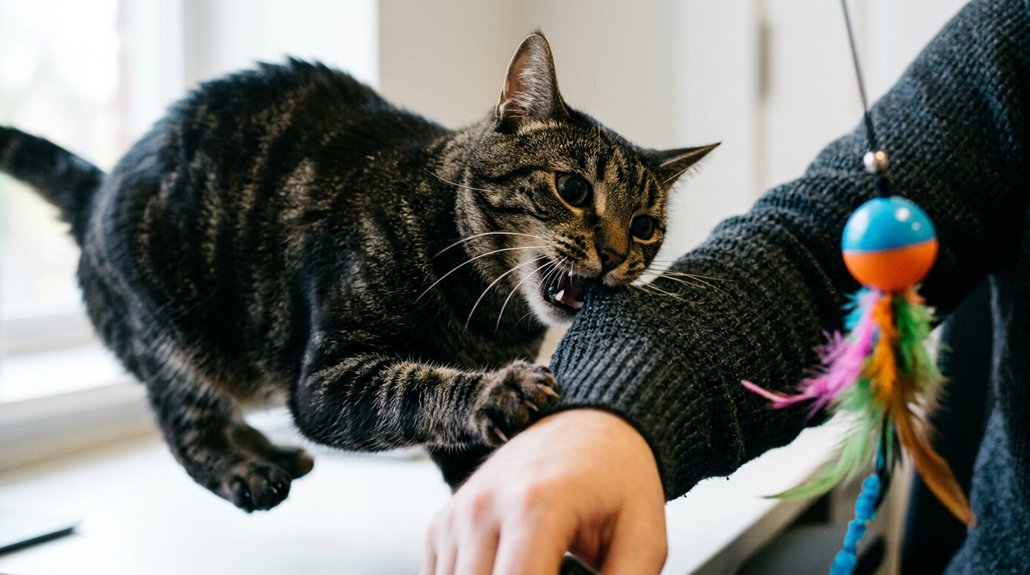
When it comes to managing your cat’s playful energy, redirecting their attention to toys is both a practical and beneficial approach. Implementing interactive toys, like feather wands and laser pointers, encourages natural predatory behavior while ensuring your cat’s attention and playful aggression are diverted away from your hands and feet. Regular play sessions, lasting 15 to 30 minutes, are essential. These sessions provide important physical and cognitive stimulation, greatly diminishing the incidence of playful biting. Integrating kicker toys—large enough for wrestling—satisfactorily channels energy, reducing the risk of human contact. Complement this with dual-play scenarios involving another feline, minimizing human-targeted biting. Rewarding your cat with treats for engaging with appropriate toys reinforces positive play dynamics, promoting healthier interaction patterns.
How to Diffuse Aggressive Biting
To effectively diffuse aggressive biting, it’s essential to recognize aggression signals like flattened ears or a flicking tail, which indicate heightened stress or agitation. By staying calm and using deliberate movements, you can employ calming techniques that prevent escalation. Prioritize gentle redirection with toys to reinforce positive behavior, and immediately pause interactions when biting occurs to establish clear boundaries.
Recognize Aggression Signals
While understanding feline aggression can be complex, recognizing key signals is essential for diffusing potential biting incidents. Aggression triggers can include sudden movements or loud noises which heighten defensive responses. Communication cues such as flattened ears, dilated pupils, and a tense tail suggest fear or aggression and indicate potential for biting if interaction persists. Slow, gentle gestures can help foster a sense of security. Adopt a calm demeanor to mitigate hostility. Provide safe retreats to alleviate confinement stress. If a biting event ensues, calmly withdraw, allowing the cat space to decompress. Observe these communication cues with precision:
| Aggression Signal | Emotional Insight |
|---|---|
| Flattened Ears | Fear or displeasure |
| Dilated Pupils | Heightened alert, potential danger |
| Tense Tail | Stress, defensive posture |
| Sudden Movement | Provocation of fear response |
| Loud Noise | Startle-induced aggression trigger |
Implement Calming Techniques
Managing aggressive biting in cats necessitates a calm and strategic approach. Begin by adopting calming techniques such as maintaining stillness; sudden movements can exacerbate a cat’s aggression. Creating a safe space where your cat can retreat is vital, as this relaxation method helps alleviate stress triggers. Understanding feline body language, like flattened ears or a twitching tail, informs you of when to offer needed solitude, preventing biting incidents. Regular play sessions utilizing appropriate toys serve as a constructive outlet for pent-up energy, reducing aggression tendencies. Additionally, consider pheromone diffusers or calming aids; these tools foster a tranquil environment that diminishes aggressive behavior. A holistic implementation of these techniques enhances harmony and safety for you and your pet.
When to Ask a Vet for Help
If your cat’s biting behavior begins suddenly or intensifies, it may signal underlying health concerns that necessitate a veterinary evaluation. A thorough vet evaluation can reveal pain, which often manifests as aggression, or identify other health issues. Coupled with biting, symptoms like increased hiding, aggression, or loss of appetite warrant an immediate behavioral assessment. These behavioral changes might indicate a serious issue needing professional intervention.
Moreover, if biting results in puncture wounds or signs of infection such as redness or swelling, prompt veterinary attention is essential to prevent complications. Persistent biting despite management efforts suggests that expert advice from a veterinarian or animal behaviorist could offer tailored recommendations. Professional insights are important to addressing the root causes and ensuring your cat’s well-being.
Frequently Asked Questions
How Do I Stop My Cat From Aggressive Biting?
To stop aggressive biting, redirect play aggression with toys, avoiding hand play. Recognize fear responses by monitoring body language, and use positive reinforcement for calm behavior. Consult a behaviorist if biting persists for tailored interventions.
What Is the 3-3-3 Rule for Cats?
The 3-3-3 rule suggests that 67% of cats take around three months to fully acclimate, which enhances understanding of cat behavior and feline communication. This framework guarantees you’re patient with their gradual socialization, promoting their well-being.
What Is “I Love You” in Cat Language?
“I love you” in cat language involves cat communication through feline behaviors like head-butting, slow blinking, purring, and grooming actions. These behaviors signify a bond, indicating your cat’s trust and affection, supported by evidence-based observations of felines.
How Do You Discipline a Cat for Biting?
When disciplining a cat for biting, imagine Fluffy biting due to overstimulation. Instead of punishment, identify biting triggers and apply positive reinforcement. This approach respects cat behavior, minimizes aggression, and encourages appropriate interaction, enhancing long-term trust.
Conclusion
Ironically, while you’d assume a creature so fond of napping might be tranquility personified, cats keep us on our toes with their biting antics. Addressing this, from recognizing overstimulation to channeling play aggression into toys, not only keeps your skin intact but also fortifies your feline relationship. Expert advice? Stay observant and when in doubt, consult a vet. Because, in reality, understanding those pointy teeth can indeed be a bonding exercise cloaked in sharp disguise.