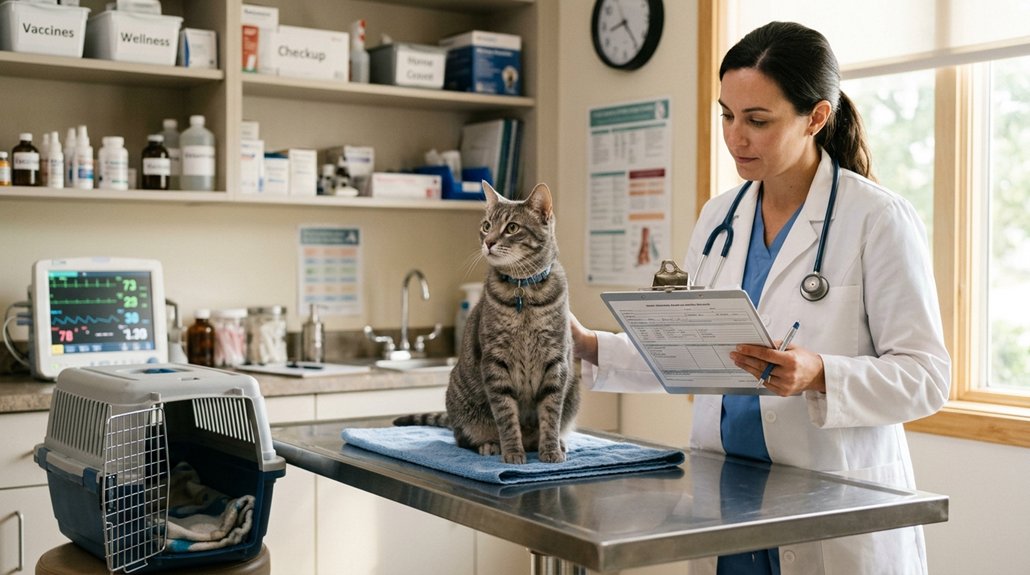
You should take your kitten to the vet within the first week of adoption and follow a vaccination schedule every 3–4 weeks until 16 weeks old. Adult cats, aged 1 to 10, require annual vet visits for wellness exams. Senior cats, over 10 years, benefit from twice-yearly check-ups. Preventive care guarantees early detection of health issues and reduces costs. By staying informed, you’ll gain insights into safeguarding your cat’s lifelong health.
Key Takeaways
- Kittens require vet visits within the first week of adoption and vaccinations every 3-4 weeks until 16 weeks old.
- Adult cats (1-10 years) should have annual wellness exams for early detection of health issues.
- Senior cats, over ten years old, need vet visits every six months to monitor chronic conditions.
- Cats aged 15 or with chronic conditions should visit the vet every four months.
- Consistent preventive care minimizes emergency costs and enhances cats’ long-term health.
Kitten Vet Visits and Vaccination Needs
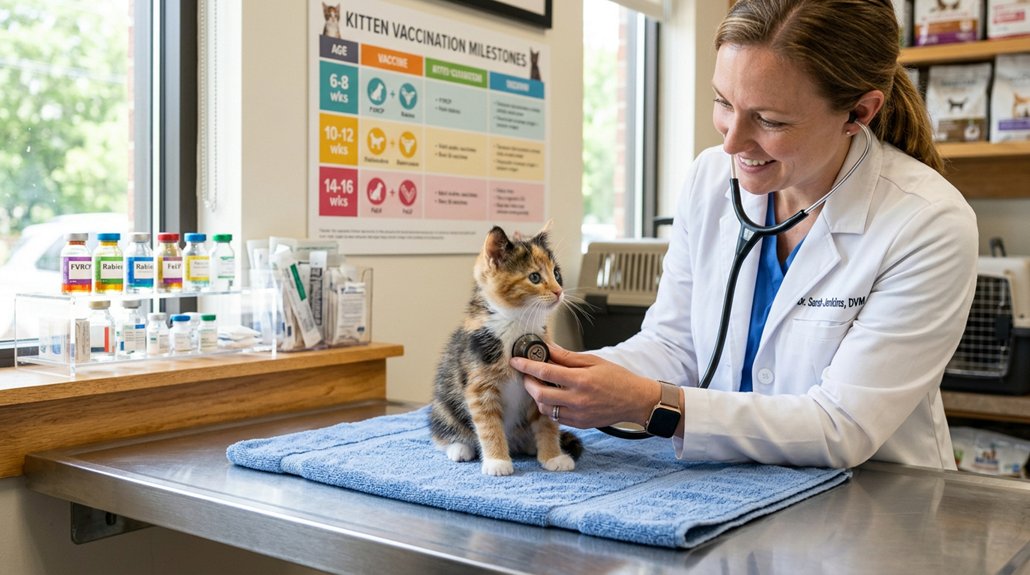
When adopting a kitten, it’s crucial to prioritize their health by scheduling a vet visit within the first week. This inaugural check-up is critical for evaluating early health. Your veterinarian will guide you through the vaccination timeline, initiating the core kitten vaccination protocol no earlier than six weeks old. Kittens require vaccinations every 3-4 weeks until they are at least 16 weeks old, ensuring full protection against diseases like Feline Distemper and Rabies. Early diagnosis and timely intervention in potential health issues, such as nutritional deficiencies or respiratory problems, are important during this period. Routine visits are necessary for monitoring weight and growth, which directly influence immune development. Regular vet care lays the foundation for a robust start in life.
Essential Check-Ups for Adult Cats
Proper care during a cat’s early years lays the groundwork for a healthy adult life, emphasizing the need for ongoing check-ups. Adult cats, specifically those aged 1 to 10 years, should have annual wellness exams. These visits guarantee that any potential health issues are identified early. Essential elements include monitoring dental health and conducting behavioral assessments. Dental health assessments help prevent periodontal disease, a common ailment in cats. Veterinarians will also evaluate your cat’s behavior to detect any changes that may indicate underlying health problems. Even indoor cats, while often healthier, aren’t exempt; they too require yearly vet visits. Regular vaccinations and boosters are administered during these exams to safeguard against prevalent diseases, while establishing a valuable health baseline for comparison.
Getting Serious About Senior Cat Health
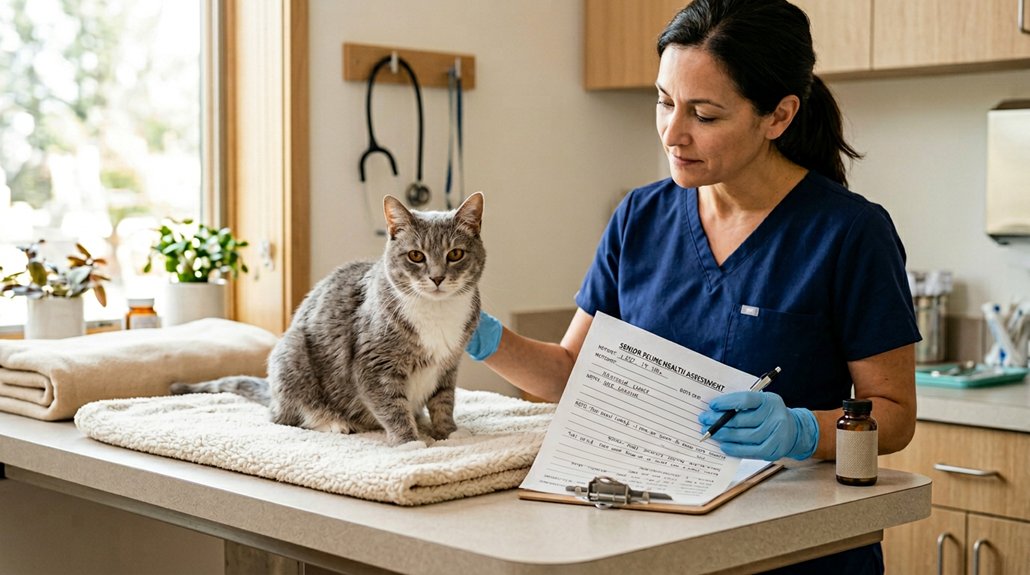
As cats age and shift into their senior years, it is important to intensify their veterinary care to guarantee longevity and quality of life. Senior wellness becomes significant, as cats over ten years are prone to chronic conditions like kidney disease, diabetes, and hyperthyroidism. Scheduling veterinary visits every six months is recommended to monitor these issues. Regular checkups allow for early detection—vital for effective management.
During senior wellness exams, diagnostic tests such as blood work and urinalysis assess organ function and identify emerging age-related concerns. These exams also focus on adjusting nutrition and pain management to accommodate slow-progressing conditions. For cats aged 15 or those with chronic conditions, consider more frequent visits every four months for thorough health monitoring and care.
Why Preventive Care Is Essential for Your Cat’s Health
Preventive care is essential for maintaining your cat’s health, as it enables early detection of diseases through regular check-ups and routine health monitoring. Ensuring your cat is kept on a strict vaccination schedule and receives appropriate parasite control can guard against serious infections while promoting long-term wellbeing. By actively engaging in these practices, you’re greatly enhancing your cat’s quality of life and potentially reducing future medical costs.
Early Disease Detection
Ever wonder why regular veterinary visits are essential for your cat’s well-being? Detecting diseases early through preventive care guarantees better outcomes by addressing early symptoms and subtle changes before they escalate. Veterinarians rely on scheduled checkups to identify common issues like dental disease or chronic kidney disease early, allowing for more effective management. Here’s why consistency is key:
- Early Detection: Regular exams uncover subtle changes or early symptoms unnoticed at home, leading to a prompt diagnosis.
- Treatment Outcomes: Identifying health problems before they become severe enables timely intervention, improving treatment success.
- Improved Longevity: Cats with consistent veterinary care tend to have longer, healthier lives, evidenced by statistics correlating routine visits with reduced health risks.
Annual wellness exams are critical for maintaining your cat’s health.
Routine Health Monitoring
Incorporating routine health monitoring into your cat’s care plan is essential for maintaining peak health. Regular veterinary visits allow early detection of health issues, making treatment manageable and improving outcomes. Adult cats benefit from annual wellness exams that can identify asymptomatic conditions before they become severe. For senior cats, bi-annual vet visits provide timely intervention against chronic diseases. These check-ups also include cat behavioral assessments, important for understanding any shifts in your cat’s health that may indicate issues. At home, focus on health tips such as monitoring weight and dental health, critical for your cat’s well-being. Routine monitoring isn’t just about visits—apply learned practices at home to sustain health and happiness between appointments.
Vaccination and Parasite Control
Ensuring your cat receives vaccinations and parasite control is an essential component of their preventive health care. Kittens need a systematic vaccination schedule, starting as early as 6-8 weeks old, with boosters every 3-4 weeks until 16 weeks. These include core vaccines like Feline calicivirus, herpesvirus-1, and leukemia to safeguard against severe diseases. For effective parasite management, combatting fleas, ticks, and intestinal worms is imperative, as these pests pose significant health threats. Veterinarians can advise on suitable products tailored to your cat’s lifestyle.
Key Steps for Preventive Care:
- Follow a vaccination schedule: Important for immune protection.
- Adopt rigorous parasite management: Prevents infestations and related health issues.
- Schedule annual wellness exams: Keep vaccinations current and manage parasites efficiently.
Recognizing When Your Cat Needs Emergency Care
Recognizing when your cat requires emergency care is critical, as swift intervention can make the difference between life and death. Watch for crisis signals such as collapse, seizure, or severe vomiting—these are signs of potentially life-threatening conditions. Difficulty breathing can indicate respiratory distress and demands immediate veterinary attention. Behavioral changes, like distress during urination or an inability to urinate, suggest serious urinary tract issues needing urgent evaluation. Kittens, in particular, are more vulnerable; pay close attention if they exhibit poor appetite, lethargy, or diarrhea, as these may signal underlying health problems. Additionally, any traumatic injuries or persistent changes in behavior are red flags that necessitate immediate assessment to guarantee your cat’s health and safety. Always err on the side of caution.
The Financial Sense of Regular Vet Visits

Regular vet visits are an investment that can yield cost benefits by facilitating early detection of health issues, potentially reducing the expense and complexity associated with advanced treatments. Preventive measures, such as vaccinations, are financially prudent, lowering the risk of serious diseases that could incur substantial costs. When considering long-term savings, manageable expenditures like annual exams and pet insurance provide a buffer against unexpected healthcare emergencies, highlighting the importance of financial preparedness for your cat’s well-being.
Cost Benefits of Prevention
Investing in preventive veterinary care for your feline friend can offer substantial financial benefits by averting more costly medical emergencies down the line. Through effective preventive strategies, potential health issues can be identified early, simplifying and reducing the cost of treatment. Regular vet visits, typically costing $80–$200, are pivotal in cost management, particularly when managing conditions that could otherwise exceed $500 annually without routine monitoring.
Consider these points for financial efficiency:
- Routine Checks: Regular wellness exams and vaccinations often cost less than emergency treatments, which can easily start at $200.
- Early Detection: Identifying diseases early, like chronic kidney disease, enhances prognosis, reducing future expenses.
- Insurance Plans: Many insurance plans cover preventive services, furthering cost control by cushioning unexpected expenses.
Long-Term Savings Analysis
Incorporating routine veterinary visits into your cat’s care regimen isn’t just about prevention—it’s a strategic financial decision. By employing preventive strategies, such as annual wellness exams costing $80-$200, you can identify potential health issues early. This proactive approach helps in managing conditions like diabetes or kidney disease before they escalate, reducing overall expenses that otherwise could exceed $500 annually.
Moreover, pet insurance plans covering preventive care can offset these costs, translating into significant savings for you. To avoid unexpected financial strain from emergency interventions, budget for regular visits consistently. These budgeting tips guarantee you’re prepared for standard care, preventing expensive complications from untreated health issues. Regular vet visits not only promote your cat’s well-being but also anchor your long-term savings.
Frequently Asked Questions
What Is the 3-3-3 Rule for Cats?
The 3-3-3 rule describes cat behavior as it acclimates: three days to adapt to new surroundings, three weeks to show comfort, and three months to settle fully. Veterinary advice supports patience during this critical adjustment period.
What Is “I Love You” in Cat Language?
Imagine whispers of purrs and gentle breezes of tail flicks. In cat language, “I love you” is a symphony of cat vocalizations and feline body language—purring, slow blinking, kneading, which convey trust and deep affection scientifically.
What Is the 3:2:1 Rule in Cats?
The 3:2:1 rule optimizes cat health by advising weight checks every 3 months, dental health assessments every 2 months, and monthly body condition evaluations, complementing regular veterinary visits to detect issues early and maintain your cat’s well-being.
How Much Should a Cat Checkup Cost?
Routine cat checkups can cost between $80 and $200. Did you know that regular visits guarantee lifespan extension? It’s essential for vaccine updates and checkup frequency to safeguard your feline friend’s health, ultimately reducing emergency care expenses.
Conclusion
Regular vet visits are pivotal for your cat’s health. Did you know that cats who receive consistent preventive care live an average of 3 years longer than those who don’t? This statistic underscores the importance of routine health checks. By staying ahead of potential issues, you’re ensuring a better quality of life for your feline friend. Ultimately, investing in your cat’s health now leads to fewer emergencies and lower costs over time, proving the efficiency of proactive care.