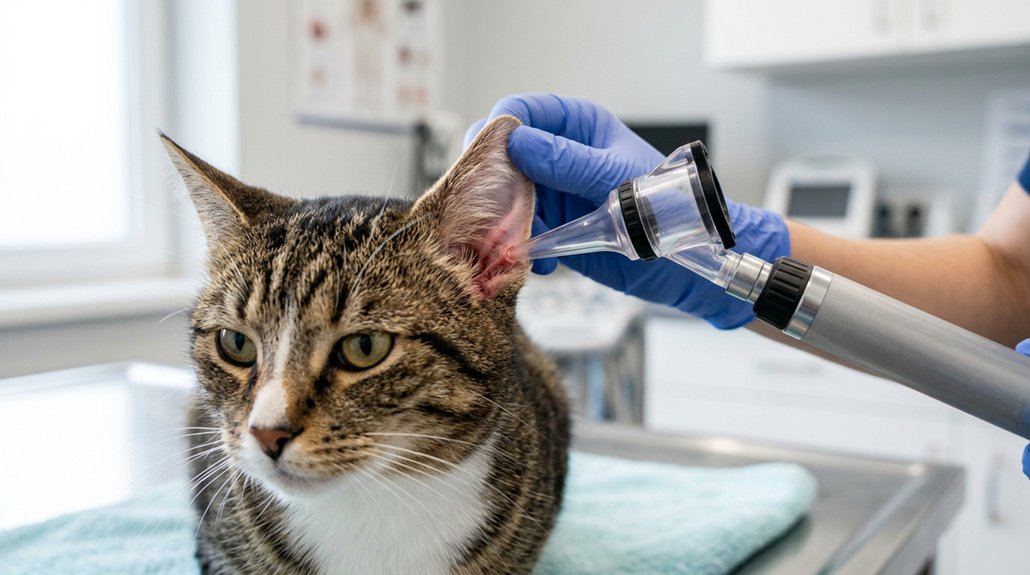
You might notice your cat shaking its head, scratching ears, or displaying discharge if it has an ear infection. Causes include ear mites, yeast, or bacterial infections. Diagnosis typically involves visual examination and swab analysis. Treatment often requires antifungal or antibiotic medications, ear cleaning, and possibly antiparasitic drugs. Regular vet visits and proper ear hygiene are essential in preventing future issues. Discover more about managing ear infections effectively and ensuring your cat’s ear health.
Key Takeaways
- Common symptoms include head shaking, frequent scratching, and unusual discharge from the ears.
- Ear mites, yeast, and bacteria are primary causes of ear infections in cats.
- Initial diagnosis involves visual inspection and cytology to identify infectious agents.
- Treatments consist of antifungal medications, antibiotics, and regular ear cleaning for effective management.
- Regular veterinary check-ups and maintaining proper ear hygiene are essential for prevention and long-term health.
Symptoms to Watch for in Cat Ear Infections
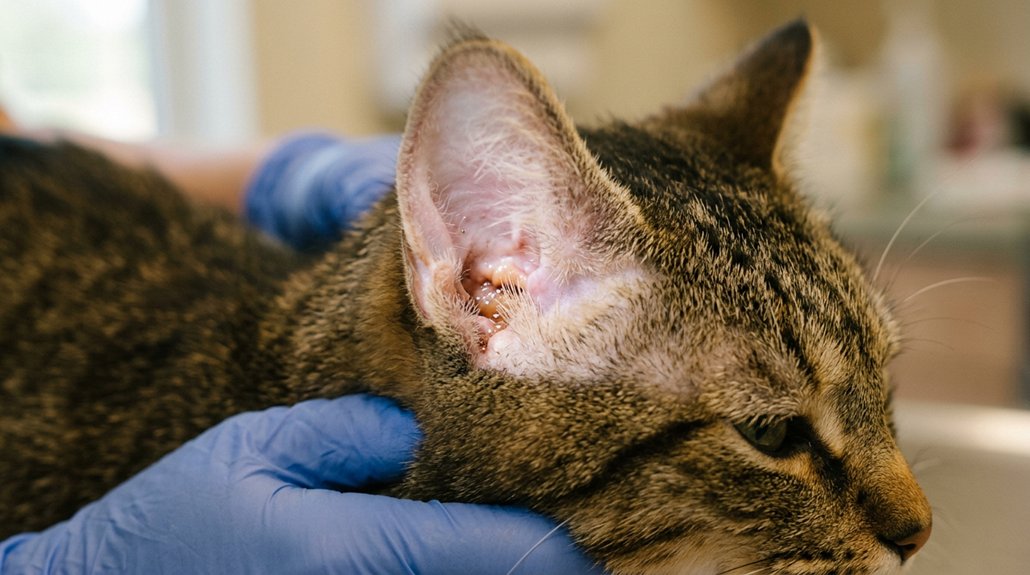
When monitoring for cat ear infections, it’s essential to recognize the key symptoms that commonly present. You’ll notice behaviors like head shaking and frequent scratching at the ears, often accompanied by a distinct odor from the ear canal. Look for discharge that may be yellowish or black, indicating infection. Redness and swelling of both the ear canal and the pinna signal inflammation. Pain or discomfort response when the ear is touched suggests a deeper issue. Additionally, changes in your cat’s behavior, such as increased irritability or a tilted head, may point to inner ear involvement. Maintaining ear hygiene through regular check-ups is critical for early detection, ensuring any infection is identified and addressed promptly.
Common Causes of Cat Ear Infections
You’re likely aware that ear infections in cats can be complex, with yeast and bacteria often becoming secondary culprits after the initial issue. Ear mites are a common primary cause, leading to irritation and the potential for subsequent infections. Environmental and allergy factors, such as pollen or food sensitivities, can also contribute notably by causing inflammation and wax buildup.
Yeast and Bacterial Causes
Understanding ear infections in cats requires recognizing yeast and bacterial causes, as these are among the most prevalent culprits. Yeast overgrowth, particularly from organisms like Malassezia, results in symptoms such as itching, foul odor, and dark ear discharge. Bacterial infections often follow other issues, like allergies, exacerbated by ear wax buildup, leading to inflammation. Diagnosing these involves bacterial cultures, identifying species like Staphylococcus or Pseudomonas that thrive in moist ear conditions. These infections can become chronic, underscoring the need to treat underlying causes. Effective treatments include antifungal medications for yeast infections paired with antibiotics for bacterial infections, along with regular ear cleaning to remove debris. Timely intervention prevents long-term complications, preserving your cat’s ear health.
Role of Ear Mites
Ear mites are a primary cause of ear infections in cats, eliciting severe itching and inflammation within the ear canal. These microscopic parasites, known as *Otodectes cynotis*, thrive on debris and wax, leading to significant discomfort and secondary infections. You might notice symptoms like dark, coffee ground-like discharge, frequent head shaking, and relentless scratching. Mites transmission generally occurs through direct contact with other infected animals, making social or outdoor cats more susceptible. To manage and prevent infestations, prompt veterinary intervention is essential. A typical treatment includes antiparasitic medications alongside thorough ear cleaning to purge the infestation and relieve symptoms. For infestation prevention, regularly inspect and clean your cat’s ears, especially if they’re in contact with other animals.
Environmental and Allergy Factors
Beyond the microscopic menace of ear mites, ear infections in cats can arise from various environmental and allergy-related factors. Allergies, whether food-induced or environmental, often incite inflammation in a cat’s ear canal, heightening infection risks. Conditions like flea allergy dermatitis exacerbate irritation, potentially culminating in secondary infections without prompt inflammation management. Cats with abnormal ear structures or an overproduction of earwax are particularly vulnerable, as environmental irritants can further aggravate these predispositions. Allergic reactions might provoke skin conditions that jeopardize ear health, fostering inflammation and escalating infection chances. For effective prevention, regular allergen identification and monitoring are essential. Prioritizing appropriate inflammation management protects your feline companion from the discomfort and health risks of persistent ear infections.
How to Recognize an Ear Infection in Your Cat
When monitoring your cat’s health, it’s essential to recognize the signs of an ear infection promptly. Pay attention to troublesome behaviors such as head shaking and scratching at the ears, often signaling discomfort and poor ear hygiene. A distinctive odor may emanate from the ear canal, accompanied by yellowish or black discharge. Inspect your cat’s ears for redness and swelling, indicators of inflammation.
Additionally, watch for head tilting or incoordination, which may suggest inner ear involvement or a more severe infection. Cats might frequently paw at their ears or show noticeable discomfort. Symptoms can appear suddenly or persist over time, underscoring the importance of routine ear health checks. Seek veterinary attention immediately if these signs present to prevent further complications.
Diagnostic Methods for Cat Ear Infections
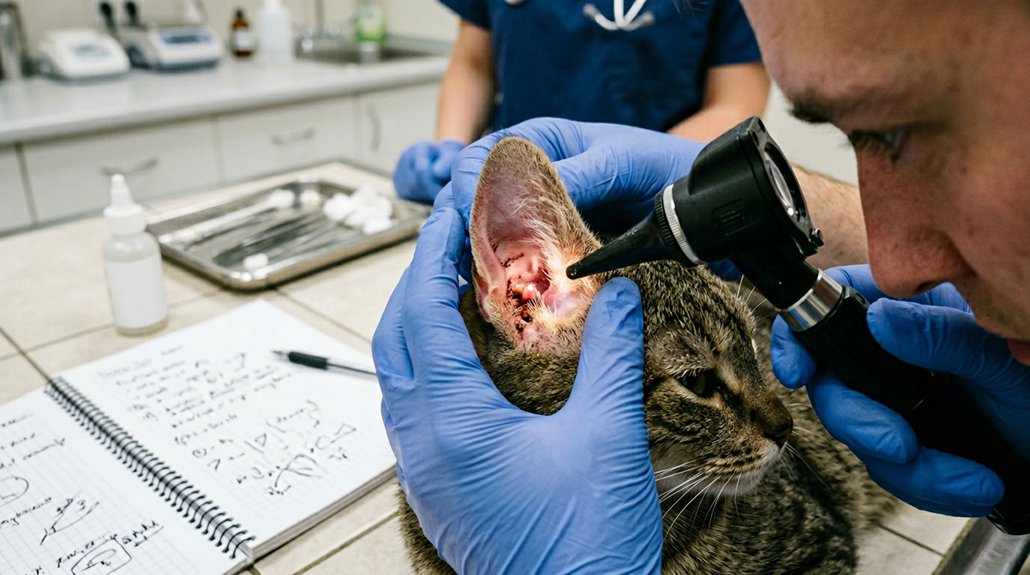
To accurately diagnose ear infections in cats, you’ll begin with a veterinarian’s physical examination, checking for redness, swelling, or discharge. The veterinarian may use an otoscope to visually inspect the ear canal and take samples for cytology or culture analysis, which identify pathogens like yeast, bacteria, or mites. In more chronic or complicated cases, advanced imaging techniques may be necessary to evaluate the full extent of the infection and any associated damage.
Symptoms and Initial Examination
Diagnosing ear infections in cats begins with recognizing tell-tale symptoms such as head shaking, pawing at the ears, and discharge that may emit a foul odor. You might notice ear discharge appearing yellowish or black. An initial veterinary examination involves using an otoscope to inspect the ear canal for debris, redness, or potential polyps. Ear cleaning is often a part of the initial examination to help visualize the canal properly and to collect samples.
Cytology, an essential diagnostic method, entails collecting a swab from the ear canal to identify bacteria, yeast, or mites microscopically. Preventive measures, such as regular ear cleaning and monitoring for symptoms, are key to avoiding chronic infections and ensuring a timely response to any abnormalities detected.
Microscopic and Culture Analysis
| Diagnostic Step | Purpose |
|---|---|
| Microscopic Evaluation | Identify bacteria, yeast, parasites |
| Culture Testing | Determine bacterial strains |
| Sensitivity Testing | Guide antibiotic selection |
This diagnostic process differentiates between infection types—bacterial, yeast, or parasitic—ensuring appropriate treatment. A thorough cytology report reveals infection severity and organism types, laying the groundwork for choosing effective therapeutic agents and determining if more advanced techniques are warranted.
Imaging and Advanced Techniques
After microscopic and culture analyses lay the foundational understanding of an ear infection’s cause, clinicians often turn to imaging and advanced techniques to get a thorough view of the cat’s ear health. Advanced diagnostics, such as CT scans, are particularly valuable in chronic or treatment-resistant cases, providing detailed visualization of ear structures. Cytology, an important diagnostic tool, involves collecting cell samples from the ear to identify infections caused by bacteria, yeast, or mites under a microscope. Meanwhile, an otoscope allows for the inspection of the ear canal and eardrum, detecting any tumors or inflammation. Sometimes, culture testing on ear debris is necessary to tailor antibiotic treatments. Sedation or anesthesia may be required to guarantee the cat’s comfort during exhaustive evaluations.
Effective Treatments for Cat Ear Infections
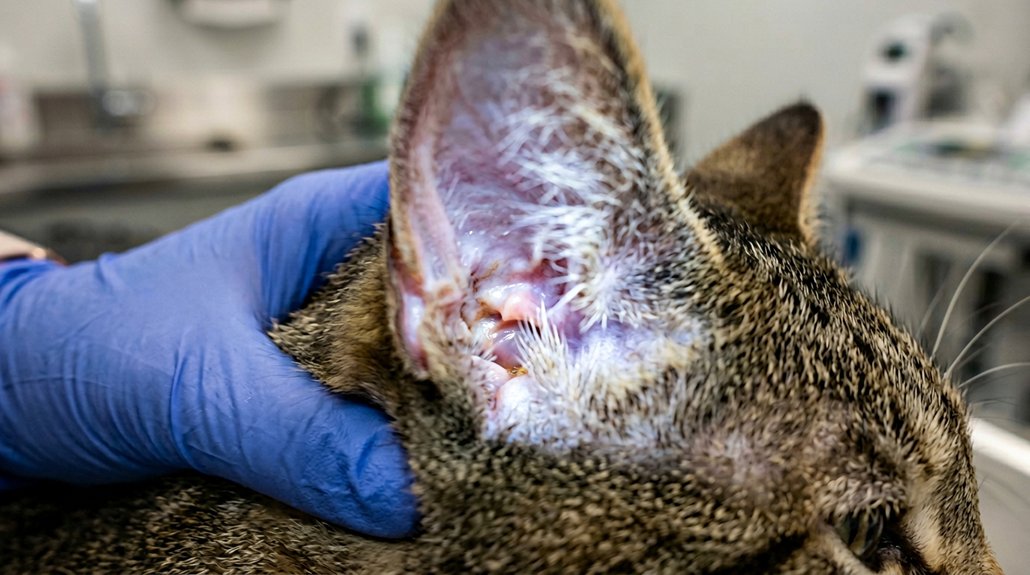
When addressing cat ear infections, effective treatments often hinge on targeted interventions such as prescription ear drops that contain antifungal or antibacterial compounds tailored to the infection’s specific cause. Treatment protocols emphasize the importance of identifying the pathogen involved, ensuring medication options are precisely aligned for ideal outcomes. Oral antibiotics like Veraflox may be recommended for chronic or refractory infections, particularly those unresponsive to topical solutions. If ear mites are the issue, antiparasitic medications, such as Revolution, are crucial for thorough management, preventing secondary complications. Prior to administering medication, thorough cleaning of the ear canal enhances penetration efficacy. Note that persistent infections may necessitate anti-inflammatory drugs to alleviate irritation. Surgical measures aren’t discussed here but could be explored if infection persists.
When Is Ear Surgery Necessary for Cats?
How do you know when ear surgery might be necessary for your cat? It becomes important when chronic ear canal blockages persist despite medical treatment, leading to recurring infections and discomfort. Surgical intervention is essential for removing foreign bodies, polyps, or tumors contributing to these persistent issues. In cases where infections extend to the middle or inner ear, surgery prevents complications like hearing loss or balance problems. A veterinarian’s consultation is critical to assess the condition’s severity, examine surgical options, and weigh potential risks and benefits. Recovery protocols, including post-surgical care and monitoring, are important. Regular follow-up evaluations guarantee that the infection resolves and the ear canal heals properly, providing your cat relief and preventing future issues.
Tips for Post-Treatment Care
Ensuring proper post-treatment care for your cat’s ear infection is essential to achieving full recovery and preventing recurrence. Medication adherence is critical; always complete the full course as prescribed, usually 7-14 days, even if symptoms improve. Schedule regular check-ups with your vet to evaluate the treatment’s effectiveness. Prioritize ear cleaning by using a vet-recommended cleaner to maintain hygiene and deter debris buildup, enhancing recovery. Monitor your cat for any signs such as head shaking or unusual discharge, and seek veterinary advice if these occur. A calm environment mitigates stress, aiding healing and reducing further irritation to the ear.
| Task | Key Points |
|---|---|
| Medication Adherence | Complete the prescribed medication course |
| Vet Appointments | Regular rechecks to assess treatment efficacy |
| Ear Cleaning | Use recommended cleaners for debris removal |
| Monitor Symptoms | Watch for head shaking or discharge, consult vet if necessary |
Preventing Future Cat Ear Infections
While prevention of ear infections in cats relies heavily on regular monitoring and environmental management, it is essential to implement a structured approach. Regularly check your cat’s ears for redness, swelling, or discharge, guaranteeing prompt veterinary intervention if changes occur. Routine ear examinations and annual veterinary check-ups are crucial for maintaining optimal ear health. Keeping your cat in an indoor environment minimizes exposure to environmental irritants and reduces the risk of ear mite infestations. Avoid excessive ear cleaning—consult with a vet to verify proper methods. Consider dietary changes if recommended by your veterinarian to support overall ear health and lessen infection risk. By applying these steps, you can considerably lower the incidence of ear infections and secure your feline’s well-being.
FAQs About Cat Ear Infections and Their Solutions
Ever wondered why your cat might be persistently shaking its head or scratching its ears? These behaviors signal potential ear infections, often accompanied by yellowish or black discharge, and sometimes a foul odor. A common misconception is that all infections arise solely from ear mites, but diagnosis usually involves an otoscopic examination to identify specific causes, ranging from bacteria to yeast. One treatment myth is that infections resolve quickly with over-the-counter remedies. However, appropriate treatment typically requires veterinary prescription medications such as antibiotics, antifungals, or anti-parasitics, administered over 7-14 days. You should conduct regular ear checks and seek prompt veterinary care if you notice symptoms. Early intervention prevents complications and guarantees your cat’s quicker, more complete recovery.
Frequently Asked Questions
How Do You Treat a Cat’s Ear Infection at Home?
Don’t use homemade remedies for a cat’s ear infection. Instead, consult a vet for a professional diagnosis and safe treatment plan. Administer prescribed medications as directed, and never compromise by skipping a veterinary consultation.
What Are the First Signs of a Cat’s Ear Infection?
You’ve likely noticed ear infection symptoms when your cat frequently shakes its head, scratches its ears, or tilts its head. Explore the cat ear anatomy to spot issues like discharge, redness, or swelling which indicate irritation.
Can a Cat’s Ear Infection Heal on Its Own?
A cat’s ear infection typically can’t heal on its own due to limited self-healing abilities. Veterinary intervention is essential for diagnosis and treatment, preventing complications such as hearing loss. Prompt attention guarantees proper recovery and prevents chronic issues.
What Can Happen if a Cat Ear Infection Goes Untreated?
Untreated feline ear infections can lead to myriad potential complications. Imagine, in a Dickensian manner, chronic issues such as balance problems, hearing loss, and systemic symptoms evolving. Timely intervention’s essential to prevent severe ailments and permanent damage.
Conclusion
Steering cat ear infections juxtaposes nurturing care with clinical precision. As a vigilant cat owner, you’ve observed the subtle twitch of discomfort and understood the intricate causes of ear infections. You’ve learned to recognize symptoms and sought diagnostic clarity. Treatments can range from the simplicity of ear drops to the complexity of surgery. Yet, as you nurture recovery and invoke preventive strategies, you’re ensuring your feline friend’s return to purrs over pain, creating harmony amidst disruption.