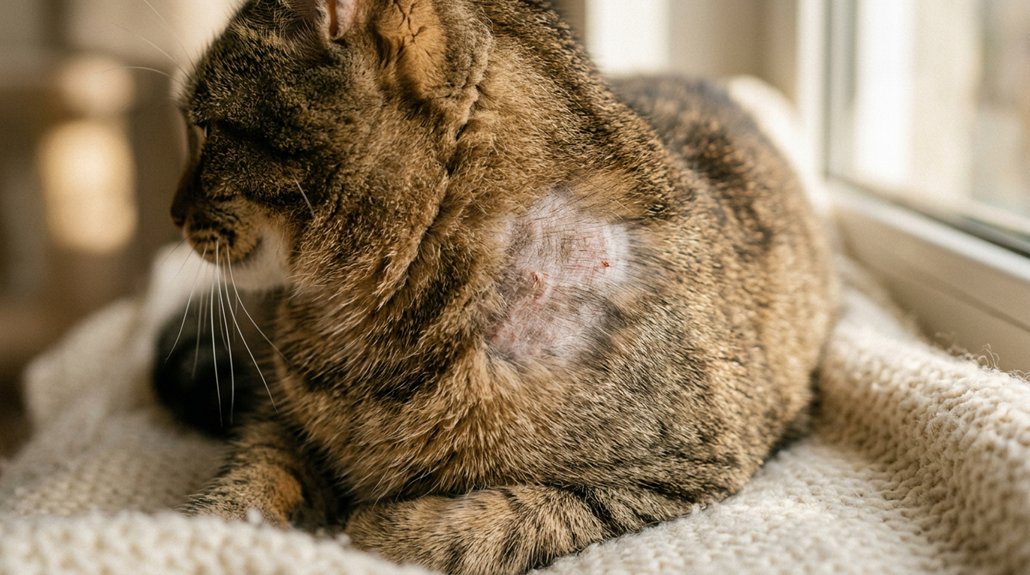
Your cat’s bald spots or hair loss may result from issues such as alopecia, flea allergy dermatitis, food allergies, or infections. Stress-induced overgrooming is another common reason. A veterinary examination, including skin tests and blood work, is essential to identify the underlying cause. Persistent bald spots or rapid hair loss should prompt a vet visit for accurate diagnosis and treatment. Exploring further will provide insights into effective management and prevention strategies.
Key Takeaways
- Alopecia in cats results in noticeable bald patches and is often caused by specific breed predispositions.
- Stress or itch-induced overgrooming commonly leads to fur loss in cats.
- Flea Allergy Dermatitis from flea bites can trigger bald spots and skin irritation.
- Food allergies cause hair loss due to adverse reactions to certain dietary ingredients.
- Bacterial or fungal infections can contribute to noticeable hair loss in cats.
What Is Alopecia in Cats?
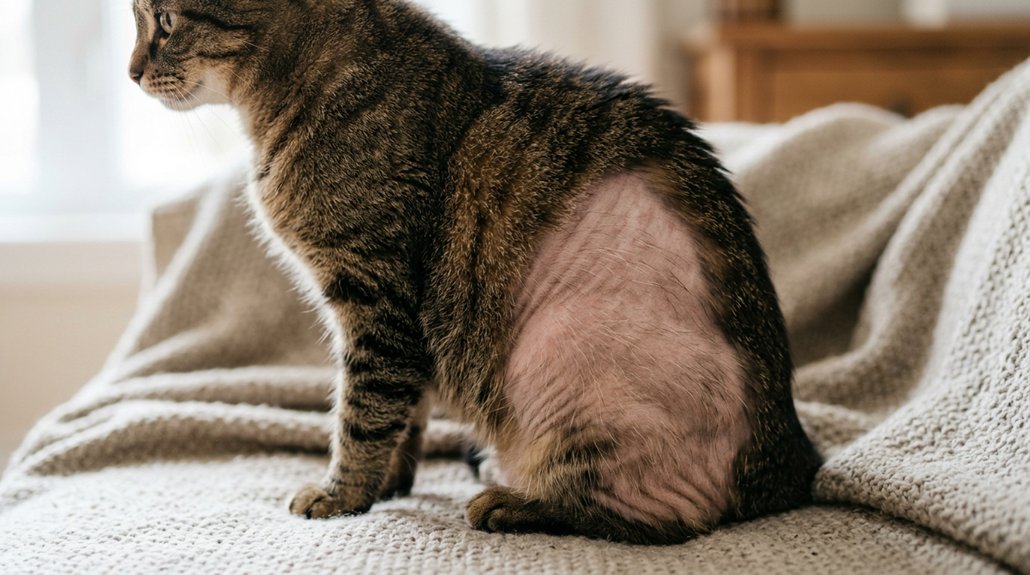
While you might notice your cat losing its fur, it’s essential to understand that alopecia in cats refers to a distinct condition marked by noticeable loss of thick fur tufts, resulting in exposed skin areas. Symptoms of alopecia typically manifest as noticeable bald patches that reveal the skin beneath. This hair loss can affect your cat’s behavior, potentially leading to increased grooming or stress-related actions. Certain breeds, such as Abyssinians, Siamese, and black cats, carry a predisposition for alopecia. Diagnosis involves a veterinarian’s expertise in physical examinations, blood work, and skin tests to pin down the root cause. Understanding the clinical nature of alopecia allows you to identify its symptoms accurately and seek appropriate veterinary care for your feline friend’s well-being.
Why Does Your Cat Have Hair Loss?
Hair loss in cats is a multifaceted issue that warrants careful consideration, as it can stem from various root causes that affect your feline companion’s health and comfort. Understanding these causes can guide you in addressing the problem effectively. Behavioral issues, such as overgrooming due to anxiety or itchiness, are common culprits. Dietary impacts, like food allergies, also play an important role. Identifying triggers is essential for treatment.
| Cause | Description | Solution/Action |
|---|---|---|
| Overgrooming | Excessive licking due to stress or itchiness | Address underlying stressors or itch relief |
| Flea Allergy Dermatitis (FAD) | Allergic reaction to flea bites leading to itch | Flea prevention and control measures |
| Food Allergies | Reaction to specific dietary components | Specialized diets or allergen avoidance |
| Infections | Resulting from bacterial or fungal pathogens | Veterinary diagnosis followed by targeted treatment |
Given these factors, a tailored approach is key for your cat’s hair restoration.
How Vets Diagnose Cat Hair Loss
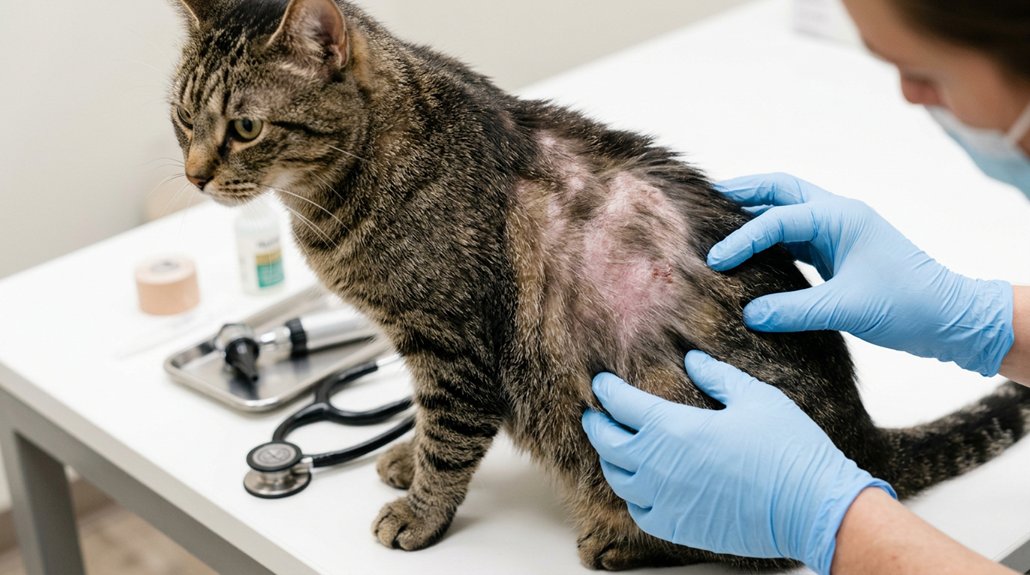
When diagnosing your cat’s hair loss, veterinarians begin with a thorough physical examination to identify signs of hair loss and itchiness. They may use a flea comb to check for fleas or flea dirt, which are common contributors to this condition. If necessary, additional diagnostic tests such as blood work, urinalysis, or skin biopsies will help determine the underlying cause if initial assessments don’t provide clear answers.
Physical Examination Process
A meticulous physical examination is essential for veterinarians to diagnose the cause of your cat’s hair loss effectively. During this process, vets focus on symptom assessment, scrutinizing your cat’s skin and evaluating evidence of inflammation or infection. Understanding your cat’s grooming behavior is vital, as excessive grooming often correlates with stress-induced hair loss.
Here are key elements of the examination:
- Visual inspection: Identifying patterns of hair loss and skin abnormalities.
- Flea comb check: Detecting fleas or flea dirt to assess possible allergic reactions.
- Overall health review: Evaluating symptoms such as irritation or scaling.
- Medical history review: Discussing recent environment or medication changes that might affect hair loss.
These steps enable a thorough understanding of potential issues.
Diagnostic Testing Methods
To effectively diagnose why your cat might be experiencing hair loss, veterinarians employ a variety of diagnostic testing methods that complement the initial physical examination. They start with diagnostic tools like flea combing to detect fleas or flea dirt, which may suggest flea allergy dermatitis as a potential cause. If necessary, additional allergy testing and tests such as blood work, urinalysis, and skin cultures are conducted to uncover underlying infections or health conditions. Your vet might take a thorough history, noting any new medications or changes that could contribute to your cat’s condition. When preliminary tests don’t reveal the cause, a skin biopsy may be performed for a deeper analysis of the skin condition, ensuring precise identification and treatment of the issue.
When to Visit a Vet for Cat Hair Loss
How do you know it’s time for a veterinary visit when your cat starts losing hair? Persistent bald spots might indicate underlying health issues requiring professional evaluation. You should watch for possible triggers causing hair loss symptoms.
If you notice any of the following, schedule a vet appointment:
- Persistent skin changes like redness, flakes, or discharge accompanying hair loss suggest immediate veterinary intervention.
- Continuous itching or scratching, combined with hair loss, might indicate allergies or infections needing professional care.
- Behavioral shifts, such as hiding or altered eating habits along with hair loss, may hint at distress demanding attention.
- Rapid hair loss or sudden bald spots suggest serious conditions, including infections, parasites, or hormonal imbalances needing thorough investigation.
Early recognition and veterinary assessment are essential for effective management.
Best Treatments for Cat Hair Loss
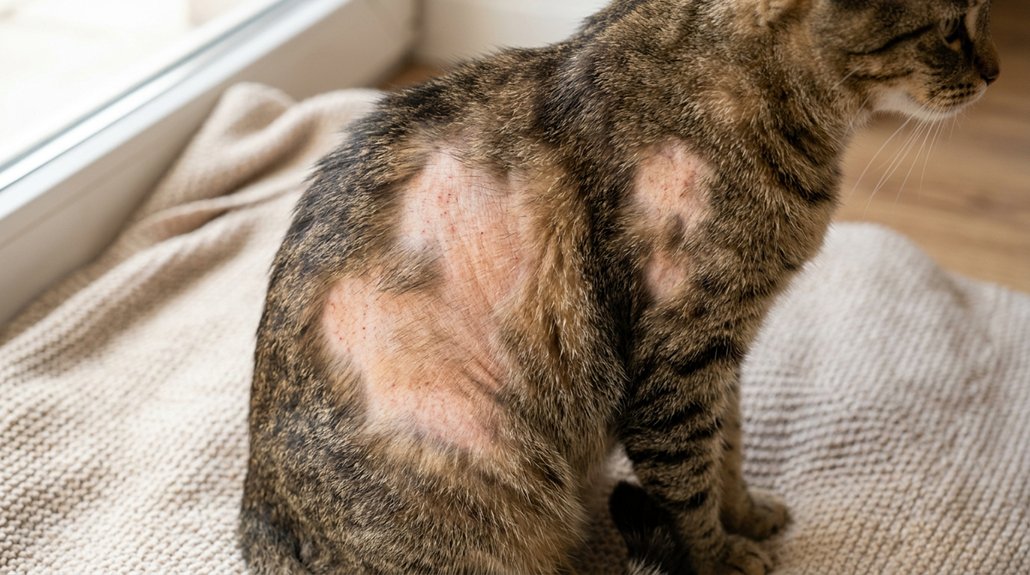
To effectively treat your cat’s hair loss, start by identifying the underlying cause, which could range from infections to allergies or hormonal imbalances. Based on the diagnosis, targeted treatment options include medications for infections, antiparasitic treatments for flea allergy dermatitis, and antifungal solutions for conditions like ringworm. A tailored approach involving dietary changes or medications, coupled with regular veterinary follow-ups, guarantees the best recovery and restores your cat’s coat health.
Identifying Underlying Causes
Understanding why your cat has bald spots hinges on identifying the underlying causes, which can vary widely from environmental stressors to medical conditions. It’s essential to pinpoint whether stress factors or dietary influences are at play. Stress from changes in the environment or social dynamics can lead to overgrooming, resulting in hair loss. Similarly, food allergies could demand dietary adjustments, often requiring a hypoallergenic diet.
To systematically assess the cause, consider:
- Environmental stress: Changes at home or new family members.
- Dietary influences: Food allergens that might trigger a reaction.
- Infections or parasites: Such as flea allergy dermatitis, necessitating flea control.
- Medical conditions: Hormonal imbalances needing vet assessment.
Consult your vet to effectively diagnose and address these issues.
Treatment Options Overview
Once you’ve identified the underlying cause of your cat’s bald spots, it’s time to explore the best treatments tailored to address the specific issue. Treatment modalities vary greatly—antiparasitic medications effectively combat flea infestations, while antifungal treatments target fungal infections. Allergy-related alopecia may require allergy medications or dietary changes as therapy options to eliminate triggering allergens. Stress-induced overgrooming can be managed with calming supplements like Zylkene and behavior modification techniques. In cases where inflammatory skin conditions are present, antibiotics or corticosteroids may be prescribed to reduce inflammation and promote healing. Regular follow-up appointments with your veterinarian are crucial to monitor progress and adjust the treatment plan as necessary to guarantee effective hair regrowth and maintain your cat’s overall health.
How to Prevent Hair Loss in Cats at Home
When it comes to preventing hair loss in cats at home, taking proactive steps is vital. Start with consistent grooming techniques that help maintain coat health and minimize shedding. Consider adding nutritional supplements to your cat’s diet if recommended by your vet, as they can fortify fur and skin.
Consistent grooming and vet-recommended supplements can support your cat’s coat and minimize shedding at home.
Regular veterinary check-ups are essential for identifying potential problems early on. Implement year-round flea and tick preventative measures to safeguard against parasites. Create a structured routine and stress-free environment to deter anxiety-related overgrooming.
- Grooming regularly: Brushes reduce tangles and disperse natural oils.
- Supplements: Omega-3 fatty acids boost skin and coat health.
- Environmental enrichment: Climbing structures and toys lower stress.
- Balance diet: Confirm it’s rich in protein for peak coat quality.
These strategies can effectively mitigate the risk of hair loss.
Frequently Asked Questions
What Do I Do if My Cat Has Bald Spots?
If your cat has bald spots, it’s vital to evaluate feline skin issues and consult a vet for common treatments. Regular checks, proper grooming, stress reduction, and nutritional balance are essential in managing and preventing this concern.
What Can I Feed My Cat for Hair Loss?
You should feed your cat a diet rich in high-quality protein and essential fatty acids, like omega-3s. Consider dietary supplements for enhanced nutrition, and maintain good grooming habits to support fur health. Consult your vet.
Is It Normal for Old Cats to Get Bald Spots?
About 30% of senior cats show alopecia, mostly from causes like hormonal changes or skin conditions. Don’t worry, it’s pretty normal. Regular vet visits are essential to assess and manage potential underlying health issues affecting fur.
When to Worry About a Bald Spot on a Cat?
You should worry about a cat’s bald spot when you notice signs of infection, such as redness or discharge, or suspect causes of alopecia like stress or hormonal imbalances. Consult a vet for diagnosis and treatment.
Conclusion
So, you notice your cat has bald spots, and the coincidence? It might just be a sign of alopecia, a common condition in our feline friends. It’s vital to figure out the cause—whether it’s allergies, parasites, or stress. A vet’s guidance guarantees accurate diagnosis and treatment. You could stumble upon simple at-home prevention methods, too. Remember, your attentive care can greatly impact your cat’s comfort and health, keeping that luxurious coat intact.