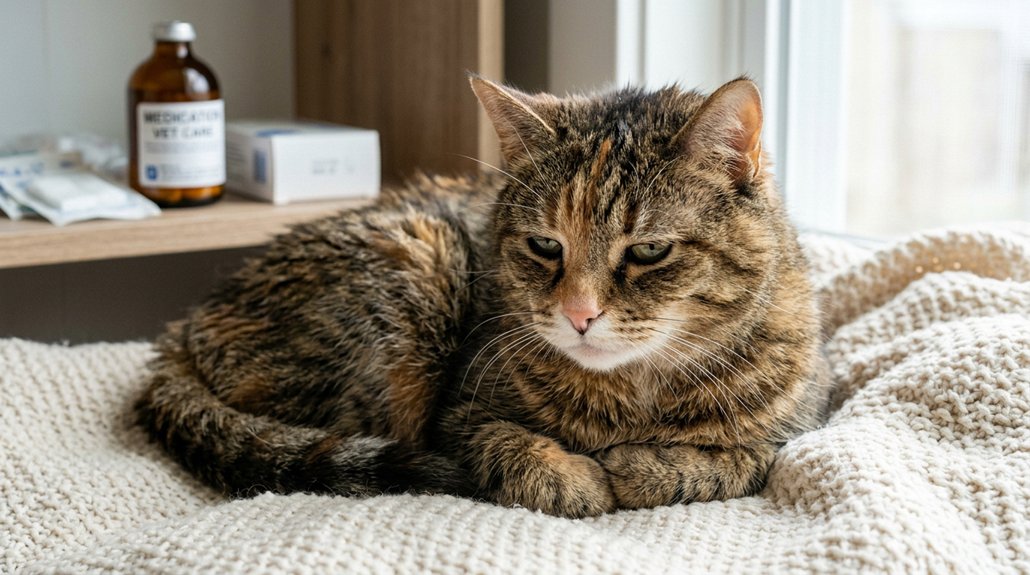
Watch for subtle behavior changes, like hiding or loud meowing, which could signal pain. Altered grooming habits, appetite changes, and weight fluctuations can also indicate health concerns. Monitor the litter box for straining or changes in frequency. If your cat stops eating or displays any urgent symptoms like seizures or labored breathing, seek veterinary care immediately. Keep them comfortable and document these changes for your vet. Explore further to understand and manage your cat’s health better.
Key Takeaways
- Monitor changes in behavior, such as increased hiding or aggression, as they can signal distress or pain.
- Pay attention to appetite and weight changes, and consult a vet if your cat refuses food for over 24 hours.
- Regularly check grooming habits; reduced or excessive grooming may indicate stress or health issues.
- Observe litter box behavior; straining or blood in urine requires immediate veterinary attention.
- Document any unusual symptoms like labored breathing or seizures to provide detailed information to your vet.
How to Spot Early Signs of Feline Illness
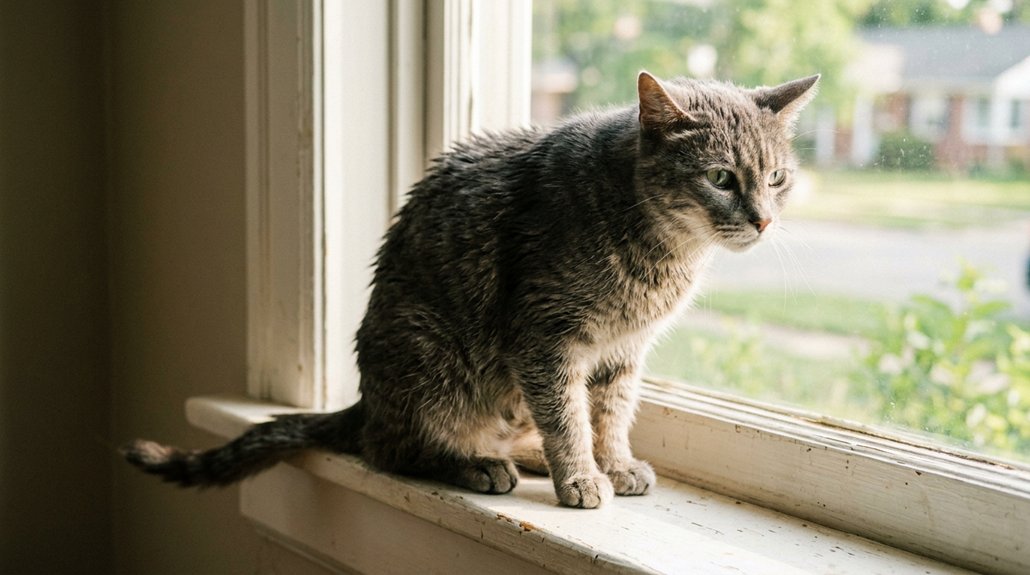
How can you tell if your cat’s subtle behavior changes indicate an underlying health issue? Cats are naturally adept at concealing discomfort, making early illness indicators like behavior changes critical in feline health monitoring. You’ll want to pay close attention to shifts in grooming habits: if your cat stops grooming or starts excessively, it might be experiencing pain or stress. Regularly observe your pet’s litter box habits; straining or changes in frequency could suggest urinary issues that need prompt action. Scheduling biannual veterinary check-ups guarantees professional assessment, complementing your diligence. If you notice anything amiss, don’t hesitate to consult your vet. Remember, you’re not just monitoring symptoms—you’re safeguarding your cat’s well-being and enhancing its quality of life.
Understanding Appetite and Weight Shifts in Cats
While keeping a vigilant eye on your cat’s behavior is essential, understanding appetite and weight shifts is equally important in evaluating its health. Appetite changes, whether a sudden decrease or increase, could indicate serious issues like dental disease or metabolic disorders, such as hyperthyroidism or diabetes, which warrant a veterinary evaluation. Weight fluctuations, whether loss or gain, can reveal hidden health problems. Cats may lose weight even with normal eating due to muscle mass loss or illnesses like kidney disease or cancer. Conversely, sudden weight gain might stem from fluid retention or hormonal imbalances. Monitoring your cat’s weight regularly is important, as unexpected changes should prompt immediate veterinary attention, especially if appetite loss exceeds 24 hours, risking hepatic lipidosis.
Identifying Changes in Cat Behavior and Grooming
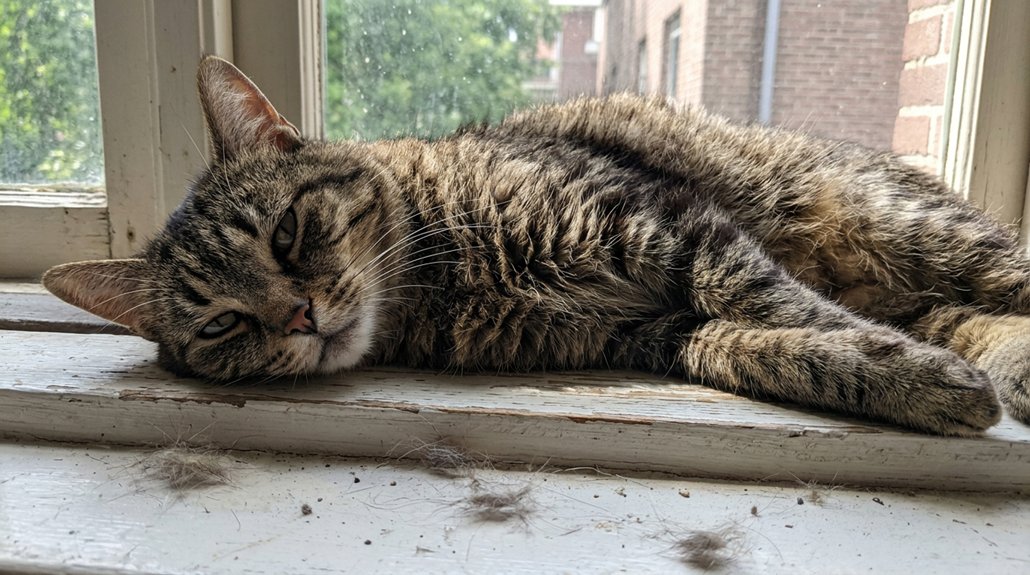
As attentive as you may be towards your cat, subtle shifts in behavior and grooming routines can be telling signs of health issues that need immediate attention. If your cat starts showing hiding behavior more frequently, this withdrawal could indicate underlying health concerns. Such behavior suggests they might be trying to shield themselves from stress or discomfort. Similarly, changes in grooming patterns are important to monitor. A decrease in grooming might lead to a dirty or matted coat, reflecting a lack of energy or discomfort. Conversely, excessive grooming can point to stress, pain, or skin problems. Document these patterns meticulously; they provide essential insights for your vet, aiding in timely diagnosis and care. Be observant; your vigilance can make a difference.
Urgent Symptoms That Need a Vet Right Away
Could your feline companion be in distress? Recognizing urgent symptoms is vital. Pain indicators like loud crying or sudden aggression often highlight severe pain that needs immediate veterinary attention. Seizure warnings are also essential—if your cat experiences convulsions, it could signal neurological issues or toxic exposure requiring rapid intervention. Trauma signs such as limping, difficulty moving, or visible wounds must be addressed immediately to avoid complications. Breathing difficulties, shown through rapid or labored breathing or open-mouth breathing, are emergencies indicating potential respiratory distress. Finally, pain during urination, such as straining or seeing blood in the urine, points to serious urinary tract issues needing urgent care. Stay vigilant and seek help immediately for these essential symptoms.
What to Do When Your Cat Seems Sick
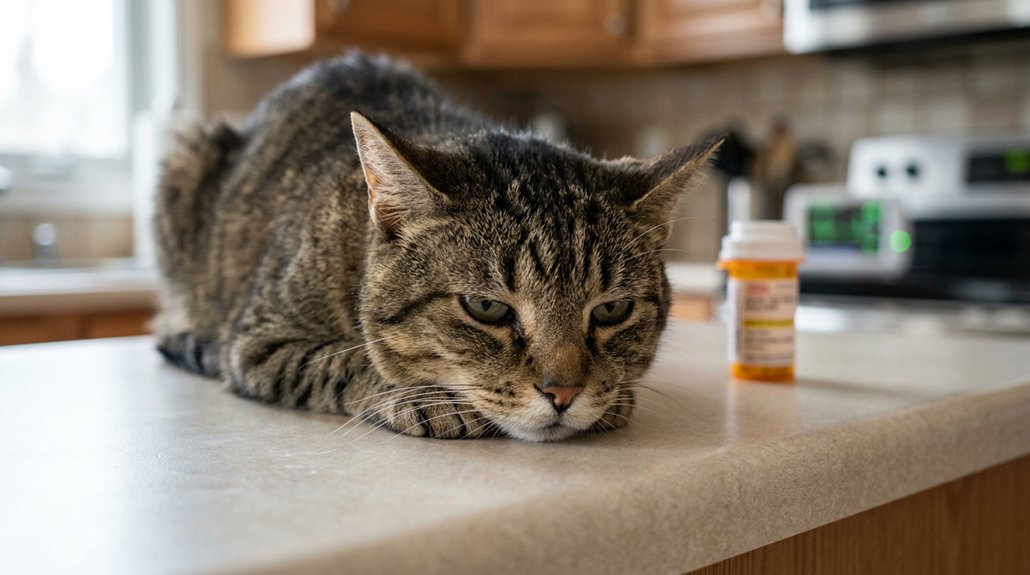
It’s vital to take immediate action when your cat appears unwell. Begin by closely monitoring and jotting down any changes in behavior, appetite, or grooming—this symptom tracking is fundamental for effective veterinary communication. If your cat hasn’t eaten for over 24 hours or seems unusually lethargic, schedule a veterinary appointment right away to prevent potentially serious health issues. Document daily habits like eating, drinking, and litter box usage, offering your vet accurate information for diagnosis and treatment. Seek immediate help if your cat struggles to breathe, shows severe pain, or presents trauma symptoms, as these may be life-threatening. Utilize local veterinary services or emergency clinics and make sure you’re prepared financially with pet insurance for unforeseen medical costs.
Frequently Asked Questions
What Is the 3-3-3 Rule for Cats?
The 3-3-3 Rule for cats outlines the adjustment period for feline behavior: three days to settle, three weeks for routine, and three months for full acclimation. It guarantees you’re supporting your cat’s health and well-being empathetically.
How to Tell if Your Cat Is Seriously Sick?
You can tell if your cat’s seriously sick by looking for changes in behavior, like increased hiding or irritability, and unusual vocalizations. These signs suggest they need a vet’s evaluation for potential health concerns. Don’t wait.
What Is the 3:2:1 Rule in Cats?
The 3:2:1 rule is the shining beacon of cat health monitoring. You’ll take younger cats to the vet thrice annually, middle-aged twice, and older ones once, ensuring any changes in feline behavior are caught early.
What Is “I Love You” in Cat Language?
In cat language, “I love you” is expressed through feline communication like slow blinking, head rubbing, and purring. By understanding cat behavior, you’ll recognize these affectionate gestures as genuine signs of love and trust from your feline friend.
Conclusion
As a pet owner, you’re the first line of defense for your cat’s health. If you notice any changes in appetite, weight, behavior, or grooming, it’s essential to act swiftly. Think of these signs as whispers from your feline friend that something’s amiss. Don’t hesitate to seek veterinary care when urgent symptoms arise. By staying vigilant and proactive, you can guarantee your cat stays healthy, happy, and purring by your side for years to come.