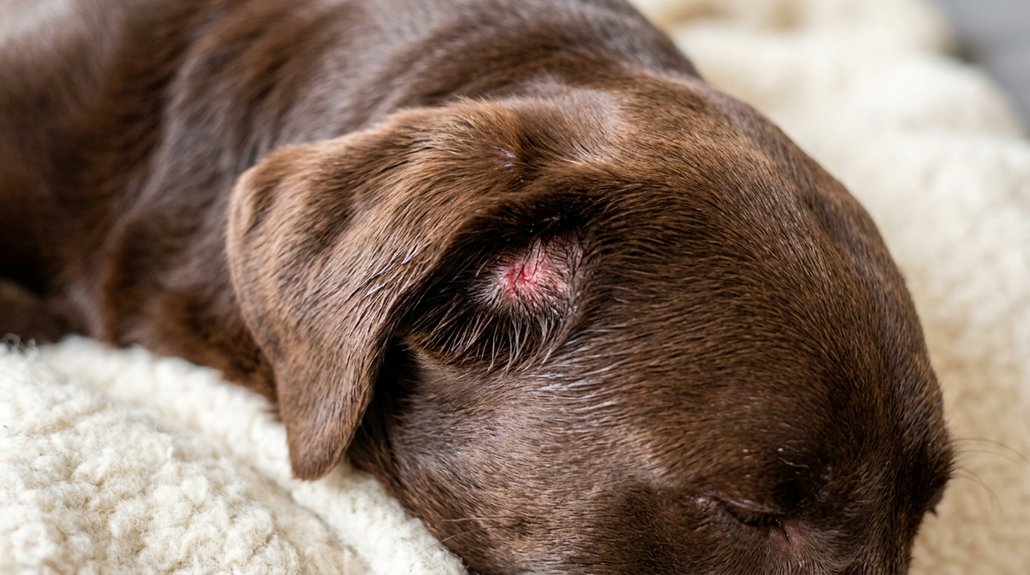
Hot spots, clinically known as acute moist dermatitis, are rapidly developing inflamed skin lesions on dogs, often due to self-inflicted trauma like scratching or licking. You’ll notice red, swollen areas that may be raw or moist, sometimes with a foul odor signaling infection. To treat them, gently cleanse the area, trim surrounding fur, and apply veterinary-grade ointment. Using natural remedies can also soothe inflammation. Regular grooming and parasite prevention are key strategies. Discover more effective solutions ahead.
Key Takeaways
- Hot spots are inflamed skin lesions caused by excessive scratching, licking, or biting, often due to allergies or flea infestations.
- Symptoms include red, swollen, and moist skin with hair loss and sometimes pus discharge, indicating possible bacterial infection.
- Common treatments involve cleansing the area, trimming fur, applying ointments, and using natural remedies like chamomile tea.
- Prevention includes regular grooming, parasite control, proper hygiene, and ensuring mental stimulation and physical activity for your dog.
- Watch for signs on the face, neck, hips, and limbs, especially in thick-coated breeds like Golden Retrievers.
What Are Hot Spots? Detailed Overview
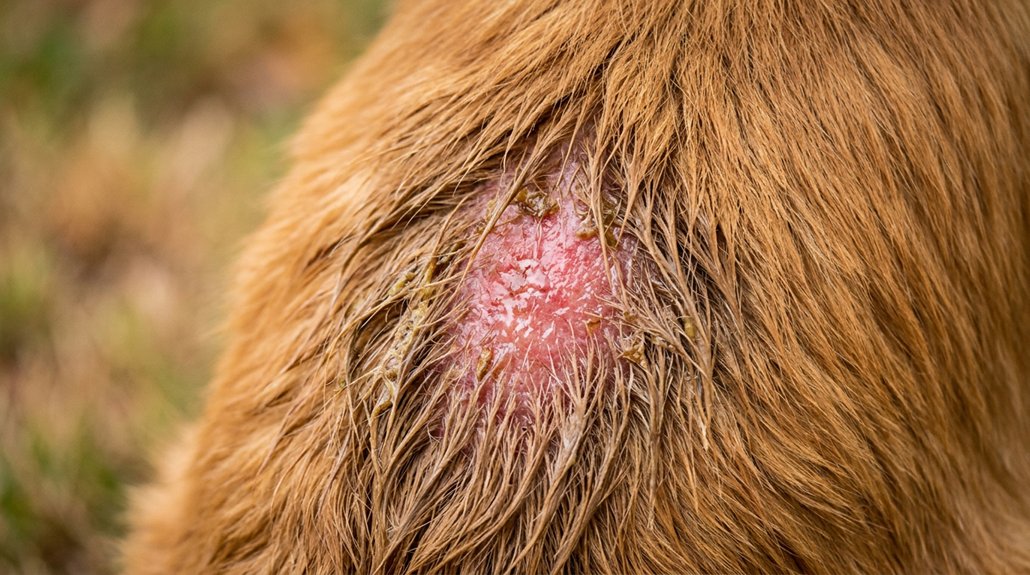
Hot spots, clinically referred to as acute moist dermatitis, are rapidly developing, inflamed lesions on a dog’s skin caused by excessive scratching, licking, or biting. These lesions appear in areas like the face, neck, hips, and limbs, often leading to painful, red, and moist skin if left unchecked. Hot spot identification is essential for successful treatment. Allergies, ear infections, excessive moisture, and irritants such as insect bites frequently act as catalysts.
Prompt veterinary intervention is advised, particularly in severe cases, to prevent complications like hair loss and secondary infections. Treatment involves thorough grooming to remove matted fur, cleaning the lesion, and potentially administering antibiotics or anti-inflammatory medications. Early diagnosis and appropriate care are key to managing this common canine skin condition effectively.
Symptoms and Appearance: Identifying Hot Spots in Your Dog
Identifying hot spots in your dog starts with recognizing several hallmark symptoms. Be attentive to symptom recognition as these can escalate rapidly. Appearance characteristics of hot spots include well-defined, red, and swollen lesions that may seem raw or moist with potential pus discharge. Expect hair loss in affected areas with pain leading to obsessive licking or scratching. These skin irritations can develop swiftly, sometimes within mere hours. Areas like the head, limbs, and hips are common hotspots due to their distinctive swollen, raw appearance. Vigilantly watch for:
Be alert to red, swollen lesions causing hair loss and obsessive itching; hot spots develop quickly.
- Hair loss areas: Often painful, leading your dog to lick or scratch.
- Moist and crusted lesions: Sometimes discharging fluid or pus.
- Foul odor and increased swelling: Indicators of bacterial infection needing urgent veterinary attention.
Why Do Dogs Get Hot Spots? Understanding the Causes
Understanding the root causes of hot spots, also known as acute moist dermatitis, is essential for effective management and prevention. These lesions often arise from self-inflicted trauma due to intense scratching, licking, or chewing the skin. Allergy triggers, whether stemming from food or environmental factors, are common culprits that provoke such behaviors. Flea infestations and secondary skin infections can further exacerbate the issue. In addition, breed predisposition plays a significant role; breeds like Golden Retrievers and Rottweilers, with thick coats, are more susceptible as moisture and irritants can become trapped. Furthermore, activities that increase moisture, like bathing or swimming, demand thorough drying. Stress-induced behaviors linked to anxiety or boredom can also amplify the risk by encouraging excessive grooming habits.
Home Treatments for Hot Spots: Quick Relief for Your Dog
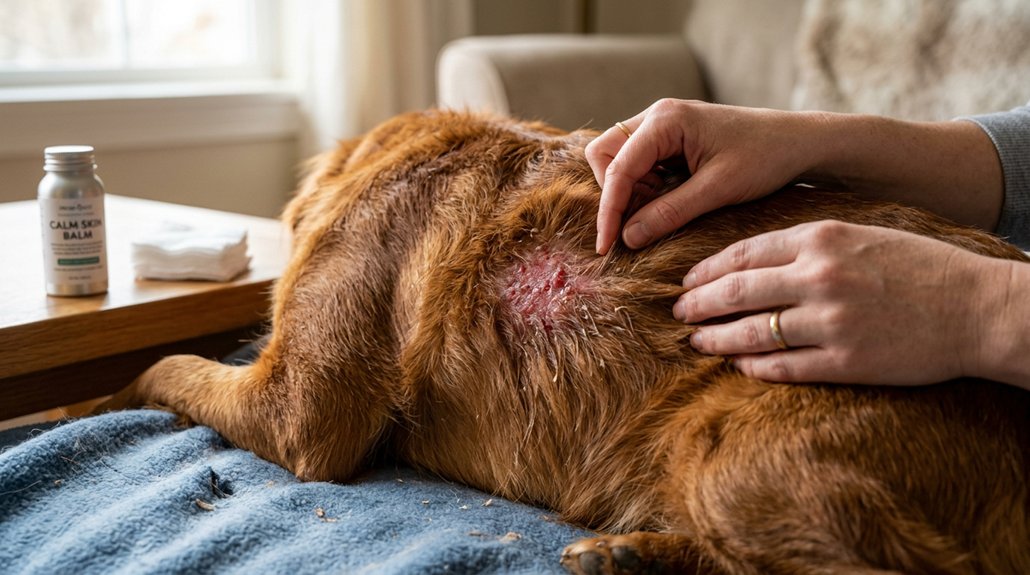
When addressing hot spots on your dog, it’s crucial to start with immediate and effective home treatments that can provide quick relief. Begin by gently cleansing the affected area with mild soap or a veterinary-recommended antiseptic. This guarantees the lesion remains bacteria-free. Enhance air circulation by trimming the fur around the hot spot, aiding in moisture reduction and expediting healing. Next, apply a veterinary-approved hot spot ointment to mitigate inflammation and discomfort.
Consider incorporating these soothing techniques:
- Use natural remedies, such as diluted chamomile tea, which can offer anti-inflammatory effects.
- Implement an Elizabethan collar to prevent further irritation caused by licking or scratching.
- If no improvement occurs within 24 hours, promptly consult your veterinarian to rule out infections or underlying conditions.
Proactive Strategies for Hot Spot Prevention and Long-Term Management
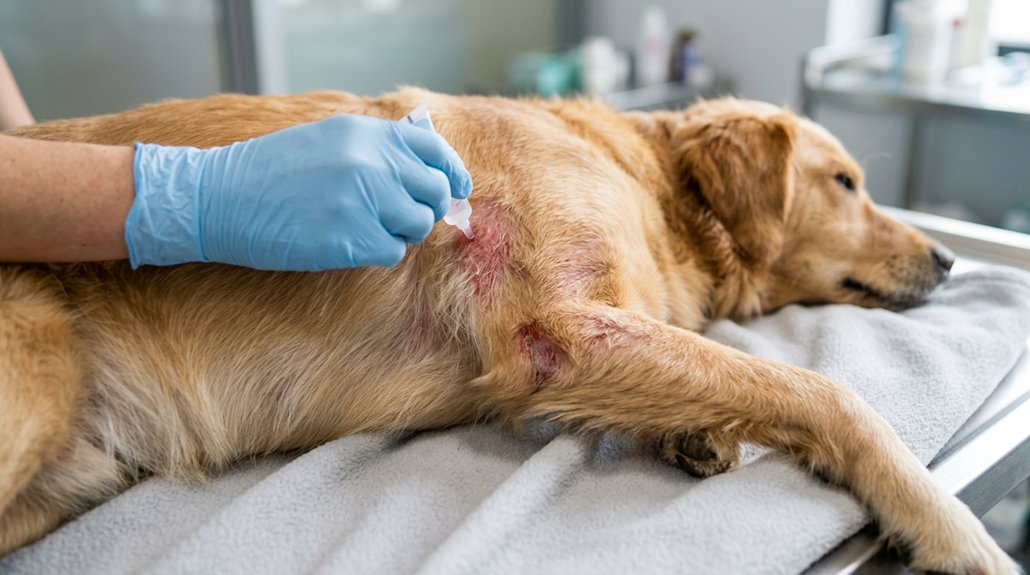
Even though hot spots can be distressing for your dog, implementing proactive strategies can prevent their occurrence and guarantee long-term management. Prioritize regular grooming techniques, such as consistent brushing to remove mats and debris, which is essential for maintaining dermal health, especially in predisposed breeds. Implementing a robust parasite prevention program mitigates flea and tick infestations—typical culprits in triggering dermatitis and subsequent hot spots. Maintain proper hygiene with veterinarian-recommended shampoos, ensuring your dog’s skin remains clean and free from irritants. Additionally, offering ample mental stimulation and physical exercise can prevent boredom-induced licking, a precursor to hot spot formation. Regularly monitor your dog’s skin for early detection of abnormalities, facilitating timely intervention and reducing hot spot risks.
Frequently Asked Questions
What Is the Best Thing to Put on a Dog’s Hot Spot?
Use a vet-recommended antiseptic or natural remedies like aloe vera. Combine with prevention strategies: regular grooming, use an Elizabethan collar, and maintain hygiene. For severe cases, consult a vet for possible systemic medications.
How Long Does a Hotspot Last on a Dog?
Hotspot duration usually spans one to two weeks. Contrarily, the healing process’ initial improvement might show within days. Yet, vigilance against licking and scratching is essential, as neglect extends recovery, necessitating a vet’s reassessment if no progress shows.
What Triggers Hot Spots on Dogs?
Hot spots on dogs are triggered by factors like allergies, moisture, and poor grooming. Prevent hot spots by addressing the causes: manage allergies, guarantee proper grooming, and reduce moisture exposure to minimize irritation and bacterial growth.
Can I Put Neosporin on My Dog’s Hotspots?
You shouldn’t use Neosporin as a hot spot treatment for your dog. This antibiotic ointment can irritate canine skin. Opt for veterinary-approved formulations specifically crafted for dogs instead, and consult your vet for treatment guidance.
Conclusion
Think of your dog’s skin as a lush forest. Hot spots are like wildfires; they can start small but spread quickly if not managed. Identifying symptoms early and understanding causes allows you to extinguish these fiery patches with targeted treatments. Just as a diligent ranger knows the terrain, you can prevent future flare-ups by nurturing your dog’s skin health. Equip yourself with knowledge, tools, and care, ensuring your forest thrives without interruptions.